TML

Presenting a smattering of titles mastered at one of the greatest mastering houses of all time, The Mastering Lab.

If you know of any remastered pressings that improve upon their TML counterparts, please email your list to me at tom@better-records.com.

The Who – Who By Numbers

More of the Music of The Who

  • Who By Numbers returns to the site for only the second time in over three years, here with KILLER Shootout Winning Triple Plus (A+++) sound or close to it on both sides of this vintage Polydor import pressing – fairly quiet vinyl too
  • Glyn Johns‘s magic is on display here, with open mics in a big studio space creating the 3D soundscapes we love
  • Features two of their most iconic songs, “Slip Kid” and “Squeezebox,” and both sound incredible on this copy
  • 4 stars – Rolling Stone raves: “They may have made their greatest album in the face of [their personal problems]. But only time will tell.”
  • These are the stampers that always win our shootouts, and when you hear them you will know why – the sound is big, rich and clear like no other
  • We’ve discovered a number of titles in which one stamper always wins, and here are some others
  • If you’re a Who fan, this title from 1975 is surely a Must Own.

(more…)

Dave Grusin – Discovered Again!

  • Grusin’s jazz Masterpiece from 1976 returns to the site for only the second time in sixteen months, here with INCREDIBLE Shootout Winning Triple Plus (A+++) grades or close to them throughout this original import copy – fairly quiet vinyl too
  • Here are just a few of things we had to say about this killer copy in our notes: “weighty, deep bass and kick”…”3D, rich, and silky”…”excellent detail and size”
  • After critically listening to this record good and loud, and hearing it sound the way this copy sounds, we have to call it One of the All Time Great Direct to Disc Recordings
  • The songs, the players, the arrangements, the sound – this is a record that will reward hundreds of plays for decades to come
  • Side one of this copy is out of polarity and not a copy you should buy if you can’t switch
  • “…makes for the kind of demo material audiophiles are so fond of using to impress friends and neighbors.”

We are on record as being big fans of this album. Unlike most Direct to Disc recordings, Discovered Again actually contains real music worth listening to. During our all-day shootout, the more we played the record, the more we appreciated it. These are top quality players totally in the groove on this material. When it’s played well, and the sound is as good as it is here, there’s nothing dated about this kind of jazz. Hey, what can we say — it works.

(more…)

How Do the The Mastering Lab Pressings of Sticky Fingers Sound?

Hot Stamper Pressing of the Music of The Rolling Stones Available Now

A listing for an early domestic Hot Stamper pressing for Sticky Fingers will typically be introduced like this:

If you have never heard one of our Hot Stamper pressings of the album, you (probably) cannot begin to appreciate just how amazing the sound is.

A landmark Glyn Johns / Andy Johns recording, our favorite by the Stones, a Top 100 Title (of course) and 5 stars on Allmusic (ditto).

After hearing so much buzz about it, we finally broke down and ordered a German TML pressing about a year ago. Having played scores of phenomenally good sounding copies of the album over the past fifteen or so years, we were very skeptical that anyone could cut the record better than the mastering engineers who inscribed Rolling Stones Records into the dead wax on the early pressings. (I could find no mastering engineers credited.)

Well, the results were not good. As we suspected would be the case, we were not impressed in the least with what The Mastering Lab — one of the greatest independent cutting houses of all time, mind you — had wrought.

Their version is not really even good enough to charge money for. It might have earned a grade of One Plus, just under the threshold for a Hot Stamper that we would put on the site these days. Decent, but not much more than that.

Wait, There’s More

We subsequently learned that it is the British TML pressings that are supposed to be the best.

So we got one of those in, an A3/B4 copy.

Better, but good enough? Barely.

Here are the notes for the copy we played. For those who have trouble reading our writing, I have transcribed the notes as follows:

Side One

Track one:

Weighty, a bit veiled or smeary. Backing vox kinda lost.

Track three:

Very full, rockin’ but not the sparkle/space.

Kinda compressed.

Not as huge.

Side Two

Track two:

Not as rich, clear.

A bit pushy/dry vox.

No real space.

Thick drums

Track one:

This works better.

A bit hard, but full and lively.

This Sound?

Is this the sound audiophiles are raving about?

(more…)

Judging the Sound of Heavy Vinyl We’ve Never Played

Hot Stamper Pressings of Pablo Recordings Available Now

We freely admit that we have never played the Heavy Vinyl pressing of The Alternate Blues on the Analogue Productions label. It started life in 1996 as APR 3010, part of the Analog Revival Series on 150 gram vinyl (average price on Discogs these days: $99), and now it seems to be in print on 180 gram vinyl, made from the same metalwork by the looks of it.

The mastering of the Analog Revival Series pressing may have been credited to Bruce Leek and Stan Ricker, but the stamper information is TML, The Mastering Lab all the way.

In case you, unlike us, are tempted to try one or both of the AP pressings, or perhaps already own one or both, here is our advice on how to recognize the fairly predictable shortcomings of Chad’s pressing, or any pressing mastered by Doug Sax in the 90s for that matter. Every one we’ve ever played has suffered from the same suite of sins.

The Best Part

And we expect that the AP pressing’s failures in some areas will be so obvious that you really don’t need any other copy of the album to be able to hear them.

Just focus on the two qualities that Analogue Productions’ records have always failed to deliver: transparency and freedom from smear.

In our 2011 shootout notes we drew the reader’s attention to both:

What to Listen For – Transparency

What typically separates the killer copies from the merely good ones are two qualities that we often look for in the records we play: transparency and lack of smear. Transparency allows you to hear into the recording, reproducing the ambience and subtle musical cues and details that high-resolution analog is known for.

Note that most Heavy Vinyl pressings being produced these days seem to be quite transparency challenged.

Lots of important musical information — the kind we hear on even second-rate regular pressings — is simply nowhere to be found. That audiophiles as a whole — including those that pass themselves off as the champions of analog in the audio press — do not notice these failings does not speak well for either their equipment or their critical listening skills.

What to Listen For – Lack of Smear

Lack of smear is also important, especially on a recording with this many horns, where the leading edge transients are so critical to their sound. If the horns smear together into an amorphous blob, as if the sound were being fed through ’50s vintage tube amps (for those of you who know that sound), half the fun goes right out of the music.

Richness is important — horns need to be full-bodied if they are to sound like the real thing — but so are speed and clarity, two qualities that insure that all the horns have the proper bite and timbre.

More on Smeary Sound

Smear, a blurring of the sharpness of the notes, refers to the loss of transient information which is most often associated with tube gear.

However, smear occurs with every kind of gear, especially high-powered amps, the kind typically required to power the inefficient speakers audiophiles often favor. We caution against the use of both.

When we finally got rid of our tube equipment and high-powered amps, a lot of smear in the playback of our records disappeared with them.

Once that happened, the smear that is commonly heard on most modern Heavy Vinyl repressings became much more noticeable and, over time, even more annoying.

Nobody else seems too bothered by smear, and one of our many theories about the stereo shortcomings of reviewers and audiophiles in general is that their systems are fairly smeary, so a extra smear — a little or a lot — becomes virtually inaudible to them.

(more…)

Little Feat – Waiting For Columbus

More Little Feat

  • A vintage copy of Waiting For Columbus with seriously good Double Plus (A++) grades or close to them on all FOUR sides – exceptionally quiet vinyl too
  • Some of the best sounding live rock and roll sound you will ever hear outside of a concert venue (particularly on sides one, two, and four)
  • If you want to understand the unique appeal of the band, there’s no better place to start than right here
  • One of our all-time favorite live recordings and their single best release – a true Masterpiece
  • 4 1/2 stars: “There’s much to savor on Waiting For Columbus, one of the great live albums of its era, thanks to rich performances that prove Little Feat were one of the great live bands of their time.”
  • We’ve recently compiled a list of records we think every audiophile should get to know better, along the lines of “the 1001 records you need to hear before you die,” but with less of an accent on morbidity and more on the joy these amazing audiophile-quality recordings can bring to your life. Waiting for Columbus is a good example of a record many audiophiles may not know well but should.

This is an amazingly well-recorded concert, and what’s more, the versions the band does of their earlier material are much better than the studio album versions of those same songs in every case.

Fat Man In A Bathtub on this album is out of this world, but you could easily say that about a dozen or more of the tracks on this double album. Which simply means that you will have a very hard time listening to any of the studio versions of these songs once you’ve heard them performed with the kind of energy, enthusiasm and technical virtuosity Little Feat brought to this live show. (I saw them twice with Lowell and they were amazing both times.)

This is some of the best sounding live rock and roll sound you will ever hear outside of a concert venue. In fact, on a great copy, it’s just about as good as live rock’n’roll sound gets.

Here is a link to take you to more letters, commentaries and reviews for Waiting for Columbus.

(more…)

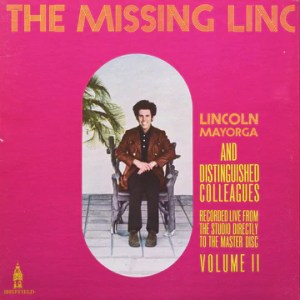
Lincoln Mayorga – The Missing Linc

More of the Music of Lincoln Mayorga

  • With two STUNNING Shootout Winning Triple Plus (A+++) sides, this Sheffield Direct to Disc recording is certainly as good a copy as we have ever heard
  • Guaranteed to be dramatically richer, fuller and more Tubey Magical than any other copy you have heard, with especially punchy drums and rosiny-textured strings
  • The bass on side one extends all the way into whomp land for that big bass drum at the end of “Limehouse Blues” – what a sound!
  • The top end is key to the better pressings too – lots of string harmonics and bells and other high frequency stuff gets lost on most pressings, but not this one, it’s all there on this pressing
  • The audiophile “Sgt. Pepper” of its day, a record that was so much better than anything else you’d ever heard it made you rethink the possibilities (and they did the same thing with Volume III two years later)
  • If you’re a Sheffield Labs fan, and what audiophile wouldn’t be?, this title from 1972 is clearly one of their best
  • If you’re a fan of big drums in a big room, with jump out of the speakers sound, this is the album for you.

This is definitely not your typical Sheffield pressing. Some of them are aggressive, many of them are dull and lack the spark of live music, some of them have wonky bass or are lacking in the lowest octave — they are prey to every fault that befalls other pressings.

Which shouldn’t be too surprising. Records are records. Pressing variations exist for every album ever made. If you haven’t noticed that yet, start playing multiple copies of the same album while listening carefully and critically.

Just listen to the texture on the saxophone on “Limehouse Blues” — you can really hear the leading edge transients of the brass that are so important to the sound of those instruments. Track after track, the sound gets surprisingly more open and airy. The harpsichord has such great presence it jumps out of the speakers. 

I was selling audio equipment (Audio Research, Fulton speakers) back in the ’70s and this was a favorite demo disc in our store. The bass drum at the end of track two would shake the foundation with a big speaker like the Fulton J.

Every bit as amazing to me was the string quartet on side 2. You could actually hear the musicians breathing and turning the pages on their music stands, just as if you were actually in their “living presence.”

This is one of the albums that made me realize how good audio in the home could really be. In a way this was the Audiophile “Sgt. Pepper” of its day, a record that was so much better than anything else you’d ever heard it made you rethink the possibilities.

(more…)

Letter of the Week – “Why can’t all records sound this good…?”

Hot Stamper Pressings of the Music of Ambrosia Available Now

One of our good customers wrote to tell us about a very Hot Stamper pressing he purchased recently:

Hey Tom,   

Question:

Does Tom Port have any clue as to what the hell he’s doing or selling to the public?

That is my question.

Hello Tom,

I’m the idiot who spent $399 on your White Hot Stamper of Ambrosia’s first album a few weeks ago. I did an A/B listening test with an A++/A++ copy I bought from you a few years ago. Your website waxes lyrical about the exceptional qualities of this recording; I always thought it was very, very good but not quite the recording you make it out to be!

To perform my listing test, I listened to my A++/A++ side one first. Then listened to the newly purchased A+++/A+++ next. The results? I almost had to call 911 because my jaw hit the floor! THIS was the recording you had written about in the records descriptive comments. This pressing is so holographic I swear I could have stepped into the recording.

Dare I say this is a better recording than Dark Side of the Moon; and yes, I can make such a claim, I purchased an A++/A+++ – A++/A+++ copy from you guys a few years ago. This is what I refer to as Master Tape sound quality. A Holy Grail for audiophiles.

It’s pressings like this that pose the questions: Why can’t all records sound this good and why can’t all recording engineers be as great as Alan Parsons?

So, back to my original question. Does Tom Port know what the hell he is doing or selling to the public?

Yes Tom, I’d say absolutely, 100% you know what you are doing and I’m the happiest idiot on this Earth. Keep up the great work, Tom, and thank you and your staff for the incredible service you provide.

Todd N.

Dear Todd,

Thanks for your letter. I’m positively blushing!

Seriously, the right vintage pressing — on the right stereo — can take the enjoyment of music to a level far beyond that of anything being experienced by the audiophile of today, at least those who are stuck in a rut due to their misguided devotion to the modern Heavy Vinyl reissue. (more…)

Joan Baez / Diamonds and Rust

More Joan Baez

  • Boasting two incredible Nearly Triple Plus (A++ to A+++) sides, this early A&M pressing is practically as good a copy as we have ever heard, right up there with our Shootout Winner
  • The sound is rich, full, warm, and sweet, the vocals are full-bodied and breathy, and the acoustic guitars are fairly natural for a pop recording from 1975
  • Guaranteed to handily beat the Nautilus Half-Speed as well as the TAS list-approved MoFi (which is awful by the way)
  • These are the stampers that always win our shootouts, and when you hear them you will know why – the sound is big, rich and clear like no other
  • We’ve discovered a number of titles in which one stamper always wins, and here are some others
  • 5 stars: “…the real hit was the title track, a self-penned masterpiece and… her finest moment as a songwriter…”

(more…)

Gary Wright / The Dream Weaver – One and Done

More Gary Wright

  • Superb sound throughout this vintage Warner Bros. pressing, with both sides earning solid Double Plus (A++) grades or BETTER
  • Big, rich and full-bodied with lovely texture to the synths and relatively little grit – these are all qualities critically important to the sound of the better copies
  • Only the second copy to hit the site in nearly two years – pressings with this kind of sound are tougher to come by than you might imagine
  • 4 stars: “Backed with only drums and a wide assortment of keyboards, Gary Wright crafted instantly recognizable tunes such as the title cut and “Love Is Alive,” which caught on and remain staples of classic rock stations around the U.S. … Dream Weaver hasn’t lost any of its magic over time.”
  • If you’re a Gary Wright fan, or perhaps a fan of mid-70s synth-pop, this title, a personal favorite of mine from 1975, is surely a Must Own.
  • In our opinion, Dream Weaver is the only Gary Wright record you’ll ever need. Click on this link to see more titles we like to call one and done

Dream Weaver checks off a few of our favorite boxes:

Keyboards and More Keyboards

An all-keyboard pop record like this was a rarity at the time. The only other instruments besides drums (and one track with guitar) are keyboards. Every song is layered with multi-tracked clavinets, organs, and Moogs – it was a remarkable feat in 1975 to create an album with nothing but keys. Listen to the title track, the most dynamic song on the record, and you will hear just how well all of those stacked keyboards and synths work together. (Steve Winwood’s Back in the High Life borrowed a page or two from Gary’s solo debut here.)

(more…)

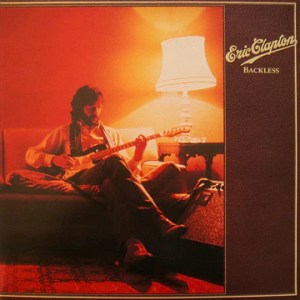
Eric Clapton – Backless

More Eric Clapton

  • You’ll find INCREDIBLE Shootout Winning Triple Plus (A+++) grades on both sides of this early British pressing – exceptionally quiet vinyl too
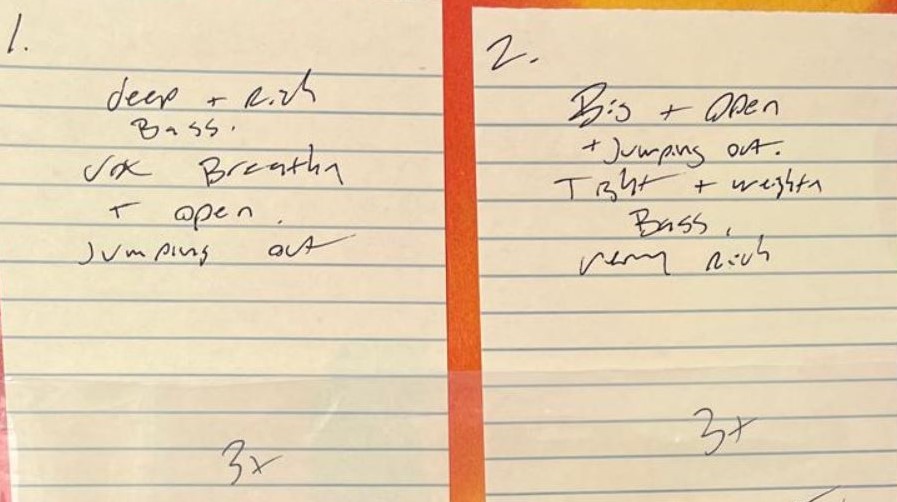
  • Here are just a few of the things we had to say about this amazing copy in our notes: “deep, rich bass”…”vox breathy and open”…”jumping out of the speakers”…”big and open”
  • Rich, smooth, clear sound throughout – listen to the grungy guitars on “Walk Out In The Rain” – that’s the way they should sound, all right
  • Clapton comes to life on the traditional blues “Early In The Morning” – it also has the best sound on the album
  • “Backless is a seductive record, if you’re attracted to the interplay of Clapton’s dolorous voice and Marcy Levy’s raspy backup vocals, George Terry’s slide guitar and Glyn Johns pristine production.” – Rolling Stone

The typical pressing of Backless, much like the typical pressing of Slowhand, is just too thick, dull, compressed and veiled to be much fun.

You need to turn this album up good and loud to get it to do anything.

The copies that are solid and weighty love getting loud; the copies that are thin and bright only get worse as the level goes up, a sign that they leave a lot to be desired. This is supposed to be a rock album after all.

UPDATE 2025

Last time around in 2023 we wrote:

We had top quality copies on both domestic and British vinyl. Both were cut here in L.A. It makes sense that either can be good.

This time around none of our domestic pressings mastered by The Mastering Lab, the ones we used to think could be good, did well in our shootout. They were boxy and hard. We probably won’t be buying them anymore. The better Brits just killed them.

Seems we got this one wrong. Live and learn is our motto, for precisely this reason. When we’re wrong we admit it, and we tell you what we think is true about the record now, reserving the right to change our minds again. All it takes is the right pressing to show us the error of our ways, and we are looking for those all the time.


(more…)