multi

We Get Letters – “You kept me from slipping off the edge and living in the zone of not knowing what I missed.”

Hot Stamper Pressings of Orchestral Spectaculars Available Now

UPDATE 2026

One of our good customers had this to say about some Hot Stampers he purchased a great many years ago when we preferred the recording of The Planets conducted by Steinberg.

We no longer sell the Steinberg recording, for the simple reason that we prefer this version of The Planets.

We wrote about it in some detail here.


Tom

I must have at least 10 versions of this music in my CD, SACD, DVD-Audio and LP collection. I am always trying to get a good one because I really like this music.

All of the recorded performances that I have are disappointing – a few are barely acceptable but nothing I really like. I have heard this work performed live four times…

Well – guess what – this White Hot Stamper 2 Pack is the best sounding LP I have ever heard – bar F’ing None. Side One absolutely took my breath away – seriously. It is ALSO better than ANY single live performance I have heard. I know that is heresy but its true.

First, the performance is unbelievable. I have never heard this conductor before but he sure knows how to do this work. The tonal quality of the Boston Symphony is fantastic. Mars, the Bringer of War is sensational and every bit as heart throbbing as I want it to ever be. Thank you VERY VERY much for this. I am embarrassed that I haggled with you over this – it is clearly worth every penny that you asked for it (gulp – even more so). I hope you will forgive me – sometimes I can be very dumb. I just never heard any classical music sound this good.

I am going to get a ton of enjoyment from this LP 2 pack for the rest of my life. My regards to Tom for discovering it. You kept me from slipping off the edge and living in the zone of not knowing what I missed.

PS – I played it ungodly loud and it was HEAVEN ON EARTH!

Regards,

John

John,

Thanks for your letter,

Tom


How Does the Heavy Vinyl Pressing of Harvest Sound?

 Hot Stamper Pressings of the Music of Neil Young Available Now

How does the Heavy Vinyl of Harvest sound?

We have no idea. We’ve never played a copy.

Actually, that’s not true. We do have an idea.

Although we’ve never auditioned the Heavy Vinyl pressing of Harvest, we have played the newly remastered After the Gold Rush. We concluded that this is a reissue series that should hold very little appeal for audiophiles. Some excerpts from our review:

We know what the good pressings of the album sound like, we play them regularly, and this newly remastered vinyl is missing almost everything that makes the album essential to any Right Thinking Music Lover’s collection.

We can summarize the sound of this awful record in one word: boring. Since some of you may want to know more than that we’ll be happy to break it down for you a bit further.

What It Does Right

It’s tonally correct.

Can’t think of anything else…

What It Does Wrong

Where to begin?

It has no real space or ambience. When you play this record it sounds as if they must have recorded it in a heavily padded studio. Somehow the originals of After the Gold Rush, like most of Neil’s classic albums from the era, are clear, open and spacious.

Cleverly the engineers responsible for this audiophile remastering have managed to reproduce the sound of a dead studio on a record that wasn’t recorded in one.

In addition, the record never gets loud. The good pressings get very loud. They rock, they’re overflowing with energy.

And, lastly, there’s no real weight to the bottom end. The whomp factor on this new pressing is practically non-existent. The low end of the originals is huge, deep and powerful.

The Bottom Line

This new Heavy Vinyl pressing is boring beyond belief (tip of the hat to Elvis Costello there). I wouldn’t give you a nickel for it. If Neil Young actually had anything to do with it he should be ashamed of himself.

If you want a good copy of the album we have them on the site from time to time. If you can’t afford our Hot Stampers, please don’t waste your money on this one. I have an old CD from 30 years ago, and it is dramatically better than this LP.

Pass / Not Yet

We think the Heavy Vinyl pressing of After the Gold Rush is so awful that whatever supporters it may have — and there are surely some who have spoken highly of it on audiophile forums somewhere, having seen the most ridiculously bad audiophile records touted again and again — are failing utterly in this hobby in one or both of the following ways.

(more…)

Listening in Depth to So Far

Hot Stamper Pressings of the Music of Crosby, Stills and Nash Available Now

This is a very difficult record to find with proper mastering (and good vinyl, ouch!). It seems that all of Crosby, Stills and Nash’s albums are that way. The average domestic pressing rarely even hints at how well recorded this band really was (and the imports are even worse — we’ve never heard one that didn’t sound dubby, veiled and compressed).

In my experience not even one out of ten LPs sounds right; I put the figure at one out of twenty. Most of them are shrill, dull, grainy, flat, opaque, harsh and in varying degrees suffer from every other mastering and pressing malady known to man.

But the best ones have some tracks in superb sound. When you hear the Hot Stampers for records like this you will simply be AMAZED. If you’ve ever heard a really good If Only I Could Remember My Name, an album that CAN be found with proper mastering, that should give you some idea of how good the first two albums can sound.

Side One

Déjà Vu

When you get a good copy of this album, this song sounds like it was lifted right off of a Hot Stamper copy of Deja Vu itself. It’s so rich and Tubey Magical you’d swear it couldn’t get any better. Huge amounts of deep bass. Acoustic guitars that ring for days. Midrange magic to die for. Not many of them sound this way, unfortunately.

If I could indulge in some more MoFi and Half-Speed bashing for a moment, the bass “solo” at the end of this song is a great test for bass definition. The notes are relatively high, and it’s easy for them to sound blurred and wooly. The MoFi, like virtually all Half-Speed mastered records, has a problem with bass definition. If you own the MoFi, listen for how clearly defined the notes are at the end of this track. Then play any other copy, either of So Far or Deja Vu. It’s a pretty safe bet that the bass will be much more articulate. I know how bad the MOFI is in this respect. Rarely do “normal” records have bass that bad.

(more…)

Our Four Plus Abbey Road Shootout Winner

Hot Stamper Pressings of Abbey Road Available Now

UPDATE 2026

This listing is from many years ago, possibly as early as 2010.

  • Our lengthy commentary entitled outliers and out-of-this-world sound talks about how rare these kinds of pressings are and how we go about finding them.
  • We no longer give Four Pluses out as a matter of policy, but that doesn’t mean we don’t come across records that deserve them from time to time.
  • Nowadays we most often place them under the general heading of breakthrough pressings. These are records that, out of nowhere, to the surprise of the listening panel, revealed to us sound of such high quality that it fundamentally changed our appreciation of the recording itself.
  • Breakthroughs often come about because the conventional wisdom we had been relying on up to that time turned out to be wrong. Regardless of how many original UK pressings of Abbey Road we might have cleaned and played, we would never have found one that sounds as good as this pressing does, simply because none of the originals ever came close to winning a shootout, and it’s very unlikely that one ever would.

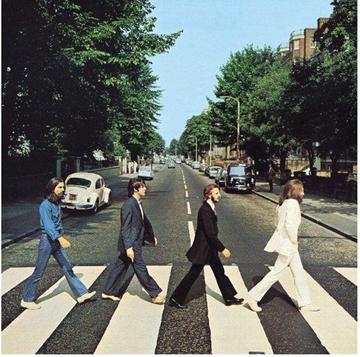
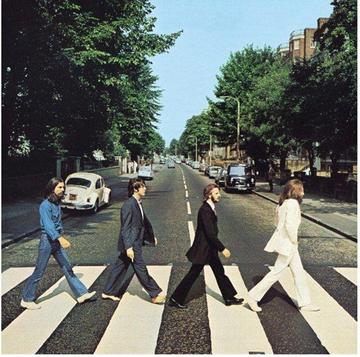
An exceptional copy of The Beatles’ last and arguably greatest album with THE BEST SIDE TWO WE HAVE EVER HEARD — QUADRUPLE PLUS (A++++)!

If you’ve heard the disastrous new pressing, then you know how important it is to play a real, vintage, analog pressing. A copy this good might just give you a new appreciation for one of the Greatest Rock Albums of All Time.  A permanent member of the Better Records Top 100, and a Desert Island Disc if ever there was one.

Abbey Road checks off a number of important boxes for us here at Better Records. Here are three for starters:

The blog you are on now as well as our website are both devoted to very special records such as these.

Abbey Road is the very definition of a big speaker album. The better pressings have the kind of ENERGY in their grooves that are sure to leave most audiophile systems begging for mercy.

This is one of the The Beatles’ many audio challenges that await you. If you don’t have a system designed to play records with this kind of sonic power, don’t expect to hear them the way the band, Geoff Emerick, George Martin and everyone else involved in the production wanted you to.

It’s clear that The Beatles albums informed not only my taste in music, but the actual stereo I play that music on. It’s what progress in audio is all about. I’ve had large scale dynamic speakers for close to five decades, precisely in order to play demanding recordings such as Abbey Road, an album I fell in love with “all those years ago.”

(more…)

Houses of the Holy on Classic Records Heavy Vinyl

We can describe the sound of this miserable Bernie Grundman remaster in two words: ridiculously bright.

Honestly, what more do you need to know? It’s almost as bad as the Zep II he cut, and that record is an abomination.

Is it the worst version of the album ever made? Hard to imagine it would have much competition.

(Oh but it does – this misbegotten series out of Japan will do nicely to illustrate how brighter is not necessarily better, it’s just brighter.)

Over the years we have done many Led Zeppelin shootouts, often including the Classic Heavy Vinyl pressings for comparison purposes. After all, these Classic LPs are what many — perhaps most — audiophiles consider superior to other pressings.

We sure don’t, but everybody else seems to. You will find very few critics of the Classic Zeps LPs outside of those who write for this blog, and even we used to recommend three of the Zep titles on Classic: Led Zeppelin I, IV and Presence.

Wrong on all counts.

We don’t actually like any of them now, although the first album is still by far the best of the bunch.

(more…)

We Was Wrong About The Beatles Magical Mystery Tour (Circa 1985-90)

Hot Stamper Pressings of the Music of The Beatles Available Now

This is a very old and somewhat embarrassing commentary about how ridiculously wrong we were about which are the best sounding German pressings of the Magical Mystery Tour.

Today we would never consider selling a record that sounds as phony as this version of the album does, but we did back in the 90s and probably as late as the 2000s.

Bad sounding records I once liked are common enough on the blog to have their own category, with 76 entries to date. If we had the time to make listings for them, there would surely be hundreds of others. If you’ve been in the audio game for as long as we have, you should have plenty of records that fit that bill. All those old records sitting on the shelves that you haven’t played in years might not sound they way you remember them, but the only way to know that is to pull them out and play them. If you’ve been making regular audio progress, most of them should sound better than ever, but there have to be plenty that won’t. You just don’t know which are which as long as they sit on the shelf.


This German pressing has sound that is dramatically different from that found on other Hot Stamper pressings of MMT we’ve had on the site. I used to be convinced that its sound was clearly superior to the regular German MMT LPs.

Back in the late 80s and into the 90s this was the pressing that I was certain blew them all out of the water.

We know better now. We call this version the “Too Hot” Stamper pressing — the upper mids and top end are much too boosted to be enjoyable on top quality equipment.

It does have some positive qualities though. It has substantially deeper bass than any other version; in fact, it has some of the deepest bass you will ever hear on a pop recording. It can literally rattle the room when Paul goes down deep on Baby You’re A Rich Man.

It also uses a slightly different mix on some tracks and is mastered differently in terms of levels. The level change is most obvious at the beginning of Strawberry Fields, where it starts out very quietly and gets louder after a short while, unlike all other versions which start out pretty much at the same level.

The effect is pleasing, you might even say powerful, but probably not what The Beatles intended, as no other copy I’ve ever heard makes use of the same quiet opening. An unknown mastering engineer made the choice, he created a new sound for the song, probably because he didn’t like all the tape hiss at the opening, during which few instruments were playing loud enough to mask it.

With this mix the record is now more of a Hi-Fi spectacular — great for waking up sleepy stereo systems but not the last word in natural sound.

Records that are boosted on the top and bottom suffer from what we like to call the smile curve. This pressing, as well as lots of records remastered to appeal to audiophiles, have a bad case of it.

(more…)

Detail on Crosby, Stills and Nash – Holy Grail or Audio Trap?

Hot Stamper Pressings of the Music of Crosby, Stills, Nash and (Sometimes) Young

Detail may be the Holy Grail to some audiophiles, but listening for the details in a recording can be a trap we too easily fall into unless we are on our guard.

Tonal balance is the key.

Without correct tonal balance, no judgments about the details of the recording have any real value. 

A case in point: As good as the Classic Heavy Vinyl pressing is, the guitar at the opening of Helplessly Hoping tells you everything you need to know about what’s missing. The guitar on the better Hot Stamper domestic copies has a transparency and harmonic integrity that cannot be found on Classic’s version.

The Classic Records pressing gets the tonal balance right, but their guitar lacks the subtlety and harmonic resolution of the real thing.

I’m laboring here to avoid the word “detail,” since many audiophiles like bright, phony sounding records because of all their wonderful detail. Patricia Barber’s albums come to mind, along with scores of audiophile pressings. 

The MoFi guys and the CD guys are constantly falling into the trap of being impressed by the phony detail in some recordings.

The solution is to get the sound tonally balanced first, then see how much detail you have left.

Detail is not the end-all and be-all of audio. Those who think it is have systems that are sure to fall apart at louder levels. If the sound of your system on your best pressings doesn’t get better as it gets louder, you are failing one of the most important tests in all of audio, the turn up your volume test.

(more…)

Listening in Depth to Abbey Road

Hot Stamper Pressings of the Music of The Beatles Available Now

Presenting another entry in our extensive listening in depth series with advice on what to listen for as you critically evaluate your copy of Abbey Road.

Here are some albums currently on our site with similar track by track breakdowns.

For all you record collectors out there, please note that no pressing from 1969 (and even for a number of years after) has ever won a shootout.

If you have an Apple UK first pressing and you think it would be hard to beat, we would love to send you one that sounds better than yours, if you can justify the kind of bread we charge for the privilege of owning a musical Masterpiece such as this.

This is the final statement from The Beatles. To take away the power of their magnum opus by playing it through inadequate equipment makes a mockery of the monumental effort that went into it. Remember, the original title for the album was Everest. That should tell you something about the size and scope of the music and sound that the Beatles had in mind. More letters, reviews and commentaries for Abbey Road can be found here.

Side One

Come Together

This track and I Want You are both good tests for side one. They tend to be smooth, but what separates the best copies is deep, punchy bass. Without a good solid bottom end, these songs simply don’t work.

Something

When the choruses get loud on this song, most copies will be aggressive. You’ll want to turn down the volume. With Hot Stampers, the louder the better. The sound stays smooth and sweet.

Maxwell’s Silver Hammer

Probably the toughest test on side one. The loud banging on the anvil can be pretty unpleasant if you don’t have a well-mastered pressing.

Also, this track has a tendency to be a bit lean and upper midrangey on even the best copies.

Oh! Darling
Octopus’s Garden
I Want You (She’s So Heavy)

Listen to Paul’s bass on this track. When you have a good copy and the bass notes are clearly defined, you can hear him doing all kinds of interesting things throughout the song. I remember playing the MoFi not long ago and noticing how that pressing’s lack of bass definition robbed Paul of his contribution to so many of these songs. When the bass is blubbery, it’s difficult to follow his parts.
Side Two

Here Comes the Sun
Because

The best pressings are full of TUBEY MAGIC here — sweet and smooth, but still present and clear. There should be no trace of grain or spi on their voices if you have a good copy. This is DEMO DISC MATERIAL. If you have the system for it, you can show people the sound of the Beatles in a way few have ever heard.

(more…)

Listening for a Bit Too Much Tubey Magic Down Low on Buffalo Springfield

Hot Stamper Pressings of Personal Favorites Available Now

Note to customers: We rarely have Hot Stamper pressings of Buffalo Springfield available on the site, so albums with Stephen Stills or Neil Young playing on them are about the best we can do these days. We regret we must go many years between shootouts for this seminal band’s albums, two of which are personal favorites of mine and have been since they were first released, 1968’s (Again) and 1969’s (Last Time Around) Thank god my older stepbrother had good taste in music. I doubt that many 14-year-olds were playing Buffalo Springfield albums, but I was, even though most of the time it was on 8-track tape.


On even the best copies I regret to say there’s a bit too much Tubey Magic in the bass. Tubbiness and bloat were par for the course. This may explain why so many copies have rolled off bass; the engineer cut the bass because he heard how tubby it was and figured no bass is better than bad bass. 

Which is just not true. Cutting the bass leans out and “modernizes” the sound, making the voices sound thinner and dryer. Less rich. This pretty much ruins everything on this album, just the way it ruins everything in many of the modern recordings I hear.

Having your bass under control on the playback side isn’t easy — in fact it’s probably the hardest thing to achieve in audio — but it can be done, and with good bass control the slightly wooly bass is just a part of the sound you learn to accept.

It doesn’t actually interfere much with your enjoyment of the music, mostly because all the other instruments and voices sounds so magical.


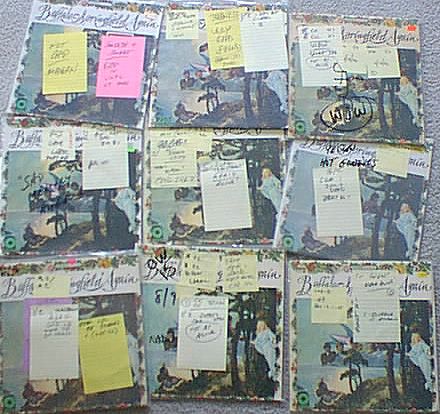
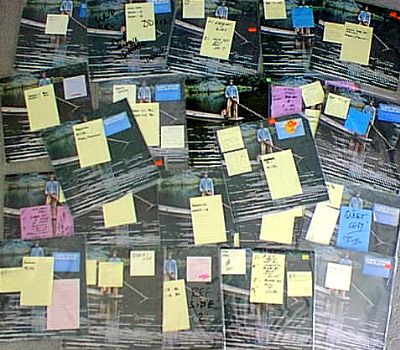
The post-it notes you see are very old, probably from the early 2000s.

Until we got our cleaning system sorted in 2007, shootouts for any of this band’s first three albums were going to be tough sledding, if not downright impossible.

In this commentary we describe what needed to change in order to make Buffalo Springfield shootouts a reality.


Want to find your own killer copy?

Consider taking our moderately helpful advice concerning the pressings that tend to win our shootouts. This album sounds its best:

(more…)

Why Do We Wait?

Hot Stampers and Audio Progress Go Hand in Hand

Practically all of our audio philosophy derives from the simple act of trying to get the stereo system to play the greatest recordings of all time with the highest fidelity possible.

For my first twenty years in audio — roughly 1975 to 1995 — I made change after change in my equipment and setup to improve the sound quality of the music I loved. It’s an article of faith we me that to get anywhere in this hobby, music must do the driving.

When I started my record business in 1987, I discovered that higher fidelity playback allowed me to do a better job of evaluating the records I was selling. By the late-90s, continuing improvements to that system were helping me to find — you guessed it — Hot Stamper pressings.


“‘How much progress shall you make?’ you ask. Just as much as you try to make. Why do you wait? Wisdom comes haphazard to no man.” — Seneca


Practicing the skills you seek to develop is the only sure way to get better at what you are trying to do.

But where have you ever seen those concepts applied to improving your own critical listening skills outside of this blog?

For those who want to improve in this devilishly difficult hobby of ours, the question that needs answering is:

What are some good ways to challenge yourself as an audiophile?

Turns out there are plenty, and they’re really not that hard. Better yet, none of them will cost you a dime.

(more…)