jonesselft

Rickie Lee Jones – Self-Titled

More of the Music of Rickie Lee Jones

  • You’ll find STUNNING Shootout Winning Triple Plus (A+++) grades or close to them on both sides of this vintage copy of Rickie Lee Jones’s debut LP
  • Exceptionally present, real and resolving, this pressing is guaranteed to murder any remastering undertaken by anyone, past, present and future
  • The superbly talented musicians and engineers deserve much of the credit for making this album a Grammy Winning Must Own audiophile favorite
  • Both of our two best sounding pressings had condition issues, as did many of the other copies we played, which we chalk up to the Warner Bros. quality control department of 1979
  • Not their finest hour, but at least they still knew how to record in rich, smooth, very real sounding analog as that decade came to a close
  • 4 stars: “One of the most impressive debuts for a singer/songwriter ever, this infectious mixture of styles not only features a strong collection of original songs but also a singer with a savvy, distinctive voice that can be streetwise, childlike, and sophisticated, sometimes all in the same song.”

This vintage Warner Brothers LP has the kind of Tubey Magical midrange that modern pressings barely BEGIN to reproduce. Folks, that sound is gone and it sure isn’t showing any sign of coming back.

(more…)

Baskets of Recordings and Facets of Reproduction

Hot Stamper Pressings of the Music of Rickie Lee Jones Available Now

Ideally you need a basket of roughly five to ten well known recordings with which to test your equipment, tweaks, room, cleaning regimen and the like.

Don’t rely on any single recording to be The Truth. None of them are. (I found this out the hard way when tweaking the setup in our new studio in 2022.)

To illustrate this idea, imagine your stereo as a huge diamond. Every recording you play is showing you a different facet of that diamond, corresponding to a different strength or weakness of your system’s reproduction.

Audiophile X will play a record and say it has bad bass. His bass reproduction is excellent when playing other recordings, so record X, which he thinks has bad bass, is clearly at fault.

If you have been in audio for very long, you should easily recognize the conclusion this person has drawn as a case of mistaken audiophile thinking. 

Audiophile Y plays the same record and says it has good bass. Assuming the record has good bass for a moment, what is in fact happening in Audiophile X’s system is that most facets of his bass are good, but some facet of his bass is bad, and this record is showing him some shortcoming in his bass reproduction that his other records are not capable of showing him. 

If Audiophile X makes some changes to his stereo, and the record in question now has better bass, and, importantly, other records still sound as good or better than they used to, then some measure of success has most likely been achieved, and another step forward has been taken on that very long and often frustrating journey that we are on.

Flaws in the Diamond

The diamond has many flaws. We find them and fix them by regular tweaking and tuning, both of which have the added benefit of improving one’s critical listening skills.

To help you improve your stereo, room, electricity and the like, we have scores of records that are good for testing a great many aspects of audio reproduction.

Rickie Lee Jones’ first album is what we would call a bad test disc, for one very simple reason:

It can sound good on a system with a great many problems. It doesn’t expose sonic flaws as much as it hides them.

Port’s Rule states: If it isn’t easy for your test discs to sound wrong, they are not very good test discs.

If you are looking for tougher test discs, we have you covered there, with more than two dozen ballbusters guaranteed to bring any stereo to its knees. If you like a challenge, and own some of these records, preferably Hot Stamper pressings you bought from us (because we know those have the right sound; we played them), we invite you to have at ’em.

(more…)

Rickie Lee Jones on Rhino Records – Not Our Idea of Good Sound, and We Hope Not Yours

Hot Stamper Pressings of the Music of Rickie Lee Jones Available Now

We were fairly unimpressed with the Rickie Lee Jones on Warners that came out a few years back [2008 in fact, time flies!].

It has that same phony modern mastering we find so unappealing on the Heavy Vinyl reissue of Blue. (We seem to be pretty much alone in not liking that one, and we’re proud to say we still don’t like it. We encourage you to play The Blue Game and maybe you’ll see why we feel the way we do.)

We liked the new Sweet Baby James Hoffman and Gray cut. We note in our review that:

Hoffman and Gray can take pride in this Sweet Baby James. It’s some of the best work I’ve heard from them to date. If more DCC and Heavy Vinyl reissues sounded like this, we wouldn’t be so critical of them. Unfortunately they don’t, and there are scores of pages of commentary on the site to back up that statement for those of you interested in the subject.

We went on to say

The amazing transparency and dynamic energy of the best originals will probably never be equaled by an audiophile pressing like this. (It hasn’t happened yet and we remain skeptical of the possibility.) Considering that this pressing is sure to beat most reissues, imports and other such like, we have no problem heartily recommending it to our customers, especially at the price.

So, What’s Wrong With Rickie Lee?

Simple. They took a somewhat artificial, hi-fi-ish, close-miked, heavy-on-the-reverb recording and made it sound even more artificial, phony and hi-fi-ish (but less-heavy-on-the-reverb; there is always a noticeable loss of resolution in these modern mastering jobs).

What were they thinking?

The best copies have warmth, richness and sweetness to balance out the more unnatural elements in the recording. Copies with these qualities are not that common, but we’ve run across plenty of them in our shootouts and proudly offered them for sale, where of course they sold quickly for lots of money. Major league audiophile appeal, this one. In its day it was heavily demo’ed in every stereo store in town, and for good reason — the sound positively jumps out of the speakers.

It’s a Trap

The average copy of this album is a sonic disaster, akin to the average copy of Famous Blue Raincoat or — gulp, even worse — Graceland. If you’re a detail freak, this Rhino pressing may be just what you are looking for. It’s got detail all right.

But all that phony detail obscures what is wrong with the sound. Overly detailed sound is a trap that is all too easy to fall into.

Plenty of recordings designed to appeal to audiophiles strike us as being phony in this way. Stan Ricker cut a lot of overly-detailed records for Mobile Fidelity in the 70s and 80s, records that may have sounded fine on the lo-rez stereos of that era (like the one I owned), but are positively painful to play on the top quality equipment that is available (but rare) today. [1]

I would hope that the audiophile community would have developed their listening skills to a level sufficient to recognize what this pressing doesn’t have — warmth, richness and sweetness — but I get the feeling I will be proved wrong yet again in that regard.

This Performance Is High?

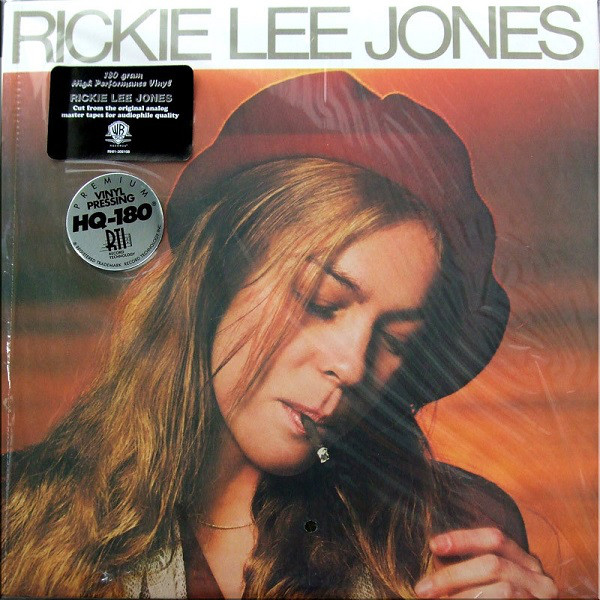
Rhino Records has really made a mockery of the analog medium. Rhino bills their releases as pressed on “180 gram High Performance Vinyl.” However, if they are using performance to refer to sound quality, we have found the performance of their vinyl to be quite low, lower than the average copy one might stumble upon in the used record bins.

The CD versions of most of the LP titles they released early on are far better sounding than the lifeless, flat, pinched, so-called audiophile pressings they released starting around 2000. The mastering engineer for this garbage actually has the nerve to feature his name in the ads for the records. He should be run out of town, not promoted as a keeper of the faith and defender of the virtues of “vinyl.”

If this is what vinyl sounds like I would switch to CD fast enough to make your head spin.

And the amazing thing is, as bad as these records are, there are people who like them. I’ve read postings on the internet from people who say the sound on these records is just fine.

Their Grateful Dead titles sound worse than the cheapest Super Saver reissue copies I have ever heard.

The Yes Album sounds like a cassette, a mere ghost of the real thing.

(more…)
Listening in Depth to Rickie Lee Jones

Hot Stamper Pressings of the Music of Rickie Lee Jones Available Now

Presenting another entry in our extensive listening in depth series with advice on what to listen for as you critically evaluate your copy of RLJ.

Here are some albums currently on our site with similar track by track breakdowns.

On the best of the Hot Stamper copies, it becomes abundantly clear just how well the string bass was recorded — assuming you like the close-miked, maximum-presence quality they were going for.

You hear all the fingering, the wood of the body resonating — all the stuff you could never hear live unless you were ten feet from the guy.

Natural it’s not, but natural is not what most hit records are all about anyway.

Credit — or blame — belongs squarely with Lee HerschbergThere’s no question that he knew exactly what he was doing, he’s the pro’s pro, so let’s give him credit for making the sound of the record really pop.

Side One

Chuck E.’s in Love

Rickie’s biggest hit is a great test track for side one. The guitars should have some twang but not too much. The typical pressing errs in one of two ways here — either they are overly smooth and lacking texture, or they are a bit bright, giving the guitars a glary, hi-fi-ish sound.

Also listen for a big room around the finger snaps. If you don’t hear a lot of ambience around them you won’t hear it on the rest of the side either.

On Saturday Afternoons in 1963

This track should sound warm, sweet, and breathy, but will almost always be plagued by a bit of surface noise behind the quiet intro.

Night Train
Young Blood
Easy Money

This song is a great test for bass definition. No MoFi ever made will have the tight bass found on the best pressings of this record.

There’s a wonderful version of this song on Lowell George’s solo album that we love every bit as much. Check it out if you have a copy.

The Last Chance Texaco

Side Two

Danny’s All-Star Joint
Coolsville

Bar none the toughest test track for side two. Only a superb copy will get all the orchestral instruments right. Listen for texture on the strings, extension on the chimes, and lots of room around the timpani. This is another track with a quiet intro that will almost always be a bit noisy.

Weasel and the White Boys Cool

Much like Chuck E.’s In Love, you’ll want to hear just the right amount of twang on those guitars. If your copy doesn’t sound punchy and lively on this track, we suggest you contact us for a Hot Stamper pressing ASAP.

Company
After Hours (Twelve Bars Past Goodnight)


Further Reading

Rickie Lee Jones – Good Demo Disc / Bad Test Disc

Hot Stamper Pressings of the Music of Rickie Lee Jones Available Now

RLJ’s first album is what we would consider a Good Demo Disc but a Bad Test Disc.

Meaning that this record can sound good on really crappy stereos — which explains why it is so often heard at stereo stores and at shows, where really crappy stereos are unusually plentiful.

But it’s not what the System Doctor ordered if the goal is to work out some problem or fault with the reproduction of all your other recordings. In other words, records like this can be misleading. 

Of course, all records have that quality to one degree or another, which is why you need to use a basket of recordings to make judgments about equipment.

Don’t rely on any given recording to be The Truth. None of them are.

Wait a minute. Perhaps I spoke too soon. (more…)

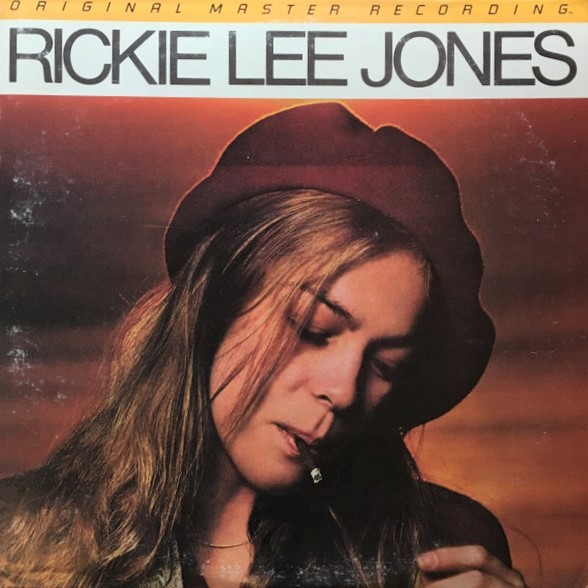
Rickie Lee Jones – MoFi Reviewed, Positively (!)

Hot Stamper Pressings of the Music of Rickie Lee Jones Available Now

Sonic Grade: B

Another MoFi LP reviewed, and this one’s pretty good for a change

The Mobile Fidelity pressing of this album can actually be pretty decent.

If you get a good one, that is. Records are records and limited editions have dramatic pressing variations just like all the other records out there in Record Land.

Audio perfection it ain’t, but all in all it’s a very enjoyable record. Its strengths are many and its faults are few. Let’s give credit where credit is due; the MoFi is dynamic, transparent, sweet, and open, and you won’t hear us saying that about very many MOFI pressings.

It belongs in their Top Ten (a list we have yet to make, for some reason we never find the time!), toward the bottom I would guess, due to its own sloppy bottom, but that’s half-speed mastering for you. Like most new audio technologies it was a giant step in the wrong direction.

We suppose you could live with the blubbery MoFi bass found on their remastered LP — most audiophiles seem more than happy to, right? — but instead, we’re happy to report that it will no longer be necessary. All our Hot Stamper copies are guaranteed to trounce it.

Our Hot Stamper of Rickie Lee Jones from Way Back in 2007

Hot Stamper Pressings of the Music of Rickie Lee Jones Available Now

We know many of you have been eagerly awaiting Hot Stamper copies of this record, a longtime audiophile favorite and Demo Disc par excellence, but frankly, we’re always a bit hesitant (some might say afraid, but I prefer hesitant, thank you very much) to take it on.

So many copies of this album sound so bad — grainy, compressed and cardboardy are the first three adjectives that spring to mind. 

And so many are noisy, having been pressed on the reground dreck that passed for new vinyl in the late ’70s. Slogging through dozens of noisy, grainy sounding copies was not going to be a day at the beach. We like the music, but could it possibly be worth it? Would the ends justify the means?

Ah, but this album was such a smash last time around we felt we owed it to our loyal following to do it again, to dig them up a copy of RLJ with the kind of AMAZING sound we knew the album could have. The late 70s produced some knockout pop records; two of the best are Rumours and Rickie Lee Jones. It was time. We rolled up our sleeves and started cleaning.

The lifting was heavy right from the start. For one thing the stamper numbers are all over the map. The stampers we used to like for this album years ago turned out to be very good, but far from the best.

We basically found ourselves starting from scratch, with no choice but to throw all the old notes out the window and begin the shootout again with open minds and fresh ears.

Designed To Pop Out Of Your Speakers

On the best of the Hot Stamper copies, it becomes abundantly clear just how well the string bass was recorded — assuming you like the close-miked, maximum-presence quality they were after. You hear all the fingering, the wood of the body resonating — all the stuff you could never hear live unless you were ten feet from the guy.

Natural it’s not, but natural is not what most hit records are all about anyway.

Let’s face it: Everything on this record is designed to “pop” out of the speakers, and everything does. The important thing is that the bass sounds just as good as everything else while still staying in correct proportion to the rest of the music.

This is not an easy thing to do. Many recordings have qualities that draw attention to themselves at the expense of the overall presentation. The mix will have an “unbalanced” quality, with some elements coming on too strong and some getting lost.

(more…)