vta-advice

When Did You First Hear that 10k Boost on Sittin’ In?

Hot Stamper Pressings of the Music of Loggins and Messina Available Now

UPDATE 2026

It took us a long time to recognize it, I can tell you that. 30 years? Maybe even more.

And how about the boost to the low end?

This commentary is from many years ago, perhaps as far back as 2010.

Of course it could not have been written until the stereo had reached the level where these anomalies and others like them could be easily recognized, the clearest kind of evidence of progress in audio.

If you’re not noticing these kinds of things on the vintage vinyl you play, then it’s probably time for a serious upgrade or two.

The anomalies are there, of that there can be no doubt. They’re everywhere. You just need a more accurate and revealing system and room to show them to you.

In that respect, you my find our shootout notes are helpful at pointing you in the right direction as to what you should be listening for. They are especially helpful in recognizing when one side or another falls short in some specific area.

(more…)

VTA – A Few Moments of Experimentation Can Really Pay Off

Basic Audio Advice — These Are the Fundamentals of Good Sound

Here we discuss what to listen for as you critically adjust your VTA.

While experimenting with the VTA for this record, we found a precise point where it all came together, far beyond whatever expectations we might have had for the sound at the time.

Practically out of nowhere we heard a solid, full-bodied, palpable violin that appeared to be floating between the speakers, an effect that, speaking for myself as a lifelong, obsessive audiophile — I fully appreciated for the magic trick that it is.

The sound of the wood of the instrument became so clear, the harmonic textures so natural, it was quite a shock to hear a good record somehow become an amazing one.

And all it took was a few moments of experimentation.

With the right VTA setting we immediately heard more harmonic detail, achieved, as is often not the case, with no sacrifice in richness.

That’s the clearest sign that your setup is right, or very close to it.

By the way, Robert Brook can get your front end tuned up and working right. We highly recommend his new service. It might just put you on the path to achieving the next level in audio. (You will definitely struggle to get there with a table, arm and cartridge that aren’t set up with a high degree of precision by a person who knows what they are doing, and Robert has been doing this work for years now.)
(more…)

Amazing Grace – A Bit of VTA Experimentation Can Really Pay Off

More Setup Advice for Turntables and Cartridges

UPDATE 2026

Although we liked it well enough, this title unfortunately did not get much love from our customers.

Years ago it was tagged here as a never again title, which simply means we would stop doing shootouts for it because they were no longer profitable. (It’s possible we could do it again, expecially if we were to get hold of an amazing sounding pressing or two, but at this point that does not seem to be in the cards, if for no other reason than we have stopped buying them altogether. Cheap records are a thing of the past and have been for quite a while now.)

We encourage you to find a nice copy for yourself. Stick with the early label. If you don’t hear the sound we describe below, you might consider buying more copies until you do, assuming you like the music.


Amazing Grace is a handy record for VTA setup, a subject we discuss below.

On the better copies Aretha’s vocals are as dynamic as any you will ever hear, and unlike all the records she did with Tom Dowd, her voice never breaks up on this record. If you have big speakers that can play at loud levels, with the right volume level you can really get Aretha to belt it out like nothing you have ever heard on record. 

Like most modern churches, the kind that have upholstered pews and lots of carpeting, the natural reverberation of the sound isn’t as pronounced as it would be were the recording taking place in a 16th century cathedral.

Note also that the recording is from 1972, not 1962, so the Tubey Magic that would have been on a recording such as this ten years earlier is not going to be as great either.

When we play a big stack of copies of a record like this, the limitations of the recording have to be taken into account.

The best copies will do what the best copies do; we can’t ask them to sound like something they were never designed to sound like.

The best copies of the album clearly sound quite a bit better than the average copy we played, but they still sound like the same recording, just bigger, richer, clearer and more alive.

To set your VTA right, don’t try to make Aretha too smooth — she should sound a bit “hot” when the spirit fills her and she shouts her loudest. If you get her to sound correct you lose a lot of space and ambience. What space and ambience there is on the tape need to be there for the recording to sound “real.”

(more…)

Can the Brightness Problem on the UHQR of Tea for the Tillerman Be Fixed?

Hot Stamper Pressings of the Music of Cat Stevens Available Now

Can adjusting the VTA for the heavier weight vinyl of the UHQR fix its tonality problems?

[This subject also came up in a discussion of the remastered pressings of Scheherzade.]

Probably not. VTA is all about balance.

Adjusting for all the elements in a recording involve tradeoffs. When all the elements sound close to their best, and none of them are “wrong,” the VTA is mostly right.

Try as you might, you cannot fix bad mastering by changing your VTA.

Tea for the Tillerman on UHQR

When I first got into the audiophile record business back in the 80s, I had a customer tell me how much he liked the UHQR of Tea for the Tillerman.

This was a record I was selling sealed for $25. And you could buy as many as you liked at that price!

I was paying $9 for them and could order them by the hundreds if I’d wanted to. Yes, I admit I had no shame.

I replied to this fellow that “the MoFi is awfully bright, don’t you think?” (My old Fulton system may have been darker than ideal, but no serious audio system can play a UHQR as bright as this one without someone noticing the paint has started to peel.)

His reply: “Oh no, you just adjust your VTA until the sound is tonally correct.”

(more…)

Orchestral Music Is the Ultimate Test for Proper Turntable-Arm-Cartridge Setup

Hot Stamper Pressings of the Music of Stravinsky Available Now

Dorati’s performance of The Firebird for Mercury is excellent for adjusting tracking weight, VTA, azimuth and the like.

A huge and powerful recording such as The Firebird quickly separates the men from the boys when it comes to the honest recreation of an orchestra performing live in a concert hall.

Recordings of this quality are the reason $10,000+ front ends exist in the first place. Just ask Robert Brook.

You don’t need to spend that kind of money to play this record, but if you do, this might just be the record that will show you what you got for all your hard-earned dough.

Ideally you would want to work your setup magic at home with this record, then take it to a friend’s house and see if the same results could be achieved on his system.

I actually did this sort of thing for years.

Sadly, not so much anymore; nobody I know can play records such as these the way we can.

Playing and critically evaluating records all day, every day, year after year, you get pretty good at it. And the more you do it, the easier it gets.


UPDATE 2025

The above was written about ten years ago. By then I had learned enough to know that all the systems my audio friends owned were woefully inadequate to the proper reproducton of sonic blockbusters such as The Firebird. They simply hadn’t spent the money on their equipment or done the tweaking and tuning work that it takes to play a magnificent recording such as this.

It was about this time that I stopped visiting them. In my experience, mediocre sound is not simply a matter of being less enjoyable than good sound. In fact, I found it to be the opposite of enjoyable. It was frustrating, irritating and unpleasant, and I wanted no part of it. My friends couldn’t hear what was wrong — they had nothing better to compare the sound to. I knew how much better it could sound because I had the killer pressings and the highly-tweaked system that were able to work magic on orchestral spectaculars like The Firebird. (More on that subject here.)

By the way, Robert Brook can get your front end tuned up and working right.

We highly recommend his new service. It might just put you on the path to achieving the next level in audio. (You will definitely struggle to get there with a table, arm and cartridge that aren’t set up with a high degree of precision by a person who knows what they are doing, and Robert has been doing this work for years now.)


Properly set VTA is especially critical on this record, as it is on most classical recordings. The smallest change will dramatically affect the timbre, texture and harmonic information of the strings, as well as all the other instruments of the symphony orchestra of course.

(more…)

Violin Concertos Are Ideal for Testing Table Setup

Hot Stamper Pressings Featuring the Violin Available Now

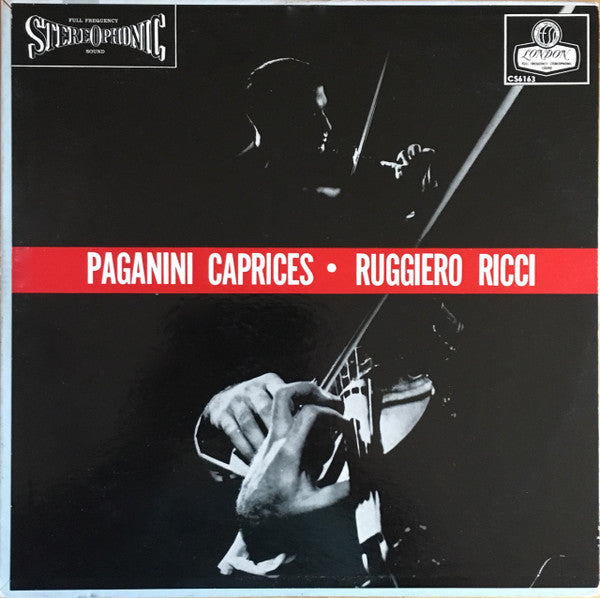
This is one of the ALL TIME GREAT violin concerto records. In Ruggiero Ricci’s hands both works are nothing short of magical. If you want to know why people drool over Golden Age recordings, listen to the violin. Careful, when you hear it you may find yourself drooling too.

The staging of the orchestra and violin is exactly the way we want to hear it in our heads. Whether it would really sound this way in a concert hall is impossible to say — concert halls all sound different — but the skill and the emotion of the playing is communicated beautifully on this LP. This is a sweetheart of a record, full of the Tubey Magic for which London recordings are justly famous.

As we noted above, engineering took place in the legendary Kingsway Hall. There is a richness to the sound of the strings that is exceptional, yet clarity and transparency are not sacrificed in the least.

VTA and the Violin

This is truly The Perfect Turntable setup disc. When your VTA, azimuth, tracking weight and anti-skate are correct, this is the record that will make it clear to you that your efforts have paid off.

What to listen for you ask? With the proper adjustment the harmonics of the strings will sound extended and correct, neither hyped up nor dull; the wood body of the instrument will be more audibly “woody”; the fingering at the neck will be noticeable but will not call attention to itself in an unnatural way. In other words, as you adjust your setup, the violin will sound more and more right.

And you can’t really know how right it can sound until you go through hours of experimentation with all the forces that affect the way the needle rides the groove. Without precise VTA adjustment there is almost no way this record will do everything it’s capable of doing. There will be hardness, smear, sourness, thinness — something will be off somewhere. With total control over your arm and cartridge setup, these problems will all but vanish. (Depending on the quality of the equipment of course.)

We harp on all aspects of reproduction for a reason. When you have done the work, records like this are nothing less than GLORIOUS.

(more…)

Lady in Satin – What It Takes to Hear It Right

Robert Brook runs a blog called The Broken Record, with a subtitle explaining that the aim of his blog is to serve as:

A GUIDE FOR THE DEDICATED ANALOG AUDIOPHILE

Here is Robert’s latest posting.

LADY IN SATIN: What it Takes to HEAR it RIGHT

Robert writes:

A few years ago, Better Records founder Tom Port told me something that I’ve never forgotten. I had just demoed my system for an industry guy, and while relaying the experience to Tom, he asked me what records I had played for him. I mentioned a few, including Charles Mingus‘s Ah Um.

Tom said (paraphrasing here) “Not a good choice. You want to play records that can only sound good one way. Ah Um can sound good a lot of different ways.”

At the time I didn’t fully understand what Tom was getting at. Ah Um, or at least the copy of it I had, always sounded great. Wasn’t it therefore a great record to demo my system with?

Since then I’ve come to understand that this was exactly Tom’s point. If you really want to show someone what your system can do, by all means, play a great sounding record, but also one that requires your turntable and your system as a whole be at their best to reproduce it.

Lately I’ve come to understand something that I feel every audiophile, analog audiophiles in particular, would do well to recognize and come to terms with. When we play a record, each of us is listening for different things, and these things are very often not the things that we should be listening for if we want to determine if our system is sounding its best.

Robert continues:

But a pretty steady diet of Ah Um for a number of years now has taught me that the right copy will sound good, even with the most basic turntable setup, and even on a system that’s not performing its best.

Meanwhile, it would seem that Lady In Satin is a record that only sounds good, great even, one way and one way only. It needs us to attend to all the little details in our system before it will reveal its magic.

(more…)

Letter of the Week – “You can’t hear the speakers; the sound fills the entire room, including the back walls.”

More Customer Letters Comparing Our Hot Stamper Pressings to Their Heavy Vinyl

One of our good customers had this to say about some Hot Stampers he purchased a while back:

Hey Tom, 

A good friend of mine came over today to take a look at my cartridge setup now that it is properly burned in. I was still getting some brightness in the right channel and we found that the cartridge was not seating properly in the groove. A few adjustments and now perfection!

My litmus test, Yes Close to the Edge now sounds absolutely unbelievable! You can’t hear the speakers; the sound fills the entire room, including the back walls.

As you stated, everyone should own a copy of this record to determine if their setup is correct.

I went through several of my hot stampers and I feel like I am in audio heaven now.

Morning Has Broken also sounds amazing; Piano definition, Cat’s voice, etc.

nother 3D sound extravaganza!

Finally, I had a chance to compare Led Zeppelin 4 (your hot stamper vs. my 200g Classic).

Before the cartridge tweaking I was hard pressed to tell the difference.

Now that the stylus is properly seated in the groove, with the Hot Stamper I can hear more detail in Jimmy’s guitar, more airiness in Robert’s voice and just an overall more listenable experience.

The entire soundstage is about 3 feet higher than the Classic version.

Well, I am spoiled again and loving it!

Thanks again,
Rob

Rob,

Glad to hear your turntable is working better. As you say, differences between Hot Stampers and Heavy Vinyl pressings are not much more obvious, and that’s a good thing. We think audiophiles should learn to do all these sorts of things for themselves, and have written about it at some length: Tuning and tweaking are essential to improving your critical listening skills.

(more…)

Helplessly Hoping to Get the VTA Right

Hot Stamper Pressings of the Music of Crosby, Stills, Nash and (Sometimes) Young

This listing from 2005 (!) contains commentary about VTA adjustment using the track Helplessly Hoping from a Hot Stamper pressing of CSN’s So Far. It would not be long before we went with the much more accurate and revealing 17D (first the 17D3, then the 17DX), which took us to another level, as documented here.

Helplessly Hoping is a wonderful song that has a lot of energy in the midrange and upper midrange which is difficult to get right. Just today (4/25/05) I was playing around with VTA, having recently installed a new Dynavector DV-20x on my playgrading table (a real sweetheart, by the way), and this song showed me EXACTLY how to get the VTA right.

VTA is all about balance.

The reason this song is so good for adjusting VTA is that the guitar at the opening is a little smooth and the harmony vocals that come in after the intro can be a little bright. Finding the balance between these two elements is key to getting the VTA adjusted properly.

When the arm is too far down in the back, the guitar at the opening will lose its transparency and become dull and thick. Too high in the back and the vocals sound thin and shrill, especially when the boys all really push their harmony. The slightest change in VTA will noticeably affect that balance and allow you to tune it in just right.

To be successful, however, there are also other conditions that need to be met. The system has to be sounding right, which in my world means good electricity, so make sure you do this in the evening or on a weekend when the electricity is better.

That’s the easy part. The hard part is that you need a good pressing that includes this song, and those don’t grow on trees.

The vast majority of CSN’s first album and the vast majority of So Far’s are junk.

Trying to get junk pressings to sound right is impossible, because they weren’t mastered right in the first place.

But if you’re one of the lucky few who has a good pressing of Helplessly Hoping, try tweaking your VTA adjustment and see if you aren’t able to dial it in even better than before.

(more…)

Speakers Corner Peer Gynt Reviewed, with Handy VTA Advice

Hot Stamper Pressings of the music of Edvard Grieg Available Now

Sonic Grade: C+

The Fjeldstad has long been one of our favorite performances of Peer Gynt here at Better Records. 

This record is handy for VTA set-up as well, a subject discussed below in our listing from 2010.

The sound is excellent for a modern reissue*, but in the loudest sections the orchestra can get to be a bit much, taking on a somewhat harsh quality. (The quieter passages are superb: sweet and spacious.)

So I adjusted the VTA a bit to see what would happen, and was surprised to find that even the slightest change in VTA caused the strings to lose practically all their rosiny texture and become unbearably smeared.

This is precisely why it’s a good heavy vinyl pressing for setting up your turntable.

If you can get the strings to play with reasonably good texture on this record you probably have your VTA set correctly.

VTA

Correct VTA adjustment for classical records (as well as all other kinds of records) is critical to their proper reproduction. If you do not have an arm that allows you to easily adjust its VTA, then you will just have to do it the hard way (which normally means loosening a set screw and moving the arm up and down until you get lucky with the right height).

Yes, it may be time consuming, it may in fact be a major pain in the ass, but there is no question in my mind that you will hear a dramatic improvement in the sound or your records once you have taken the time to correctly set the VTA, by ear, for each and every record you play.

We heard the improvement on this very record, and do on all the classical LPs (and all other kinds of records) we play.

The Big Caveat

As for the asterisk (*) above, it concerns the caveat “…for a modern reissue…” What exactly do we mean by that? Allow us to reprint what we wrote about another Heavy Vinyl classical pressing, one that we actually used to like.

(more…)