buy-the-CD

Allow Us to Make the Case that Even CDs Have Better Sound than Classic’s Vinyl

brahmvioli_1903_debunk

Hot Stamper Classical and Orchestral Pressings Available Now

The Classic reissue of LSC 1903 is a disaster: shrill, smeary and profoundly unmusical.

In these four words we can describe the sound of the average Classic Records Living Stereo pressing.

The best Heifetz records on Classic were, if memory serves, LSC 2734 (Glazunov), LSC 2603 (Bruch) and LSC 2769 (Rozsa).

They aren’t nearly as offensive as the others, and one is actually quite good. If you can pick one up for ten or twenty bucks, you might get your money’s worth depending, I suppose, on how critically you listen to your classical records.

The CDs are better for all I know. That’s probably the first place to go, considering Classic’s generally poor track record.

(more…)

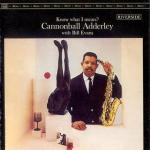
Cannonball Adderley with Bill Evans – How Does the 80’s OJC Sound?

Hot Stamper Pressings of the Music of Cannonball Adderley Available Now

This is a very old commentary about a favorite record of ours here at Better Records, one I have been selling since the late 80s, first as a sealed, in-print title for about ten bucks, and later, after learning to how to clean records and do shootouts, as Hot Stampers.

After hearing nothing that could compete with the right OJC pressing for more than a decade, we recently discovered an even better sounding pressing of the same music.

Live and learn, we say. It’s what makes record collecting fun. The future is not yet written.

George Horn was doing brilliant work for Fantasy all through the ’80s. This album is proof that his sound is the right sound for this music.

The DCC Gold CD of the album is also excellent. As with many of the better DCC CDs, it’s proof that Steve Hoffman’s sound is also the right sound for this music. I recommended that Steve consider doing the title on Gold CD — you can see my credit below — and I am glad he found it to his liking. In general, I much prefer the sound of the DCC Gold CDs to the sound of the records they released.

(more…)

When I Wrote this Years Ago I Was Being Far Too Charitable

Hot Stamper Pressings of the Music of Chet Atkins Available Now

It’s been quite a while since I played the Classic pressing, but I remember it as nothing special. Like a lot of the records put out by this label, it’s tonally fine but low-rez and lacking space, warmth and, above all, Tubey Magic.

When I wrote that years ago I was being far too charitable.

A remastered pressing of a Chet Atkins recording from 1959 that lacks Tubey Magic is one that is failing fundamentally to understand why it has any reason to exist.

The premise of the modern Heavy Vinyl pressing, as its legions of defenders constantly remind us, is to allow the listener to hear the music as it was meant to be heard — with two added bonuses: better vinyl, and affordable, non-collector prices.

(The dirty little secret of the mid-fi collector market is that affordability, not sound quality, is at the heart of it. The knock on our records is that they are expensive, but how is that relevant to the sound quality of the pressings we offer? A better sounding pressing is a better sound pressing, regardless of its price.)

These newly remastered pressings are meant to offer the music lover the opportunity to hear the true sound of the master tape. This elusive holy grail they will stop at nothing to acquire can be summed up in three words: Master Tape Sound. Or so they think.

(The fact that vanishingly few audiophiles have ever heard a master tape or would know oen if they heard one is an inconvenient truth that must not be allowed to interfere with their righteous desire to own whatever pressing purports to offer it.)

But I digress. Back to Chet Atkins in 1959. Let me sum up my position this way, with a nod to the Brits:

A Living Stereo recording that lacks Tubey Magic is one that has completely lost the plot.

(more…)

If Only I Could Remember My Name – Another in a Long Line of Classic Records’ Mediocrities

Hot Stamper Pressings of the Music of David Crosby Available Now

What do you get with our best Hot Stampers compared to the Classic Heavy Vinyl reissue?

On high quality equipment, you can expect to hear improvements in all of the following areas:

  • Noticeably more warmth,
  • Noticeably more sweetness,
  • Noticeably more delicacy,
  • Noticeably more transparency,
  • Noticeably more ambience,
  • Noticeably more energy,
  • Noticeably more size (width and height),
  • Noticeably more correct timbres (without the boost to the top and the bottom end that the Classic suffers from).

in other words, the kind of difference you almost ALWAYS get comparing the best vintage pressings with their modern remastered counterparts, if our first hand experience with thousands of them can be considered evidentiary.

The Classic is a decent enough record. I might give it a “C” or so. It’s sure better than the Super Saver reissue pressing, but that is obviously setting a very low bar. No original I have ever played did not sound noticeably better than Bernie’s recut.

A Hot Stamper of an amazing recording such as this is a MAGICAL record. Can the same be said of any Classic Records release? None come to mind.

By the way, the remastered CD that came out in 2011 (I think that’s the one I have) is excellent, with a surprising amount of the Tubey Magic that is on the original tape. On a good CD player it would be clearly superior to the Classic vinyl, and for that reason, we say buy the CD.

(more…)

Good Digital Beats Bad Analog Any Day

Hot Stamper Pressings of the Music of Sonny Rollins Available Now

And this is some very bad analog indeed!

We here present our 2010 review of the Sonny Rollins Plus 4 album, the one remastered on two slabs of 45 RPM Analogue Productions Heavy Vinyl.

It has everything going for it, right?

Steve Hoffman, Kevin Gray, 45 RPMs, Heavy Virgin Vinyl, fancy packaging — clearly no expense was spared!

The ingredients may have been there, but the cake they baked was not only not delicious, it was positively unlistenable — I mean, inedible.

I cannot recall hearing a more ridiculously thick, opaque and unnatural sounding “audiophile” pressing than this Rollins record, and believe me, I’ve heard plenty. (And it seems the bad news will never stop.)

As I noted in another commentary “Today’s audiophile seems to be making the same mistakes I was making as a budding enthusiast more than thirty forty years ago. Heavy Vinyl, the 45 RPM 2 LP pressing, the Half-Speed limited edition — aren’t these all just the latest audiophile fads, each with a track record more dismal than the last one?”

It reminds me of the turgid muck that Doug Sax was cutting for Analogue Productions back in the 90s. The CD has to sound better than this. There’s no way could it sound worse.


CD Update:

I managed to track down a copy of the CD and it DOES sound better than this awful record, and by a long shot. It’s not a great sounding CD, but it sure isn’t the disaster this record is.

Buy the CD, and whatever you do, don’t waste money on this kind of crap vinyl.


This is a very bad sounding record, so bad that one minute’s play will have you up and out of your chair trying to figure out what the hell is wrong with your system. But don’t bother. It’s not your stereo, it’s this record.

It has the power to make your perfectly enjoyable speakers sound like someone wrapped them in four inches of cotton bunting while you weren’t looking.

(more…)

West Side Story – How Does the DCC Pressing Stack Up?

Hot Stamper Pressings of the Music of Oscar Peterson Available Now

I’ve known this was a well recorded album since I first heard the excellent DCC Gold CD back in the 90s.

If you happen to own the DCC vinyl, buy the CD and find out for yourself if it doesn’t have better sound.

The vinyl will most likely be thickopaqueairless and tonally too smooth.

That is the sound their records tended to have back in those days, and at the time I bought into that mastering approach.

Over the course of the next decade I learned how foolish I had been to fall for that kind of euphonic EQ.

The better the system, the more second-rate Hoffman’s remastered vinyl releases will sound when they aren’t just terrible.

And Kevin Gray, his partner in crime, has been making a mockery of the audiophile LP for decades now.

Testing with Oscar

We write quite a bit about how good pianos are for testing your system, room, tweaks, electricity and all the rest, not to mention turntable setup and adjustment.

(more…)

Is the 1s Pressing Always the Best on the Brahms Violin Concerto with Heifetz?

Hot Stamper Pressings that Sound Their Best on the Right Reissue

This early Shaded Dog pressing of the 1958 recording has surprisingly good sound on side two. On the second side the sound opens up and is very sweet, with the violin becoming much more present and clear.

The whole of side two is transparent with an extended top. Usually the earliest Living Stereo titles suffer from a lack of top end extension, but not this one.

Maybe the 1s pressing is also that way. For some reason audiophiles tend to think that the earliest cuttings are the best, but that’s just more mistaken audiophile thinking if our experience can serve as any guide, easily refuted if you’ve played hundreds of these Living Stereo pressings and noted which stampers sound the best and which do not.

The 1s pressings do not consistently win our shootouts.

About half the time, maybe less would be my guess.

Of course, to avoid being biased, the person listening to the record doesn’t know the stamper numbers, and that may help explain why the 1s loses so often.

If you are interested in finding the best sounding pressings, you have to approach the problem scientifically, and that means running record experiments.

Practically everything you read on this blog we learned through experimentation.

When we experimented with the Classic Records pressing of LSC 1903, we were none too pleased with what we heard. Our review is reproduced below.

(more…)

The Law of Large Numbers Can Help You Find Better Records

Presenting another entry in our series of big picture observations concerning records and audio.

One of our good customers had this to say about some Hot Stampers he purchased recently:

Hey Tom,   

I’m going out of my frigging mind on this White Hot stamper of Roy Orbison Greatest Hits. What a piece of sh*t is my DCC test pressing.

Naz

Naz,

I actually used to like the DCC vinyl. I suspect you did too back in the day.

Then my stereo got a lot better, which I write about under the heading progress in audio.

Eventually it became obvious to me what was wrong with practically all of the Heavy Vinyl pressings that were put out by that label.

The good ones can be found in this group, along with other Heavy Vinyl pressings we liked or used to like.

The bad ones can be found in this group.

And those in the middle end up in this group.

Audio and record collecting (they go hand in hand) are hard. If you think either one is easy you are most likely not doing it right,, but what makes our twin hobbies compelling enough to keep us involved over the course of a lifetime is one simple fact, which is this: Although we know so little at the start, and we have so much to learn, the journey itself into the world of music and sound turns out to be not only addictive, but a great deal of fun.

Every listing in this section is about knowing now what I didn’t know then, and there is enough of that material to fill its own blog if I would simply take the time to write it all down.

Every album shootout we do is a chance to learn something new about records. When you do them all day, every day, you learn things that no one else could possibly know who hasn’t done the work of comparing thousands of pressings with thousands of other pressings.

The Law of large numbers[1] tells us that in the world of records, more is better. We’ve taken that law and turned it into a business.

It’s the only way to find Better Records.

Not the records that you think are better.

No, truly better records are the records that we proved to be better empirically, by employing rigorous scientific methodologies that we have laid out in detail for anyone to read and follow.

Being willing to make lots of mistakes is part of our secret, and we admit to making a lot of them

(more…)

Helen Humes / Songs I LIke to Sing – A Forgotten Jazz Vocal Classic

More Pop and Jazz Vocal Albums

  • With a STUNNING Shootout Winning Triple Plus (A+++) side two mated to a solid Double Plus (A++) side one, this vintage Contemporary pressing was giving us the sound we were looking for on our all time favorite Big Band Vocal album – fairly quiet vinyl too
  • Helen’s voice is perfection — breathy, full, and sweet; and the orchestra sounds just right — just listen to the nice bite of the brass
  • 5 stars: “One of the high points of Helen Humes’ career, this Contemporary set features superior songs, superb backup, and very suitable and swinging arrangements by Marty Paich. Humes’ versions of ‘If I Could Be With You,’ ‘You’re Driving Me Crazy,’ and ‘Million Dollar Secret,’ in particular, are definitive… This classic release is essential and shows just how appealing a singer Helen Humes could be.”

(more…)

Steely Dan ‎on MCA Audiophile Vinyl – Sounds Like a Good CD to Me

Hot Stamper Pressings of the Music of Steely Dan Available Now

Clean and clear and tonally correct, just like a good CD should sound.

If this is what you are after, why not just buy the CD? It’s bound to be a lot cheaper.

Some songs sound better than others, but I can’t for the life of me remember which ones. I auditioned copies of this record more than twenty thirty years ago. Once I got rid of them I never bought another. Why would I?

No doubt there are still audiophiles extolling the virtues of this record on various internet threads.

One thing you can be sure of: these are people who are not serious about making progress in audio.

Some of the pressings these audiophiles like can be found in our stone age audio record section.

If you have top quality, highly-tweaked modern equipment, a good room, and the myriad other things that make exceptionally good vinyl playback possible these days — in a way that was not possible even ten or fifteen years ago — you would have no reason to keep a record of such mediocrity in your collection.

(more…)