fix-up-and-post

How Good Are the Domestic Pressings of Days of Future Passed?

Hot Stamper Pressings of the Music of The Moody Blues Available Now

If you’ve ever done a shootout between domestic pressings of the Moody Blues and the good early imports, you know that the imports just murder the American LPs.

Domestic pressings are cut from sub-generation tapes, so they tend to sound dubby and smeary, yet strangely they’re also thinner and more transistory than the UK imports, and overall have a fraction of the Tubey Magic that make the good imports such an engaging listening experience.

Moody Blues albums on import are typically murky, congested and dull. Listening to the typical copy you’d be forgiven for blaming the band or the recording engineer for these problems. But the properly mastered copies are none of these things.

The cutting engineers who cut the pressings for the U.S. market thought they knew exactly how to fix the problem. When the album came out in America in 1968, leaner and cleaner were in and rich and tubey were out.

Of course the album is never going to have the kind of super-clean, high-rez sound some audiophiles prize, but that’s clearly not what the Moody Blues were aiming for.

It isn’t about picking out individual parts or deciphering the machinery of the recording with this band.

It’s all about lush, massive soundscapes. In our experience only the best UK pressings can give you the sound.

(more…)

Sometimes Tubey Magic Comes at a Fairly Steep Price

Living Stereo Hot Stamper Orchestral Titles Available Now

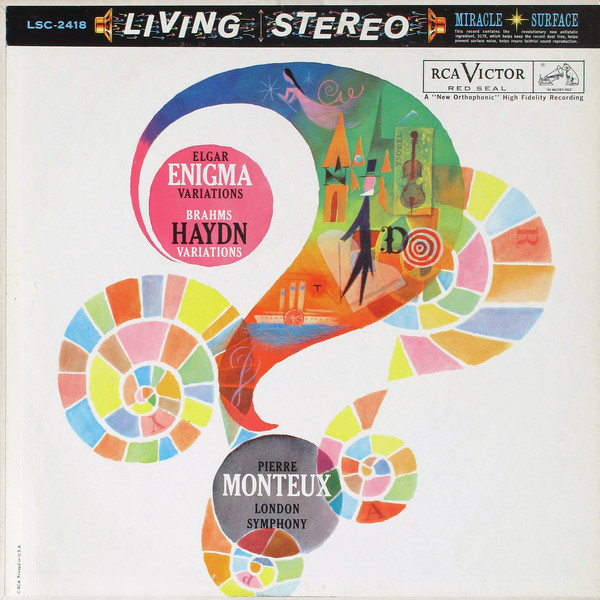
This famous Shaded Dog, containing two superb performances by Monteux and the LSO, has many of the Golden Age strengths and weaknesses we know well here at Better Records, having auditioned hundreds upon hundreds of these vintage pressings over the last twenty years or so. 

The wonderful sounding tube compressors that were used back in the day result in quieter passages that are positively swimming in ambience and low-level orchestral detail. Tube compression is often a large part of what we mean when we use the term Tubey Magic.

If you want to know what zero Tubey Magic sounds like, play some Telarcs or Reference Recordings from the 70s and 80s. Or a modern digital recording on CD.

But all that sweet and rich Tubey Magic comes at a price when it’s time for the orchestra to get loud.

It either can’t, or the louder passages simply distort from compressor overload.

Fortunately, on this copy the orchestra does not distort, it simply never gets as loud as it would in a real concert hall, clearly the lesser and more preferable of the two evils.

(more…)

Mussorgsky / Pictures At An Exhibition – A Good Record (Potentially), Not a Great One

More of the music of Modest Mussorgsky

More of the music of Benjamin Britten

This Chicago Symphony recording by RCA in 1968 has that BIG HALL SOUND we love here at Better Records.

Multi-miking is kept to a minimum, which allows the listener to visualize the orchestra from a more natural perspective than some of the other recordings of the work you may have heard. 

The sound is open and spacious, with lovely texture to the strings. The larger horns are especially well-captured here, Their dark and powerful sound, coupled with the fact that the recording is so dynamic and full-bodied, can really be quite moving. It might just send some shivers up your spine. (more…)

Breaking Through Barriers and Crossing Bridges

More on Developing Your Critical Listening Skills

The Invisible Barrier Theory

Your ability to recognize that one side of a record more often than not will have sonic qualities that are different from the other side of the same disc is limited by an invisible barrier that exists between you, in your role as listener, and you, in your role as judge of the sound.

This barrier goes by another name: “the stereo.“ There really can be no other explanation for it, assuming you have something in the range of normal hearing.

What the stereo is incapable of showing you limits what you can hear, regardless of how much money, time and effort you may have dedicated to your system, or how good a job you think it is doing.

The solution is to get better sound. Then the differences between any two sides of the same record will become as obvious to you as they are to us.

Shootouts are the best way to highlight these often subtle differences, and, as an added benefit, they are also the best way to train your ears to identify them. Once you cross that bridge, there is no going back. ALL your records will start to reveal their true selves, one side at a time.

(more…)

Suite Espanola – How Do the Remastered Pressings Sound?

Decca and London Hot Stamper Pressings Available Now

In 2011 we made the (usually pointless) effort to compare a London pressing to the 180 gram Speakers Corner reissue which we were carrying at the time. We noted simply that the Heavy Vinyl pressing “was a joke next to this copy.”

I wish I could tell you in what way it was a joke — we try to be specific about the shortcomings of these records, which is why we publish our notes for some of them — but the old notes are long gone.

Naturally, we don’t have the reissue to play this time around. Still, we are confident that the results of any comparison would be the same.

Mark Lehman in the Absolute Sound gave the ORG Heavy Vinyl remastering Five Stars, having this to say about the sound:

ORG’s 45rpm remastering is terrific (as indeed are all of the ORG vinyl reissues I’ve heard). Comparison with the late- 60s London LP on which the Suite first appeared reveals sharpened and clarified attacks and articulations, more tightly focused individual strands, fuller and warmer string choirs, more resonant brass, more pillowy air around flutes, clarinets, and oboes, and more nuance and opulence in the orchestral blends.

The total effect is to make Albeniz’s composition even more sweeping, rhapsodic, richly hued, evocative, and involving—and that’s saying something, considering how good the sonics are on this recording’s first incarnation.

If only any of this were true!

We readily admit we have never played the ORG pressing and have no plans to, but when has a Heavy Vinyl pressing ever had any of the qualities described above, let alone in such abundance?

Never in our experience, and our experience extends to more than four hundred of them.

Enough Already

Enough about records we’ve never played. Let’s discuss some of the pressings of this very recording that we actually have played, it being a favorite of ours for which we have done a number of shootouts.

The Super Analogue remaster from the 90s was awful. I would give it an F if I were grading it today.

The Speakers Corner pressing earned a B grade from us, which makes it one of the better releases on that label. I would guess that one or two out of ten would rate a B. I don’t know of any record of theirs that rates a grade higher than B.

Using letter grades, our grading system of White Hot, Super Hot and Hot would translate to something like A Plus, A and A Minus.

Which means that there is no Heavy Vinyl pressing, from any era, on any label, that should be able to beat any Hot Stamper pressing on our site, and we back that up with a 100% money back guarantee.


UPDATE 2024

Stop the presses and hold your horses.

As of 2024 we actually know of more than one Shootout Winning title pressed on modern Heavy Vinyl. You can read about one of them here.

There is another one as well and we will be writing about that one soon.

We now return you to our old commentary.

(more…)

Letter of the Week – “I’m stunned, flabbergasted, and amazed.”

Hot Stamper Pressings of the Music of Yes Available Now

One of our good customers had this to say about some Hot Stampers he purchased recently:

Hey Tom,  

Got my albums today, and I’m stunned, flabbergasted, and amazed.

I purchased a “Hot Stamper” Yes Fragile, and immediately spun Side B. For the first two minutes, listening to “Long Distance Runaround,” I sat there with jaw slack, repeatedly shouting expletives. My son finally came downstairs to see what was going on. I simply couldn’t believe my ears. I have never, ever, heard as good a recorded rendition – and I’ve heard (and owned) numerous copies over the years.I literally heard stuff I’ve never heard before – for example, in the last chorus of “Heart of the Sunrise”, I could for the first time ever clearly hear Wakeman’s Minimoog layered on top of Anderson’s vocal. I knew it was there in the front part (“Sharp…Distance”) but never knew it was there on the “How can the wind with its arms…” part. Amazing.

I’ve been doing the audiophile thing for 20 years now – exclusively analog. And for the last many years, I’ve read your website, but remained skeptical. This is my first purchase! But it most certainly won’t be my last. My only lament is that I lack the funds to buy all of the albums that I now realize I MUST have! So, THANK YOU – for your dedication to finding and making available high quality recordings; and for bringing such incredible music into my home space!!! I look forward to doing much business with you in the future!   (more…)

On Trust, the Bass Is (Almost) All

Hot Stamper Pressings of Elvis’s Albums Available Now

Notes from a Hot Stamper shootout we did quite a while back.

There’s a TON of low-end on this record. Regrettably, most copies suffer from either a lack of bass or a lack of bass definition. I can’t tell you how much you’re missing when the bass isn’t right on this album. (Or if you have the typical bass-shy audiophile speaker, yuck.) 

It’s without a doubt THE SINGLE MOST IMPORTANT ASPECT of the sound on this album. When the bass is right, everything falls into place, and the music comes powerfully to life. When the bass is lacking or ill-defined, the music seems labored; the moment-to-moment rhythmic changes in the songs blur together, and the band just doesn’t swing the way it’s supposed to.

On the best pressings, you get the full-on bottom end WHOMP you paid for, with no loss in control. You can clearly follow Bruce Thomas’s bass lines throughout the songs, a real treat for any music lover. (He and Elvis don’t get along, hence the end of the Attractions as his backing band. I guess we should be thankful for the nine albums on which they were together; many of them are Desert Island Discs for me.)

Not only that, but the drums have real body and resonance, a far cry from the wimpy cardboard drum sound you’ll hear on most copies.

Hey, these are The Attractions: the pro’s pros. You can’t ask for better, and as expected they deliver big time on this album. But the mastering and pressing problems of most British copies typically make them sound half-hearted and uninspired, which is certainly nothing like what they sound like on the master tape. On the master tape, they play GREAT. You need a very special copy of the LP to hear them play that way, and that’s all there is to it. 

The better the pressing, the better the band.

A Must Own Title

This, along with My Aim Is True and Armed Forces, is as good as it gets for Elvis on LP.

All three are absolute Must Owns that belong in any serious rock collection. This is that rare breed of music that never sounds dated (especially considering the era in which it was produced). Music with real depth such as this only gets better with the passage of time. The more you play it, the more you appreciate it, and love it.

(more…)

We Used to Think the 25th Anniversary British Pressing of Mr. Fantasy Was Pretty Good

Hot Stamper Pressings of the Music of Traffic Available Now

This is an older review. probably from the early 2000s,so take it for what it’s worth.


This minty looking Island 25th Anniversary British Import LP has SURPRISINGLY GOOD SOUND! I’d have to say it’s the best sounding record from this series I’ve ever heard. (Note that this is the British version and not the Italian one.)

I can’t vouch for other copies of this record — they may not sound as good as this one — but this one has the bass that’s missing from some of the Pink Label copies and is overall tonally Right On The Money (ROTM), with almost none of the transistory grain that you find on domestic pressings. If you don’t want to spend the big bucks for a Hot Stamper, this is probably the next best way to go.


Most of the older reviews you see on the blog are for records that did not go through the shootout process, the revolutionary approach to finding better sounding pressings we developed in the early 2000s and have since turned into an art as well as a business.

We found the records you see in these older listings by cleaning and playing a pressing or two of the album, which we then described and priced based on how good the sound and surfaces were. (For out Hot Stamper listings, the sonic grades and vinyl playgrades are listed separately.)

We were often wrong back in those days, something we have no reason to hide.

Audio equipment and record cleaning technologies have come a long way since those darker days, a subject we discuss here.

(more…)

Sgt. Peppers on Heavy Vinyl – The Reviewers from 1982 Blow It Again

beatlessgtHot Stamper Pressings of Sgt. Peppers Available Now

You might agree with some reviewers that EMI’s engineers did a pretty good job with the new Pepper.

In the March 2013 issue of Stereophile, Art Dudley weighed in, finding little to fault on this title but being less impressed with most of the others in the new box set.

His reference disc? The MoFi UHQR. Gadzooks!

Oh, and he also has some old mono pressings and a domestic Let It Be. Now there’s a man who knows his Beatles. Fanatical? Who can blame him? We’re talkin’ The Beatles for Chrissake!

When I read the reviews by writers such as these I often get the sense that I must’ve fallen through some sort of Audio Time Warp and landed back in 1982.

How is it that our so-called experts evince so little understanding of how records are made, how variable the pressings can be, and, more importantly, how absolutely crucial it is to understand and implement rigorous protocols when attempting to carry out comparisons among pressings.

Critically comparing LPs is difficult and time-consuming.

It requires highly developed listening skills that I could not possibly have had because I had no clue as to what they were or how to go about acquiring them.

I see no evidence that the audiophile reviewers of today are better at it than I was in 1982, and I was terrible.

What does one well-known reviewer have to say, keeping in mind that he’s using his original British pressing for comparison? I quote at length — without prejudice so to speak — so there can be no misunderstanding. (Emphasis added.)

(more…)

What to Listen For on The Nightfly

Hot Stamper Pressings of the Music of Donald Fagen Available Now

We just finished a big shootout for Donald Fagen’s solo effort from 1982, released just two years after Gaucho and the end of Steely Dan and we gotta tell you, there are a lot of weak sounding copies out there. We should know — we played them. 

Robert Ludwig cut all the originals we played. Are you going to tell me that every copy with RL in the dead wax sounds the same as every other copy with those initials? The question answers itself.

What to Listen For

The upper mids on certain tracks of both sides have a tendency to be brighter than we would have liked.

Ruby Baby on side one can be that way, and the title track on side two has some of the wannabe hit single radio EQ that makes it less likely to please, so to speak.

Other records with a tendency to have boosted upper mids can be found here.

On a good copy the first track of each side should be all you need to hear.

Here are hundreds other titles with specific advice on what to listen for on some of the albums we’ve played in shootouts.

If you know how to do shootouts, you know how to find good sounding records.

(more…)