milestones-in-audio

Small Speakers and Some Audio Lessons I’ve Learned Over the Last 50+ Years

These Are the Fundamentals of Good Sound

UPDATE 2026

The video linked to below is now private.

However, as you will see from our commentary, it really doesn’t make much of a difference whether it is or not. What we had to say about it years ago is nonetheless true.


Do not believe a word you hear in this video. [Not a problem!]

You probably shouldn’t even watch it. [Same.]

Let me state clearly one of our core beliefs here at Better Records.

Small speakers are incapable of lifelike musical reproduction in the home.

(more…)

We Get Letters – “That is the only CD I have ever heard that had Hot Stamper sound quality.”

Hot Stamper Pressings of the Music of The Doors Available Now

A customer wrote the following to us not long ago:

Recently I fired up my CD circuit, which does not happen very often.

Once the system was warmed up I played some MoFi gold CDs.

Nothing special, but I did like the Yes Fragile CD. Actually enjoyed it.

Guns and Roses Appetite was nasty…

Supertramp Breakfast was nasty…

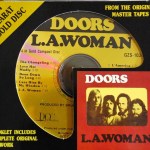
Enough of that. Then I read your blog on the Doors LA Woman DCC gold CD. Found I have it!

Played the whole thing and I wanted more of it. That is the only CD I have ever heard that had Hot Stamper sound quality.

Dear Sir,

Steve did a great job on L.A. Woman, let me be the first to say. Of course the real thing on vinyl is even better, but it’s a great way to test how good your front end is, assuming you have a killer copy of the vinyl, something that is very unlikely to be the case but something that cannot be ruled out entirely. (Tell me your stamper numbers and I will tell you if you are close.)

I worked through a lot of changes to my system in the 90s and 2000s partly because I had CDs that sounded better in some ways than my vinyl versions of them.

That never happens now, but it took me 20 years to get there!

For example, in the early 2000s this title did not sound as good as the CD until I got rid of all my tube equipment and discovered the life-changing sound of the EAR 324P, the Dynavector 17d and a lot more. The transient attack of the drums and cymbals went from “well recorded — it’s a direct to disc, what did you expect?” to suddenly sounding like real drums you might hear if you were sitting right in front of the kit in a small club.

(I recently took a trip to Nashville and had a chance to see and hear more than a dozen drum kits on the main boulevard. There seemed to be one in every club, facing inwards with the glass of the window removed to give the passers by a taste of what was in store for them inside. Standing three feet from a guy banging a drum kit is something that can teach you a lot about sound, mostly by showing you the enormous gulf that separates live sound from recorded sound in the most audiophile systems.)

That CD of The Three showed me what I had been missing — the presence, dynamics, and most importantly speed and complete freedom from smear of any kind on any instrument. It changed many of my ideas about audio in the most fundamental ways imaginable. Nothing in my audio world was the same after that.

Of the many audio breakthroughs I’ve undergone in the fifty years I’ve been pursuing audio , I might be inclined to put this one right at the top of the list.

(more…)

Getting the Electricity Right Made All the Difference in Our New Studio

Hot Stamper Pressings of the Music of Cat Stevens Available Now

In response to a customer’s letter, I wrote the following a few years back:

The vast majority of audiophiles never get to the higher levels of audio because of the compromises they make at every step in their rooms, speakers, wires and practically everything else.

For example:

  • Speakers too small,
  • Shoved up against a wall,
  • In an untreated room that
  • The family uses to watch TV in?

You can’t get very far that way.

Some of the worst off of these folks end up with a collection of crap Heavy Vinyl because their systems simply will not let them hear how much better their vintage pressings sound.

Better Electricity Made All the Difference

When we moved the business into an industrial park a few years ago, I took the opportunity to build the largest playback studio I could fit on the premises. It was 17 by 22 with a 12 foot high ceiling, with a concrete slab floor and six inch thick double drywall for walls, as well as a complicated system of dedicated electrical circuitry.

It took a surprising amount of work carried out over months to get it to sound right. Day after day we ran experiments. Most of the time it was just me. I actually like working alone. It’s not hard for me to stay focussed.

Oddly enough, what made the biggest difference was getting the electricity right: computers and cleaning machines on isolation transformers, stuff unplugged, stuff left plugged in that made the sound better, lights hooked up to batteries rather than plugged in to the main circuits, etc. 

Over the course of about two months, the sound became night and day better.

More on unplugging here.

Also, Robert Brook has done a great deal of work along these same lines, which he explains in detail here.

This kind of work is not hard for me. We’ve been doing it for decades, but we have a very big advantage over everyone else: we have good sounding records to test with.

We have Hot Stampers! The records are correct. If they sound wrong, it’s not their fault. They are almost never the problem.

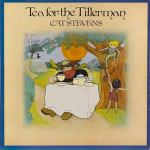
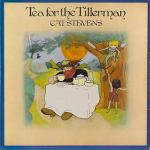
I used But I Might Die Tonight from Tea for the Tillerman for weeks and weeks. It was very difficult to get all the parts right, but in the end it was more glorious than I had ever heard it. I wrote an extensive commentary on the experience I went through which you can read all about here.

(more…)

Our Advice Has Been Followed and the Results Are In

Proper Record Cleaning Can Help You Find Your Own Hot Stamper Pressings

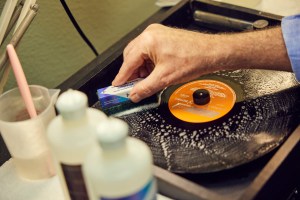
One of our customers wrote to us about cleaning his collection not long ago, and we advised him how he should go about it. He seems to have taken much our advice to heart and has quieter, better sounding records as a result. He did not spring for the pricey Keith Monks style machine we use, but felt that his efforts produced excellent results regardless. Best to hear it from him:

Hey Tom,

Just did three records, in all different conditions, and this one Eddie Palmieri, the Latin Salsa pioneer. And I had been meaning to get some famous albums in that genre, and I looked through Discogs.com and this guy wanted $40 for an album called Mozambique. Even though it looked great, it had so much noise from years of build up.

It played beautifully after all the steps. There was a huge jump in fidelity, just the tiniest, tiniest surface noise between songs. You wouldn’t notice if you weren’t listening for it.

From the other two records which had different issues, I don’t think it’s very hard to understand what else a Keith Monk type machine might add to other more difficult records, in combination with the Prelude stuff and a VPI. But for this one, and I think a lot of other records I own, the Prelude and VPI are all I needed.

I know there’s going to be a huge learning curve and I don’t expect things to be so simple. But it was just cool and kind of a treat, my first time out, to know that it’s possible.

Anyway, I just wanted to share that for what it’s worth. Thanks,

Andrew

Dear Andrew,

Glad to hear you were able to get your records cleaner and make them better sounding to boot. What could be better?

Well, there actually is an answer to that rhetorical question, and we supplied it right here on the blog in a listing with step by step instructions using the Prelude Record Cleaning System and two record cleaning machines. You asked me to write it all out so that’s what I did.

It does not surprise me in the least that you got great results with your VPI. That is the very machine we had been using since the early-90s to clean all our records. Sometime later in the decade we discovered the Disc Doctor fluids and switched to them. I wrote a long piece in my paper catalog (this was in our pre-internet days) discussing how much quieter and better sounding all of our vintage classical records sounded when cleaned with DD fluids, and that I was therefore going to reclean them all and reevaluate every last one for sound and surfaces. It was that big a difference.

In 2007, when I first heard a record cleaned with the Prelude System, everything changed radically, a story I tell using the record I was testing at the time, Meddle. It was one of the biggest breakthroughs we had experienced up to that time.

This is the kind of difference you have now heard with Prelude and your 16.5. You are operating at a different level now.

But there was more to come for us when an audio friend invited me to bring a record over that he would clean with Prelude on his Keith Monks machine. I brought over a killer copy of Meddle as I recall. Imagine my shock when it sounded even better than it had when first cleaned with Prelude. I immediately ordered up a industrial-strength threaded-pickup machine, the Odyssey, made in Germany, and started offering Hot Stamper pressings that were quieter and had better sound than I had ever heard before. (We are currently on our third unit. We clean a lot of records.)

This is leap you have yet to take. It might not make as much difference as your cleaning has to date, but, once you do it, you will find that there is a clearly audible “before and after” quality to the sound of your records. No doubt you will want to reclean all your personal favorites using Prelude and whatever Keith Monks type machine you end up with.

(more…)

The Second Best Day of My Life in Audio

Advice on Making Audio Progress

In the late-90s I had tried to power various speakers I owned with Mac 30s. I could never actually get  them to reproduce music faithfully, but they did wonderful things for some recordings.

In 2005, long after I had moved on from the Macs, I found a low-power integrated transistor amp from the 70s that was vastly superior to the custom tube preamp and amp we were using for shootouts at the time. 

It was, simply put, much more musically truthful. It sounded more like live music and less like recorded music.

It is this quality that is hardest to find in all of audio.

It is also the one quality of our system that, more than any other, makes it possible to do the kind of work we do.

Our equipment (along with our room treatments, setup, electricity and such) lets us hear the naked sound of the record being played, uncolored and unadorned.

Back to Mac

They started building them in 1954. Steve Hoffman was a big fan. We spent a fair amount of our time together tube-rolling back in the late-90s. Based on some of the recent interviews I’ve read, he appears to still be enamored with their sound.

Like the fellow who bought his first boat, buying a pair of Mac 30s was the second best day of my life, exceeded only by the day I got rid of them.

Regardless of what they might have said in their ads, they were not 99.60% perfect by any stretch of the imagination. To this day I consider them to be the most colored and inaccurate — albeit perhaps the most Tubey Magical — amp I have ever heard in my life. Having been actively involved in this hobby for more than fifty years, I regret to say that I’ve heard plenty of amps that didn’t do their jobs right.

(more…)

Sinatra At The Sands through Dahlquist DQ-10’s – My Neophyte Audiophile Mind Is Blown

Hot Stamper Pressings of the Music of Frank Sinatra Available Now

Back in the early 70s this was actually the album that first introduced me to honest-to-goodness “audiophile” sound.  

I was at my local stereo store listening to speakers one day, and the salesman made a comment that the speakers we were listening to (the old Infinity Monitors with the Walsh tweeter) sounded “boxy.”

I confessed to him that I didn’t actually know what that meant or what it would sound like if it weren’t boxy. 

So he hooked up a pair of Dahlquist DQ-10s and put Sinatra at the Sands on. I was amazed at how the sound just floated in the room, free from the speakers, presenting an image that was as wide and deep as the showroom we were in. That speaker may have many flaws, but boxiness is definitely not one of them.

This description is pretty close to what I thought I heard all those years ago:

The presence and immediacy here are staggering. Turn it up and Frank is right between your speakers, putting on the performance of a lifetime. Very few records out there offer the kind of realistic, lifelike sound you get from this pressing.

This vintage stereo LP also has the MIDRANGE MAGIC that’s missing from the later reissues. As good as some of them can be, this one is dramatically more real sounding. It gives you the sense that Frank Sinatra is right in front of you.

He’s no longer a recording — he’s a living, breathing person. We call that “the breath of life,” and this record has it in spades. His voice is so rich, sweet, and free of any artificiality, you immediately find yourself lost in the music, because there’s no “sound” to distract you.

Or so I thought at the time.

(more…)

Bob and Ray Were Not Enough – We Needed the Tillerman Too

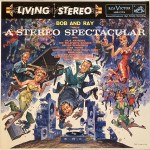
Bob and Ray Throw a Stereo Spectacular is my all time favorite test disc, the one test that every change to the system must pass: by making The Song of the Volga Boatmen sound better.

The danger in making the bulk of your sonic judgments using only one record is that you never want to optimize your system for a single record, only to find out later that it now sounds better but others you play now sound worse.

Here is the story of how I made that mistake long ago (and apparently did not learn my lesson): In 2005, I fell into a exactly this kind of audiophile trap.

The Right Way

So the right way to go about testing and tweaking is to get all your hardest test records out and start playing them, making notes as you tweak and tune your system, setup, room and whatever else you can think of.

This may take a long time, but it is time well spent when you consider that, once you are done, all — or nearly all — of your records will sound better than they did before.

In my review of the 45 RPM Tillerman, I noted the following:

Recently I was able to borrow a copy of the new 45 cutting from a customer who had rather liked it. I would have never spent my own money to hear a record put out on the Analogue Productions label, a label that has an unmitigated string of failures to its name. But for free? Count me in!

The offer of the new 45 could not have been more fortuitous. I had just spent a number of weeks playing a White Hot pink label original UK pressing in an attempt to get our new playback studio sounding right.

We had a lot of problems.

We needed to work on electrical issues.

We needed to work on our room treatments.

We needed to work on speaker placement.

We Repeated Our Mistake

(more…)

Trying to Get at the Truth with Transistors

More Entries from Tom’s Audiophile Notebook

In 2007 we did a shootout for The Four Seasons on RCA and noted the following:

For those of you with better tube gear, the string tone on this record is sublime, with that rosin-on-the-bow quality that tubes seem to bring out in a way virtually nothing else can, at least in my experience.

Our experience since 2007 has changed our view concerning the magical power of tubes to bring out the rosiny texture of bowed stringed instruments.

We have in fact changed our minds completely with respect to that rarely-questioned belief.

It’s a classic case of live and learn, and represents one of the bigger milestones in audio that we marked in 2007, a year that in hindsight turns out to have been the most important in the history of the company.

Everything changed dramatically for the better for us sometime in 2005. That’s when we discovered the transistor equipment we still use to this day.

We found a low-power integrated amp made in the 70s that was vastly superior to our custom-built tube preamp and amp. We had an EAR tube phono stage at that time, which we quite liked.


UPDATE 2025

We recently hooked up our old 834p phono stage in the system and did not like the sound at all.

Things change. Boy do they ever!


In 2007 we auditioned the EAR 324P transistor phono stage and immediately recognized it would take our analog playback to an entirely new level, one we had simply never experienced before and really had never thought could possbily exist.

(more…)

Advances in Playback Technology Are More Than Blind Faith

More of the Music of Eric Clapton

In a 2007 commentary for a Hot Stamper pressing of Blind Faith we noted that:

When it finally all comes together for such a famously compromised recording, it’s nothing less than a THRILL. More than anything else, the sound is RIGHT. Like Layla or Surrealistic Pillow, this is no Demo Disc by any stretch of the imagination, but that should hardly keep us from enjoying the music. And now we have the record that lets us do it.

The Playback Technology Umbrella

Why did it take so long? Why does it sound good now, after decades of problems? For the same reason that so many great records are only now revealing their true potential: advances in playback technology.

Audio has finally reached the point where the magic in Blind Faith’s grooves is ready to be set free.

What exactly are we referring to? Why, all the stuff we talk about endlessly around here. These are the things that really do make a difference. They change the fundamentals. They break down the barriers.

You know the drill. Things like better cleaning techniques, top quality front end equipment, Aurios, better electricity, Hallographs and other room treatments, amazing phono stages like the EAR 324p, power cables; the list goes on and on.

If you want records like Blind Faith to sound good, we don’t think it can be done without bringing to bear all of these advanced technologies to the problem at hand, the problem at hand being a recording with its full share of problems and then some.

Without these improvements, why wouldn’t Blind Faith sound as dull and distorted as it always has? The best pressings were made more than thirty years ago [thirty? make that fifty] — they’re no different.

(more…)

We Love Our Triplanar Arm as Much as Robert Brook Loves His, Which Is a Lot

One of our good customers has a blog which he calls

A GUIDE FOR THE DEDICATED ANALOG AUDIOPHILE

In the listing below, Robert Brook recommends you buy a Triplanar tonearm. So do we. If you would like one, as dealers for this wonderful arm we may be able to help, although it typically takes about a year to get one since they are handbuilt to order. Worth the wait I say!

I hope to write a bit about getting my first Triplanar back in the late-90s, a life-changing event in my evolution as an audiophile.

Once I had learned how to dial in the VTA adjustment for every record I played, I quickly discovered that I was able to operate at a completly different level.

This is a sophisticated piece of equipment with very fine adjustments for every aspect of playback. I confess it actually took me about five years to be in full control of all the ins and outs of the Triplanar. The more I experimented with the settings, the more I learned and the better I could play records.

In 2005 I made a breakthrough while working with a favorite Borodin record I had been trying and failing to get to sound right. I wrote about the hours I spent adjusting the azimuth, VTA, anti-skate and tracking weight for that record, and what dramatic improvements resulted from my efforts all those years ago.

If you don’t have an arm of this quality, or don’t know how to adjust it for every record you play, it is our belief that you have not begun to hear how good your records can sound.

The TRIPLANAR MK VII is at the PINNACLE OF PERFORMANCE


More on Robert’s system here. You may notice that it has a lot in common with the one we use.

Robert has approached the various problems he’s encountered scientifically, methodically and carefully, along these three fronts:

(more…)