my-old-system

Trying to Get at the Truth with Transistors

More Entries from Tom’s Audiophile Notebook

In 2007 we did a shootout for The Four Seasons on RCA and noted the following:

For those of you with better tube gear, the string tone on this record is sublime, with that rosin-on-the-bow quality that tubes seem to bring out in a way virtually nothing else can, at least in my experience.

Our experience since 2007 has changed our view concerning the magical power of tubes to bring out the rosiny texture of bowed stringed instruments.

We have in fact changed our minds completely with respect to that rarely-questioned belief.

It’s a classic case of live and learn, and represents one of the bigger milestones in audio that we marked in 2007, a year that in hindsight turns out to have been the most important in the history of the company.

Everything changed dramatically for the better for us sometime in 2005. That’s when we discovered the transistor equipment we still use to this day.

We found a low-power integrated amp made in the 70s that was vastly superior to our custom-built tube preamp and amp. We had an EAR tube phono stage at that time, which we quite liked.


UPDATE 2025

We recently hooked up our old 834p phono stage in the system and did not like the sound at all.

Things change. Boy do they ever!


In 2007 we auditioned the EAR 324P transistor phono stage and immediately recognized it would take our analog playback to an entirely new level, one we had simply never experienced before and really had never thought could possbily exist.

(more…)

Big Speakers and Loud Levels Bring Out the Power of the Orchestra

Hot Stamper LPs that Sound Their Best on Big Speakers at Loud Levels

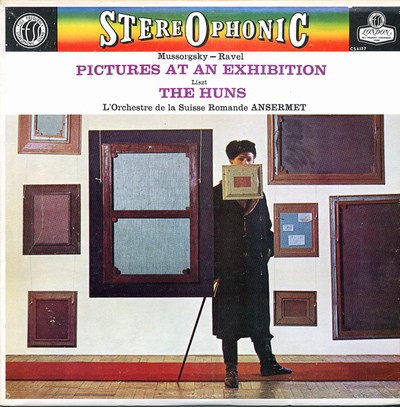
The darker brass instruments like tubas, trombones and french horns are superb here. Other Golden Age recordings of the work, as enjoyable as they may be in other respects, do not fully reproduce the weighty quality of the brass, probably due to limiting, poor eq, poor miking, or some combination of the three.

The brass on this record has a power like practically no other.

It’s also tonally correct. It’s not aggressive. It’s not irritating. It’s just immediate and powerful the way the real thing is when you hear it live. That’s what really caught my ear when I first played the recording.

There is a blast of brass at the end of Catacombs that is so big and real, it makes you forget you’re listening to a recording. You hear every brass instrument, full size, full weight. I still remember the night I was playing the album, good and loud of course, when that part of the work played through. The power of it was truly startling.

Back then I had the Legacy Whisper speaker system, the one with eight 15″ woofers. They moved air like nobody’s business. If you want to reproduce the power of the trombone, the loudest instrument in the orchestra, they’re the speaker that can do it.

Some of Ansermet’s recordings with the Suisse Romande are absolutely the best I’ve ever heard. It was a magical combination of the right hall, the right engineers, the right orchestra and the right technology — the pure tube ANALOG technology of the 50s and 60s!

Dynamics

Another thing this recording has going for it is dynamic power. This is a dynamic piece of music. Few recordings I have ever heard have the dynamic contrasts that this one does. It really gets loud when it needs to. The best pressings sound completely uncompressed. Although I’m sure there has to be compression of one kind or another, the listener is rarely made aware of it.

Dynamics such as these are thrilling. They let the music come alive.

(more…)

What I Couldn’t Hear on My 90s Tube System

Hot Stamper Pressings of Contemporary Jazz Albums Available Now

I have a very long history with Bells Are Ringing, dating back to the 90s. My friend Robert Pincus first turned me on to the CD, which, happily for all concerned, was mastered beautifully and comes highly recommended if you want to work on your digital playback or other non-analog aspects of your system such as your room, electricity, speaker placement and such like. (More recommended CDs here.)

Back in the day we often used it to test and tweak some of the stereos in my friends’ systems.

Playing the original stereo pressing, all I could hear on my 90s tube system was

  • blurred mids,
  • lack of transient attack,
  • sloppy bass,
  • lack of space and transparency,
  • and plenty of other shortcomings too numerous to mention.

All of which I simply attributed at the time to the limitations of the vintage jazz pressing I owned.

A classic case of me rather foolishly blaming the recording.

I know better now. The record was fine. I just couldn’t reproduce it.

Well, things have certainly changed. I have virtually none of the equipment I had back then, and I hear none of the problems with this copy that I heard back then. This is clearly a different LP, I sold the old one off years ago, but I have to think that much of the change in the sound was a change in cleaning, equipment, setup, tweaks and room treatments, all the stuff we prattle on about endlessly on this blog.

(more…)

DBX “Making Good Sound Better” – But Did It Really?

Please Consider Taking Some of Our Audio Advice

Yes, I actually owned a DBX device, but not the one used to restore the dynamics to records. The one I had (seen below) was a simple dynamic range expander. I later stepped up to the 3BX, seen below.

I tried to get it to make my compressed rock records sound more lively, but what I really needed was equipment that could actually reproduce the dynamics of the records I owned.

Some of the most compressed records I owned were made by Mobile Fidelity and their ilk, and there is nothing you can do for those records. The compression is baked into them like flour is baked into a cake. (More on that subject here.)

The equipment I own now is by far the most dynamic I have ever heard, and I wouldn’t want it any other way.

When I first got serious about reel to reel, I bought a Tandberg unit with no noise reduction. My stereo store in San Diego told me that the DBX noise reduction unit they offered was better than Dolby. This, I found out the hard way, was not true. The DBX pumped like crazy. I took both units back, got a Tandberg with Dolby and was reasonably happy ever after.

I think. I may have bought an outboard Dolby unit to use with my Tandberg. I remember having one. It was a very long time ago.

(more…)

My Stereo from the 70s and the Audio Cult I Was In

Basic Audio Advice – These Are the Fundamentals of Good Sound

A somewhat strange coincidence occurred not long ago. I found an old commentary describing the speakers I used to own, part of a discussion explaining why I have never wanted to settle for small speakers.

At the same time, I saw that a fellow on Audiogon was selling the electrostatic tweeter array for the very same speaker I owned, the RTR 280DR.

Let me tell you, it really took me back; I haven’t seen a pair in over twenty years. The RTR 280DR you see pictured below plays full range, but there is an optional electrostatic tweeter array that is designed to sit on top of it, which provides a radical improvement in the mids and highs. 

The sound of the 280DR with the electrostatic array was dramatically better than any speaker I had ever heard up to that time.

Here is the story from the old listing talking about the RTRs, sparked by a discussion of Demo Discs.

Fooled Again

I was duped into buying my first real audiophile speaker, Infinity Monitors, when the clever salesman played Sheffield’s S9 through them. I desperately wanted sound that incredibly real in my playback system, and so I agreed to buy them then and there.

It was only later when I got home with them that none of my other records sounded as good, or even good for that matter. That was my first exposure to a Direct to Disc recording. To this day I can still picture the room the Infinity’s were playing in; it really was a watershed moment in my audiophile life.

And of course I couldn’t wait to get rid of them once I’d heard them in my own system with my own records. I quickly traded them in for a pair of RTR 280DR’s. Now that was a great speaker! A 15 panel RTR Electrostatic array for the highs; lots of woofers and mids and even a piezo tweeter for the rest. More than 5 feet tall and well over 100 pounds each, that speaker ROCKED.

(more…)

The ARC SP3A-1 Tube Preamp – A Giant Leap Forward for Me, Circa 1975

Our Playback System (and Why You Shouldn’t Care)

A blast from the past about the single most revolutionary change I made to my system in the 70s.

In the commentary below I talk about buying the Audio Research SP3A-1 tube preamp (with built-in phono stage, as was the rule in those days). The difference it made in the ability of my system to reproduce the subtle complexities of my favorite music was completely beyond my imagination after having spent my early days listening through transistors.

Naturally, my ability to enjoy music increased dramatically as well. It wasn’t long before I was obsessed.

I was running Crown gear at the time, the DC-300 amp and the IC-150 preamp, so you can imagine that owning a state-of-the-art tube preamp was a real game changer for me.

We talk a lot about Tubey Magic on the site and on this blog. This preamp is the very definition of that sound.

Listening for Tubey Magic was simply not possible until we had electronics that could reproduce it, and the ARC equipment of that day had the best balance of Tubey Magic with clarity and freedom from smear that money could buy.

You could call my old Crown system BTM (Before Tubey Magic) and my new Audio Research-based system WTM (With Tubey Magic) if you wanted to be cute about it.

Now we provide the same life-chaning experiences to the audiophiles of the world through our Hot Stamper pressings. Better sound than they ever imagined. It’s practically our credo.

(more…)