boxy-sound

Linked here are pressings we found to have “boxy sound,” defined as sound that lacks much in the way of top and bottom, leaving a “box” for the sound in the middle.

Stick with Porky on East Side Story

More Hot Stamper Pressings We Only Offer on Import Vinyl Available Now

Porky cut the original British pressings of this Squeeze album, one of countless personal favorites of yours truly. They are records (and cassettes and CDs) I have played hundreds of times and still listen to regularly to this very day, in this case more than forty years after I purchased my first copy. (Good albums age well.)

I would have picked the record out of the bin at my local Tower Records, probably based on the radio play Tempted was getting.

That copy undoubtedly would have been domestic and made from a sub-generation tape, although I’m quite sure I could not have recognized what constituted dubby sound back then. In 1981, what I understood about the importance of different record pressings would have fit comfortably in a thimble.

I had my MoFi’s, and although I hate to admit it, that’s about as far as I had gotten in my quest for superior sounding pressings. You could add Nautilus and a few other Half-Speeds to the list of what pressing I thought were impressive, leaving plenty of room in that thimble unfilled.

Thankfully those bad old days are gone, and the music can now, finally, live and breath on the best of these imports from the UK. Of course they are the only ones we buy these days for our shootouts. The others are what are known around these parts as “mistakes.”

Sometimes the imported pressings are mastered by Porky and sometimes they are not. The ones that are not tend to have a lot of problems, as you can see from our stamper sheet below.

When Porky is not on side one, that side will tend to be hard, lean and bright. Side two of that copy had decent sound, earning a minimal Hot Stamper grade of 1.5+.

(more…)

Every Last One of These Bartok Records with Ansermet Was No Good

Hot Stamper Pressings of the Music of Bela Bartok Available Now

Every last one of our London pressings of Concerto for Orchestra was a disaster: smeary strings, blary brass and painfully shrill throughout, with no top or bottom to speak of, the very definition of boxy sound.

The entire group of CS 6086 we had on hand — whether on Blueback or Whiteback, we had a good selection of both — were much too unpleasant to be played on high quality modern equipment.

Why had I been buying them for years?

I made the mistake of assuming that the phenomenally talented Decca engineering and producing team who worked on this project could be relied upon to produce a top quality recording of the Concerto for Orchestra.

As it turns out, my guess turned out to be wrong.

I had made the mistake of believing in the infallability of experts.

I talk about the team of producers and engineers seen below in listing after listing, raving about the amazing sound of the recordings produced by them in the 50s and 60s, many of which are right at the top of the best sounding recordings I have ever had the privilege to play.

(more…)

Does Year of the Cat on Mobile Fidelity Have Audiophile Sound?

Hot Stamper Pressings of the Music of Al Stewart Available Now

Our answer, judging by the copy we played not long ago, would be solidly in the negative. The final grade we awarded both sides was No, our way of saying the record is Not Good.

Below is a description for what a top copy of the album sounds like, based on our most recent shootout:

Incredible sound throughout this vintage Janus pressing of Stewart’s 1976 Masterpiece. With engineering by Alan Parsons, the top pressings are every bit the audiophile Demo Discs you remember. The best sides have sweet vocals, huge amounts of space, breathtaking transparency, and so much more.

Tubey Magical acoustic guitar reproduction is superb on the better copies of this recording. Simply phenomenal amounts of Tubey Magic can be heard on every strum, along with richness, body and harmonic coherency that have all but disappeared from modern recordings (and especially from modern remasterings).

But if you own the wrong Mobile Fidelity pressing — this one was reissued in 1981, the original came out in 1978, so there may be some other pressings that sound better than this one — you would never know how good sounding the album can be. We put a copy we had laying around in a shootout recently and the results were, not to put too fine a point on it, pretty painful.

As the notes make clear, the Mobile Fidelity pressing, with the stampers you see on the sheet above, is:

(more…)

The “Not-So-Golden-Age” of RCA, Mercury, London and Others

Hot Stamper Pressings of Living Stereo Titles Available Now

We ran into a number of copies of this title that had what we like to call “old record sound,” which is surprisingly common on even the most revered Golden Age labels, RCA included.

No top, no real bottom, congested climaxes and a general shrillness to the sound — we’ve played Living Stereos by the dozens that have these shortcomings and many more.

Some audiophiles may be impressed by the average Shaded Dog pressing, but I can assure you that we here at Better Records are decidedly not of that persuasion.

Something in the range of five to ten per cent of the major label Golden Age recordings we play will eventually make it to the site. The vast majority just don’t sound all that good to us. (Many have second- and third-rate performances and those get tossed without ever making it to a shootout.)

The One Out of Ten Rule

If you have too many classical records taking up too much space and need to winnow them down to a more manageable size, pick a composer and play half a dozen of his works.

Most classical records display an irredeemable mediocrity right from the start. It does not take a pair of golden ears to hear it.

If you’re after the best sound, it’s the rare record that will have it, which makes clearing shelf space a lot easier than you might imagine. If you keep more than one out of ten, you’re probably setting the bar too low, if our experience is any guide.

(more…)

This London from 1961 Didn’t Make the Grade

Hot Stamper Classical and Orchestral Imports on Decca & London
1961 just happens to be one of the greatest years for high quality analog recordings. Just check out this amazing group of albums, all recorded or released that year.

This London LP was released in 1961, right in the heart of the Golden Age, so we figured it had a good chance of displaying the kind of relaxed, immersive, smooth, rich, Tubey Magical Decca sound we absolutely cannot get enough of here at Better Records.

As we were preparing to do the shootout with the six copies of CS 6202 we had amassed over the years, we suddenly ran into a big problem.

(Cue sound effect of record being scratched here.)

(more…)

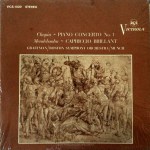
VICS-1030 Can Have Passable Sound for Chopin’s Piano Concerto No. 1

Hot Stamper Pressings of Living Stereo Recordings Available Now

Our favorite recording for performance and sound is the Living Stereo from 1961, LSC 2575, with Rubinstein at the piano and Skrowaczewski conducting the New Symphony Orchestra of London.

This Victrola pressing, VICS-1030, with Graffman performing, had good, not great sound. We’ve played them before and none of them was ever better than middling.

Some specifics we noted in the sound:

  • The piano was loud and clear, close-miked.
  • Boxy sound, could be richer
  • Orchestration not too compressed but veiled and small.
  • Not a standout performance.

A decent-enough record I suppose, but lacking in too many of the qualities our customers are looking for, especially at the prices we charge.


This is what we had to say about the sound of our Shootout Winner for LSC 2575:

We love the huge, solid and powerful sound of the piano on this recording. This piano has weight and heft. As a result, it sounds like a real piano.

For some reason, a great many Rubinstein recordings are not capable of reproducing those seemingly all-important qualities in the sound of the piano.

Those are, as I hope everyone understands by now, the ones we don’t sell. If the piano in a piano concerto recording doesn’t sound solid and powerful, what is the point of playing such a record?

Or, to be more accurate, what is the point of an audiophile playing such a record? (Those of you who would like to avoid bad sounding vintage classical and orchestral records have come to the right place. We’ve compiled a very long list of them for precisely that purpose, and we add to it regularly, a public service from your friends here at Better Records.)

(more…)

Sinatra At The Sands through Dahlquist DQ-10’s – My Neophyte Audiophile Mind Is Blown

Hot Stamper Pressings of the Music of Frank Sinatra Available Now

Back in the early 70s this was actually the album that first introduced me to honest-to-goodness “audiophile” sound.  

I was at my local stereo store listening to speakers one day, and the salesman made a comment that the speakers we were listening to (the old Infinity Monitors with the Walsh tweeter) sounded “boxy.”

I confessed to him that I didn’t actually know what that meant or what it would sound like if it weren’t boxy. 

So he hooked up a pair of Dahlquist DQ-10s and put Sinatra at the Sands on. I was amazed at how the sound just floated in the room, free from the speakers, presenting an image that was as wide and deep as the showroom we were in. That speaker may have many flaws, but boxiness is definitely not one of them.

This description is pretty close to what I thought I heard all those years ago:

The presence and immediacy here are staggering. Turn it up and Frank is right between your speakers, putting on the performance of a lifetime. Very few records out there offer the kind of realistic, lifelike sound you get from this pressing.

This vintage stereo LP also has the MIDRANGE MAGIC that’s missing from the later reissues. As good as some of them can be, this one is dramatically more real sounding. It gives you the sense that Frank Sinatra is right in front of you.

He’s no longer a recording — he’s a living, breathing person. We call that “the breath of life,” and this record has it in spades. His voice is so rich, sweet, and free of any artificiality, you immediately find yourself lost in the music, because there’s no “sound” to distract you.

Or so I thought at the time.

(more…)

The Early London Pressings Of Schubert’s 9th Are Awful

Hot Stamper Classical and Orchestral Imports on Decca & London

There are plenty of Deccas and Londons that we’ve cleaned and played over the years that were disappointing, and some of them can be found here.

What was most striking about this shootout was how poorly the original London Bluebacks (CS 6061) fared when going head to head with the best vintage reissues. In fact, they were so obviously inferior I doubt we would have even needed another pressing to know that they could not possibly be considered Hot Stampers.

The two we had were crude, flat, full of harmonic distortion, and both had clearly restricted frequency extremes.

In other words, it just sounded like an old record, and not a very good one at that. The world is full of them.

But I remember liking the Blueback pressings I played ten or twenty years ago.

Did I have better copies, or was my system not capable of showing me the shortcomings I so clearly heard this time around? Since this is a question that cannot be answered with any certainty, we’ll have to leave it there.

Our favorite performance of the work is this one with Krips and the LSO, but on a much later reissue pressing produced by Decca in the 70s. Imagine that!

(more…)

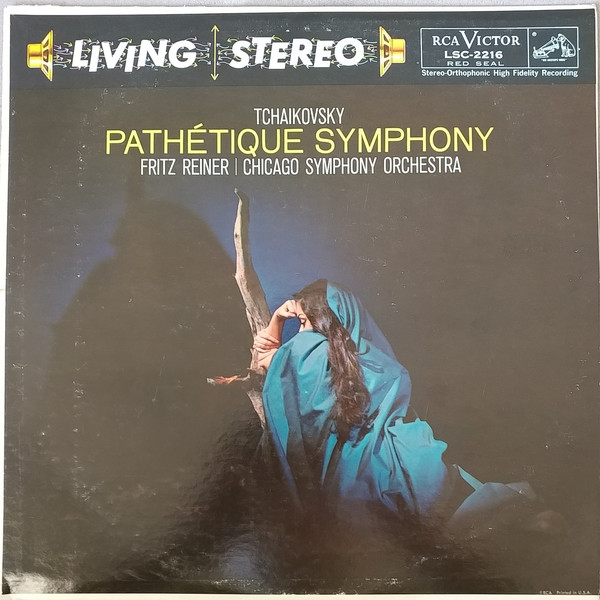
RCA Released this Awful Living Stereo Recording in 1958

Hot Stamper Pressings of the Music of Tchaikovsky Available Now

Some audiophiles buy albums based on their labels. For example, this pressing from the Golden Age of Living Stereo might appeal to a certain kind of audiophile who treasures LSC’s with the original Shaded Dog label.

More than that, he might limit himself to 1S Indianapolis pressings. Hoorah! What could be better?

However, many records from this era simply do not sound good, and this is one of them. We have never heard a good sounding copy of LSC 2216, and we’ve played quite a number of them over the decades we’ve been in the business of selling Golden Age classical records.

A copy came in just last week so I figured it was time to give it a spin and see if there was any reason to change my opinion. Hey, maybe this one had Hot Stampers! Can’t say it wouldn’t be possible. Unlikely, yes, impossible, no.

So here’s what I heard. No real top above 6k, hardly any bottom, dry and thin, but with a very wide stage – the textbook definition of “boxy sound.”

If you are a fan of Living Stereo pressings, have you noticed that many of them – this one for example – don’t sound good?

If you’re an audiophile with good equipment, you should have. But did you? Or did you buy into the hype surrounding these rare LSC pressings and just ignore the problems with the sound?

(more…)

Do All the Early Stamper Shaded Dog Pressings of this Title Sound Good?

Hot Stamper Pressings of Living Stereo Recordings Available Now

Below you will see the complete stamper sheet for a shootout we did recently.

Note that the album you see pictured — LSC 2265 — is not the record we did this particular shootout for.

We are not revealing what record had these stampers and earned these grades for the simple reason that we rarely if ever give out the specific information that identifies the best sounding pressing of any album.

As I’m sure you can understand, we want you to buy the copy with the Hottest Stampers from us, not find one on your own! We’re happy to be somwhat helpful, but naturally we find it necessary to draw the line somewhere, and giving out “the shootout winning stampers” are where we choose to draw it.

One set of stampers for the mystery Shaded Dog pressings we played in our most recent shootout sounded consistently subpar.

The sound on 3s was boxy and the violin was dry. This was surprising as the stampers are quite low: 3s/1s.

Many RCA chamber recordings can be dry, and if one owned a nice early stamper pressing of the album with boxy, dry sound, one might conclude that this RCA is just another chamber recording with those shortcomings.

But one would be wrong, because the 1s stamper shootout winner sounded amazing, not dry or boxy in the least.

How Come?

Since, as we discovered recently, 1s wins, and handily, why does 3s/1s do so much worse?

Who knows?

And why is the White Dog barely passable on side one and just awful on side two?

Your guess is as good as mine.

More of the Same

Below you will find links to other records we’ve played that had the same problems as our mystery RCA here.

(more…)