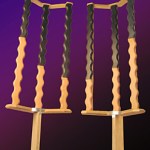
milestones-in-audio

Letter of the Week – “Nothing I’ve done has ever offered a more DEEPLY SATISFYING audio improvement than Hallographs.””

Basic Audio Advice — These Are the Fundamentals of Good Sound

Many years ago one of our good customers had this to say about the Hallographs he had purchased.

They are no longer made, but if you have a chance to get hold of a pair, take it. You may find yourself as knocked out by the sound as Dan was.

Hey Tom, 

Man, you weren’t kidding. Hallographs, utilizing a process as comprehensible to me as voodoo magic, have got to be the most AMAZING sonic upgrade ever. Hallographs allow my stereo to induce not just pleasure, but euphoria. That’s not hyperbole.

I don’t know how these tall sticks of wood, albeit expertly crafted, do whatever it is they do, but the sound emanating from my speakers reached a whole new league of sonic reproduction.

Edginess to the highs? Gone.

Bass bloat? Gone.

High volume distortion? Gone.

Meanwhile, it adds rich tones, warmth, detail, clarity, dynamics, life-like three-dimensional sound, and a wonderful ease and naturalness to the overall sound. To top it off, I’ve been able to calibrate focus and immediacy vs. soundstaging and depth. Did I mention it adds a beautifully rich tone?

That I could achieve such wonderful sound with Hallographs in my mid-sized room should be an encouragement to any of your customers who, like me, are still working their way up to a large listening room. I was worried that I might not get much out of the Hallos in the absence of a full range of placement options, and nothing could be further from the truth.

Despite the tens of thousands of dollars of stereo equipment I’ve purchased, nothing I’ve done has ever offered a more DEEPLY SATISFYING audio improvement than Hallographs. When can I get a second pair?

Dan L.

Dan,

Thanks so much for your letter. We are as enthusiastic about the Hallograph’s ability to improve the sound of the stereo as anyone, as can be seen from the photo below. Three Hallos can be seen in the picture surrounding one old man, but we actually use a total of six of them, with two in the back corners of the room behind the listener.

Discovering these room treatments around 2004 completely changed audio for me.
(more…)

Big Speakers and Loud Levels Bring Out the Power of the Orchestra

Hot Stamper LPs that Sound Their Best on Big Speakers at Loud Levels

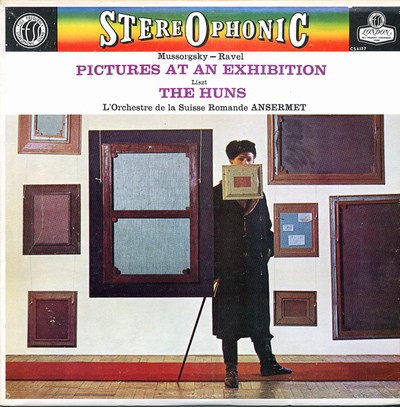
The darker brass instruments like tubas, trombones and french horns are superb here. Other Golden Age recordings of the work, as enjoyable as they may be in other respects, do not fully reproduce the weighty quality of the brass, probably due to limiting, poor eq, poor miking, or some combination of the three.

The brass on this record has a power like practically no other.

It’s also tonally correct. It’s not aggressive. It’s not irritating. It’s just immediate and powerful the way the real thing is when you hear it live. That’s what really caught my ear when I first played the recording.

There is a blast of brass at the end of Catacombs that is so big and real, it makes you forget you’re listening to a recording. You hear every brass instrument, full size, full weight. I still remember the night I was playing the album, good and loud of course, when that part of the work played through. The power of it was truly startling.

Back then I had the Legacy Whisper speaker system, the one with eight 15″ woofers. They moved air like nobody’s business. If you want to reproduce the power of the trombone, the loudest instrument in the orchestra, they’re the speaker that can do it.

Some of Ansermet’s recordings with the Suisse Romande are absolutely the best I’ve ever heard. It was a magical combination of the right hall, the right engineers, the right orchestra and the right technology — the pure tube ANALOG technology of the 50s and 60s!

Dynamics

Another thing this recording has going for it is dynamic power. This is a dynamic piece of music. Few recordings I have ever heard have the dynamic contrasts that this one does. It really gets loud when it needs to. The best pressings sound completely uncompressed. Although I’m sure there has to be compression of one kind or another, the listener is rarely made aware of it.

Dynamics such as these are thrilling. They let the music come alive.

(more…)

What I Couldn’t Hear on My 90s Tube System

Hot Stamper Pressings of Contemporary Jazz Albums Available Now

I have a very long history with Bells Are Ringing, dating back to the 90s. My friend Robert Pincus first turned me on to the CD, which, happily for all concerned, was mastered beautifully and comes highly recommended if you want to work on your digital playback or other non-analog aspects of your system such as your room, electricity, speaker placement and such like. (More recommended CDs here.)

Back in the day we often used it to test and tweak some of the stereos in my friends’ systems.

Playing the original stereo pressing, all I could hear on my 90s tube system was

  • blurred mids,
  • lack of transient attack,
  • sloppy bass,
  • lack of space and transparency,
  • and plenty of other shortcomings too numerous to mention.

All of which I simply attributed at the time to the limitations of the vintage jazz pressing I owned.

A classic case of me rather foolishly blaming the recording.

I know better now. The record was fine. I just couldn’t reproduce it.

Well, things have certainly changed. I have virtually none of the equipment I had back then, and I hear none of the problems with this copy that I heard back then. This is clearly a different LP, I sold the old one off years ago, but I have to think that much of the change in the sound was a change in cleaning, equipment, setup, tweaks and room treatments, all the stuff we prattle on about endlessly on this blog.

(more…)

Azimuth, VTA, Anti-Skate and Tracking Weight – We Got to Live Together

More Record Playback Advice

With a shout out to my man Sly!

The commentary was written in 2005.

One of the reasons this record is sounding so good today (1/12/05) is that I spent last weekend adjusting my Triplanar tonearm. The sound was bothering me somewhat, so I decided to start experimenting again with the azimuth adjustment.

I changed the azimuth in the smallest increments I could manage, which on this turntable are exceedingly small increments, until at some point the following changes became evident:

  1. The bass started to go deeper,
  2. The dynamics improved, and
  3. The tonal balance became fuller and richer.

In essence the cartridge was becoming perfectly vertical to the record.

I don’t think this can be done any other way than by ear, although I don’t know that for a fact.

Azimuth, VTA, anti-skate and tracking weight all work in combination to create the sound you hear. They are like trying to juggle four balls at the same time. They all interact with each other in mysterious ways.

This is one of the reasons why I think everyone needs to know how to set up their own front end. Nobody you could ever pay is going to put the time and effort into getting it just right. I have at least 30 or 40 and probably closer to 50 hours of set up time in this arm. [It is in the many hundreds by now.]

This is, of course, over a period of two years. But as I have played around and experimented in different ways with the setup, I have managed to tailor the sound to my taste while maintaining what I consider to be the highest levels of accuracy.

Robert Brook has some advice for those who would like to learn more about analog setup, and you can find it here.

(more…)

Revolutionary Changes in Audio – What Works for Us Can Work for You

Basic Audio Advice — These Are the Fundamentals of Good Sound

This listing, like the stereo itself (mine and yours), is a work in progress. It used to be on our website. Now it resides here on the blog.

When I first got started in audio in the early- to mid-70s, the following important elements of the modern stereo system did not exist:

  • Stand-alone phono stages.
  • Modern cabling and power cords.
  • Vibration controlling platforms for turntables and equipment.
  • Synchronous Drive Systems for turntable motors.
  • Carbon fiber mats for turntable platters.
  • Highly adjustable tonearms (for VTA, etc.) with extremely delicate adjustments and precision bearings.
  • Modern record cleaning machines and fluids.
  • And there wasn’t much in the way of innovative room treatments like the Hallographs we use.

Our reason for having this kind of commentary on a site ostensibly devoted to the selling of records is simple: the better your stereo sounds, the better our records sound, and, more importantly, the bigger the difference between our records and the copies you already own. That includes LPs recommended by “audiophile” record dealers, which tend to be on Heavy Vinyl, at 45 RPM, Half-Speed mastered or Japanese pressed.

We have no interest in any of them. Why?

On our system they rarely sound better than second-rate.

(more…)

Recent Revolutions in Audio Can Make a Huge Difference on Familiar Recordings

This White Hot Stamper Ambrosia LP from some years ago had the kind of sound you would never expect to find in the grooves of this album. It was a THRILL to hear it, especially at the volumes at which we were playing the record.

The transparency and openness were off the charts, and unmatched by any other copy in our shootout. We’re big fans of this band here at Better Records — we love their take on complex, big production arty rock.

It’s also yet another example of the value of taking part in the myriad revolutions in audio.

If you never want your prized but sonically-challenged records to sound any better than they do right now, this minute, don’t bother to learn how to clean them better, play them back better or improve the acoustics of your room.

No one can make you do any of those things. The only reason you might have for doing them is so that you can enjoy more of your favorite music with much better sound. 

Is that a good enough reason? If you’re on this site I’m guessing it is.

That’s the reason we do it. We want records like this one, which didn’t start sounding good until about 2005, and now sound much better than I ever thought they could, to keep getting better and better. Why shouldn’t they? Because some people think we’ve reached the point of diminishing returns in audio? Those people do not know what they are talking about.

(There is a reference to racing cars in the WAPO article [1] which is pure poppycock, or at least those of us who have been in audio for a long time know it is. Lap times are not a good analogy. We need to be thinking about immersive experiences being ten times more immersive for a hundred times as many recordings as was possible when I started.)

And these improvements we talk about have allowed us to enjoy records we could never fully enjoy before because they never really sounded all that good to us.

Now they do, and they will keep getting better, as more and more developments come along in all areas of analog reproduction.

(more…)

Listening in Depth to Little Queen

Hot Stamper Pressings of the Music of Heart Available Now

This is a recording that I credit with taking me to the next level of sound. When I first heard a killer Hot Stamper pressing played back through the EAR 324P phono stage at a friend’s house, I immediately called the distributor and ordered one. That was a Saturday. It arrived on the following Tuesday.

Compared to the 834P tube unit I had been using, the solid state 324P simply took the recording to a level I had no idea could possibly exist. Yet there it was.

That was 2007. Looking back now, it’s clear to me that 2007 was by far the most momentous year in the history of Better Records.

Once I had reached that higher level of playback, I set about using the album for tweaking and testing, and learned a lot doing it. Along with a substantial number of other records I have come across in my forty plus years as a hobbyist and audiophile record dealer, Little Queen is one that has done a great deal to help me become a more critical listener. [1]

Side One

Barracuda

One of the little tricks I used toward the end of my marathon Little Queen tweaking session from many years ago (which lasted more than six hours one Saturday evening, leaving me euphoric but exhausted) was to listen to the ending of Barracuda. Some of the big guitar chords at the end of the song are louder than others, and the more the differences in level among them can be heard, the better the stereo and the room must be at exposing these micro-dynamic changes.

You can’t make the guitarist play some of the notes at the end louder than others, you can only reveal the fact that he indeed must have. This is what we mean by Hi-Fidelity.

(more…)

My Stereo from the 70s and the Audio Cult I Was In

Basic Audio Advice – These Are the Fundamentals of Good Sound

A somewhat strange coincidence occurred not long ago. I found an old commentary describing the speakers I used to own, part of a discussion explaining why I have never wanted to settle for small speakers.

At the same time, I saw that a fellow on Audiogon was selling the electrostatic tweeter array for the very same speaker I owned, the RTR 280DR.

Let me tell you, it really took me back; I haven’t seen a pair in over twenty years. The RTR 280DR you see pictured below plays full range, but there is an optional electrostatic tweeter array that is designed to sit on top of it, which provides a radical improvement in the mids and highs. 

The sound of the 280DR with the electrostatic array was dramatically better than any speaker I had ever heard up to that time.

Here is the story from the old listing talking about the RTRs, sparked by a discussion of Demo Discs.

Fooled Again

I was duped into buying my first real audiophile speaker, Infinity Monitors, when the clever salesman played Sheffield’s S9 through them. I desperately wanted sound that incredibly real in my playback system, and so I agreed to buy them then and there.

It was only later when I got home with them that none of my other records sounded as good, or even good for that matter. That was my first exposure to a Direct to Disc recording. To this day I can still picture the room the Infinity’s were playing in; it really was a watershed moment in my audiophile life.

And of course I couldn’t wait to get rid of them once I’d heard them in my own system with my own records. I quickly traded them in for a pair of RTR 280DR’s. Now that was a great speaker! A 15 panel RTR Electrostatic array for the highs; lots of woofers and mids and even a piezo tweeter for the rest. More than 5 feet tall and well over 100 pounds each, that speaker ROCKED.

(more…)

The Townshend Seismic Isolation Platform Is Key to Better Orchestral Playback

Robert Brook has a blog which he calls

A GUIDE FOR THE DEDICATED ANALOG AUDIOPHILE

Below is a review Robert Brook wrote for one of our favorite tweaks. We have most — but not all — of our equipment sitting on one of these stands. We were big fans of the earlier model all the way back in the early 2000s, the kind that had three air bladders inside for isolation. You had to pump air into with a bicycle pump.

Those Cursed Bladders

The unfortunate aspect of that design was the fact that the amount of air in the bladders had a profound effect on the sound quality of the system. We would pump the thing up, and then listen, and if the sound wasn’t right we would let some air out. We would do this a couple of times, and if the sound refused to get better, we would pump the thing up and start the process all over again.

For every shootout.

The air pressure changed during the day with the heat, and the bladders did not hold air all that well, so you had to do a lot of pumping and air releasing if you wanted to get the best sound.

Crazy, huh? And that’s in combination with all the VTA adjustments that were needed for each title.

(more…)

The ARC SP3A-1 Tube Preamp – A Giant Leap Forward for Me, Circa 1975

Our Playback System (and Why You Shouldn’t Care)

A blast from the past about the single most revolutionary change I made to my system in the 70s.

In the commentary below I talk about buying the Audio Research SP3A-1 tube preamp (with built-in phono stage, as was the rule in those days). The difference it made in the ability of my system to reproduce the subtle complexities of my favorite music was completely beyond my imagination after having spent my early days listening through transistors.

Naturally, my ability to enjoy music increased dramatically as well. It wasn’t long before I was obsessed.

I was running Crown gear at the time, the DC-300 amp and the IC-150 preamp, so you can imagine that owning a state-of-the-art tube preamp was a real game changer for me.

We talk a lot about Tubey Magic on the site and on this blog. This preamp is the very definition of that sound.

Listening for Tubey Magic was simply not possible until we had electronics that could reproduce it, and the ARC equipment of that day had the best balance of Tubey Magic with clarity and freedom from smear that money could buy.

You could call my old Crown system BTM (Before Tubey Magic) and my new Audio Research-based system WTM (With Tubey Magic) if you wanted to be cute about it.

Now we provide the same life-chaning experiences to the audiophiles of the world through our Hot Stamper pressings. Better sound than they ever imagined. It’s practically our credo.

(more…)