324p

Trying to Get at the Truth with Transistors

More Entries from Tom’s Audiophile Notebook

In 2007 we did a shootout for The Four Seasons on RCA and noted the following:

For those of you with better tube gear, the string tone on this record is sublime, with that rosin-on-the-bow quality that tubes seem to bring out in a way virtually nothing else can, at least in my experience.

Our experience since 2007 has changed our view concerning the magical power of tubes to bring out the rosiny texture of bowed stringed instruments.

We have in fact changed our minds completely with respect to that rarely-questioned belief.

It’s a classic case of live and learn, and represents one of the bigger milestones in audio that we marked in 2007, a year that in hindsight turns out to have been the most important in the history of the company.

Everything changed dramatically for the better for us sometime in 2005. That’s when we discovered the transistor equipment we still use to this day.

We found a low-power integrated amp made in the 70s that was vastly superior to our custom-built tube preamp and amp. We had an EAR tube phono stage at that time, which we quite liked.


UPDATE 2025

We recently hooked up our old 834p phono stage in the system and did not like the sound at all.

Things change. Boy do they ever!


In 2007 we auditioned the EAR 324P transistor phono stage and immediately recognized it would take our analog playback to an entirely new level, one we had simply never experienced before and really had never thought could possbily exist.
(more…)

Letter of the Week – “You’ve created something really special here in Pittsburgh.”

More Letters from Customers and Critics Alike
Hi Tom,

I know you will be delighted to know that you’ve created something really special here in Pittsburgh.

Last night, Bill had us over for a listening session. Brisket tacos, Japanese whiskey, and his newest pile of White Hot Stampers. The official reason for the get-together (not that we needed any excuse) was because a work colleague of ours, David, had made an offhand remark a couple weeks ago that “vinyl doesn’t sound good.” Bill took that as a direct challenge!

The evening started with some Tidal streaming to Bill’s Chord DAC. David was selecting tracks off his iphone, and he put on The Chain. That was all Bill needed – he grabbed his White Hot Stamper of Rumours, and once the song ended, we switched over to vinyl.

Before the music even started, we could all hear the crackle and pop in the run-in groove. David commented, “see, that’s what I don’t like about vinyl.” We sat and listened to the rest of the song. The crackle of course vanished from our consciousness once the music started, or rather, it kind of hung out in a different space from where the music was. At the end, as if evaluating a fine whiskey, David offered that the bass was more clearly defined on the vinyl, less dominant and bloated, and that there were details he was hearing in the vinyl that he just hadn’t noticed in the digital. He characterized the vinyl/digital difference as, “I guess it depends on what you’re going for.”

I had brought my EAR with me. Bill swapped a few cables, and with the EAR in place, we listened to The Chain again, now utterly enraptured. I turned to David at the end, and all he said this time was, “that was fantastic.”

From there, there was no stopping us. We listened to Wish You Were Here. Tchaikovsky’s violin concerto. Rhapsody in Blue. Abraxas. All just mesmerising, room-filling sound. Once a record went on the table, it didn’t come off until the side was over.

David had brought along a stack of his dad’s records. In the pile was SRV’s Couldn’t Stand The Weather. Turns out Bill had just come across a super-clean copy in the used racks at one of our local shops. We played Tin Pan Alley back to back, first with David’s copy then Bill’s. David found out for himself that no two copies of a record sound the same. And Bill was reminded that he can’t just walk into a store, buy a Near Mint record, and expect to get something that sounds great.

(more…)

Our Playback System – And Why You Shouldn’t Care

Advice to Help You Make More Audio Progress

Below you will find a list of most of the equipment we have been using over the last twenty years or so to carry out our Hot Stamper pressing evaluations, or “shootouts” as we like to call them.

Naturally the reality of the 80/20 Rule comes into play here — 80% (probably more like 90 or 95%, truth be told) of the sound is what you do with your audio system, 20% (or 10 or 5%) of the sound is the result of the components you own.

We like to say it’s not about the audio you have, it’s about the audio you do: how you set up your system, what you’ve done to treat your room, how good your electricity is and all the rest of it.

  • Our VPI Aries (original, not the latest model) with 
  • Super Platter (no longer made) and
  • TTWeights Carbon Fiber Platter (a big upgrade, no longer made).
  • VPI Synchronous Drive System (as of 2016 now sitting on a Townshend Seismic Sink).
  • Triplanar tonearm.
  • Dynavector 17dx.
  • Aurios (no longer made), which sit on a
  • Townshend Seismic Sink (another big upgrade).
  • EAR 324p phono stage
  • We love our modified Legacy Focus speakers. Even more now that they have much improved high frequency extension courtesy of Townshend Super Tweeters.
  • Mix in extensive room treatments, aided inestimably by three pairs of Hallographs (as we like to say, there is practically no Hi-Fi without them), more than thirty years of experience and endless hours of experimentation and you have a system that can separate the winners from the losers like nobody’s business.
  • Exactly like nobody’s business, because nobody does it in this business but us. Having heard hundreds of systems over the years, it’s an open question as to whether anyone else could do what we do even if they tried.

(more…)

Revolutionary Changes in Audio – What Works for Us Can Work for You

Basic Audio Advice — These Are the Fundamentals of Good Sound

This listing, like the stereo itself (mine and yours), is a work in progress. It used to be on our website. Now it resides here on the blog.

When I first got started in audio in the early- to mid-70s, the following important elements of the modern stereo system did not exist:

  • Stand-alone phono stages.
  • Modern cabling and power cords.
  • Vibration controlling platforms for turntables and equipment.
  • Synchronous Drive Systems for turntable motors.
  • Carbon fiber mats for turntable platters.
  • Highly adjustable tonearms (for VTA, etc.) with extremely delicate adjustments and precision bearings.
  • Modern record cleaning machines and fluids.
  • And there wasn’t much in the way of innovative room treatments like the Hallographs we use.

Our reason for having this kind of commentary on a site ostensibly devoted to the selling of records is simple: the better your stereo sounds, the better our records sound, and, more importantly, the bigger the difference between our records and the copies you already own. That includes LPs recommended by “audiophile” record dealers, which tend to be on Heavy Vinyl, at 45 RPM, Half-Speed mastered or pressed in Japan.

We have no interest in any of them. Why?

On our system they rarely sound better than second-rate.

(more…)

Listening in Depth to Little Queen

Hot Stamper Pressings of the Music of Heart Available Now

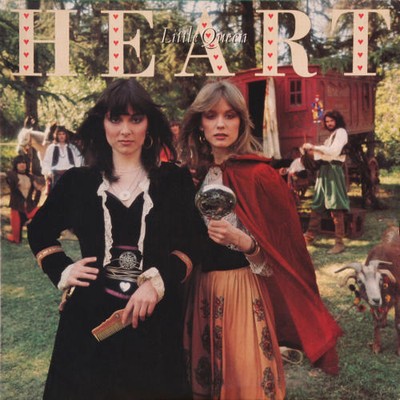
This is a recording that I credit with taking me to the next level of sound. When I first heard a killer Hot Stamper pressing played back through the EAR 324P phono stage at a friend’s house, I immediately called the distributor and ordered one. That was a Saturday. It arrived on the following Tuesday.

Compared to the 834P tube unit I had been using, the solid state 324P simply took the recording to a level I had no idea could possibly exist. Yet there it was.

That was 2007. Looking back now, it’s clear to me that 2007 was by far the most momentous year in the history of Better Records.

Once I had reached that higher level of playback, I set about using the album for tweaking and testing, and learned a lot doing it. Along with a substantial number of other records I have come across in my forty plus years as a hobbyist and audiophile record dealer, Little Queen is one that has done a great deal to help me become a more critical listener. [1]

Side One

Barracuda

One of the little tricks I used toward the end of my marathon Little Queen tweaking session from many years ago (which lasted more than six hours one Saturday evening, leaving me euphoric but exhausted) was to listen to the ending of Barracuda. Some of the big guitar chords at the end of the song are louder than others, and the more the differences in level among them can be heard, the better the stereo and the room must be at exposing these micro-dynamic changes.

You can’t make the guitarist play some of the notes at the end louder than others, you can only reveal the fact that he indeed must have. This is what we mean by Hi-Fidelity.

(more…)

It Took Us Until 2011 to Resolve the Studio Ambience on You’re Gonna Get It

More of the Music of Tom Petty

This commentary was written way back in 2011 after playing the best sounding copy of the album we had ever heard up to that point.

For those who may be interested, we offer some unsolicited audio advice toward the end of our review regarding what kind of stereo is not appropriate for Tom Petty’s albums.

Our story from 2011:

This Minty looking Shelter original LP has THE TWO BEST SOUNDING SIDES we have ever heard for this album! It’s a freak in the world of Tom Petty records, which tend to have NO good sounding sides.

And this is the band’s MASTERPIECE to boot, with four or five of their best and Hardest Rockin’ songs.

Both sides come flyin’ out of the gate with straight ahead rockers that have the Big Sound we go crazy for here at Better Records.

Side one was so unbelievable that we had to award it the rare Four Plus (A++++) rating.

Of course the sound is punchy and alive — with Hot Stampers, what else would they be? — but where did all that studio ambience come from?

Simple: the best copies have the RESOLUTION that’s missing from the average pressing. You know the kind of run-of-the-mill LP I’m talking about: punchy but crude and just a bit too aggressive to really enjoy.

Oh, but not this bad boy. Sweetly textured guitars, breathy vocals — all the subtleties of a Top Quality Recording are here, along with prodigious amounts of bass and powerful dynamics. (Check out that drum sound!)

If you can play this one good and loud you will be shocked at how good it sounds.

I’ve paraphrased a bit of commentary from Aja for this listing where we discussed the kind of changes we needed to go through here at Better Records to make it possible to play a hard-drivin’ rock record like this one and get it to sound the way we always wanted it to.

(more…)

Compare the Gold CD and the Vinyl on The Original Soundtrack

Hot Stamper Pressings of the Music of 10cc Available Now

UPDATE 2025

This commentary was written sometime around 2004 I imagine. It references my old Legacy Whisper Speaker system, which I permanently replaced with the Legacy Focus shortly thereafter.

We sold off our Whispers long ago. You can read all about what we use now to find our Hot Stamper pressings in this listing.


As good as the DCC Gold CD is, this record has all the MAGIC of ANALOG vinyl — and then some. It’s the kind of sound you will never hear coming from a CD or digital source of any kind, trust me.

If there isn’t a huge difference in sound between the Hoffman DCC gold CD and your LP, I can tell you without fear of contradiction that you:

A.) Need a better front end (turntable, arm, cart, phono stage — which of course we are happy to help you acquire) or,

B.) You have a second- or third-rate pressing of the vinyl. 


UPDATE 2023

Note that as of 2023, we offer only a few select pieces of equipment: the Dynavector 17dx, the Townshend Platform 9which you can now buy directly from them at a better price), the EAR 324p phono stage, the Triplanar tonearm and maybe one or two more. Email for details if you are interested in any of the above.


Most likely it would be a combination of the two, which, if I can say it without sounding too smug or arrogant, is the most likely scenario.

I haven’t run into too many audiophiles who own a hot copy of The Original Soundtrack, or have the kind of system that can play a record like it. As I am fond of saying, this is the kind of record that is guaranteed to bring any audiophile stereo to its knees.

The recording itself is a tour de force, one reason I’ve been demonstrating my stereo with it for more than thirty years. The extended suite that opens side one, One Night in Paris, has ambience, sound effects, and incredibly dynamic multi-tracked vocals at its climax that will make your jaw drop.

Reinventing The Wall of Sound The Right Way

This is the kind of record that makes you sit up and take notice. It’s classic 10cc everything-but-the-kitchen-sink “Wall of Sound” sound (minus the Phil Spector distortion), the kind big speaker guys like me live for. Supertramp, Yes, Ambrosia, Blood, Sweat and Tears, Zeppelin, Bowie — to this day I’m a sucker for that Cinerama-size soundstage these bands like to play on. It’s one of the reasons I am a proud owner of the Legacy Whisper speaker system, complete with its eight fifteen inch woofer driver complement. You need that kind of piston power to produce The Really Big Sound with Super Low Distortion at Very High Levels. The louder the better. (We have a pair of highly modified Focuses set up in our listening room as well. Three twelves per channel moves a fair amount of air too.)

(more…)