blame-the-recording

It’s amazing how many records that used to sound bad — or least problematical — now sound pretty darn good. 

Every one of them is proof that comments about recordings are of limited value.

The recordings don’t change. Our ability — and yours — to find, clean and play the pressings made from them does, and that’s what Hot Stampers are all about.

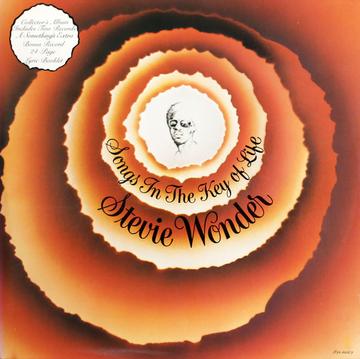
Songs in the Key of Life – Is This a Well-Engineered Album?

Hot Stamper Pressings of the Music of Stevie Wonder Available Now

UPDATE 2026

This commentary was written more than ten years ago and probably updated a bit here and there since then.

Fremer is here as reliably mistaken as ever about the sound of the records he reviews, in this case Songs in the Key of Life, but even worse, he thinks he knows things about master tapes and the qualities of specific recordings that he can’t possibly know. We simply wanted to call him out for the pernicious ideas he’s made a career out of spreading.

These ideas may comfort the mid-fi crowd who accept the mediocrities produced by this guy and all those who compete with him, but they will positively impede the progress of any audiophile who wants to reach the highest levels of playback in the home.


I’ve just gone to Fremer’s website to make sure the quote below is accurate, and everything you need to see is still up and as misguided as ever.

Some audiophiles never learn, and a great deal of this blog is devoted to helping audiophiles avoid the errors this reviewer and others like him have been making for decades. In the mid-90s I wrote my first commentary about the awful audiophile records this person had raved about in his review in one of the audiophile rags.

In the years since it seems that nothing has changed. Bad sounding audiophile pressings make up the bulk of this person’s favorable reviews to this day. Here are 157 of them.

How it is possible to spend so much time doing something, yet learn so little in the process? It is frankly beyond me.

I put the question to you again:

Is this a well-engineered album?

The first question that comes to mind is:

How on Earth could anyone possibly know such a thing?

(more…)

Letter of the Week – “…this record knocked my socks off.”

More of the Music of Neil Young

One of our good customers had this to say about some Hot Stampers he purchased recently:

Hey Tom, 

I just played your hot stamper pressing of Neil Young After the Gold Rush, and WOW! I don’t always agree with everyone else on which record pressings sound best, but this record knocked my socks off. 

No doubt about this one. I compared it to a recent German/Dutch reissue, which I remember sounding better than the crappy US pressing I previously had, and the difference was amazing. The soundstage was huge, I heard instruments playing right in front of me, dynamics were great, the bass drum on Only Love Can Break Your Heart was deep and extended, guitars were full, and so on.

I hadn’t played this record in a while mainly because it was, well, a lousy recording, which is a shame because it is one of my favorite records. I am sure I will be playing this version a lot more. Too bad for those who haven’t heard this pressing. (more…)

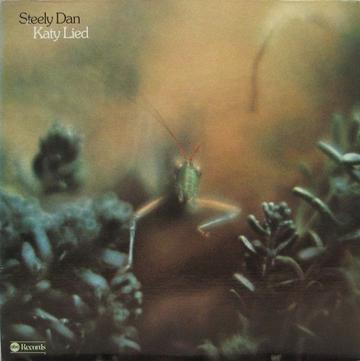
Letter of the Week – “I just figured this was just a bad recording…”

Hot Stamper Pressings of the Music of Steely Dan Available Now

This week’s letter is from our good friend Roger, who, like us, is a GIANT Steely Dan fan. Apparently he had tried every copy of Katy Lied he could get his hands on and practically had given up on the album — until he decided to shell out the princely sum of Three Hundred Clams ($300, probably not the last piaster he could borrow, but a pretty hefty chunk of dough for a fairly common used LP from 1975) to Better Records, with the hope that we might actually find a way to put him in touch with the real Dr. Wu.

Let’s just say it seems that Roger got his money’s worth — and maybe a little more.

The title of his letter is: 

Katy Lied? Are you sure?

I tried your Hot Stamper Steely Dan Katy Lied. You gotta be kidding me. Are you sure this is the same recording? I remember your saying that this one is your favorite SD record and I could never understand why, at least until I heard this secret recording. Other than the HS copy you basically had a choice between the dull and lifeless bland US pressing, or the Mobile Fidelity version, which has those indescribable phasey, disembodied instruments and voices that sound unmusical to me.

I even tried British and Japanese pressings with no luck. I just figured this was just a bad recording, which made sense in light of all the press about the problems during the recording and mixing sessions, and I don’t think I bothered to listen to it again for at least the past 5 years.

But wow, this is clearly in another league. The voices and instruments are in three dimensions, the bass and dynamics are far far better, the saxes are up-front and breathy. I couldn’t believe how good Daddy Don’t Live in that New York City No More and Chain Lightning sounded. Even my subwoofer that I roll off at 30Hz got a good workout. It sounds like live music. So how did you sneak your tape recorder into the studio sessions, anyway?

Roger, we’re so happy to know that your love for Katy Lied has finally been requited after all these years. The reason we go on for days about the sound of practically every track on the album is that we love it just as much as you do.

We struggled ourselves from one bad pressing to another. Eventually, with better cleaning fluids, better equipment and tons of pressings at our disposal, we broke through the Bad ABC Pressing Barrier and discovered the copies that had the real Katy Lied Magic.

We Are Heartened

Everything you said was true. We are especially heartened by the fact that you cited Chain Lightning as a high point of the album we sent you. Your copy, earning a grade of A+ for side two, was a couple of steps down from the best — but it still sounds great! You don’t have to buy the Ultimate Copy to get sound that beats the pants off any “audiophile” pressing, any import, any anything, man.

It’s Not About The Money

You and I both know it’s not about the three hundred bucks. It’s about some of the best music these guys ever made. It’s about their ambitious yet problem-plagued recording surviving the record label’s mass-production-on-the-cheap, opting to stamp the sound on a slice of not-particularly-good vinyl. It’s about the search for that rare pressing with the kind of sound that conveys the richness and sophistication of Becker and Fagen’s music, music that I’ve been listening to since 1975 and do not expect to tire of any time soon (so far so good: as of 2013 this is still my favorite Dan album). [Still true as of 2022.]

So what if it took thirty years to finally get hold of a good one? With a little luck we’ll both be listening to this album for another thirty years, and that works out to the very un-princely sum of ten bucks a year.

I wish I could have sneaked a tape recorder into the studio. I sure wouldn’t have gone in for that crazy DBX Noise Reduction system they used. That alone would have saved us all a decade or two of suffering (unless you like the sound of two trash can lids crashing into each other).

(more…)
Years Ago We Badly Misjudged the Recording Quality of Tull’s Debut

Hot Stamper Pressings of the Music of Jethro Tull Available Now

A clear case of live and learn.

We listed a White Hot copy of This Was in 2008 on the Island pink label and noted at the time:

Be forewarned: this ain’t Stand Up or Aqualung. I don’t think you’ll be using any copy of This Was to demo your stereo, because the recording has its share of problems. That said, this record sounds wonderful from start to finish and will make any fan of this music a VERY happy person. We guarantee you’ve never heard this album sound better, or your money back.

Now we know a couple of things that we didn’t back in 2008.

1). This album is a lot better sounding than we gave it credit for years ago. It’s not perfect by any means but it is much better than the above comments might lead you to believe.

We chanced upon an exceptional sounding copy of the album in 2017 or so, and that taught us something new about the record:

2). The Pink Label pressings are not the best way to go on this album.

Once we heard the exceptional copy alluded to above, we played it against our best Pink Label copies and it was simply no contest.

In 2008 we still had a lot to learn. We needed to do more research and development, which of course we are doing regularly with Classic Rock records, our bread and butter and the heart of our business.

We do them as often as is practical, considering how difficult it is to find copies with audiophile quality playing surfaces.

Nine years later, we felt we finally had a proper understanding on the various pressings of This Was. It goes like this:

The Pink Label original British pressings can be good, but they will never win a shootout up against copies with these stampers (assuming you have more than one copy — any record can have the right stampers and the wrong sound, we hear it all the time. Beware of small sample sizes).

(more…)

We Used to Blame CCR’s Records for the Bad Sound We Heard Too

Hot Stamper Pressings of the Music of Creedence Clearwater Revival Available Now
Another entry that falls under the heading of

What’s the big idea?

Before 2008 or so we had regularly been frustrated with this band’s recordings. There were plenty of  customers for their albums, but even our best Hot Stampers fell well short of the standards we set for top quality sound.

We assumed the recordings themselves were at fault.

Things started to turn around after that, judging from this bit of boilerplate at the bottom of a listing for Green River from around 2010 or so:

Many copies were gritty, some were congested in the louder sections, some never got big, some were thin and lacking the lovely analog richness of the best — we heard plenty of copies whose faults were obvious when played against two top sides such as these.

The best copies no longer to seem to have the problems we used to hear all the time.

Of course the reason I hadn’t heard the congestion and grittiness in the recording is that two things changed. (1) We found better copies of the record to play — probably, can’t say for sure, but let’s assume we did — and (2) we’ve made lots of improvements to the stereo since the last time we did the shootout.

You have to get around to doing regular shootouts for any given record in order to find out how far you’ve come, or if you’ve come any distance at all. Fortunately for us the improvements, regardless of what they might comprise or when they might have occurred, were incontrovertible. The album was now playing at a much, much higher level.

It’s yet more evidence supporting the possibility, indeed the importance, of taking full advantage of the revolutions in audio of the last ten or twenty years. [Make that thirty by now.]

Live and Learn

When Creedence’s records started to sound good, we stopped blaming those albums for being badly recorded.

It’s amazing how many records that used to sound bad — or least problematical — now sound pretty darn good. 

Every one of them is proof that comments about recordings are of limited value.

The recordings don’t change. Our ability — and yours — to find, clean and play the pressings made from them does, and that’s what Hot Stampers are all about.

(more…)

After 40 Years, Waiting for the Sun Comes Full Circle

Hot Stamper Pressings of the Music of The Doors Available Now

This commentary was written in 2008, shortly after playing an amazingly magical Gold Label pressing in a shootout.

My favorite of the first three Doors album, Waiting for the Sun is imbued with more mystery and lyricism than previous efforts. The album shows them maturing as a band, smoking large amounts of pot and preparing for the wild ride of their next opus, the ambitious, controversial The Soft Parade.

Actually, as I listen to this album, it reminds me more and more of that one. Now that it sounds as good as The Soft Parade, I find I’ve gained a new respect for Waiting.

More to Come

I started playing these albums in high school on my 8-track tape player. My older stepbrother had the records and I probably played those too.

When I seriously got into audio sometime in the ’70s, I tried every kind of record I could get my hands on — Brits, Germans, Japanese, originals, reissues — but no matter what I did, I couldn’t find good sounding pressings of their albums. Everything I played sounded terrible and I just assumed the band, like so many other ’60s artists, had been poorly recorded.

Then in the early 80s, the MoFi pressing of the first album came out. It sounded amazing to me at the time.

Ten or so years later the DCC pressing on Heavy Vinyl came along and showed me how wrong I — and it — were.

Now we’ve come full circle — back to the right originals. (The operative word there is “right”; some early stampers are terrible. We know, we’ve played them.)

With better cleaning technologies and much better playback equipment, the tables have turned.

(more…)

We Was Wrong about Presence

Hot Stamper Pressings of Led Zeppelin’s Albums Available Now

My history with Led Zeppelin’s seventh album is a classic case of me mistakenly blaming the recording.

In our listings for Presence from about fifteen years ago (a lifetime in audio, at least for us) we noted:

“By the way, Royal Orleans (at the end of side one) never sounds good; it’s always grainy. Same story with the intro to Nobody’s Fault But Mine. It sounds like groove damage, but since it’s on every last one of our domestic copies (the only ones that have the potential to sound amazing in our experience) we know it has to be a pressing problem and not a problem with the individual copies. It’s a shame, but the rest of the songs here all sound amazing.”

This is no longer true, or at least the part about Nobody’s Fault But Mine being grainy or distorted isn’t, since I didn’t test Royal Orleans this time around.

I had just put in a fresh Dynavector 17d3 two days before and spent almost three hours getting the setup dialed in. In fact, it was so right when I was done that I spent the next three or four hours experimenting with room treatments.

When I was done the changes seemed to have opened up the sound and increased the transparency even further. (I went a little too far and had to dial it back a bit, but that’s not at all unusual in my experience.)

Wait a Minute

So now I’m reading about the problems we used to encounter with Nobody’s Fault and thinking to myself, “Wait a minute. I didn’t hear any grain or distortion. Not on the good copies anyway.”

Of course the reason I hadn’t heard those problems is that over the last year or so we’d fixed them.

How I don’t really know.

Maybe the main improvements happened just last week with the cartridge being dialed in better.

Or maybe it was that in combination with a few new room tweaks.

Or maybe those changes built upon other changes that had happened earlier; there’s really no way to know.

(more…)

Advances in Playback Technology Are More Than Blind Faith

More of the Music of Eric Clapton

In a 2007 commentary for a Hot Stamper pressing of Blind Faith we noted that:

When it finally all comes together for such a famously compromised recording, it’s nothing less than a THRILL. More than anything else, the sound is RIGHT. Like Layla or Surrealistic Pillow, this is no Demo Disc by any stretch of the imagination, but that should hardly keep us from enjoying the music. And now we have the record that lets us do it.

The Playback Technology Umbrella

Why did it take so long? Why does it sound good now, after decades of problems? For the same reason that so many great records are only now revealing their true potential: advances in playback technology.

Audio has finally reached the point where the magic in Blind Faith’s grooves is ready to be set free.

What exactly are we referring to? Why, all the stuff we talk about endlessly around here. These are the things that really do make a difference. They change the fundamentals. They break down the barriers.

You know the drill. Things like better cleaning techniques, top quality front end equipment, Aurios, better electricity, Hallographs and other room treatments, amazing phono stages like the EAR 324p, power cables; the list goes on and on.

If you want records like Blind Faith to sound good, we don’t think it can be done without bringing to bear all of these advanced technologies to the problem at hand, the problem at hand being a recording with its full share of problems and then some.

Without these improvements, why wouldn’t Blind Faith sound as dull and distorted as it always has? The best pressings were made more than thirty years ago [thirty? make that fifty] — they’re no different.

(more…)

A Killer Can’t Buy a Thrill (and Some Lessons We Learned)

Hot Stamper Pressings of the Music of Steely Dan Available Now

During our shootouts, when we drop the needle on a copy and don’t hear that “Hot Stamper” sound, we toss that one and move on to the next. The difference between a truly Hot Stamper and most copies is so obvious that we rarely waste time on the pressings that clearly don’t have any real magic in their grooves.

Like we’ve said after some of our other Steely Dan Hot Stamper shootouts, you would never imagine how good this album can sound after playing the average copy, which is grainy, compressed and dead as the proverbial doornail. It’s positively criminal the way this well-recorded music sounds on the typical LP.

And how can you possibly be expected to appreciate the music when you can’t hear it right? The reason we audiophiles go through the trouble of owning and tweaking our temperamental equipment is we know how hard it is to appreciate good music through bad sound. Bad sound is a barrier to understanding and enjoyment, to us audiophiles anyway.

We Was Wrong About the Sound

Years ago – starting with our first shootout in 2007 for the album as a matter of fact – we had put this warning in our listings:

One thing to note: this isn’t Aja, Pretzel Logic or Gaucho (their three best sounding recordings). We doubt you’ll be using a copy of Can’t Buy A Thrill to demo your stereo.

We happily admit now that we got Can’t Buy a Thrill wrong. It’s actually a very good sounding record – rich, smooth, natural, with an especially unprocessed quality.

In that sense it is superior to most of their catalog; better than Countdown to Ecstasy, Katy Lied, Royal Scam and maybe even Gaucho (which is a bit too artificial and glossy for our tastes, although it might make owners of less revealing equipment or those who find that kind of sound more appealing positively swoon).

You could easily use Can’t Buy a Thrill to demo your stereo, depending on what you were trying to demonstrate. A realistic, solidly-weighted piano comes to mind — there are many songs with an exceptionally well recorded piano on the album.

Mistakes Were No Longer Made

We used to think it sounded flat, cardboardy, veiled and compressed. It’s actually none of those things on the best copies. The reason we didn’t find those problems during our most recent shootouts is that we must have improved our playback. Precisely how I don’t really know.

Maybe the main improvements happened just last week with the cartridge being dialed in better. Or maybe it was that in combination with the few new room tweaks. Or maybe those changes built upon other changes that had happened earlier; there’s really no way to know. 

(more…)

The Beatles on Vinyl – An Audiophile Wake Up Call

Hot Stamper Pressings of the Music of The Beatles Available Now

No artists’ records have been more important to my evolution as an audiophile than those of The Beatles.

This commentary was written about 15 years ago. Unlike some of the things I used to say about records and audio, practically every word of this commentary still holds true in my opinion.

The sound of the best pressings of The Beatles — when cleaned with the Prelude Enzyme System on the Odyssey machine — are truly a revelation.

So much of what holds their records back is not bad mastering or poor pressing quality or problems with the recording itself.

It’s getting the damn vinyl clean.

(It’s also helpful to have high quality playback equipment that doesn’t add to the inherent limitations of the recordings.)

Know why you never hear Beatles vinyl playing in stereo stores or audio shows?*

Because they’re TOO DAMN HARD to reproduce. You need seriously tweaked, top-quality, correct-sounding equipment — and just the right pressings, natch — to get The Beatles’ music to sound right, and that’s just not the kind of stuff they have at stereo stores and audio shows. (Don’t get me started.)

However, you may have noticed that we sell tons of Beatles Hot Stamper pressings. We have the stereo that can play them, we have the technology to clean them, and we know just how good the best pressings can sound. The result? Listings for Beatles Hot Stampers on the site all the time.

Five of their titles — the most of any band — are on our Rock and Pop Top 100 List. That ought to tell you something. (Let It Be and Revolver would easily make the list as well, but seven albums from one band seemed like overkill, so we’re holding firm at five for now.)

A True Pass/Fail Test for Equipment

(more…)