8-13-2025

A Deep, Deep Dive into LSC 2323 – A Shootout Like No Other

Hot Stamper Pressings of Orchestral Spectaculars Available Now

Years ago, around 2005 if memory serves, I played a copy of the Classic Records remastered pressing of LSC 2323 and thought it was pretty good.

It seemed better than the Shaded Dog copies I had compared it to, which, based on the hundreds of other Classic Records titles I had auditioned up to then, was unexpected to say the least.

Unheard of is more like it. (That is no longer true — stay tuned for the story of the one Classic Records classical record that actually won a shootout not that long ago.)

Little did I know that the Shaded Dog pressings on this title are not remotely competitive with the right early reissues.

The best of the Shaded Dog pressings we could find, which just happened to have a 1s side one, came in tied for last with the one 70s Red Seal pressing we thought sounded good enough to make the shootout. (Most are terrible.)[1][2]


Some Inside Baseball

Most of the Shaded Dogs and Red Seals were needle-dropped, and all but two were eliminated before the shootout. It takes time and wastes money to clean and play pressings that sound hopeless, so a quick elimination round often precedes the cleaning process.


Back then it was tough to wrap my head around the idea that a Classic Record classical title could actually be better sounding than a Shaded Dog — it had never happened, so I knew there had to be more to the story.

The time to do a serious investigation of LSC 2323 necessary to get to the bottom of what was truly a head scratcher was not in the cards, so I shelved the project for close to the next twenty years. (Other such oddities have their own section here by the way.)

This title would have to wait until 2025 to go through a proper shooout, and when it did, naturally the Classic was part of the mix, which is the way we do things here at Better Records.

Why? Because every record with any hope of sounding good must be given the chance to show us what it can do. It deserves to be evaluated fairly, without the listener having any knowledge as to which pressing my be playing.

It turns out that side one of the Classic was passable, but side two — the side I had never played — was every bit as bad as most of their other classical offerings, which is very bad indeed.
(more…)

Our Advice Has Been Followed and the Results Are In

Proper Record Cleaning Can Help You Find Your Own Hot Stamper Pressings

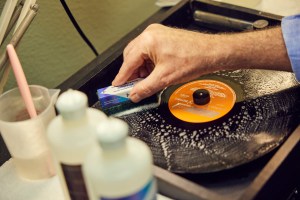
One of our customers wrote to us about cleaning his collection not long ago, and we advised him how he should go about it. He seems to have taken much our advice to heart and has quieter, better sounding records as a result. He did not spring for the pricey Keith Monks style machine we use, but felt that his efforts produced excellent results regardless. Best to hear it from him:

Hey Tom,

Just did three records, in all different conditions, and this one Eddie Palmieri, the Latin Salsa pioneer. And I had been meaning to get some famous albums in that genre, and I looked through Discogs.com and this guy wanted $40 for an album called Mozambique. Even though it looked great, it had so much noise from years of build up.

It played beautifully after all the steps. There was a huge jump in fidelity, just the tiniest, tiniest surface noise between songs. You wouldn’t notice if you weren’t listening for it.

From the other two records which had different issues, I don’t think it’s very hard to understand what else a Keith Monk type machine might add to other more difficult records, in combination with the Prelude stuff and a VPI. But for this one, and I think a lot of other records I own, the Prelude and VPI are all I needed.

I know there’s going to be a huge learning curve and I don’t expect things to be so simple. But it was just cool and kind of a treat, my first time out, to know that it’s possible.

Anyway, I just wanted to share that for what it’s worth. Thanks,

Andrew

Dear Andrew,

Glad to hear you were able to get your records cleaner and make them better sounding to boot. What could be better?

Well, there actually is an answer to that rhetorical question, and we supplied it right here on the blog in a listing with step by step instructions using the Prelude Record Cleaning System and two record cleaning machines. You asked me to write it all out so that’s what I did.

It does not surprise me in the least that you got great results with your VPI. That is the very machine we had been using since the early-90s to clean all our records. Sometime later in the decade we discovered the Disc Doctor fluids and switched to them. I wrote a long piece in my paper catalog (this was in our pre-internet days) discussing how much quieter and better sounding all of our vintage classical records sounded when cleaned with DD fluids, and that I was therefore going to reclean them all and reevaluate every last one for sound and surfaces. It was that big a difference.

In 2007, when I first heard a record cleaned with the Prelude System, everything changed radically, a story I tell using the record I was testing at the time, Meddle. It was one of the biggest breakthroughs we had experienced up to that time.

This is the kind of difference you have now heard with Prelude and your 16.5. You are operating at a different level now.

But there was more to come for us when an audio friend invited me to bring a record over that he would clean with Prelude on his Keith Monks machine. I brought over a killer copy of Meddle as I recall. Imagine my shock when it sounded even better than it had when first cleaned with Prelude. I immediately ordered up a industrial-strength threaded-pickup machine, the Odyssey, made in Germany, and started offering Hot Stamper pressings that were quieter and had better sound than I had ever heard before. (We are currently on our third unit. We clean a lot of records.)

This is leap you have yet to take. It might not make as much difference as your cleaning has to date, but, once you do it, you will find that there is a clearly audible “before and after” quality to the sound of your records. No doubt you will want to reclean all your personal favorites using Prelude and whatever Keith Monks type machine you end up with.

(more…)

Bernie Finds the Right Sound for The Genius After Hours

charlgeniusHot Stamper Pressings of Titles that Sound Better in Mono Available Now

This commentary was written about ten years ago has been updated with the latest information from the shootout we did in 2025.


Proof positive that there is nothing wrong with remastering vintage recordings if you know what you’re doing. These sessions from 1956 (left off of an album that Allmusic liked a whole lot less than this one) were remastered in 1985 and the sound — on the better copies mind you — is correct from top to bottom.

The highest compliment I can pay a pressing such as this is that it doesn’t sound like a modern remastered record.

It sounds like a very high quality mono jazz record from the 50s or 60s.

Unlike modern recuts, it doesn’t sound EQ’d in any way.

It doesn’t lack ambience the way modern records do.

It sounds musical and natural the way modern records rarely do.

If not for the fairly quiet vinyl, you would never know it’s not a vintage record. The only originals we had to play against it were too noisy and worn to evaluate critically. They sounded full, but dark and dull and somewhat opaque.


UPDATE 2025

The originals on the Atlantic Plum and Red Label are not the way to go on this album. Our shootout notes below make that clear. Take our friendly and helpful advice and steer clear of them.

(more…)