make-me-better

The albums listed here were instrumental in guiding the changes I made to the system over the last fifty years.

I’ve had large scale dynamic speakers for five decades, precisely in order to play demanding recordings such as these.

The more tweaking and tuning you do — on your system, room and electricity — the more progress you will make in this hobby, and the bigger and bolder these recordings will come to sound. They are some of the most difficult-to-reproduce albums we know of.

Again and again it was meeting the challenge of reproducing recordings such as these that allowed those of us at Better Records to go to the next level, and they can do the same for you.

Is This Bill Halverson’s Engineering Masterpiece?

Hot Stamper Pressings of the Music of Stephen Stills Available Now

This listing for the White Hot Stamper pressing we put up years ago was written around 2007. A few points have been added since then.

When all the elements are working together as they do here, the music on Steve Stills’ first album is positively AMAZING. Until I hear something better, I’m going to have to call this Bill Halverson‘s engineering masterpiece.* Yes, on the best copies it’s that good.

*UPDATE 2024: We have now discovered something even better, an album from earlier in the same year in fact, Deja Vu.

What to Listen For

Both sides can be rich and full-bodied, as well as transparent, with lots of separation between the parts. Most copies tend to be murky, thick, and veiled. The overall sound here is airy, open, and spacious, with TONS of ambience.

Check out the sound of Booker T’s big organ solo on Love The One You’re With — you can really hear the air moving through the instrument. That’s what a Hot Stamper pressing is all about.

And that’s not all. Listen for the rosiny texture to the strings, the warmth of the midrange, and the breath in the vocals. These are all signs of a very good pressing.

The bottom end is well-defined and has substantial weight to it, something you won’t hear on most copies. They sure don’t record music that sounds like this anymore, and even if they did I doubt they could press a record from the tapes that sounds as good as this one does. That sound is gone and it shows no sign of coming back anytime soon.

We’ll keep trying to find the unbelievably rare Hot Deja Vu’s, but in the meantime all you CSN fans should consider taking a chance on one of our Stephen Stills Hot Stampers. We guarantee you’ll love it (or your money back of course).

We Can’t Get Enough Of This Stuff

Some of the most sought after records in the world, as well as the most difficult to find with top quality sound, are those involving the various groupings of Crosby, Stills, Nash and Young.

This album is no exception. It’s Stills’ masterpiece, a record I’ve been playing since I was in high school. The sound on the LPs I bought over the years has been pretty consistently disappointing. It’s refreshing to actually find a copy like this that lets you hear the album the way you remember it.

There’s a very good chance — bordering on a certainty — that the copy you played back then was no doubt just as poor sounding, but you remember it sounding good.

That, more than anything else, is why we audiophiles keep chasing after so many classic albums from our younger days. We’re trying to find the record that can give us the musical satisfaction now that we achieved so easily then.
(more…)

Crisis? What Crisis? – It Took Us Until 2012 to Finally Beat the Audiophile Pressing We Swore By

Hot Stamper Pressings of the Music of Supertramp Available Now

This listing is from 2012. Since that time we have been able to find and play a great many British pressings of the album, and they tend to win our shootouts.

But the domestic pressings can also do very well, just not well enough to win shootouts these days, a clear case of live and learn.

Our Understanding from 2012

TWO AMAZING SIDES, including an A+++ SIDE ONE! It’s not the A&M Half Speed, and it’s not a British pressing either. It’s domestic folks, your standard plain-as-day A&M pressing, and we’re as shocked as you are. Hearing this copy (as well as an amazing Brit; they can be every bit as good, in their own way of course) was a THRILL, a thrill that’s a step up in “thrillingness” over our previous favorite pressing, the A&M Half Speed.

The best of the best domestics and Brits are bigger, livelier, punchier, more clear and just more REAL than the audiophile pressing something we knew had to be the case if ever a properly mastered non-Half Speed could be found. And now it has. Let the rejoicing begin!

This is only the second White Hot Stamper copy of Crisis to come to the site, and it’s not the A&M Half Speed. It’s an AMAZING sounding British copy. The only other copy that we have ever heard sound this good was the domestic copy we put up a few weeks back.

The best of the best domestics and Brits are bigger, livelier, punchier, more clear and just more REAL than the audiophile pressing — something we knew had to be the case if ever a properly mastered non-Half Speed could be found.

Our previous commentary for our domestic pressings noted:

We’d love to get you some great sounding quiet British copies, but we can’t find any. They either sound bad (most of them) or they’re noisy (the rest). It is our belief that the best Hot Stamper pressings of this Half-Speed give you the kind of sound on Crisis? What Crisis? you can’t find any other way, not without investing hundreds of dollars and scores of hours of your time in the effort. Wouldn’t you just rather listen to the record?

Why did we think Jack Hunt‘s mastering approach for the A&M Half Speed was the right one?

(more…)

Bob and Ray Produced Our Favorite Record for Cartridge Setup

Hot Stamper Pressings of Bob and Ray Available Now

Bob and Ray Throw a Stereo Spectacular just happens to be our favorite Test Disc, eclipsing all others in the areas of naturalness and difficulty of reproduction. Any tweak or new room treatment — we seem to do them almost weekly these days — has to pass one test and one test only — the Bob and Ray Test. 

This record has the power to help you get to the next level in audio like no other.

Six words hold the key to better sound: The Song of the Volga Boatman.

For the purpose of mounting new carts, our favorite track is The Song of the Volga Boatman from LSP 1773. It’s by far the most difficult track we know of to get to sound right.

There are about twenty places in the music that we use as tests, and the right setting is the one that gets the most of them to sound their best. With every change some of the twenty will sound better and some will sound worse. Recognizing when the sound is the biggest, clearest, and most balanced from top to bottom is a skill that has taken me twenty years to acquire.

It’s a lot harder than it looks. The longer you have been in audio, the more complicated it can seem, which may be counterintuitive but comports well with our day-to-day experience very well.

All our room treatments and tweaks must pass The Bob and Ray Test as well. It’s the one record we have relied on more than any other over the course of the last ten years.

Presenting as it does a huge studio full of brass players, no record we know of is more dynamic or more natural sounding — when the system is working right. When it’s not working right the first thirty seconds is all it takes to show you the trouble you are in.

If you don’t have a record like that in your collection, we highly recommend you find one.

It will be invaluable in the long run. The copy we have is so good (White Hot, the best we have ever played), and so important to our operation here, that it would not be for sale at any (well, almost any) price.

The Bob and Ray Trombone / Trumpet Test

One of the key tests on Bob and Ray that keeps us on the straight and narrow is the duet between the trombone and the trumpet about half way through The Song of the Volga Boatman. I have never heard a small speaker reproduce a trombone properly, and when tweaking the system, when the trombone has more of the heft and solidity of the real instrument, that is a tweak we want to pursue.

The trumpet interweaving with it in the right rear corner of the studio tests the transients and high frequency harmonics in the same section. With any change to the stereo, both of those instruments are going to sound different. For a change to be positive they must both sound better.

(more…)

Audiophile Wire Testing with Jethro Tull and His Friend Aqualung

Hot Stamper Pressings of the Music of Jethro Tull Available Now

… who seems to have a rather nasty bronchial condition…

[This commentary is from 2008 or so I’m guessing. Still holds up though.]

Like Heart’s Little Queen album, Aqualung presents us with a Demo Disc / Test Disc that really puts a stereo through its paces, assuming it’s the kind of stereo that’s designed to play an album like Aqualung.

Not many audiophile systems I’ve run across over the years were capable of reproducing the Big Rock Sound this album requires, but perhaps you have one and would like to use the album to test some of your tweaks and components. I used it to show me how bad sounding some of the audiophile wire I was testing really was.

Here’s what I wrote:

A quick note about some wire testing I was doing a while back. My favorite wire testing record at the time (2007)? None other than Aqualung!

Part One

Here’s why: Big Whomp Factor. Take the whomp out of Aqualung and the music simply doesn’t work, at all. To rock you need whomp, and much of Aqualung wants to rock.

(more…)

Recent Revolutions in Audio Can Make a Huge Difference on Familiar Recordings

This White Hot Stamper Ambrosia LP from some years ago had the kind of sound you would never expect to find in the grooves of this album. It was a THRILL to hear it, especially at the volumes at which we were playing the record.

The transparency and openness were off the charts, and unmatched by any other copy in our shootout. We’re big fans of this band here at Better Records — we love their take on complex, big production arty rock.

It’s also yet another example of the value of taking part in the myriad revolutions in audio.

If you never want your prized but sonically-challenged records to sound any better than they do right now, this minute, don’t bother to learn how to clean them better, play them back better or improve the acoustics of your room.

No one can make you do any of those things. The only reason you might have for doing them is so that you can enjoy more of your favorite music with much better sound. 

Is that a good enough reason? If you’re on this site I’m guessing it is.

That’s the reason we do it. We want records like this one, which didn’t start sounding good until about 2005, and now sound much better than I ever thought they could, to keep getting better and better. Why shouldn’t they? Because some people think we’ve reached the point of diminishing returns in audio? Those people do not know what they are talking about.

(There is a reference to racing cars in the Washington Post article about Hot Stampers which is pure poppycock, or at least those of us who have been in audio for a long time know it is. Lap times are not a good analogy. We need to be thinking about immersive experiences being ten times more immersive for a hundred times as many recordings as was possible when I started.)

And these improvements we talk about have allowed us to enjoy records we could never fully enjoy before because they never really sounded all that good to us.

Now they do, and they will keep getting better, as more and more developments come along in all areas of analog reproduction.

(more…)

Listening in Depth to Tarkio

More Albums with Key Tracks for Critical Listening

Analog richness, sweetness and Tubey Magic are elements absolutely indispensable to the sound of these recordings. Without them you might as well be playing a CD.

Some of the reissue pressings actually do sound like CDs and are not part of the shootouts for this album anymore. Who wants a record that sounds like a CD? They may be pressed on vinyl but they’re no less an embarrassment to analog for it. As you can imagine we feel the same way about most of the Heavy Vinyl records being made today. They’re just embarrassing.

The best pressings, on the other hand, are everything that’s good about the analog medium — smooth, sweet, relaxed and involving. You had best have a fast cartridge and not overly rich electronics to get the most out of this one. The richness on this record is already baked-in; no need to add more.

Side One

One Toke Over the Line

This track is almost always ever so slightly too bright on even the best copies. How many records do we know that have the projected hit single EQ’d a little brighter (or a lot brighter) than the rest of the album? Sergio Mendes’ first album and Mona Bone Jakon spring immediately to mind and I’m sure if I thought about it for a while I could think of many more. It’s a common practice and there’s nothing that can be done about it.

But what this slightly bright track helps the listener to notice is whether there is grain to those brighter highs. The Hot Stamper copies will still be sweet and clear even though they are a little tipped up on the top. The typical copy, pressed on the typically bad vinyl Buddah records is infamous for, will be edgy and aggressive when the vocals get loud.

(more…)

Listening in Depth to Little Queen

Hot Stamper Pressings of the Music of Heart Available Now

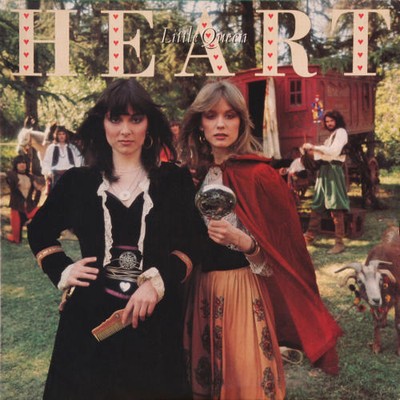
This is a recording that I credit with taking me to the next level of sound. When I first heard a killer Hot Stamper pressing played back through the EAR 324P phono stage at a friend’s house, I immediately called the distributor and ordered one. That was a Saturday. It arrived on the following Tuesday.

Compared to the 834P tube unit I had been using, the solid state 324P simply took the recording to a level I had no idea could possibly exist. Yet there it was.

That was 2007. Looking back now, it’s clear to me that 2007 was by far the most momentous year in the history of Better Records.

Once I had reached that higher level of playback, I set about using the album for tweaking and testing, and learned a lot doing it. Along with a substantial number of other records I have come across in my forty plus years as a hobbyist and audiophile record dealer, Little Queen is one that has done a great deal to help me become a more critical listener. [1]

Side One

Barracuda

One of the little tricks I used toward the end of my marathon Little Queen tweaking session from many years ago (which lasted more than six hours one Saturday evening, leaving me euphoric but exhausted) was to listen to the ending of Barracuda. Some of the big guitar chords at the end of the song are louder than others, and the more the differences in level among them can be heard, the better the stereo and the room must be at exposing these micro-dynamic changes.

You can’t make the guitarist play some of the notes at the end louder than others, you can only reveal the fact that he indeed must have. This is what we mean by Hi-Fidelity.

(more…)

Salvation Is a Tough Test on Honky Chateau

Hot Stamper Pressings of the Music of Elton John Available Now

We award the Four Plus A++++ grade so rarely that we don’t have a graphic for it in our system to use in the grading scale. So the side two here shows up on the chart as A+++, but when you hear this copy you will know why we gave it a fourth plus.


UPDATE

We no longer give out grades of Four Pluses as a matter of policy, but that doesn’t mean we don’t come across records that deserve them from time to time.


When I hear a record with a side this phenomenally good, with the stereo tuned-up and tweaked within an inch of its life to reproduce the album at the highest level I can manage, I will sometimes sit my wife down and play her a track or two. I did it for a Four Plus Deja Vu earlier this year [2016] as a matter of fact, playing Country Girl: Whiskey Boot Hill on side two, with that crazy HUGE organ blasting out of the right speaker — what a thrill!

For this record I played her Salvation, with one huge chorus following another, like powerful waves crashing on the shore, until Elton takes a deep breath and belts out the final, biggest chorus, hitting his peak an octave higher and taking the song to an emotional level neither one of us had ever experienced with it before.

We followed it up with the lovely Mona Lisas and Mad Hatters, and that was about as much Elton John live in my listening room at practically concert hall levels we could take in one sitting.

Hearing Elton with such energy, standing right in front of us, with instruments and singers encircling him from wall to wall and floor to ceiling, was so powerful and immersive it left us both with tears in our eyes.

That’s what gets you a Fourth Plus around these parts.

(more…)

Is There a Better Sounding Record on the Site?

Hot Stamper Pressings of the Music of 10cc Available Now

The answer to the question posed above is almost always going to be “yes,” if only for the simple reason that we rarely have The Original Soundtrack in stock.

On to our commentary.

On any given day a White Hot side one of The Original Soundtrack could very well be the best sounding record we have on the site. 

“On any given day” being a day when we don’t have a hot copy of Dark Side of the Moon to offer, or a killer Eagles first album, or a top copy of the self-titled BS&T, or an RL Zep II, or a White Hot Teaser and the Firecat.

Most days we don’t have such records on the site, and on those days this 10cc album is a recording Tour De Force that would be bigger, bolder, more dynamic, and more powerful than anything we could throw against it.

I haven’t run into too many audiophiles who own a hot copy of The Original Soundtrack, or have the kind of system that can play a record like it (almost none in fact). As I am fond of saying, this is the kind of record that is guaranteed to bring any audiophile stereo to its knees.

I’ve been demonstrating my stereo with it for more than thirty years. The extended suite that opens side one, One Night in Paris, has ambience, sound effects, and incredibly dynamic multi-tracked vocals at its climax that will make your jaw drop.

Reinventing The Wall of Sound The Right Way

This is the kind of record that makes you sit up and take notice. It’s classic 10cc everything-but-the-kitchen-sink “Wall of Sound” (minus the Phil Spector distortion), the kind big speaker guys like me live for. Supertramp, Yes, Ambrosia, Blood, Sweat and Tears, Zeppelin, Bowie — to this day I’m a sucker for that Cinerama soundstage these bands like to play on. It’s one of the reasons I am a proud owner of the Legacy Whisper speaker system, complete with its eight fifteen inch woofer driver complement. You need that kind of piston power to produce The Really Big Sound with Super Low Distortion at Really High Levels. The louder the better. (We have a pair of highly modified Focuses set up in our listening room as well. Three twelves per channel moves a fair amount of air too.)

The Original Soundtrack checks off quite a few of our favorite boxes here at Better Records:

(more…)

Listening in Depth to Crosby Stills & Nash – Now with Bonus CD Advice

Hot Stamper Pressings of the Music of Crosby, Stills and Nash Available Now

Although millions of copies of this album were sold, so few were mastered and pressed well, and so many mastered and pressed poorly, that few copies actually make it to the site as Hot Stampers.

We wish that were not the case — we love the album — but the copies we know to have the potential for Hot Stamper sound are just not sitting around in the record bins these days.

Whatever you do, don’t waste your money on the Joe Gastwirt-mastered CD. It couldn’t be any more awful. (His Deja Vu is just as bad.)

In-Depth Track Commentary

Side One

Suite: Judy Blue Eyes

What’s magical about Crosby, Stills, Nash & Young? Their voices of course. It’s not a trick question. They revolutionized rock music with their genius for harmony. Any good pressing must sound correct on their voices or it has no value whatsoever. A CSN record with bad midrange reproduction — like most of them — is a worthless record.

(more…)