make-me-better

The albums listed here were instrumental in guiding the changes I made to the system over the last fifty years.

I’ve had large scale dynamic speakers for five decades, precisely in order to play demanding recordings such as these.

The more tweaking and tuning you do — on your system, room and electricity — the more progress you will make in this hobby, and the bigger and bolder these recordings will come to sound. They are some of the most difficult-to-reproduce albums we know of.

Again and again it was meeting the challenge of reproducing recordings such as these that allowed those of us at Better Records to go to the next level, and they can do the same for you.

Tea for the Tillerman – Making Progress in Audio from 1984 to 2004

Hot Stamper Pressings of the Music of Cat Stevens Available Now

The following comments were written in 2004.

Hard Headed Woman is a song that has evolved dramatically over the last 20 years. If you’ve been making regular upgrades to your equipment and taking advantage of all the new technologies available at the front end, such as: vibration control, electromagnetic stabilization, better arms, better cartridges, better phono stages, better motors, fly wheels, Synchronous Drive Systems, better power cords, better power conditioning, to name just a few, you are no doubt able to reproduce this song much better than you were in the old days. Speaking of congestion, it had previously been our experience that every copy of the record had at least some congestion in the loudest parts, typically the later parts of songs where Cat is singing at the top of his lungs, the acoustic guitars are strumming like crazy, and big drums are pounding away and jumping out of both speakers. 

I used to think that Cat’s voice got hard and harsh when he got loud on the passage that starts with “I know… [big drums here] many fine feathered friends…”. Now he gets even louder, the drums are much more powerful, and yet he still sounds like a real person, not an overdriven recording.

A classic case of blaming the recording. The record was fine. I just couldn’t play it right.

(more…)

Listening in Depth to Blood, Sweat and Tears

Hot Stamper Pressings of Top 100 Titles Available Now

In my opinion this is the BEST SOUNDING rock record ever made. Played on a BIG SPEAKER SYSTEM, a top Hot Stamper pressing is nothing less than a thrill, the ultimate Demo Disc.

Credit must go to the amazing engineering skills of ROY HALEE. He may not be very consistent (Graceland, Still Crazy After All These Years) but on this album he knocked it out of the park. With the right copy playing on the right stereo, the album has the potential to sound like LIVE MUSIC.

You don’t find that on a record too often, practically never in fact. I put this record at the top of The Best Sounding Rock Records of All Time.

Side One

Variations on a Theme by Erik Satie (1st & 2nd Movements)

The song is always going to be plagued with a certain amount of surface noise. A solo guitar opening on a pop record pressed on Columbia vinyl from the ’60s? A brand new copy would have surface noise, so it’s important to not get too worked up over surfaces that are always going to be problematical.

Smiling Phases
Sometimes in Winter

This shootout taught me a lot about this track. There is a huge amount of bass which is difficult to reproduce; the best copies have note-like, controlled (although prodigious) bass which is a very tough system test.

Having said that, what separates the killer copies from the merely excellent ones is the quality of the flute sound. When you can hear the air going through the flute, and follow the playing throughout the song, you have a superbly transparent copy with all the presence and resolution of the best. If the flute sounds right, Katz’s voice will too. The sound will be Demonstration Quality of the highest order. Want to shoot out two different copies of this album on side one? Easy. Just play this track and see which one gets the flute right.

By the way, we LOVE the version of this song that Sergio Mendes does on Stillness. Eric Katz is a decent singer; the two girls in Brazil ’66 are SUPERB singers. The fact that they are female, that there are two of them and that they can harmonize as beautifully as any two singers you’ve ever heard allows their version of the song to have qualities far beyond the boys in Blood Sweat and Tears. But the BS&T guys make up for it by being REAL JAZZ MUSICIANS. Most of this album is real jazz played by top notch players. No other successful pop album to my knowledge can make that claim. In that sense it’s sui generis. But it’s unique in other ways as well, not just that one.

(more…)

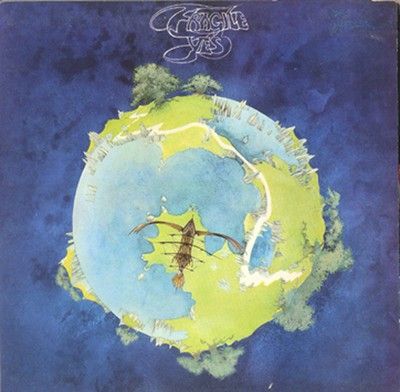
Roundabout Vs. South Side of the Sky

yes__fragiHot Stamper Pressings of the Music of Yes Available Now

Fragile is yet another record the deserves some of the credit for helping me become a better listener.

This shootout taught us that track one is not as well recorded as the rest of side one. On copy after copy, and there were well over a dozen, it was the other big track on side one, South Side of the Sky, that had consistently better sound.

You really hear it in the choruses, where the voices are especially full-bodied, powerful, rich and energetic on that fourth track.

A lesser amount of these qualities can be heard on the first.

We play both songs, but we play them in reverse order, knowing that the mind-boggling sound is really going to be on South Side, not so much Roundabout.

This record should give any record you own a run for its money. It’s as BIG and as BOLD a statement about raising the bar for rock recordings as any I know. Without a doubt one of the Best Rock Recordings of all time.

A well known audiophile record reviewer opined on his website that Fragile “was never a very good recording to begin with… cardboardy, compressed and somewhat cloudy and distant.”

Perhaps his old copy sounded like that, or maybe it sounded like that on his stereo, but our Hot Stampers sure don’t. The typical pressing of Fragile can be painful — smeary and dull with plenty of distortion. If you know the magic stamper numbers and you spend the time to clean and play enough copies, you’re bound to hear some serious magic.

Of course, that’s a lot of work, and some people are probably too busy typing out lists of their pricey equipment to be bothered with such things.

Evolution

My equipment was forced to evolve in order to be able to play the scores of challenging recordings issued by Yes and other groups in the ’70s. You could say that the albums of Yes informed not only my taste in music but the actual stereo I play that music on.

I’ve had large scale dynamic speakers for the last four decades, precisely in order to play records like this, the kind of music I fell in love with fifty years ago.

Behind the Scenes of One of My Favorite Recordings – Citizen Kane

More of the Music of Bernard Herrmann in Stock

An orchestral dreadnought such as this requires mastering and pressing of the highest quality. The music by its very nature taxes the limits of LP playback itself, with deep bass notes; incredible dynamics from every area of the stage; masses of strings playing at the top of their registers with abandon; huge drums; powerful brass effects — every sound an orchestra can produce is found on this record, and then some.

Kenneth Wilkinson was the engineer for these sessions in glorious Kingsway Hall.

It’s yet another remarkable disc from the Golden Age of Recording, in this case extending all the way into the ’70s.

You will hear plenty of sounds that defy description, that’s for sure. Some of the time I could not even imagine what exotic instrument could possibly be making the sound I was hearing. The remarkable document pictured below will show you some of them.

(more…)

Dream With Dean – Watch Out for Hard and Honky Vocals

Hot Stamper Pressings of Pop and Jazz Vocal Albums

Dream with Dean is great for finding any traces of “honk” in your midrange. Getting Deano’s baritone to sound tubey and rich, to get the sound that Bing Crosby could get just by opening his mouth, is not all that easy on some systems, mine included.

Correctly set VTA is critical in this regard, but pretty much everything must be working at its best for Dean to sound as intimate and natural as we know he can on the best pressings.

Balancing the lower mids with the upper mids is the goal, and it’s not as easy as it sounds. This album is great for testing, and guaranteed to bring practically any high-dollar system at a stereo showroom, a convention, or your very own home to its knees.

This is my favorite Dean Martin record of all time; just Dean and a jazz guitar quartet behind him (featuring Contemporary favorites Barney Kessel and Red Mitchell!) doing standards. On the best copies, the immediacy is absolutely mind-blowing. It’s a shame that there aren’t more Frank Sinatra records that sound like this.

(more…)

We Happily Admit the Originals of Time Out Are (Potentially) the Best Sounding

More of the Music of Dave Brubeck

This time around [2014] no other copy of Time Out could touch our good Six Eye Stereo pressings. They were simply in a league of their own.

If you’ve been with us for a long time you may remember that this was not always the case. We used to really like some 360s as I recall, as well as the original mono pressing. This time around, not so much. 

This time around most everything is different. Allow us to explain.

1. Our stereo is different; we’ve made quite a number of changes to it since our last big shootout for Time Out a few years back. We are strong proponents of making audio progress.

2. We’re different; we have better (I would hope) listening skills. In fact I’m sure we listen for different qualities in a recording than we might have years ago.

3. Even more importantly, we don’t have the same pile of pressings we had years ago. They’re gone, replaced by a new batch. This new batch had some killer original pressings, some good 360s, and not much to speak of on the later labels. 

With a different batch we might have found a great sounding 360 pressing; we have to believe they exist, and we certainly can’t say that our best copy here could not have been bettered in some way. That would be foolish; anything can be bettered.

The next time we run this experiment, the results could be different.

[Update from 2021: we have run the experiment a number of times in the five years since this commentary was written, and the best Six Eye in the shootout has not been beaten yet. Yet.]

For us, in 2014 (and probably through 2015), this is it.

This is the right sound.

(more…)

Led Zeppelin / II – A Milestone Event from the 90s

More of the Music of Led Zeppelin

More Milestone Events in the History of Better Records

Here’s the story of my first encounter with a Hot Stamper Zep II.

I had a friend who had come into possession of a White Label Demo pressing of the second album and wanted to trade it in to me for the Mobile Fidelity pressing that I had played for him once or twice over the years, and which we both thought was The King on that album.

To my shock and dismay, his stupid American copy KILLED the MoFi. It TROUNCED it in every way. The bass was deeper and punchier. Everything was more dynamic. The vocals were more natural and correct sounding. The highs were sweeter and more extended. The whole pressing was just full of life in a way that the Mobile Fidelity wasn’t.

The Mobile Fidelity didn’t sound Bad. It sounded Not As Good. More importantly, in comparison with the good domestic copy, in many ways it now sounded Wrong.

Let me tell you, it was a milestone event in my growth as a record collector. I had long ago discovered that many MoFi’s weren’t all they were cracked up to be. But this was a MoFi I liked. And it had killed the other copies I had heard in the past.

So I learned something very important that day. I learned that hearing a good pressing is the best way to understand what’s wrong with a bad pressing..

Needless to say, the trade didn’t go through: he kept his copy and I was stuck with mine. But I knew what to look for. I knew what the numbers were in the dead wax. And I started hunting them down.

(more…)

Blue on Heavy Vinyl – We Broke Through in 2007

Hot Stamper Pressing of the Music of Joni Mitchell Available Now

Thoughts on the so-called definitive vinyl version

Yet another milestone event in the history of Better Records.

In 2007 a customer took issue with our decision to reject the sale of the newly remastered Heavy Vinyl pressing of Blue, the one put out by Rhino and mastered by Steve Hoffman and Kevin Gray.

We actually used to give the record away for free with every purchase of a Hot Stamper Blue, making it easy for our customers to hear for themselves just how superior sounding our Hot Stamper pressings were.


UPDATE 2024

With every purchase of a Hot Stamper Led Zeppelin II, we give our customers the Page-remastered version for free so that they can hear for themselves why our pressing costs well over $1000 and Jimmy’s a small fraction of that figure, sometimes as small as one hundredth!


We did this partly out of necessity. I had foolishly taken the advice of a Mr. Robert Pincus (the discoverer of Hot Stampers let us never forget) that the new version was indeed all it was cracked up to be and proceeded to put in an advance order for twenty copies to sell to our audiophile customers.

We were still selling Heavy Vinyl in 2007, but it would not be long before we decided to end the practice. Within a few years we were only selling records that we had cleaned and played and could guarantee both their superior sound quality and audiophile-quality playing surfaces.

So we had about twenty copies of Blue we did not think qualified as “better records” and decided to just give them away.

After spending quite a number of hours evaluating the new version, I got fairly worked up over the disappointing sound, worked up enough to write a very long commentary about the album, which I entitled Blue, The Game.

Rather than detailing the shortcomings of the new pressing, in this particular commentary, the first of its kind, I decided to take a different tack.

I implored the reader to do his own shootout for the album and tell me what he heard on the various pressings he might have at hand to work with. (Nothing much came of it of course, and not too surprisingly. Shootouts are hard and the vast majority of audiophiles are averse to them in our experience, hence the sorry state of audiophile records and the systems that fail to reveal their shortcomings — but that’s a horse that gets flogged regularly enough on this site. Enough is enough.)

Tom, 

I find it curious you are not carrying the new Joni Mitchell Blue vinyl issue. Even to the point of saying you can do better… for 25 bucks? After clicking on the LP cover and reading the comments from over the years it makes me wonder what your agenda really is. I paid $250 for a wonderful WLP and this Rhino issue smokes it, even as good as it is. I even have a CD cut from this mastering session off the analog FLAT, not Dolby tapes and this vinyl even beats it…. of course just my opinion.

I have listened on $100,000 systems, all the way down to portable units, solid state and tube and there is no denying this is the definitive vinyl version….. and again for 25.00. What a bargain.

Maybe all you did was look at that Rhino sticker and think back to the Grateful Dead records they did a few years ago (horrible) and just assumed this wasn’t up to Better Records standards.

Thanks for reading. I enjoy your e mails and store….

Tom

Tom,

We don’t review records based on their labels or stickers. And of course we never assume anything about the sound of a record. We talk about this stuff all the time. Here’s a relevant quote:

My approach to reviewing records is pure skepticism: a record sounds good if it sounds good, regardless of how it was made, who made it, or why. I’ve heard lots of expensive so-called audiophile equipment do a pretty poor job of making music over the years, the owners of which had an armful of reasons for why the sound should be truly awe-inspiring. But it just wasn’t. Most fancy gold faceplates are nothing but lipstick on a pig in my opinion.

I once heard Blue poorly reproduced at a friend’s house, and this is probably the best explanation for this letter writer’s inability to understand our position on Blue.

And paying $250 for a White Label Demo that apparently doesn’t sound good is the height of audiophile collector foolishness.

That money should have gone for better equipment or room treatments or tweaks, something, anything, to make this guy’s stereo and room work better than they apparently do.

Actually this brings up a good point. If I had to choose one record that separates the men from the boys, the stereos that really work from the artificial, restricted audiophile systems you might read about in the magazines or hear in a showroom or at an audio show, Blue would be a darn good choice.

(more…)

The Glorious Sound of the SYL Pressing of On The Border

More of the Music of The Eagles

Reviews and Commentaries for the Music of The Eagles

This commentary was written about fifteen years ago, prompted by the discovery of an amazingly good sounding British original pressing. We wrote:

‘You Never Cry Like A Lover’ is breathtaking on this copy — Glyn Johns is a genius I tell you!

We’re HUGE fans of the album here at Better Records; it’s some of the most sophisticated, well-crafted, heartfelt music these guys ever made, and that’s saying a lot. Many of you have probably forgotten how good this album is (assuming you were ever familiar with it in the first place) probably because the typical domestic copy you would have played back in the day is fairly hard on the ears. Most pressings, even the British ones, barely hint at the kind of sound you’ll hear on this Hot Stamper LP!

You Never Cry Like A Lover and The Best Of My Love have SUPERB Glyn Johns Demo Disc Sound on this copy. The LIFE and ENERGY of this pressing are going to knock you right out of your seat. Most copies leave you with a headache, but this one will have you begging to turn up the volume!

Let’s talk about the Eagles’ records from an audiophile perspective.

The Last Of The Glyn Johns Eagles Records

For their debut the Eagles recorded what we consider to be one of the Ten Best Sounding Rock Records in the history of recorded media. (We sometimes have some in stock. Click here to see.)

Wait a minute, the Eagles didn’t record anything, Glyn Johns did. He deserves all the credit for turning that first album into a Demo Disc of the highest order. Partway through this album, their third, they fired him. (The British ran Winston Churchill out of office after the war, so go figure.) Johns is credited with only two tracks, and as would be expected, those two are the real Demo Disc tracks on the album.

But as I way playing various copies of these original British SYL pressings (the SYL of Desperado is the one on the TAS List, don’t you know), I could easily recognize the fully-extended, harmonically-rich, super-low distortion, Tubey Magical, Unbelievably Sweet Glyn Johns ANALOG Sound everywhere in the soundfield I happened to look.

Almost every track has some of it.

Some Is Better Than None

Maybe not the full measure you hear on You Never Cry Like a Lover, the standout track from side one, but enough to make you realize that even half of a Glyn Johns recording is quite a bit better than what was to follow.

One of These Nights, recorded by Bill Szymczyk, his replacement, is clearly a step down in sound quality, but it has some very strong material that got played on the radio incessantly. Of course it went right to Number One.

Say what you want about Hotel California — a long in the tooth FM radio staple but not a bad recording by any means — it can’t begin to compete sonically with the likes of the first three Eagles albums that Johns did. (And now that you’re familiar with the two main guys who recorded this band, check the dead wax of your Eagles Greatest Hits pressings for a laugh.)

As good as it may be sonically, Desperado is still a fairly weak concept album that lacks consistency in the songwriting department. With two good songs and lots of filler, the album bombed commercially as well as critically.

(more…)

I Once Fell Into a Common Audiophile Trap – Legrand Jazz Helped Me Find My Way Out

More Vintage Hot Stamper Pressings on Columbia Available Now

This 2005 commentary discusses how easy it is to be fooled by tweaks that seem to offer more transparency and detail at the expense of weight and heft. Detail is everything to some audiophiles, but detail can be a trap that’s easy to fall into if we do not guard against it.

The brass on this wonderful Six Eye Mono pressing of the album set me straight. [Since that time I have not been able to find mono pressings that sounded as good as I remember this one sounding. That sh*t happens.]

I was playing this record today (5/24/05) after having made some changes in my stereo over the weekend, and I noticed some things didn’t sound quite right. Knowing that this is an exceptionally good sounding record, albeit a very challenging one, I started playing around with the stereo, trying to recapture the sound as I remembered it from the last copy that had come in a few months back.

As I tweaked and untweaked the system around this record, I could hear immediately what was better and what was worse, what was more musical and what was more Hi-Fi. The track I was playing was Night In Tunisia, which has practically every brass instrument known to man, in every combination one can imagine.

Since this is a Mono pressing, I didn’t have to worry about issues like soundstaging, which can be misleading, or perhaps distracting is a better way to describe the problem.

I was concerned with tonality and the overall presentation of the various elements in the recording.

To make a long story short, I ended up undoing all the things that I had done to the system over the weekend! In other words, what improvements I thought I had made turned out not to be improvements at all. And this is the album that showed me the error of my ways.

Brass instruments are some of the most difficult to reproduce, especially brass choirs.

(more…)