difficult

If you like to challenge yourself, these are the records that can do it.

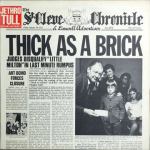
Thick as a Brick Is a Top Test Disc for System Accuracy

Hot Stamper Pressings of the Music of Jethro Tull Available Now

From 2009 to 2010 this was our single go-to record for testing and tweaking our system.

Although we now use an amazing copy of Bob and Ray (the big band version of The Song of the Volga Boatmen located therein has to be one of the toughest tests we know of), we could easily go back to using TAAB.

Artificiality is the single greatest problem that every serious audiophile must guard against with every change and tweak to his stereo. cleaning system, room, electricity and everything else.

Since TAAB is absolutely ruthless at exposing the slightest hint of artificiality in the sound of the system, it is clearly one of the best recordings one can use to test and tune with. Here are just some of the reasons this was one of our favorite test records back in the day:

Dynamics

The better copies are shockingly dynamic. At about the three minute mark the band joins in the fun and really starts rocking. Set your volume for as loud as your system can play that section. The rest of the music, including the very quietest parts, will then play correctly for all of side one. For side two the same volume setting should be fine.

Bass

The recording can have exceptionally solid, deep punchy bass (just check out Barrie “Barriemore” Barlow’s drumming, especially his kick and floor toms. The guy is on fire).

Midrange

The midrange is usually transparent and the top end sweet and extended on the better pressings.

Tubey Magic

The recording was made in 1972, so there’s still plenty of Tubey Magic to be heard on the acoustic guitars and flutes.

(more…)

Top End Extension Is Key to the Best Pressings of Fingers

airtofinge_

Hot Stamper Pressings of Jazz Fusion Albums Available Now

The best copies have the highs that are missing from so many of the CTI originals. When you play them against most copies, there is an extension to the top end that you won’t hear elsewhere. Since this album is heavy on percussion, that difference is critical.

The HARMONICS of the percussion are critically important to the music. When they go missing, it’s as if the music seems to slow down, a strange effect but a fairly common one with rhythmically dense arrangements such as these. Some of the energy of the music is lost. 

With an extended top end the sound is SWEET, not HARSH. Believe us when we tell you, the last thing you want is a harsh sounding pressing of a Rudy Van Gelder recording. (Not unless you have a dull, dull, deadly dull system. Those old school stereos are practically the only way one can tolerate some of his early recordings.)

With so many high frequency transients and such complex arrangements, this is a record that must be mastered (and pressed) with great skill or the result is going to be trouble. RVG, who both recorded and mastered the album, has a penchant for over-cutting records and being heavy handed when it comes to his favorite studio tricks, often to the detriment of instrumental fidelity. When his approach works, the resulting recordings are wonderful. When he gets too carried away with his “sound,” look out.

This is without a doubt the best album Airto ever made. On top of that, this copy really has the kind of sound we look for, with an open, fully extended top end that gives all the elements of this complex music room to breathe.

(more…)

The Turn Up Your Volume Test – Blood Sweat and Tears

Hot Stamper Pressings of the Music of Blood, Sweat and Tears Available Now

UPDATE 2025

This commentary was written about twenty years ago, back in the days when I could find clean 360 Label pressings of this album actually sitting in the bins of used record stores. The picture at the bottom says it all — I think we had more than forty copies to work through for our first shootout, pressings of the album that I had been buying (many from Robert Pincus, he was the B,S&T expert back then) since the late-80s. Blood, Sweat and Tears and I go way back.

You may notice that we rarely write about the album these days, and that’s simply because we are not able to find clean, early label pressings to play anymore. (The Red Label pressings can be good but they don’t come close to winning shootouts. Without at least some potential Shootout Winning copies, it makes no sense to do the shootout. The winners are the ones that pay for the losers, naturally, with some profit left over if things go as planned.)

Speaking of which: Our last shootout was quite a few years ago. If we somehow managed to luck into a few copies locally, it’s possible we could do the shootout tomorrow, but buying this title on Discogs and Ebay has been a nightmare, with upwards of 90% of the copies we buy ending up marked return to sender.

The cost in labor (and frustration) we incurred to pursue the album long ago forced us to move on, after plenty of swearing and licking of wounds of course. How is it that record sellers can be so oblivious to the scratches and wear on their consistently noisy vinyl offerings is beyond me.

For those of you who can’t devote the resources to finding a good copy on the Columbia 360 Label, the Gold CD put out long ago by Mobile Fidelity is excellent and well worth whatever you have to pay for it. And I mean that sincerely.


Our Old Commentary

In my opinion this is the BEST SOUNDING rock record ever made. I may be biased because I like the music so much, but played on a Big Speaker System a Hot Stamper pressing is nothing less than ASTOUNDING, the ultimate Demo Disc. It has the power of LIVE MUSIC.

You don’t find that on a record too often, practically never in fact. I put this record at the top of The Best Sounding Rock Records of All Time link (seen on the left) and said it was in a class of its own for good reason — IT IS IN A CLASS OF ITS OWN.

As I’ve noted before, this record is a milestone in the history of popular music. Not only is it The Most Successful Fusion of Rock and Jazz Ever. It’s also One of the Finest Recordings of Popular Music Ever.

The sound is nothing short of amazing. Just the drums alone are enough to win awards: the kick drum has real kick, the snare may actually be the best rock snare ever recorded, the cymbals shimmer like real cymbals; almost everything is right with this record. Especially the music.

Good Demo Disc, Good Test Disc Too

This is the kind of record that doesn’t fall into the good Demo Disc, bad test disc trap. It’s both a good Demo Disc and a good test disc; not too many records can make that claim. (Especially the kinds of records audiophiles tend to like.)

The good copies of this album sound good on almost any system. But the better systems reveal qualities to this recording that you are very unlikely to have ever heard on another record. That’s the Demo side.

On the test side, no matter what level your system is at, any change you make will be instantly obvious on this recording, for good or bad. Nothing can fool it. It’s too tough a test, the toughest I know of bar none. For this record to sound right, truly right, every aspect of its reproduction has to be at the highest level. Any shortcoming will be glaringly obvious. The record may still sound good, but it won’t really sound right. (Knowing what “right” means in this context makes all the difference in the world of course.)

One reason the turn up your volume test is such a great test — the louder the problem, the harder it is to ignore.

(more…)

Listening in Depth to The Royal Scam

Hot Stamper Pressings of the Music of Steely Dan Available Now

We really went overboard with the track commentary for this one many years ago. This should make it easy for you to compare what we say about the sound of these songs with what they sound like to you on your system, using the copy you own or, better yet, one of our Hot Stampers. 

If you end up with one of our pressings, listen carefully for the effects we describe below. This is a very tough record to reproduce — everything has to be working in tip-top form to even begin to get this complicated music sounding the way it should — but if you’ve done your homework and gotten your system really cooking, you are in for the time of your Steely Dan life.

Side One

Kid Charlemagne

By far the most sonically aggressive track on this album, Kid Charlemagne is a quick indicator of what you can expect from the rest of the side. The typical copy is an overly-compressed sonic assault on the ears. The glaring upper midrange and tizzy grit that passes for highs will have you jumping out of your easy chair to turn down the volume. Even my younger employees who grew up playing in loud punky rock bands were cringing at the sound.

However, the good copies take this aggressive energy and turn it into pure excitement. The boys are ready to rock, and they’ve got the pulsing bass, hammering drums, and screaming guitars to do it.

Without the grit and tizz and radio EQ — which could have been added during mastering or caused by the sound of some bad ABC vinyl, who can say which — the sound is actually quite good on the best copies.

It’s one of the toughest tests for side one. Sad to say, most copies earn a failing grade right out of the gate.

The Caves of Altamira

This is the best test for side one.

There are sweet cymbals at the beginning, and Fagen’s double tracked voice should be silky and smooth, but on the really hot copies it’s also big and alive.

When I was first doing these shootouts, I noted that the hi-hat is front and center in the mix of this song, and when that hi-hat sounds grainy or aggressive, it’s positively unlistenable.

That hi-hat needs to sound silky and sweet or this song is going to give you a headache, at least at the volume I play it at: GOOD and LOUD.

(more…)

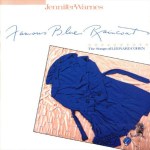
Listening in Depth to Famous Blue Raincoat

Hot Stamper Pressings of the Music of Leonard Cohen Available Now

I’m a huge fan of this FBR. It’s the only album Jennifer Warnes ever made that I would consider a Must Own recording or a Desert Island Disc. Without question this is her Masterpiece.

Key Test for Side One

Listen to the snare drum on Bird on a Wire. On most copies it sound thin and bright, not very much like a real snare. Let’s face it: most copies of this record are thin and bright, and that’s just not our sound here at Better Records. If the snare on Bird sounds solid and meaty, at the very least you have a copy that is probably not too bright, and on this album that puts it well ahead of the pack.

While you’re listening for the sound of that snare, notice the amazing drum work of Vinnie Colaiuta, session drummer extraordinaire. The guy’s work on this track — especially with the high hat — is genius.

Key Test for Side Two

Listen to the sound of the piano on Song of Bernadette. If it’s rich and full-bodied with the weight of a real piano, you might just have yourself a winner. At the very least you won’t have to suffer through the anemically thin sound of the average copy.

Side One

First We Take Manhattan

Don’t expect this song to be tonally correct. It runs the gamut from bright to too bright to excrutiatingly bright. Steve Hoffman told me that he took out something like 6 DB at 6K when he mastered it for a compilation he made, and I’m guessing that that’s the minimum that would need to come out. It’s made to be a hit single, and like so many hit single wannabes, it’s mixed brighter than we audiophiles might like.

(more…)

Listening in Depth to the White Album

Hot Stamper Pressings of The White Album Available Now

It’s exceedingly difficult to find audiophile quality sound on The White Album. The Beatles were breaking apart, often recording independently of each other, with their own favorite engineers as enablers, and George Martin nowhere to be found most of the time. They were also experimenting more and more with sound itself, which resulted in wonderful songs and interesting effects. However, these new approaches and added complexity often result in a loss of sonic “purity.”

Let’s face it, most audiophiles like simplicity: A female vocal, a solo guitar — these things are easy to reproduce and often result in pleasing sound, the kind of sound that doesn’t take a lot of expensive equipment or much effort to reproduce.

Dense mixes with wacky EQ are hard to reproduce (our famous difficulty of reproduction scale comes into play here), and the White Album is full of that sound, taking a break for songs like Blackbird and Julia.

Some of the Tubey Magic that you hear on Pepper is gone for good. (Play With a Little Help from My Friends on a seriously good Hot Stamper pressing to see what has been lost forever. Lovely Rita would probably work just as well, too.)

Side One

Looks at the lineup for side one. Is there a rock album on the planet with a better batch of songs?

Having done shootouts for the White Album by the score, we can also say with some certainty that side one is the most difficult side to find White Hot stamper sound for. It’s somewhat rare to find a side one that earns our top Triple Plus (A+++) sonic grade, even when all the other sides do. (Actually what happens more often than not is that we take the best second discs and mate them with the best first discs to make the grades consistent for the whole album. But don’t tell anybody.) (more…)

The Carmen Ballet – As Tough a Test Disc As Any We Know

Hot Stamper Pressings of the Music of Georges Bizet Available Now

If I had only one record to bring to someone’s house in order to evaluate their equipment, a killer copy of this Bizet-Shchedrin record would certainly be at the top of my list. (Here are some others.)

If you can make this record sound the way it should, your stereo is cookin’.

If you are having problems, this record will show them to you in short order.

Many copies are bright in the upper-midrange, sounding as nasally and artificial as a bad Mercury or London. Many lack weight down low. The lower strings and heavier percussion play a crucial role in balancing out the upper strings and lighter percussion, so without enough going on down low, the sound skews upwards in an artificial way.

If your copy has either of these problems don’t use it to set up or tweak anything in your system.

Use one of our Hot Stampers, the hotter the better.

The sound of the best copies is rich, full-bodied, incredibly spacious, and exceptionally extended up top. There is a prodigious amount of musical information spread across the soundstage, much of it difficult to reproduce. Musicians are banging on so many different percussive devices (often at the back of the stage, exactly where they should be) that getting each one’s sonic character to clearly come through is a challenge. And when you’ve met it, a thrill.

If you’ve done your homework with VTA, Azimuth, Anti-Skate and Tracking Weight, this is the record that will make clear just how much you’ve accomplished.

The recording has tremendous transients and dynamics. Be prepared to have trouble tracking it. In that respect it’s a prime candidate for table, cartridge and system tweaking.

If you have the kind of big system that a record like this demands, when you drop the needle on the best of our Hot Stamper pressings, you are going to hear some amazing sound.

(more…)

Ambrosia Is Right at the Top of Our Difficulty of Reproduction Scale

Hot Stamper Pressings of the Music of Ambrosia Available Now

You can play hard-to-reproduce records all day long if your system is tuned up and working fine.

Ours has to be, all day, every day. Our shootouts require that everything is working properly or we wouldn’t be able to trust the results.

But you can’t play this record on such a system without testing everything, because this is the Single Most Difficult to Reproduce Recording I know of.

This is what makes it such a great test disc; to call it a challenge doesn’t begin to convey the difficulty of playing a record that places such heavy demands on a system.

Which means I had to retweak a lot of my table setup to make sure it was 100% right, by ear. Getting the VTA right on this record was fundamentally critical to hearing it sound its best.

(None of those silly setup tools for us here at Better Records. You can hear when it’s right and if you can’t then you need to keep at it until you can.)

Detail Freaks Beware

This is the kind of record that will eat the detail freaks alive. If your system has any extra presence, or boost in the top end — the kind that some audiophiles mistake for “detail” — this record with beat you over the head with it until blood runs out of your ears.

You need balance to get the most out of this album.

The more your system is out of whack, the more this album will make those shortcomings evident.

Once you have balance, then you can unleash the energy in a way that’s enjoyable, not painful.

When this record is sounding right, you want to play it as loud as you can. It’s pedal to the metal time. This music wants to overwhelm your senses. When the system is up to it, it can, and will.

This is what a Test Disc is all about. It shows you what’s wrong, and once you’ve fixed it, it shows you that now it’s right. We audiophiles need records like this. They make us better listeners, and they force us to become better tweakers. You cannot buy equipment that will give you this kind of sound. You can only tweak the right equipment to get it. At most 20% of the sound of your stereo is what you bought. At least 80% is what you’ve done with it.

(more…)

Massed Strings and Brass Section Are Difficult to Reproduce

More of the Music of Jacques Offenbach

UPDATE 2020

Our favorite recording of the work now is this one: Fistoulari recorded for Readers Digest.


It’s also an excellent record to test with. As you no doubt know, there is a lot of “action” in this piece of music.

To get the strings and the brass to sound lively yet natural is a bit of a trick. (It doesn’t help that the polarity is reversed.)

When I first played this record many years ago, I was none too happy about the string tone. After making a few tweaky adjustments, the strings became much clearer and more textured. The overall presentation still sounded rich, but was now dramatically more natural and relaxed.

It was this record that made me realize some of the changes I had made to my stereo back then had caused it to have a certain hi-fi-ish quality, which seemed to work fine on the popular and jazz recordings I was using as test discs at the time.

But the reproduction of classical music is the ultimate challenge for any stereo.

(more…)

Bob and Ray Produced Our Favorite Record for Cartridge Setup

Hot Stamper Pressings of Bob and Ray Available Now

Bob and Ray Throw a Stereo Spectacular just happens to be our favorite Test Disc, eclipsing all others in the areas of naturalness and difficulty of reproduction. Any tweak or new room treatment — we seem to do them almost weekly these days — has to pass one test and one test only — the Bob and Ray Test. 

This record has the power to help you get to the next level in audio like no other.

Six words hold the key to better sound: The Song of the Volga Boatman.

For the purpose of mounting new carts, our favorite track is The Song of the Volga Boatman from LSP 1773. It’s by far the most difficult track we know of to get to sound right.

There are about twenty places in the music that we use as tests, and the right setting is the one that gets the most of them to sound their best. With every change some of the twenty will sound better and some will sound worse. Recognizing when the sound is the biggest, clearest, and most balanced from top to bottom is a skill that has taken me twenty years to acquire.

It’s a lot harder than it looks. The longer you have been in audio, the more complicated it can seem, which may be counterintuitive but comports well with our day-to-day experience very well.

All our room treatments and tweaks must pass The Bob and Ray Test as well. It’s the one record we have relied on more than any other over the course of the last ten years.

Presenting as it does a huge studio full of brass players, no record we know of is more dynamic or more natural sounding — when the system is working right. When it’s not working right the first thirty seconds is all it takes to show you the trouble you are in.

If you don’t have a record like that in your collection, we highly recommend you find one.

It will be invaluable in the long run. The copy we have is so good (White Hot, the best we have ever played), and so important to our operation here, that it would not be for sale at any (well, almost any) price.

The Bob and Ray Trombone / Trumpet Test

One of the key tests on Bob and Ray that keeps us on the straight and narrow is the duet between the trombone and the trumpet about half way through The Song of the Volga Boatman. I have never heard a small speaker reproduce a trombone properly, and when tweaking the system, when the trombone has more of the heft and solidity of the real instrument, that is a tweak we want to pursue.

The trumpet interweaving with it in the right rear corner of the studio tests the transients and high frequency harmonics in the same section. With any change to the stereo, both of those instruments are going to sound different. For a change to be positive they must both sound better.

(more…)