
turntable-tweaking-advice

Listening in Depth to So Far

Hot Stamper Pressings of the Music of Crosby, Stills and Nash Available Now

This is a very difficult record to find with proper mastering (and good vinyl, ouch!). It seems that all of Crosby, Stills and Nash’s albums are that way. The average domestic pressing rarely even hints at how well recorded this band really was (and the imports are even worse — we’ve never heard one that didn’t sound dubby, veiled and compressed).

In my experience not even one out of ten LPs sounds right; I put the figure at one out of twenty. Most of them are shrill, dull, grainy, flat, opaque, harsh and in varying degrees suffer from every other mastering and pressing malady known to man.

But the best ones have some tracks in superb sound. When you hear the Hot Stampers for records like this you will simply be AMAZED. If you’ve ever heard a really good If Only I Could Remember My Name, an album that CAN be found with proper mastering, that should give you some idea of how good the first two albums can sound.

Side One

Déjà Vu

When you get a good copy of this album, this song sounds like it was lifted right off of a Hot Stamper copy of Deja Vu itself. It’s so rich and Tubey Magical you’d swear it couldn’t get any better. Huge amounts of deep bass. Acoustic guitars that ring for days. Midrange magic to die for. Not many of them sound this way, unfortunately.

If I could indulge in some more MoFi and Half-Speed bashing for a moment, the bass “solo” at the end of this song is a great test for bass definition. The notes are relatively high, and it’s easy for them to sound blurred and wooly. The MoFi, like virtually all Half-Speed mastered records, has a problem with bass definition. If you own the MoFi, listen for how clearly defined the notes are at the end of this track. Then play any other copy, either of So Far or Deja Vu. It’s a pretty safe bet that the bass will be much more articulate. I know how bad the MOFI is in this respect. Rarely do “normal” records have bass that bad.

(more…)

Violin Concertos Are Ideal for Testing Table Setup

Hot Stamper Pressings Featuring the Violin Available Now

This is one of the ALL TIME GREAT violin concerto records. In Ruggiero Ricci’s hands both works are nothing short of magical. If you want to know why people drool over Golden Age recordings, listen to the violin. Careful, when you hear it you may find yourself drooling too.

The staging of the orchestra and violin is exactly the way we want to hear it in our heads. Whether it would really sound this way in a concert hall is impossible to say — concert halls all sound different — but the skill and the emotion of the playing is communicated beautifully on this LP. This is a sweetheart of a record, full of the Tubey Magic for which London recordings are justly famous.

As we noted above, engineering took place in the legendary Kingsway Hall. There is a richness to the sound of the strings that is exceptional, yet clarity and transparency are not sacrificed in the least.

VTA and the Violin

This is truly The Perfect Turntable setup disc. When your VTA, azimuth, tracking weight and anti-skate are correct, this is the record that will make it clear to you that your efforts have paid off.

What to listen for you ask? With the proper adjustment the harmonics of the strings will sound extended and correct, neither hyped up nor dull; the wood body of the instrument will be more audibly “woody”; the fingering at the neck will be noticeable but will not call attention to itself in an unnatural way. In other words, as you adjust your setup, the violin will sound more and more right.

And you can’t really know how right it can sound until you go through hours of experimentation with all the forces that affect the way the needle rides the groove. Without precise VTA adjustment there is almost no way this record will do everything it’s capable of doing. There will be hardness, smear, sourness, thinness — something will be off somewhere. With total control over your arm and cartridge setup, these problems will all but vanish. (Depending on the quality of the equipment of course.)

We harp on all aspects of reproduction for a reason. When you have done the work, records like this are nothing less than GLORIOUS.

(more…)

Azimuth – A Little Can Make a Lot of Difference

Robert Brook runs a blog called The Broken Record, with a subtitle explaining what the aim of his blog is:
A GUIDE FOR THE DEDICATED ANALOG AUDIOPHILE

We know of none better, outside of our own humble attempt to enlighten that portion of the audiophile community who love hearing music reproduced with higher fidelity and are willing to go the extra mile to make that happen.

Here is Robert’s latest posting. He recently spent some time with our favorite recording of the Beethoven First Piano Concerto, and needless to say, he’s glad he did.

AZIMUTH: A LITTLE Can Make A LOT of Difference!

You may enjoy our piece on azimuth and other aspects of turntable setup in this posting from many years ago.

Lately we have been writing quite a bit about how pianos are good for testing your system, room, tweaks, electricity and all the rest, not to mention turntable setup and adjustment.

(more…)

Cartridge Tweaking and Turntable Setup Advice

More Turntable Setup Advice

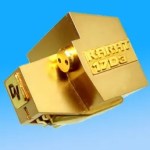
Playing so many records every day means that we wear out our Dynavector 17DX cartridges much more often than most consumers would. They typically last us about three or four months.

This requires us to regularly mount a new cartridge in our Triplanar arm.

Once a new cartridge is broken in (50 hours minimum), we then proceed to carry out the fine setup work required to get it sounding its best. We do that by adjusting the VTA, azimuth and tracking weight for maximum fidelity using recordings we have been playing for decades and know well.

For the longest time our favorite test discs for this purpose have been these three:

  1. Bob and Ray Throw a Stereo Spectacular,
  2. Tea for the Tillerman, and
  3. Led Zeppelin II.

To be honest, I was the only guy on the listening panel using Bob and Ray. I have played that record at least 500 times, perhaps 1000, and would be lost without it.

Our listening guys — much younger and not nearly as interested in correctly reproducing The Song of the Volga Boatmen as I was — preferred numbers two and three, and of course those work fine too. In fact, when setting up our new studio, I came to realize Bob and Ray were not enough to get the room right, a subject I wrote about here.

We are in the process of making some lists (more lists! You can never have too many!) for records we’ve found to be good for testing, tweaking and tuning your system, your room and your front end setup, among other things. You may want to check them out.

These are the records that challenged me and helped me to achieve more progress in audio. If you are serious about improving your playback, these are some of the best records we know of to help get you to the next level.

(more…)

How We Test Equipment Like the Townshend Seismic Platform

Basic Audio Advice — These Are the Fundamentals of Good Sound

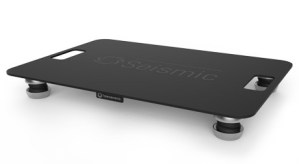
A few years back I discovered something wonderful about the Seismic Sink I was using under my turntable to control vibration.

In our experience, vibration control is one of the most important revolutionary advancements in audio of the last twenty years or so.

We sell the Seismic Sink and this is what I wrote to a customer who recently bought one:

Play your most complex test discs, the ones that are the hardest to get to sound right. Classical is the toughest test if you have some, but Pet Sounds is tough too. [I knew he was a fan and had a good copy of the album.]

Listen to one or two for a good while, at least 20-30 minutes, to know exactly what you are hearing on the tracks you know are the most difficult to get to sound right, the ones with the most problems.

Put the sink under the table. (You can also put it under your receiver, that works great too.)

Then play those tracks again.

Go back and forth a few times.

It should be pretty obvious what is going on.

Then read Robert Brook’s post.

Here is a very special tip.

The sound changes depending on how the seismic sink is “loaded.”

This means two things:

Where the weights are sitting on the sink.

    • For my integrated amp I have it all the way to the front of the sink. Sounds clearly better that way.
    • For the turntable, I have it weighted down with thin but heavy steel plates, about one quarter inch thick, about 4 inches by 8 inches. You can get them at Home Depot and similar places.

(more…)

The VPI Super Platter and Testing Advice

Revolutions in Audio, Anyone?

This review was written in 2005, perhaps before. To see what comprises our current system, click here.


We love the new VPI Super Platter. It’s a big step up over the acrylic platter, which makes records sound more like CDs, kind of thin, vague, edgy. The original TNT type Aries platter is a very similar design to the Super Platter, and so when I got my super platter it was obviously better after the first five seconds of play but not dramatically better. On a customer’s TNT with the acrylic platter it was huge.

The bigger and more powerful the stereo, the bigger will be the difference, because it has to do with weight and heft and solidness and those sorts of sonic qualities, the kind that too many modern audiophiles ignore. (The CD guys don’t even know what those things are because CDs so rarely have those qualities, certainly never in abundance the way good records do.)

It has been our experience that VPI upgrades tend to be actual sonic improvements over the earlier versions of their equipment, unlike so much of what passes for “better” audio in the land of Hi-Fi, which is often just different and in many cases actually worse. [I cannot back up that claim now, as we have been out of the turntable-auditioning business for more than a decade. I simply have no idea whether VPI’s products are any good these days. Caveat emptor, as always.]

These are the kind of upgrades we love to do, and the reason is no doubt obvious to all you audiophiles out there. Pop the new platter on and thirty seconds later you can hear the difference. Not sure about the change? Don’t like it? Thirty seconds later you can have your old platter spinning to see exactly what happened to the sound.

It’s the kind of testing we do here all day long with Hot Stamper and other pressings. [1] Take ten copies of any title and play them, making notes as to their strengths and weaknesses. Assign each one an overall sonic grade. Think numbers 2 and 7 are the best of the bunch on side one, but not quite sure which of the two is better? No problem. Take one of them, throw it back on the table, listen for a minute, then pop on the other. That kind of head-to-head shootout is the easiest, most reliable way to find out which record really has the Hot Stamper Magic and which one only appears to.

(more…)

Bob and Ray Produced Our Favorite Record for Cartridge Setup

Hot Stamper Pressings of Bob and Ray Available Now

Bob and Ray Throw a Stereo Spectacular just happens to be our favorite Test Disc, eclipsing all others in the areas of naturalness and difficulty of reproduction. Any tweak or new room treatment — we seem to do them almost weekly these days — has to pass one test and one test only — the Bob and Ray Test. 

This record has the power to help you get to the next level in audio like no other.

Six words hold the key to better sound: The Song of the Volga Boatman.

For the purpose of mounting new carts, our favorite track is The Song of the Volga Boatman from LSP 1773. It’s by far the most difficult track we know of to get to sound right.

There are about twenty places in the music that we use as tests, and the right setting is the one that gets the most of them to sound their best. With every change some of the twenty will sound better and some will sound worse. Recognizing when the sound is the biggest, clearest, and most balanced from top to bottom is a skill that has taken me twenty years to acquire.

It’s a lot harder than it looks. The longer you have been in audio, the more complicated it can seem, which may be counterintuitive but comports well with our day-to-day experience very well.

All our room treatments and tweaks must pass The Bob and Ray Test as well. It’s the one record we have relied on more than any other over the course of the last ten years.

Presenting as it does a huge studio full of brass players, no record we know of is more dynamic or more natural sounding — when the system is working right. When it’s not working right the first thirty seconds is all it takes to show you the trouble you are in.

If you don’t have a record like that in your collection, we highly recommend you find one.

It will be invaluable in the long run. The copy we have is so good (White Hot, the best we have ever played), and so important to our operation here, that it would not be for sale at any (well, almost any) price.

The Bob and Ray Trombone / Trumpet Test

One of the key tests on Bob and Ray that keeps us on the straight and narrow is the duet between the trombone and the trumpet about half way through The Song of the Volga Boatman. I have never heard a small speaker reproduce a trombone properly, and when tweaking the system, when the trombone has more of the heft and solidity of the real instrument, that is a tweak we want to pursue.

The trumpet interweaving with it in the right rear corner of the studio tests the transients and high frequency harmonics in the same section. With any change to the stereo, both of those instruments are going to sound different. For a change to be positive they must both sound better.

(more…)

Turntable Tweaking Advice – Try This at Home, It Worked for Us

More Setup Advice for Turntables and Cartridges

UPDATE 2020

This commentary was written around 2010 or so. Mapleshade stopped sending me catalogs not long after this commentary, probably not because of anything I’d written. More likely it was because I never bought anything from them. And why would I? They give out some good advice, sure, but it’s mixed in with a lot of audiophile nonsense, the purest kind of nonsense that the audio world is currently drowning in.


The Mapleshade website has a piece of audio advice that caught the eye of one our customers, who sent me the excerpt below.  

Like most advice, especially audio advice, we find that some of it accords well with our own experience and some of it clearly does not. The relationship of good to bad is hard to determine without making a more careful study, but let’s just say that there is plenty of both and let that suffice.

That being the case, we thought it would be of service to our customers to break it down in more detail, separating the wheat from the chaff so to speak.

Here is the complete quote:

To get first rate sound and to get your money’s worth from any expensive cartridge, you MUST meticulously adjust VTA or tracking force every 3-4 months — that’s because stylus suspensions always sag with use. This lowers VTA and seriously kills dynamics and treble sparkle. Lots of people misinterpret this as a worn-out cartridge, an expensive error. Instead, raise VTA or lighten tracking force until your test record’s treble sounds too harsh, then drop VTA or lighten tracking force a hair. Your test record must not be thicker or thinner than the bulk of your record collection. Adjusting tracking force yields slightly better sonic results and longer cartridge life than adjusting VTA — and adjusting tracking force on most arms is WAY easier than adjusting VTA.

The basic idea here is that your cartridge sags over time, causing the VTA (Vertical Tracking Angle) to change, which results in less dynamics and “treble sparkle.”

(By the way, this is a term you will encounter on this blog as a criticism. Treble should never “sparkle,” but we get the point. We make fun of the sparkly sound Mobile Fidelity records are famous for, a sound which bugs the hell out of us, but which does not seem to bother some audiophiles. We assume their speakers or systems lack top end and could use a bit of a boost there. Our Townshend super tweeters allow us to hear all the top end there is on the records we play, unboosted, thank you very much.)

(more…)

A Loaded Seismic Sink and the Remarkable Benefits of Testing and Tuning

Robert Brook has a blog which he calls

A GUIDE FOR THE DEDICATED ANALOG AUDIOPHILE

Below is a link to the review he’s written for one of our favorite ways to improve the sound of any stereo, the Townshend Seismic Platter.

LOADING the TOWNSHEND SEISMIC PLATTER Brings Your SYSTEM TO LIFE!

A few years back I discovered something wonderful about the Seismic Sink I was using under my turntable to control vibration.

In our experience, vibration control is one of the most important revolutionary advancements in audio of the last twenty years or so.

This commentary should help to give your tweaking efforts more context.

(more…)

Connecting the Players on Maiden Voyage

More of the Music of Herbie Hancock

More Jazz Recordings Featuring the Piano

Freddie Hubbard on this album is nothing short of astonishing. I remember playing around with the stereo one day, listening for different effects as I made minor changes to the tracking weight, the VTA, adjustments to the Hallographs and the like, and at one point I noticed that the ensemble seemed to be more coherently connected, with each of the players more properly balanced with the others. 

It was a striking effect and it made me realize that musical values can often be overlooked while chasing after audiophile effects of one kind or another.

Hearing the ensemble come together made me appreciate this album even more.

Tony Williams on the drums here deserves a special nod. His cymbal work on the first track is original and spontaneous in the best tradition of jazz improvisation. (more…)