4-2023

Tone Poets and One-Legged Tarzans

More Unsolicited Audio Advice

A tenet of conservatism is that we must all accommodate ourselves to living in the world that exists, not the world we might want to pretend exists, or the world we would like to exist.

The laws of physics are laws — not theories, not recommendations — and they operate independently of how convenient we may find them.

It follows from this — if you will allow me to make the case — that not everybody with a stereo can play Rudy Van Gelder’s recordings properly, and some people cannot play Tarzan at all. (More on that below.)

There is a fellow, rl1856, who made some comments on Robert Brook’s blog, addressing the Tone Poets pressings of RVG’s recordings vis-a-vis vintage pressings that RVG mastered. (Emphasis added.)

rl1856 writes:

An original RVG 1st or 2nd pressing has a visceral, “edge of the seat” feeling that is missing in the TP [Tone Poets] and BN [Blue Note] Classic reissues. The RVG has a tighter stereo spread, and is voiced so that the listener feels they are very close to the musicians. The TP and Classic remasters have a more distant perspective. The soundstage is wider, but the added apparent distance between musician and listener significantly reduces the impact of the music. OTOH, the reissues have greater extension at frequency extremes, and reproduce more micro detail than original pressings. We know that RVG used a surprising amount of EQ when mastering his LPs back in the day. So we need to ask ourselves, what do we want ? A better version of what we are familiar with, including EQ compromises, or a more accurate representation of what was actually captured on the master tape in RVG’s studio ? The answers may be mutually exclusive.

My system: Linn LP12 ITTOK LVII, SoundSmith Denon 103D, Audio Research SP10MKIII, Luxman MA 88 monoblocks, or Triode TRV 845PSE, or Mac 240, KEF LS50. Resolving enough to easily hear differences in LP quality.

When someone reveals that their equipment is simply not capable of reproducing the sound of live music, we can safely ignore whatever opinions they have offered about the records under discussion.

It’s obvious that they have played them with unacceptably low levels of fidelity. If they want to make the case that they in fact are able to reproduce music with acceptable fidelity, we would need to know more about their system and room in order to take such a claim seriously.

(more…)

Hi-Fi Beats My-Fi — If Better Sound Is Your Goal

Basic Audio Advice — These Are the Fundamentals of Good Sound

If by record collecting you mean collecting better sounding pressings of the albums you want to play. (If you just want to collect records because you like collecting records, you are definitely on the wrong site.)

Our system is fast, accurate and uncolored. We like to think of our speakers as the audiophile equivalent of studio monitors, showing us exactly what is on the record, nothing added, nothing taken away.

When we play a modern record, it should sound modern. When we play a vintage Tubey Magical Living Stereo pressing, we want to hear all the Tubey Magic, but we don’t want to hear more Tubey Magic than what is actually on the record.

We don’t want to do what some audiophiles like to do, which is to make all their records sound the way they like all their records to sound.

They do that by having their system add in all their favorite colorations. We call that “My-Fi,” not “Hi-Fi,” and we’re having none of it.

If our system were more colored, slower and tubier, a vintage Living Stereo record would not sound as good as it should. It’s already got plenty of richness, warmth, sweetness and Tubey Magic.

To take an obvious example, playing the average dry and grainy Joe Walsh record on our system is a fairly unpleasant experience. Some added warmth and richness, with maybe some smear and some upper-midrange suckout thrown in for good measure, would make it much more tolerable.

But then how would we know which Joe Walsh pressings aren’t too dry and grainy for our customers to play and enjoy on their systems?

How do you tell which ones have the least amount of smear when you’re playing them back through a system that has smear built into it? On some systems, every record is smeary!

(I know smear when I hear it. The Mac 30s I owned in the 90s taught me the pros and cons of tube colorations. More on that subject here.)

How do you tell which pressings have a present, tonally correct midrange when you’re playing records through a system with a sucked out, tonally incorrect midrange?

Enough with the rhetorical questions already.

There is only one approach that works. The first thing you need to get is good sound – then you can recognize and collect good records.

A White Hot copy should have a near-perfect blend of Tubey Magic and clarity, because that’s what we hear when we play it on our system.

We are convinced that the more time and energy you’ve put into your stereo over the years, decades even, the more likely it is that you will hear our Hot Stamper pressings sound the way they should.

(more…)

What I Couldn’t Hear on My 90s Tube System

Hot Stamper Pressings of Contemporary Jazz Albums Available Now

I have a very long history with Bells Are Ringing, dating back to the 90s. My friend Robert Pincus first turned me on to the CD, which, happily for all concerned, was mastered beautifully and comes highly recommended if you want to work on your digital playback or other non-analog aspects of your system such as your room, electricity, speaker placement and such like. (More recommended CDs here.)

Back in the day we often used it to test and tweak some of the stereos in my friends’ systems.

Playing the original stereo pressing, all I could hear on my 90s tube system was

  • blurred mids,
  • lack of transient attack,
  • sloppy bass,
  • lack of space and transparency,
  • and plenty of other shortcomings too numerous to mention.

All of which I simply attributed at the time to the limitations of the vintage jazz pressing I owned.

A classic case of me rather foolishly blaming the recording.

I know better now. The record was fine. I just couldn’t reproduce it.

Well, things have certainly changed. I have virtually none of the equipment I had back then, and I hear none of the problems with this copy that I heard back then. This is clearly a different LP, I sold the old one off years ago, but I have to think that much of the change in the sound was a change in cleaning, equipment, setup, tweaks and room treatments, all the stuff we prattle on about endlessly on this blog.

(more…)

Jethro Tull – One of the Worst Releases on DCC (and That’s Saying Something!)

Sonic Grade: F

The DCC pressing is a complete disaster, one of the worst sounding versions of the album ever made.

As bad as the MoFi is, the DCC is even worse. Murky and bloated, to my ear it does almost nothing right, not on vinyl anyway. The DCC Gold CD is better, and it’s certainly nothing to write home about. 

Our Hot Stamper commentary below sorts out the DCC, the Classic Records Heavy Vinyl pressing and the MoFi Half-Speed Mastered LP, as well as British and domestic originals.

We love this album and we’ve played every kind of pressing we could get our hands on. The winner? Read on!

Over the course of the last 25 years we was wrong three ways from Sunday about our down-and-out friend Aqualung here. We originally liked the MoFi.

When the DCC 180g came along we liked that one better, and a few years back I was somewhat enamored with some original British imports.

Our first big shootout disabused us of any notion that the British originals were properly mastered. As we noted in our Hot Stamper commentary, “The original Brits we played were pretty hopeless too: Tubey Magical but midrangy, bass-shy and compressed.”

Another myth bites the dust.

The same is true for Thick As A Brick; the best domestic copies are much more energetic and tonally correct.

A Guide to Finding Hot Stampers – Make More Mistakes

mistakes_stevensx20Want to get better at audio and record collecting?

Try making more mistakes.

I was reading an article on the web recently when I came across an old joke Red Skelton used to tell:

All men make mistakes, but married men find out about them sooner.

Now if you’re like me and you play, think and write (hopefully in that order) about records all day, everything sooner or later relates back to records, even a modestly amusing old joke such as the one above.

Making mistakes is fundamental to learning about records, especially if you, like us, believe that most of the received wisdom handed down to record lovers of all kinds is more likely to be wrong than right.

If you don’t believe that to be true, then it’s high time you really started making mistakes.

And the faster you make them, the more you will learn the truths (uncountable in number) about records.

And those truths will set you free.

Yes, We Admit It. We Sell the “Wrong” Pressings

Think about it: perhaps as many as a third of the Hot Stamper pressings on our website are what would commonly be understood to be the “wrong” pressings — or, worse, records that should not have any hope of sounding good at all. 

  • Reissues of Pink Floyd and Led Zeppelin from the wrong country?
  • 60s and 70s Living Stereo reissue pressings?
  • Original Jazz Classics from the 80s?
  • Beatles records reissued in the 70s, in stereo no less!
  • Kind of Blue on the 70s Red Label?
  • Jazz “Two-Fers“?
  • Budget reissue classical LPs?

The list goes on and on. We’ve reviewed 178 reissues to date worthy of the Hot Stamper designation. Some budget reissues are so good, they actually win shootouts.

Can we be serious?

(more…)

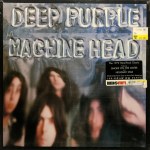
Machine Head on Rhino Vinyl Sounds Like a CD

Hot Stamper Pressings of the Music of Deep Purple Available Now
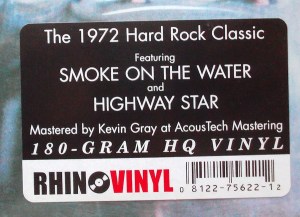
Mastered by Kevin Gray, this record has what we would call ”modern” sound, which is to say it’s clean and tonally correct, but it’s missing the Tubey Magic the British originals are swimming in.

In other words, it sounds like a CD.

I’m guessing that very few people have ever heard this record sound the way our best Hot Stamper pressings can sound.

For one thing, the domestic pressings are made from dubbed tapes, and that’s what most of us Americans would have owned. The original domestic pressings are smeary, veiled and small as a rule

Yes, the average copy may be nothing special, but this one is a boring, lifeless mess, so save your money.

Rhino Records has really made a mockery of the analog medium. Rhino touts their releases as being pressed on “180 gram High Performance Vinyl.” However, if they are using “performance” as a synonym “sound quality,” we have found the performance of their vinyl to be quite low, lower than the average copy one might stumble upon in the used record bins.

Who can be bothered to play a record that has so few of the qualities audiophiles should be looking for on vinyl?

Back in 2007 we put the question this way: why own a turntable if you’re going to play mediocrities like these?


Further Reading

Records are getting awfully expensive these days, and it’s not just our Hot Stampers that seem priced for perfection.

If you are still buying these modern remastered pressings, making the same kind of mistakes that I was making before I knew better, take the advice of some of our customers and stop throwing your money away on Heavy Vinyl and Half-Speed mastered LPs.

(more…)

Mel Torme / Swings Shubert Alley – Another Reissue that Kills the Original

More Mel Torme

Mel Torme Albums We’ve Reviewed

  • Outstanding Double Plus (A++) sound brings Torme’s 1961 release to life on this vintage Verve Stereo pressing
  • One of our favorite male vocal albums – exceptionally well recorded and really involving on a copy that sounds as good as this one does
  • Lovely richness and warmth, you may just find yourself using it as a Analog Demonstration Disc – Mel is in his prime and magnificent throughout
  • 5 stars: “Though the nominal concept for Swings Shubert Alley is Broadway standards, this last moment of pure Mel Tormé brilliance swings much too fast and hard for the concept to be anything but pure swing. The overall mood is unrestrained enthusiasm, and it makes for an excellent record.”
  • These are the top titles from 1961 we’ve reviewed to date. From an audiophile perspective, depending on your taste in music, most should be worthy of a place in your collection
  • We’ve recently compiled a list of records we think every audiophile should get to know better, along the lines of “the 1001 records you need to hear before you die,” but with the accent on the joy these amazing audiophile-quality recordings can bring to your life. Swings Shubert Alley is a good example of a record many audiophiles may not know well but would benefit from getting to know better

Mel Torme Swings Shubert Alley is one of our very favorite male vocal albums, and a great copy like this will show you why — the audiophile quality sound and swinging jazz vocal music are simply hard to beat.

This album from 1961 finds Mel in his prime. By the ’70s he was a shadow of himself, and more modern (read: less natural) recording technology wasn’t doing him any favors. None of those later albums means much to us here at Better Records.

His Bethlehem recordings can have outstanding sonics and music to match, but try to find a clean one. It’s been years since one came our way that wasn’t noisy or groove damaged. (more…)

Massed Strings and Brass Section Are Difficult to Reproduce

More of the Music of Jacques Offenbach

UPDATE 2020

Our favorite recording of the work now is this one: Fistoulari recorded for Readers Digest.


It’s also an excellent record to test with. As you no doubt know, there is a lot of “action” in this piece of music.

To get the strings and the brass to sound lively yet natural is a bit of a trick. (It doesn’t help that the polarity is reversed.)

When I first played this record many years ago, I was none too happy about the string tone. After making a few tweaky adjustments, the strings became much clearer and more textured. The overall presentation still sounded rich, but was now dramatically more natural and relaxed.

It was this record that made me realize some of the changes I had made to my stereo back then had caused it to have a certain hi-fi-ish quality, which seemed to work fine on the popular and jazz recordings I was using as test discs at the time.

But the reproduction of classical music is the ultimate challenge for any stereo.

(more…)

Energy Is Key to Dem Ol’ Kozmic Blues

More of the Music of Janis Joplin

ENERGY is the key element missing from the average copy of I Got Dem Ol’ Kozmic Blues Again Mama!, but not on this bad boy (or girl if you prefer). 

Drop the needle on the song Try and just listen to how crisp, punchy, and BIG the drums sound.

On many copies — too many copies — the vocals are pinched and edgy. Here they’re breathy and full — a much better way for Janis to sound. There’s some grit to the vocals at times and the brass as well, but the life force on these sides is so strong that we much preferred it to the smoother, duller, deader copies we heard that didn’t have that issue.

On copy after copy we heard pinched squawky horns and harsh vocals, not a good sound for this album.

Janis’ voice needs lots of space up top to get good and loud, and the best sides give her all the space she needs.

This record, along with the others linked below, is good for testing the following qualities:

(more…)

What Kind of (Audio) Fool Was I?

Thinking Critically About Records Is Key to Understanding Them

This commentary was written in 2007 or thereabouts.


Today’s audiophile seems to be making the same mistakes I was making as a budding audiophile more than thirty forty five years ago.

Heavy Vinyl, the 45 RPM 2 LP pressing, the Half-Speed Limited Edition — aren’t these all just the latest audiophile fads, each with a track record more dismal than the last?

And isn’t it every bit as true today as it was in the past that the audiophiles who buy these “special” pressings rarely seem to notice that many of them don’t actually sound very good?

Was Devo right? Is everything in audio getting worse?

Our Story Begins

One Man Dog has long been a favorite James Taylor album of mine. It didn’t catch on too well with the general public when it came out but it caught on just fine with me. I used to play it all the time. As a budding but misguided audiophile back in the early ’70s, I foolishly bought the import pressing at my local record store, The Wherehouse, assuming it would sound better and be pressed on quieter vinyl. The latter may have been true, probably was true, but the former sure wasn’t. Turns out even the average domestic original is far better sounding, but how was I to know?

Compare and Contrast? What For?

Back in those days it would never have occurred to me to buy more than one copy of a record and do a head to head comparison to see which one sounded better. I approached the subject Platonically, not scientifically: the record that should sound better would of course sound better, so what is the point of testing?

Later on in the decade a label by the name of Mobile Fidelity would come along claiming to actually make better sounding pressings than the ones the major labels put out, and — cluelessly — I bought into that nonsense too.

(To be fair, sometimes they did — Touch, Waiting for Columbus and American Beauty come to mind, but my god, Katy Lied, Year of the Cat and Sundown have to be three of the worst sounding records I’ve ever played in my life.)


UPDATE 2015

Obviously, we no longer agree with much of that except for the one MoFi record that has stood the test of time, Touch.


The Learning Curve Is Looking Awfully Flat

Pardon my pessimism, but it seems to me the learning curve these days is looking awfully flat. There doesn’t seem to be a whole lot of learning going on. If such learning were actually going on, how would most of these audiophile labels still be in business?

Don’t get me wrong: some progress has been made. Reference, Chesky and Audioquest thankfully no longer burden us with their awful LPs. But is the new Blue or Fragile really any better than the average MoFi from 1979? Different yes, but better? I know one thing: I couldn’t sit through an entire side of either of them on the remastered pressings. And I love both of those albums.

Compared to the real thing, can any of these records pretend to compete sonically? A few, I guess, but too few, and they seem to be pretty darn far between.

(more…)