jethraqual-audiophile

In these reviews and commentaries we explore the following question: Why have audiophile labels done such a poor job when remastering Aqualung?

How Not to Conduct a Proper Shootout for Aqualung

UPDATE 2023

This commentary was probably written in 2010 or thereabouts, since that’s the date on Fremer’s Aqualung review, which, for those with much more tolerance for audiophile BS than I am able to muster, can be found here. I’ve made a few changes to the commentary below, but most of the original text is intact.


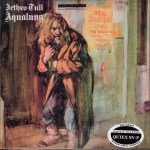
We recently put up a Hot Stamper Aqualung that just BLEW THE DOORS OFF the CLASSIC 200g pressing. Michael Fremer may think the new reissue is the ultimate pressing, but we sure don’t. 

The Aqualung shootout on his site is priceless. He has so many silly things to say about it, let’s not waste any more time and get right to them.

His Shootout Begins

He says he “… compared Classic’s new 200g reissue with: 1) an original UK Chrysalis 2) an original American Chrysalis/Warner Brothers, 3) an original French Pink Label Island, 4) The Mobile Fidelity ½ speed mastered edition and 5) DCC’s 180g issue mastered by the team of Hoffman and Gray.”

How many of each? One, right? (All the articles in front of the nouns are singular. Assuming MF is using good grammar, how many could there be?)

Mikey, that’s your first mistake.

When it comes to the domestic release, one is a wholly inadequate sample size for pressings that were pumped out by the millions and therefore mastered multiple times. Go to Discogs if you want to see just how many different stamper numbers can be found in the original Reprise pressings. Hint: it’s a lot. Some of them are known to us to be awful, some fall into the middle of the pack, and some we like. Figuring out which are which has taken us a lifetime of work and is well beyond the ability of any single person to decode for more than a few dozen records.

Maybe you got hold of a bad sounding “original American Chrysalis/Warner Brothers,” did you ever think of that? The record bins are full of them.

If you did get hold of a bad one — and all the evidence points in that direction — the time and effort you put into your shootout just went flying out the window, defenestrated as they say.

Shootouts using only a small number of pressings have very little value. Anybody who claims to know anything about records ought to know that.

This next line just floors me.

Now rather than make value judgments, let’s just compare without prejudice.

This guy may not be good for much, but he sure is good for a laugh.

Does he really expect us to believe that the comments that follow are not biased in any way, that they are The Truth, that he is able to measure “intimacy and warmth” and tell us precisely how much of each there is on any given pressing? Who in his right mind thinks like that?  (At this rate he may end up wandering about a park with snot running down his nose, greasy fingers smearing shabby clothes, but let’s hope it doesn’t come to that. Help is available; perhaps Stereophile has a mental health plan under which he could be covered.)

Soon enough he goes on to give his opinion as to the merits of each of the pressings noted above. I’m sorry, did I say opinion? I meant comparisons without prejudice. Sorry, my bad.

The Big Truth

And of course he is more than welcome to make any and all the comparisons he deems fit, each from that lovely sample size of one. And if he wants to add another sample (size = 1) to the mix by playing the DCC gold CD, he’s welcome to do that too, which he did. I’m guessing that his CD player is every bit as accurate as his front end (comprising turntable/ arm/ cartridge/ phono stage/ cables), which, if he were to ascribe a percentage to the accuracy of all the pieces that make up this chain, would have to be in the range of 100% or thereabouts. Or as the late John McLaughlin might say, on a scale of one to ten: ten, meaning Metaphysically Accurate.

No colorations. No imperfections. Pure Truth, and nothing but.

(more…)

Letter of the Week – “The [Heavy Vinyl] reissues seem to have a little too much sugar coating on them…”

One of our good customers had this to say about some Hot Stampers he purchased many, many years ago.

Hey Tom, 

The two Tull albums I purchased a while back sounded great, especially Aqualung — it didn’t have that murky sound that I remember my original had (same thing with my Black Sabbath albums).

I have a DCC pressing that I compared it to and I do like the Hot Stamper better. The reissues seem to have a little too much sugar coating on them, which makes them sound phony. The Sergio Mendes ‘Equinox’ sounded so much more alive than the copy I have. Keep up the good work.

Shane

Shane,

Records that have less sugar coating and sound more alive are the ones that tend to do well in our shootouts, as you know firsthand being a proud owner of many of them. That’s our sound in a nutshell, and yours too it seems.

Audiophile records are full of colorations, mostly the kind that boost the performance of smaller, less-revealing systems.

Good stereos don’t need their performance boosted; they just need good sounding records to play.

This is precisely why the one piece of advice we give out more than any other is the importance of improving the sound of your system before you waste any more money on audiophile pressings.

To help you to spot the shortcomings of audiophile pressings (at least the ones we’ve auditioned over the years), click here.

And you certainly don’t need to buy our wildly-expensive, obsessively-curated titles in order to get good sounding records.

The methods we’ve developed are sure to guarantee the success of anyone with the dedication, time and money to do the work they entail.

(Robert Brook has been doing shootouts the right way for many years now and has much to teach the readers of his blog. Also, another one of our good customers, Aaron, has documented his own experiences as he travels on the journey to better sound and therefore better sounding records.)

(more…)

Jethro Tull – One of the Worst Releases on DCC (and That’s Saying Something!)

Sonic Grade: F

The DCC pressing is a complete disaster, one of the worst sounding versions of the album ever made.

As bad as the MoFi is, the DCC is even worse. Murky and bloated, to my ear it does almost nothing right, not on vinyl anyway. The DCC Gold CD is better, and it’s certainly nothing to write home about. 

Our Hot Stamper commentary below sorts out the DCC, the Classic Records Heavy Vinyl pressing and the MoFi Half-Speed Mastered LP, as well as British and domestic originals.

We love this album and we’ve played every kind of pressing we could get our hands on. The winner? Read on!

Over the course of the last 25 years we was wrong three ways from Sunday about our down-and-out friend Aqualung here. We originally liked the MoFi.

When the DCC 180g came along we liked that one better, and a few years back I was somewhat enamored with some original British imports.

Our first big shootout disabused us of any notion that the British originals were properly mastered. As we noted in our Hot Stamper commentary, “The original Brits we played were pretty hopeless too: Tubey Magical but midrangy, bass-shy and compressed.”

Another myth bites the dust.

The same is true for Thick As A Brick; the best domestic copies are much more energetic and tonally correct.

Today’s Bad Heavy Vinyl Pressing Is… Aqualung!

Hot Stamper Pressings of the Music of Jethro Tull Available Now

An Audiophile Hall of Shame pressing and another Classic Records Rock LP badly mastered for the benefit of audiophiles looking for easy answers and quick fixes.

By the time the guitars at the end of the title track fade out you will be ready to take your heavy vinyl Classic Record pressing and ceremoniously drop it in a trashcan. (Actually, the best use for it is to demonstrate to your skeptical audiophile friends that no heavy vinyl pressing can begin to compete with a Hot Stamper from Better Records. Not in a million years.)

We Was Wrong on All Counts

Over the course of the last 25 years we was wrong three ways from Sunday about our down-and-out friend Aqualung here.

We originally liked the MoFi from the early ’80s. Wrong. Proof positive that In the early ’80s I didn’t have good reproduction or know much about records, but I sure thought I did!

When the DCC 180g came along in 1997 we liked that one better. Wrong again. It didn’t have MoFi’s usual midrange suckout and sloppy bass, but it was bad in so many other ways that it is hard for me to believe I ever liked it. But I did, to some degree anyway.

Back then I was a DCC believer, a mistake I would come to recognize once a few more years had passed. See here and here.

And a few years back I was briefly enamored with some original British imports. Wrong for the third time.

After playing more than two dozen pressings of Aqualung in our recent [circa 2010] shootout, it’s pretty clear that the right early Reprise pressings KILL any and all contenders. Forget all the Green Label Chrysalis pressings. Forget the reissues. Forget the imports. It’s original domestic Reprise or nothing when it comes to Aqualung.
(more…)

Aqualung Is a MoFi Disaster (But Some Folks Refuse to Believe It)

Hot Stamper Pressings of the Music of Jethro Tull Available Now

[This commentary was written about fifteen years ago, perhaps more.]

We noted in our Hot Stamper review for Aqualung that the MoFi is a disaster, with the murky bloated DCC even worse. (We didn’t like the Classic either. It seems we’re hard to please when it comes to Aqualung.) 

But we used to like the MoFi and DCC just fine. What could possibly have changed?

It’s a long story, and a pretty long commentary, which we have excerpted from a customer’s letter, along with our reply. Note that we have edited our original commentary and his letter for the sake of brevity. Now the letter:

To: Tom Port,

As far as “Aqualung” is concerned, I have a Mobile Fidelity issue of this album which sounds great and being pressed on some of the best vinyl in the world by people who are known for their meticulous care with records, I don’t think that there would be much difference at all in the quality of different MoFi pressings of this or any of their records.

The key phrase here is “I don’t think that there would be much difference at all…”. You see, this is not something to think about, this is something to test. Thinking got this gentleman nowhere; testing might have had the opposite effect.

How About Abbey Road?

And speaking of MoFis all sounding the same, we had a MoFi that we called “the Killer MFSL Abbey Road of All Time” which sold for $500. Our average copy is about $75. Which one do you think sounded better? And how can there be that big of a difference in the sound of one MoFi relative to another?

Don’t ask me; we just play them and price them according to the sound. Those big questions I defer to Joe. He thinks he has the answers.

(more…)

Why Own a Turntable if You’re Going to Play Mediocrities Like These?

Hot Stamper Pressings of Aja Available Now

Hot Stamper Pressings of Blue Available Now

Hot Stamper Pressings of Aqualung Available Now

This commentary was posted in 2007 and amended later with the statement that we would no longer be ordering new Heavy Vinyl titles. The thrill was gone and there was no sign of it ever coming back. It took a while to sell off the inventory, but by 2011 we had eliminated them completely from our site.

As it happens, 2007 turned out to be a milestone year for us here at Better Records.

If you bought any Heavy Vinyl pressing from us, ever, please accept our apologies.

Now is the perfect time to find out just how much a Hot Stamper pressing can do for your musical enjoyment. (You might consider taking the enthusiastic advice of these customers regarding that subject.)

Three of the Top Five sellers this week (8/22/07) at Acoustic Sounds are records we found hard to like: Aja, Aqualung and Blue. Can you really defend the expense and hassle of analog LP playback with records that sound as mediocre as the Rhino pressing of Blue?

Why own a turntable if you’re going to play records like these? I have boxes of CDs that sound more musically involving and I don’t even bother to play those. Why would I take the time to throw on some 180 gram record that sounds worse than a good CD?

If I ever found myself in the position of having to sell mediocrities like the ones you see pictured in order to make a living, I’d be looking for another line of work. The vast majority of these newly-remastered pressings are just not very good.

We Aren’t Walmart and We Definitely Don’t Want to Be Walmart

We leave that distinction to our colleagues at Acoustic Sounds, Elusive Disc and Music Direct (Walmart, Target and Sears perhaps?)

[Yes, Sears existed when I wrote this screed! Time flies.]

They sell anything and everything that some hapless audiophile might wander onto their site and find momentarily attractive, like shiny trinkets dangling from a tree, glittering as brightly as fool’s gold. They know their market and they know where the real money is.

(Hint: it ain’t records, dear reader, it’s equipment. If you haven’t seen one of their thick full-color catalogs lately, count how many pages of equipment you have to wade through at the front before you get to the “recommended recordings.”)


UPDATE

I would amend that to say that it probably is records now. Since 2007 they have become much more popular and profitable. Apparently you can cut the same title 16 different times and audiophiles will just keep buying it. Look at what is happening with reissues of The Beatles’ catalog.


(more…)