 Basic Audio Advice — These Are the Fundamentals of Good Sound
A fundamental tenet of conservatism is that we must accommodate ourselves to the world that exists, not the world we might want to pretend exists, or the world we would like to exist.
The laws of physics are laws — not theories, not recommendations — and they operate independently of how convenient we may find them.
It follows from this — if you will allow me to make the case — that not everybody with a stereo can play Rudy Van Gelder’s recordings properly, and some people cannot play Tarzan at all. (More on that below.)
There is a fellow, rl1856, who made some comments on Robert Brook’s blog, addressing the Tone Poets pressings of RVG’s recordings vis-a-vis vintage pressings that RVG mastered. (Emphasis added.)
rl1856 writes:
An original RVG 1st or 2nd pressing has a visceral, “edge of the seat” feeling that is missing in the TP [Tone Poets] and BN [Blue Note] Classic reissues. The RVG has a tighter stereo spread, and is voiced so that the listener feels they are very close to the musicians. The TP and Classic remasters have a more distant perspective. The soundstage is wider, but the added apparent distance between musician and listener significantly reduces the impact of the music. OTOH, the reissues have greater extension at frequency extremes, and reproduce more micro detail than original pressings. We know that RVG used a surprising amount of EQ when mastering his LPs back in the day. So we need to ask ourselves, what do we want ? A better version of what we are familiar with, including EQ compromises, or a more accurate representation of what was actually captured on the master tape in RVG’s studio ? The answers may be mutually exclusive.
My system: Linn LP12 ITTOK LVII, SoundSmith Denon 103D, Audio Research SP10MKIII, Luxman MA 88 monoblocks, or Triode TRV 845PSE, or Mac 240, KEF LS50. Resolving enough to easily hear differences in LP quality.
When an audiophile reveals that his equipment is simply not capable of reproducing the sound of live music, I think that we can safely ignore whatever opinions he may have offered about the sound of the records he is discussing.
It’s obvious that the records were played with unacceptably low fidelity, which means he has all the credibility of a blind man judging paintings.
If this person wants to make the case that he is in fact able to reproduce music with acceptable fidelity, we would need to know more about his system and room in order to take his claim more seriously.
 Basic Audio Advice — These Are the Fundamentals of Good Sound

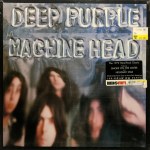 Hot Stamper Pressings of the Music of Deep Purple Available Now
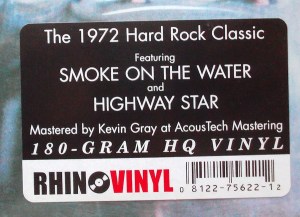 Rhino Records has really made a mockery of the analog medium.


