record-collecting-don’ts

If you want to put together a collection of records with audiophile quality sound, this group of commentaries highlights some of the more common methods and approaches that are best avoided.

Advice on Which Sgt. Peppers Pressings to Avoid

beatlessgtHot Stamper Pressings of Sgt. Peppers Available Now

UPDATE 2026

This letter came in many years ago, but the lessons to be learned from Chris’s failed approch to finding a good sounding copy of Sgt. Pepper are no doubt timeless.

Many audiophiles who start collecting records make exactly the same mistakes Chris made, and some percentage of those audiophiles, however small, actually learn from them. Sad to say, it seems that many do not.

In our own humble attempt to rectify the situation, we devote a great deal of time to discussing record collecting on this blog, seeing as how so many audiophiles suffer by going about it in all the wrong ways.


Chris, an erstwhile customer from long ago, sent us a letter describing his search for a good sounding Sgt. Pepper.

The first thing that comes to mind when reading his letter is that many record collecting rules were broken in going about the search the way he did.

But then I thought:

What rules?

Whose rules?

Where exactly does one find these rules?

If one wants to avoid breaking them they need to be written down someplace, don’t they? Wikipedia maybe?

Sadly, no, not at Wikipedia, or any place else for that matter — until now. As crazy as it sounds, we are going to try to lay down a few record collecting rules for record loving audiophiles, specifically to aid these individuals in their search for better sounding vinyl pressings. And by “these individuals” we mean you.

(more…)

Remastered, But Why on Earth Would They Bother?

New to the Blog? Start Here

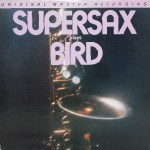
Supersax Plays Bird is awful music with awful sound.

In 1980 this record single-handedly convinced me that MoFi would lower themselves to remastering records that have little in the way of actual musical value.


UPDATE 2022

I just looked up the mastering engineer credited with cutting the original pressings in 1973, Wally Traugott. Now what are the chances that Stan Ricker cut this record better than Wally Traugott? One in a million? That would be my guess.

Which simply means that the right domestic pressing on Capitol might just be a good sounding record.

But why should anyone care? The music is hopeless.

(more…)

Houses of the Holy on Classic Records and 156 Other Records No Audiophile Should Want Anything to Do With

Hot Stamper Pressings of the Music of Led Zeppelin Available Now

Houses of the Holy is another one of the very bad records Michael Fremer put on his 2009 Top LP list, while passing over one of Classic’s better titles, the first Led Zeppelin album.

(We don’t like it as much as we used to, but it is still a good record if you get a good pressing of it, something that can never be guaranteed of course. We link to our review of it below.)

Michael Fremer’s web site used to be called called musicangle (now defunct). On this site you would have been able to find a feature called157 In-Print LPs You Should Own!”

Surprisingly it seems that the link still works. If I had made a list this misguided, it surely would have turned into a “I’m sorry,  I didn’t know what I was talking about” commentary. I would have felt an obligation to correct the record, out of sheer embarrassment at the very least.

But this guy apparently never learns. As far as he’s concerned, what worked in 1982 ain’t broke and don’t need fixing.

The List

I can’t begin to count the bad records on this list.

There are scores of them — albums that are so bad that we actually created an audiophile hall of shame section to help you avoid them.  Obviously we never got around to making listings for them all and cataloging their flaws. Who has that kind of time? 

But Michael Fremer holds just the opposite view — he thinks these are records you should own. Now I suppose we can disagree over the merits (or lack of them) of a title such as Houses of the Holy on Classic (reviewed here). It’s a free country after all.

But the reason this list does such positive harm to the record-loving audiophile public, in my opinion, is that MF passes over one of the best records Classic ever cut, Led Zeppelin’s first album, in order to put the ridiculously bright and aggressive Houses of the Holy on the list in its place.

(more…)

A Collection of Beatles Oldies on Video – Expert Advice?

The LOST Beatles Album | Cancelled By Apple – Should It Be Re-released?

Click on the link above to see an interesting and informative video that we think is well worth watching.

Allow me to make a few points:

As to the question posed above, my vote would of course be no. The new Beatles albums are awful sounding. Here are a few of rour eviews detailing their many shortcomings:

After playing those three, we gave up on the idea of playing the rest of the set.

The Mono Box (in analog!) was even worse. We played one record, heard truly awful sound, and that was all she wrote.

Mushy Sound Quality

Andrew Milton, the Parlogram Auctions guy, offers opinions about the sound quality of the various pressings he reviews. Naturally we are skeptical of reviewers’ opinions for reasons that should be clear to readers of this blog.

We have no idea how he cleans his records or how carefully he plays his records, or even what he listens for.

Frankly, even if we knew all those things it wouldn’t mean much to us. So many reviewers like so many bad sounding modern records that we’ve learned not to take anything they say seriously.

The comment about the 1G stampers being “mushy” that Andrew makes about 19 minutes in is one we take exception to. Part of the problem with his comment is that we can’t really be sure what he means by “mushy.” If it means smeary or thick, that has not been our experience with the best cleaned originals.

(more…)

To Find Better Sounding Records, Neglect Your Beautiful Ideas

Important Lessons We Learned Through Record Experiments

On the Big Think website, Michael Strevens has outlined some ideas from his recent book about how science advances.

I stumbled upon Strevens through Michael Shermer’s Skeptic Podcast. Shermer and his professor guest discuss at length (about an hour and a half) his singular insight that trying to understand and promulgate a Big Picture of Reality is what kept the scientists of the past (they used to call themselves natural philosophers) for hundreds of years from actually making the breakthroughs necessary to come up with one.

What was needed was data, and lots of it, with no concern for theories of any kind, elegant, inelegant or otherwise.

Here is the link to the podcast, which we feel is well worth your time if a deeper understanding of how we gain knowledge is a subject that interests you.

Some of the key takeaways from the book:

  • Modern science requires scrutinizing the tiniest of details and an almost irrational dedication to empirical observation.
  • Many scientists believe that theories should be “beautiful,” but such argumentation is forbidden in modern science.
  • Neglecting beauty would be a step too far for Aristotle.

My heart raced a bit when I read the line “an almost irrational dedication to empirical observation.”

This describes our obsession with finding the best sounding pressings of our favorite music better than any seven words I’ve ever come up with, that’s for sure. If only I were a better writer!

However, I did have some skills to bring to bear on the problems I was trying to solve, the most important of which was the fact that I was a naturally a skeptic.

(more…)

How to Avoid Making this Rookie Record Collecting Mistake

Record Shopping Day Video!

Not sure how much of this video you can stand — nothing could interest me less than watching a couple of vinyl enthusiasts spouting off on what they think about some random records sitting in a local store’s bins.

But one or two bits caught my eye. I thought I might take the opportunity to share my take on them with you.

Is there any value to the comments of these two collectors? If you care about what music they like, perhaps.  Anything about what to look for on the label or jacket that might correspond to better sound?  If it’s there I sure didn’t see it, but I admit to speeding through most of it, so I can’t say for sure.

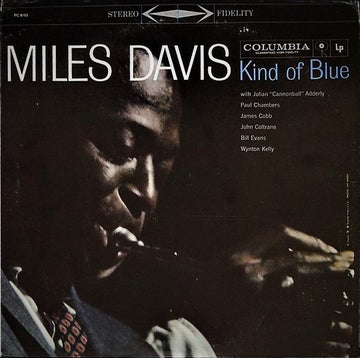
The first bit I refer to above is at 18:42.  The album in question is the legendary Kind of Blue. At this point the unseen helmet-cammed audiophile picks up the record, recognizes the cover, and proceeds to pull the record out to see what era the pressing is from.

Drat! The disappointment in this audiophile’s voice is palpable as he drops the record back in the bin with his dismissive comment that  “it’s a later pressing.”

But we here at Better Records would be falling all over ourselves to get our hands on that later pressing.

Those late pressings can and often do win shootouts. We would never look down our noses at a Red Label Columbia jazz LP, and neither should you.


UPDATE 2025

As good as the best pressings on the Red Label can sound, it has been years since one won a shootout. Here is our commentary for a recent 70s copy that went up on the site, one that earned a Super Hot grade on both sides.

They tend to sell for four or five hundred dollars these days. Why so much you ask? Because they beat the pants off of every so-called audiophile pressing of the album ever made. The testimony of one of our customers does a good job of describing the differences.

In addition, it turns out that at least nine out of ten of the copies with the red label are not remotely as good as the ones that earn Super Hot grades. The good ones are so rare that we only pick them up locally since practically none of the ones we find on the web have the right stampers. Trying to find the right red label needle in the haystack is more trouble than it’s worth, so don’t expect to see many coming to the site.


Our intrepid audiophile explorer does much the same thing about 23 minutes in. It seems pretty clear to us that he has no respect for such reissues, another example of one of the most common myths in record collecting land, the myth that the  original pressing is always, or to be fair, usually better.

This is simply not true, and those of our customers who have purchased White Hot Stamper pressings from us that turned out to be reissues know exactly what I am talking about. This is especially true for the records we sell by The Beatles. No original pressing has every won a shootout. [With one exception.]

Let’s get back to Kind of Blue.

Is the 50s original always better, is the 70s reissue always better, is the 60s 360 pressing always better?

No to one, two and three.

Why? Because no pressing is always better. All pressings are unique and should only be judged on their merits, and you do that by playing them, not by looking at their labels. For us this truth is practically axiomatic. It is in fact the premise of our entire business. Over the course of the 28 years we have been selling records we have never found any compelling evidence to invalidate it.

The day that someone can accurately predict the sound quality of a specific record by looking at the label or cover is a day I do not expect to come, ever.


UPDATE 2025

The above is somewhat misleading. With enough clean 6-Eye pressings on hand to play in a shooout, one of them will win.

That being the case, we have created two lists for those who would like to know which Columbia labels win shootouts — one for 6-Eye winners and one for 360 Label winners.


(more…)

If You’re Just Getting Started, Beware of LPs that Will Inhibit Your Progress

Hot Stamper Pressings of Blue Note Albums Available Now
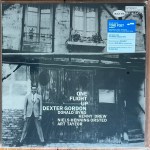
Robert Brook wrote a scathing review of the Tone Poets pressing of One Flight Up in 2023, much to the dissatisfaction of some of his readers. I was the first to leave a comment as I thought he hit the nail on the head when he said:

Overall, the Tone Poet is closed, distant and frankly boring to listen to. Where is the energy of the music? Where is the presence of these musicians? Where is the studio space?

The snare sounds muted. the piano weak, the horns, especially Gordon’s saxophone, resolves poorly and becomes increasingly tiresome to listen to. On my first listen I lasted about 3 minutes into side 1, mostly because I couldn’t stand the way the sax was sounding.

I posted the comments below on Robert’s review. (I have taken the liberty to rewrite some of my comments for the purposes of clarity, along with some additional thoughts.)

Robert,

Another great post. I have many comments to make, so here goes.

When audiophiles prefer records which are clearly second-rate, more often than not I chalk it up to their lack of a better record to play. In order to hear what they are missing, they have to have a record that somehow makes clear to them precisely which aspects of the sound are failing, or at the very least, not up to par.

You could give out the stamper numbers for your Blue Note reissue — I would be surprised if it does not have VAN GELDER STEREO in the dead wax — and those who like the Tone Poets release of One Flight Up could easily find one on Discogs or Ebay and do the comparison for themselves.

But you know what? I would bet you dollars to donuts they will never do that. They simply won’t bother.

(more…)

How Not to Conduct a Proper Shootout for Aqualung

UPDATE 2023

This commentary was probably written circa 2010 since that’s the date on Fremer’s Aqualung review, which, for those with much more tolerance for audiophile BS than I am able to muster can be found here. I’ve made a few changes to the commentary below, but most of the original text is intact.


We recently put up a Hot Stamper Aqualung that just BLEW THE DOORS OFF the CLASSIC 200g pressing. Michael Fremer may think the new reissue is the ultimate pressing, but we sure don’t. 

The Aqualung shootout on his site is priceless. He has so many silly things to say about it, let’s not waste any more time and get right to them.

His Shootout Begins

He says he “… compared Classic’s new 200g reissue with: 1) an original UK Chrysalis 2) an original American Chrysalis/Warner Brothers, 3) an original French Pink Label Island, 4) The Mobile Fidelity ½ speed mastered edition and 5) DCC’s 180g issue mastered by the team of Hoffman and Gray.”

How many of each? One, right? (All the articles in front of the nouns are singular. Assuming MF is using good grammar, how many could there be?)

Mikey, that’s your first mistake.

When it comes to the domestic release, one is a wholly inadequate sample size for pressings that were pumped out by the millions and therefore mastered multiple times. Go to Discogs if you want to see just how many different stamper numbers can be found in the original Reprise pressings. Hint: it’s a lot. Some of them are known to us to be awful, some fall into the middle of the pack, and some we like. Figuring out which are which has taken us a lifetime of work and is well beyond the ability of any single person to decode for more than a few dozen records.

(more…)

Two of the Worst Mistakes You Can Make Collecting Records

Our Guide to Record Collecting for Audiophiles

To be clear, it’s only a mistake if you are looking for top quality sound.

If, however, you are a record collector who doesn’t care about the sound of your records and is just looking for music to play, you may want to consider the very real possibility that you are on the wrong site. At the very least you are probably wasting your time.

Do you know many audiophiles who own multiple copies of the same album?

Some? Sure, okay. How many of them are still hunting around for more? Not many, right?

I’ve been buying duplicate copies of my favorite albums for more than three decades, but I’m not exactly your average audiophile record collector.

Fortunately for me, with the advent of Better Records in 1987, I’ve had an outlet for the second- and third-rate pressings I choose not to keep. (What’s left of my audiophile pressings are being sold on ebay these days. Good riddance!)

A few audiophile friends have multiple copies, but most audiophiles I know usually stop after one, or at most two or three.

At least they know not to make the worst mistake of them all: buying an audiophile pressing and figuring that that’s the one to keep.

Tossing out their vintage pressings, or never bothering to buy vintage pressings in the first place guarantees you will never have an especially good sounding collection of records to play.

Those of you who take the time to read our Hot Stamper commentary, whether you buy any of our special pressings or not, no doubt know better. At least I hope you do.

Hearing Is Believing

The only way to understand this Hot Stamper thing is to hear it for yourself, and that means having multiple copies of your favorite albums, cleaning them all up and shooting them all out on a good stereo.

Nobody, and we mean nobody, who takes the time to perform this little exercise can fail to hear exactly what we are on about.

If that’s too much trouble, you can join the other 99% of the audiophiles in the world, the ones who don’t know just how dramatic pressing variations for records and CDs can be. Probably a fairly large percentage of that group also doesn’t want to know about any such pressing variations and will happily supply you with all sorts of specious reasoning as to why such variations can’t really amount to much — this without ever doing a single shootout!.

Such is the world of audiophiles. Some audiophiles believe in anything — you know the kind — and some audiophiles believe in nothing, not even their own two ears.

(more…)

What Kind of (Audio) Fool Was I?

Thinking Critically About Records Is Key to Understanding Them

This commentary was written in 2007 or thereabouts.


Today’s audiophile seems to be making the same mistakes I was making as a budding audiophile more than thirty forty five years ago.

Heavy Vinyl, the 45 RPM 2 LP pressing, the Half-Speed Limited Edition — aren’t these all just the latest audiophile fads, each with a track record more dismal than the last?

And isn’t it every bit as true today as it was in the past that the audiophiles who buy these “special” pressings rarely seem to notice that many of them don’t actually sound very good?

Was Devo right? Is everything in audio getting worse?

Our Story Begins

One Man Dog has long been a favorite James Taylor album of mine. It didn’t catch on too well with the general public when it came out but it caught on just fine with me. I used to play it all the time. As a budding but misguided audiophile back in the early ’70s, I foolishly bought the import pressing at my local record store, The Wherehouse, assuming it would sound better and be pressed on quieter vinyl. The latter may have been true, probably was true, but the former sure wasn’t. Turns out even the average domestic original is far better sounding, but how was I to know?

Compare and Contrast? What For?

Back in those days it would never have occurred to me to buy more than one copy of a record and do a head to head comparison to see which one sounded better. I approached the subject Platonically, not scientifically: the record that should sound better would of course sound better, so what is the point of testing?

Later on in the decade a label by the name of Mobile Fidelity would come along claiming to actually make better sounding pressings than the ones the major labels put out, and — cluelessly — I bought into that nonsense too.

(To be fair, sometimes they did — Touch, Waiting for Columbus and American Beauty come to mind, but my god, Katy Lied, Year of the Cat and Sundown have to be three of the worst sounding records I’ve ever played in my life.)


UPDATE 2015

Obviously, we no longer agree with much of that except for the one MoFi record that has stood the test of time, Touch.


The Learning Curve Is Looking Awfully Flat

Pardon my pessimism, but it seems to me the learning curve these days is looking awfully flat. There doesn’t seem to be a whole lot of learning going on. If such learning were actually going on, how would most of these audiophile labels still be in business?

Don’t get me wrong: some progress has been made. Reference, Chesky and Audioquest thankfully no longer burden us with their awful LPs. But is the new Blue or Fragile really any better than the average MoFi from 1979? Different yes, but better? I know one thing: I couldn’t sit through an entire side of either of them on the remastered pressings. And I love both of those albums.

Compared to the real thing, can any of these records pretend to compete sonically? A few, I guess, but too few, and they seem to be pretty darn far between.

(more…)