cd-sound

The titles linked here have sound that reminds us of the run-of-the-mill CD, in some cases worse.

We have nothing against the sound of CDs. I own hundreds with excellent sound.

But a record should sound like a record, not a CD, or what’s the point? CDs are cheap. If you like that sound, just buy the CD.

Stop wasting your money on modern sounding Heavy Vinyl LPs. They can’t compete with the best vintage vinyl pressings.

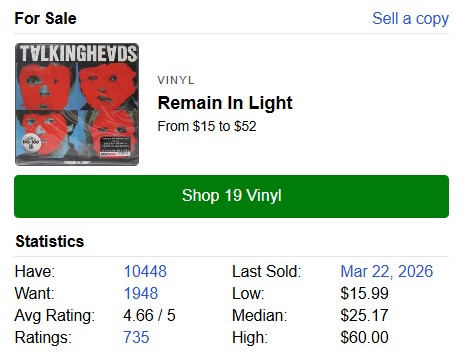
Remain In Light on Ridiculously Bad Sounding Rhino Vinyl

Hot Stamper Pressings of the Music of Talking Heads Available Now

UPDATE 2026

We reviewed this awful pressing shortly after its release in 2006. More proof, as if more were needed, that Heavy Vinyl collectors have lost their minds.

A more accurate formulation might be that such collectors can’t tell a good record from a bad one. If they could, the number owning this pressing would be a fraction of that seen below, as would the number who want it. Let’s take a deeper dive into the actual evidence for its desirability:

More than 10,000 Discogs members have this album, almost two thousand would like to own it, and the consensus is that it is an outstanding reissue, having earned a grade of 4.66 out of 5 from 735 members. (Don’t worry, I won’t show you what they had to say about it, but you are welcome to go to Discogs and read it yourself.)

With an average price of 25 bucks, what is keeping those 1948 potential buyers from pulling the trigger? Seems affordable to me. Inflation has gone up 62+% since 2006, making the album cheaper now than if you had bought it when it came out.


Our 2006 Review

The Rhino Heavy Vinyl reissue of this album was deemed dead on arrival the minute it hit my turntable.

No top, way too much bottom, dramatically less ambience than the average copy — this one is a disaster on every level.

Rhino Records has really made a mockery of the analog medium. Rhino touts their releases as being pressed on “180 gram High Performance Vinyl.” However, if they are using performance to refer to sound quality, we have found the performance of their vinyl to be quite low, lower than the average copy one might stumble upon in the used record bins. 

(more…)

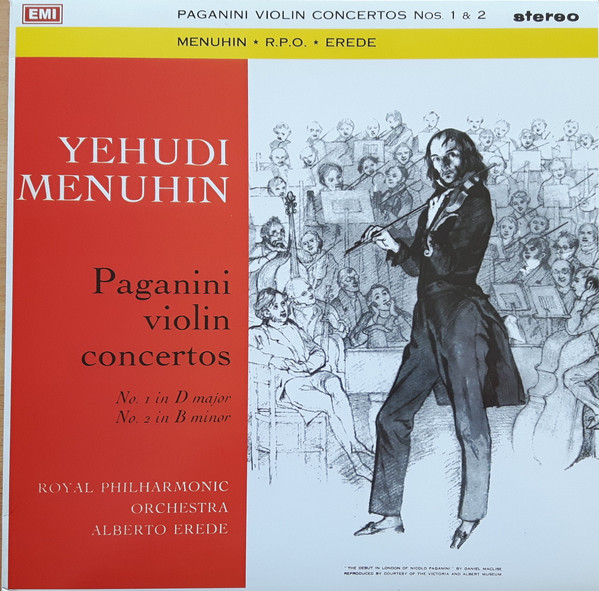
Paganini on Heavy Vinyl – Where Is the Outrage?

Hot Stamper Pressings of the Music of Paganini Available Now

Years ago we managed to get hold of the Heavy Vinyl pressing put out by Fenn Music in Germany, about which a well known record dealer on the web (you may recognize the style) had this to say:

“Stunning Reissue Of EMI ASD 440 Recorded In Stereo In 1961. This Recording Featuring The Royal Philharmonic Conducted By Alberto Erede Provides Convincing Proof, If Any Were Needed, That Menuhin Was One Of The Great Violinists Of The 20th Century.”

The “convincing proof” provided by this record is that those responsible for it are Rank Incompetents of the Worst Kind (see what I did there?).

Screechy, bright, shrill, thin and harsh, it’s hard to imagine worse sound than this piece of Heavy Vinyl trash delivers.

Had I paid good money to buy this pressing from 2004 in the hopes of hearing the supremely talented Yehudi Menuhin of 1961 tear it up on Paganini’s legendary first two concertos, I can tell you one thing: I would be pissed.

Where is the outrage in the audiophile community over this kind of trash?

I have yet to see it. I suspect I will grow quite a bit older and quite a bit grayer before anyone from the audiophile commentariat notices just how bad this record sounds. I hope I’m proven wrong.

Screechy, bright, shrill, thin and harsh, it’s hard to imagine worse sound from this piece of Heavy Vinyl garbage.

In other words, no trace of the original’s (or the early reissue’s) analog sound. At most I may own one or two classical CDs that sound this bad, and I own quite a few. When audiophiles of an analog bent tell you they don’t like the sound of CDs, this is why they don’t like them: they sound like this junky Heavy Vinyl record.

(more…)

A Question for Classic Records – What Did You Do to My Beloved Hot Rats?

Hot Stamper Pressings of the Music of Frank Zappa Available Now

Second question: This pressing of Hot Rats is analog?

You could’ve fooled me.

And somebody’s been messing around with the drums on the new version — a certain Mr. Frank Zappa no doubt. He really did the album a disservice. If you know the album well, and I know it very well, having played it literally hundreds of times, the Classic is positively unlistenable. (The reworked CD of Ruben and the Jets is even worse.)

Bernie’s version for Classic beats a lot of copies out there — the later Reprise pressings are never any good — but it can’t hold a candle to a good one.

What’s wrong with the Classic?

Well, to my ears it just doesn’t sound natural or all that musical. Sure, it’s a nice trick to beef up those drums and give them some real punch, but does it sound right? Not to these ears.

The other quality that the best copies have going for them and the Classic has none of is Tubey Magic. The Classic is clean, and at first that’s a neat trick since the originals tend to be a bit murky and congested.

But it’s clean like a CD is clean, in all the wrong ways. 

The overall sound of the best originals is musical, natural and balanced. The Classic has that third quality — it’s tonally correct, no argument there — but musical and natural? Not really.

(more…)

Steely Dan ‎on MCA Audiophile Vinyl – Sounds Like a Good CD to Me

Hot Stamper Pressings of the Music of Steely Dan Available Now

Clean and clear and tonally correct, just like a good CD should sound.

If this is what you are after, why not just buy the CD? It’s bound to be a lot cheaper.

Some songs sound better than others, but I can’t for the life of me remember which ones. I auditioned copies of this record more than twenty thirty years ago. Once I got rid of them I never bought another. Why would I?

No doubt there are still audiophiles extolling the virtues of this record on various internet threads.

One thing you can be sure of: these are people who are not serious about making progress in audio.

Some of the pressings these audiophiles like can be found in our stone age audio record section.

If you have top quality, highly-tweaked modern equipment, a good room, and the myriad other things that make exceptionally good vinyl playback possible these days — in a way that was not possible even ten or fifteen years ago — you would have no reason to keep a record of such mediocrity in your collection.

(more…)

How Does the Heavy Vinyl Rubber Soul Sound?

Hot Stamper Pressings of Rubber Soul Available Now

This review was originally written in 2015.


We are so excited to tell you about the first of the Heavy Vinyl Beatles remasters we’ve played! As we cycle through our regular Hot Stamper shootouts for The Beatles’ albums we will be of course be reviewing more of them*. I specifically chose this one to start with, having spent a great deal of time over the last year testing the best vinyl pressings against three different CD versions of Rubber Soul.

The short version of our review of the new Rubber Soul vinyl would simply point out that it’s awful, and, unsurprisingly, it’s awful in most of the ways that practically all modern Heavy Vinyl records are: it’s opaque, airless, energy-less and just a drag.

I was looking forward to the opportunity to take Michael Fremer, the foremost champion of thicky vinyl, to task in expectation of his usual rave review, when to my surprise I found the rug had been pulled out from under me — he didn’t like it either. Damn!

MF could hear how bad it was. True to form, he thinks he knows why it doesn’t sound good:

As expected, Rubber Soul, sourced from George Martin’s 1987 16 bit, 44.1k remix sounds like a CD. Why should it sound like anything else? That’s from what it was essentially mastered. The sound is flattened against the speakers, hard, two-dimensional and generally hash on top, yet it does have a few good qualities as CDs often do: there’s good clarity and detail on some instruments. The strings are dreadful and the voices not far behind. The overall sound is dry and decay is unnaturally fast and falls into dead zone.

It strikes me as odd that the new vinyl should sound like a CD. I have listened to the newly remastered 2009 CD of Rubber Soul in stereo extensively and think it sounds quite good, clearly better than the Heavy Vinyl pressing that’s made from the very same 16 bit, 44.1k remixed digital source.

If the source makes the new vinyl sound bad, why doesn’t it make the new CD sound bad? I can tell you that the new CD sounds dramatically better than the 1987 CD I’ve owned for twenty years. They’re not even close. How could that be if, as MF seems to believe, the compromised digital source is the problem?

Lucky for me I didn’t know what the source for the new CD was when I was listening to it. I assumed it came from the carefully remastered hi-rez tapes that were being used to make the new series in its entirety, digital sources that are supposed to result in sound with more analog qualities.

Well, based on what I’ve heard, they do, and those more analog qualities obviously extend to the new Rubber Soul compact disc. At least to these ears they do.

It’s possible my ignorance of the source tape allowed me to avoid the kind of confirmation bias — hearing what you expect to hear — that is surely one of the biggest pitfalls in all of audio and a pit that Fremer falls into regularly.

(more…)

How Do You Make a Vintage Jazz Recording Sound Wrong?

Hot Stamper Pressings of Jazz Albums Available Now

How do you make a vintage jazz recording sound wrong?

Easy. Just take out all the Tubey Magic that was captured on the master tape all those years ago by Howard Holzer and Roy DuNann.

You know the kind of Tubey Magic I’m talking about. It’s the trademark sound of every vintage Contemporary pressing ever made. It’s the defining sound of the best jazz recordings from the era. It’s the reason that jazz lovers and record collectors the world over pay big bucks for vintage pressings — because they have the sound of tubes.

When you take away that one quality — just the one, leaving everything else as it should be: the bass, the mids, the highs, the energy, the space, the size, you name it — what you are left with doesn’t sound right.

It no longer sounds the way a jazz record from 1958 would sound.

If you don’t know that sound, it’s possible that this cheap reissue pressing from 1984 might not be as bothersome for you as it was for us. But we’ve played vintage jazz records from the 50s by the hundreds. They never sound like this. The reissues might, but the best early pressings sure don’t.

Maybe This Is Your Sound?

However, if you happen to like the sound of CDs for some reason, something that is frankly hard to imagine but nevertheless seems to be true, this OJC might just be the ticket.

We’ve never liked that sound, and we sure don’t like this pressing.

Other records we’ve played that sounded like CDs to us can be found here.

We’ve only played three releases on the Music Matters label, but all three of them sounded like CDs to us — Green Street, The Magnificent Thad Jones, and Tina Brooks’ True Blue (review coming someday!).

Much of Kevin Gray‘s work has the kind of sound we associate with the compact disc. We don’t understand why everyone doesn’t hear how badly mastered his records are, but we have no trouble recognizing their many faults. They are, to one degree or another:

The OJC pressings of Harold in the Land of Jazz we played were thinner and brighter than even the worst of the 70s LPs we auditioned.

They did not make the cut for our shootout, a shootout we abandoned years ago because the early pressings we liked were just too rare, too noisy and too expensive to justify the cost and effort that would be required to make a shootout a reality.

(more…)

Music Matters – Tizzy Cymbals and a Bright Snare Drum, That’s Your Idea of Audiophile Sound?

Hot Stamper Pressings of Blue Note Albums Available Now

UPDATE 2026

This review was written in 2021.


An audiophile hall of shame pressing and a Heavy Vinyl disaster if there ever was one (and oh yes, the audiophile world is practically drowning in them).

After discovering Hot Stampers and the mind-blowing sound they deliver, a new customer generously sent me a few of his favorite Heavy Vinyl pressings to audition, records that he considered the best of the modern reissues that he owns.

He admitted that most of what he has on Heavy Vinyl is not very good, and now that he can clearly hear what he has been missing, having heard some of our best Hot Stamper jazz pressings, he is going to be putting them up on Ebay and selling them to anyone foolish enough to throw their money away on this kind of junk.

We say more power to him.  That money can be used to buy records that actually are good sounding, not just supposedly good sounding because they were custom manufactured with the utmost care and marketed at high prices to soi-disant audiophiles.

Audiophile records are a scam. They always have been and they always will be.

I haven’t listened to a copy of this album in a very long time, but I know a good sounding jazz record when I hear one, having critically auditioned more than a thousand over the course of the 33 38 years I have been in business. (To be clear, we only sold verified good sounding records starting in 2004.)

I knew pretty early on in the session that this was not a good sounding jazz record.  Five minutes was all it took, but I probably wasted another ten making sure the sound was as hopeless as it initially seemed.

For those of you who might have trouble reading my handwriting, my notes say:

  • Bass is sloppy and fat.

The bass is boosted and badly lacks definition. It constantly calls attention to itself. It is the kind of sloppy bass that cannot be found on any RVG recording, none that I have ever heard anyway, and I’ve heard them by the hundreds.

You no doubt know about the boosted bass on the remastered Beatles albums. It’s that sound. Irritating in the extreme, and just plain wrong.

  • Reserved. Playing through a curtain.

Very few Heavy Vinyl records these days do not sound veiled and reserved in the midrange.

To get a better sense of the effect, throw a medium weight blanket over your speakers. Voila! Your thin vinyl now weighs 180 grams!

  • No space.

Typical of Heavy Vinyl. The studio space and ambience found on the better vintage pressings, the kind we play all day long, is GONE.

RTI pressings are serial offenders in this regard.  We find them uniformly insufferable.

  • No transients.

Not the sound of the instruments that RVG is famous for.  No leading edges to any instrument anywhere.

Somebody screwed them up in the mastering. Bad cutting equipment? Bad EQ? Both? What else could it be?

  • Boring.

Of course it is. Nothing sounds right and it’s all just so dead.

I would be very surprised if the CD was not dramatically better sounding in practically every way, and far more fun to listen to.

  • Snare is hot when played loud like a bad OJC

We’ve auditioned close to a hundred OJC titles over the years. We sell quite a few of them, but of course we only sell the ones that sound good. We are in the good sounding records business. And some of them are hard to beat.

But lots of them have a phony, boosted top end, easily heard as tizzy, sizzly, gritty, phony cymbals and too-hot snare drums.

This record has that phony sound.

We would never sell any record that sounds this phony and wrong. It is an utter disgrace and an affront to vinyl loving audiophiles around the world.

If this record sounds right to you, one thing I can say without fear of contradiction: no matter how much money and time you may have spent on it, you still have a great deal of work to do on your stereo system if you want it to sound right.

(more…)

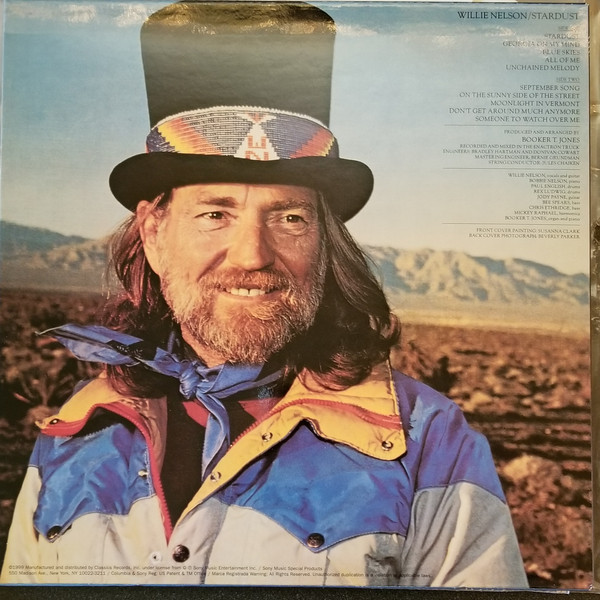
What Willie and Nat Can Teach Us about Heavy Vinyl

Hot Stamper Pressings of the Music of Willie Nelson Available Now

This letter came to us many years ago. Updates have been added as of 2024.

One of our good customers had this to say about some Hot Stampers he had purchased:

Hello team,

I’ve been a little distracted here, I got married over the weekend! So, haven’t done as much listening over the past couple of weeks. However, I did have a chance to listen to Stardust and Love Is The Thing. They were both different than their Classic Records and Analogue Productions counterparts. Willie sounded a little smoother, more organic, and more integrated.
The strings on Love Is The Thing were very different, more pronounced and emotional, but Nat’s voice, and the sound overall, sounded a little strident, maybe “too” hot.

I’d like to send them both back to you, and if you have a chance to send back the discs I sent to you I’d very much appreciate it. All told, the two big sets of Better Records are really incredible, and only serve to make my want list grow. Here’s to you and the next set!

Doug,

We now have the update for those two titles.

I, along with the two other guys in our listening panels, sat down to play the Heavy Vinyl you sent us, and the long and short of it is that we were astonished that records that sound as bad as those two actually were approved for release.

Nat is wrong six ways from Sunday, and Willie is not so much wrong as just not very good.

Nat: “F,” one of the worst heavy vinyl disasters of all time, and Willie: “D” sound, more like a CD than a record. There are many pressings of this album that are not good, but this version is probably worse than most of them, hence the D grade.

The old Classic pressing is probably better, and it would earn about a C grade. [I honestly do not remember exactly what pressing Douglas sent us. All I remember is that it was on Heavy Vinyl.]

I suspect the CDs of both these pressings are much better sounding than this vinyl.

The DCC gold is definitely better by a long shot, and the plain old Willie CD is probably a step up as well. 


A Further Update

(more…)

The Yellow Submarine Songtrack Did Not Float My Boat

Last year a customer wrote to tell me how much he liked the sound of his 2004 Japanese DMM pressing of the Yellow Submarine Songtrack.

After looking into the background of this album, we saw right from the start that it had three strikes against it.

First off, we rarely like Japanese pressings outside of those that were recorded in Japan, such as the direct to disc jazz and classical records we’ve done shootouts for. Other Japanese pressings we like were recorded in the states for the Japanese market: the jazz direct to discs on East Wind come to mind.

Secondly, whenever possible we avoid DMM pressings. They often add what seems to us like digital artifacts to the sound.

And lastly, we rarely like modern remixes, especially modern remixes that obviously use digital processes of various kinds. The remixed Abbey Road is a complete disaster. Nothing that comes out of Abbey Road these days should be expected to sound good. Their work is a disgrace.

So rather than buy the Japanese-pressed version of the album, we cheaped out and just bought a UK one for half the price.

We half-expected the worst and that’s pretty much what we found.

I used to sell this very version of the album back in 1999 when it came out. I thought it sounded just fine. That was about twenty years ago. My all tube system was darker and dramatically less resolving than the one I have now.

Scores of improvements have been made since then to every aspect of analog reproduction, something we discuss endlessly on this blog.

We Have No Idea

To be fair, we admit that we have no idea what the Japanese pressing of the album sounds like. We’ve never played one.

So what’s wrong with the UK pressing of the Yellow Submarine Songtrack?

From the notes reproduced on the left — incidentally some of the last I wrote before I retired — you can see that the overall sound struck me as drythin and CD-like.

(more…)

The Cars on Rhino – Man, This Record Is Bad

Hot Stamper Pressings of the Music of The Cars Available Now

I mean, really bad.

Kevin Gray has struck again. He’s a modern one man demolition crew, taking exceptionally well recorded analog albums and turning them into the vinyl equivalent of CDs, and bad CDs at that.

Steve Hoffman did the first Cars album on Gold CD and it sounds quite good. I still own mine. How can Kevin Gray, his former assistant, make such a mess of the album on vinyl?

This question has a rather obvious answer, and much of what we have to say about this record was said in our review of the disastrous Stand Up Gray cut for Analogue Productions.

Allow us to repeat ourselves:

We were finally able to get our hands on the newly remastered Cars first album, a record we know well, having played them by the score. Our notes for the sound can be seen nearby.

If ever a record deserved a “no” grade, as in “not acceptable,” this new pressing mastered by Kevin Gray deserves such a grade, because it’s just awful.

Here is what we heard on side one of the new Cars remaster.

Good Times Roll

  • Top is sandy  [Sandy typically refers to transistory, dry, grainy, or gritty sound.]
  • Hi-hat is spitty and gritty

My Best Friend’s Girl

  • No real space or punch
  • Flat and sandy

You’re All I’ve Got Tonight

  • Flat
  • No real space or weight
  • No dynamics

Bye Bye Love

  • Soft and sandy
  • Small and smeary

Grant Green on Music Matters had many of these same problems. Unsurprisingly, it too was mastered by Kevin Gray.

How this guy is still getting work is beyond me.

I am clearly being facetious here. These guys get work because audiophiles will buy the records they master. The market has decided these records sound just fine, and who am I to say otherwise?

Of course, people can say anything they want about these records, opinions being worth what you pay for them.

We take a different approach. We will sell you the pressing of the album that can mop the floor with this Heavy Vinyl trash. We rarely have the first album in stock, but if you want one, just let us know and we will be glad to put you on the waiting list. Email Fred at fred@better-records.com.

Compared to What?

Is the Rhino pressing the worst version of the album ever made? In our view, it’s only competition would be this disaster, a record that also sold well back in the day. The more things change…

If I were to try to reverse engineer the sound of a system that could play this record and hide its many faults, I would look for a system that was thick, dark and fat, with plenty of tube colorations and no real top end to speak of.

I know that sound. I actually had a system thirty years ago with many of these shortcomings, but of course I didn’t have a clue about any of that. Like every audio enthusiast I met back then, I didn’t know what I didn’t know.

I’m glad to say things are different now, I think.

If you made the mistake of buying this record and can’t stand the phony top end, try covering your tweeter with something absorbent. Foam might work. Also you could try disconnecting your super tweeters if you have any. This is good advice for any record mastered by Stan Ricker as well.

Since that old school vintage tube sound takes the opposite approach to music reproduction that we’ve spent the last few decades working on here at Better Records — our goal being neutrality above all else — we are clearly not playing the record back on equipment that is capable of making it sound anything but godawful, hence our relentlessly negative reaction to the record.

On any properly setup, halfway decent stereo system, any original pressing with RTB in the dead wax should murder this Heavy Vinyl piece of junk. If you don’t have a system like that, we encourage you to get one. You will save a lot of money by not buying crap vinyl like this, only to discover later just how bad it sounds on the higher quality equipment you eventually end up with. (Here is some good news on that subject.)

Although, to be honest, if you are buying these kinds of awful records, it’s hard to see how you will ever get out of the hole you are in. Some audiophiles manage it, but I suspect that most never do.

You can also buy the CD — whether on DCC Gold or just whatever disc Elektra put out — and hear for yourself if it isn’t better sounding. I would be very surprised if it were not.

(more…)