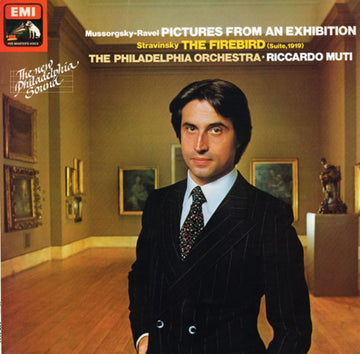
This TAS List record with a Super Hot stamper side one has some of the best sound we have ever heard for the Shaded Dog Reiner/CSO Pictures, and side two, although it starts out a little weak, gets going soon enough and earns a Super Hot Stamper sonic grade as well.
Side one is open and natural in the best Living Stereo tradition, with rich lower strings that have virtually no Golden Age smear.
Turn it up and listen for the big cymbal crashes — that’s the sound we love. It’s so good it even allows me to enjoy Reiner’s performance, never one of my favorites.
Side One
A++, transparent and free from smear, not many copies are going to beat this one! A little more top would have been nice.
Listen to: Samuel Goldenburg und Schmuyle
Superb sound! The brass and strings on this part of the work are as good as it gets. No smearing of the brass — it’s clean and clear like it is in the concert hall. We’re so used to hearing it wrong that it takes a record like this to remind us how good a full brass choir can really sound.(more…)
Lately I have been listening to this piece of music from start to finish over and over again, at this point easily ten times through, immersed in the glorious display of more orchestral color than one could possibly imagine in a single piece of music (including The Planets I dare say), in all of 35 minutes no less.
What triggered this behavior you ask? Hearing it performed live a few months back (5/2026?) planted the seed, and rediscovering the CD in my collection allowed me to get obsessed with it, something I tend to do when a piece of music is as full of life as this one is. We describe Muti’s performance of the work this way:
The EMI import pressing you see here gives you the complete Pictures at an Exhibition with a top performance and superb sonics.
Pictures is a piece of music that has been recorded countless times. I’ve played scores of different recordings starting at about the age of twenty, but the only one that still satisfies is this one, Muti’s 1979 recording with the Philadelphia Orchestra. Much like Previn and the LSO’s performance of The Planets, he brings out musical qualities in the work better than any other conductor with which I am familiar.
If I were limited to only one record to test a system with, it would be hard to choose a better one than a top copy of the Muti on EMI. (It’s almost, but not quite, all you would need.)
My advice would be to go and find yourself a clean UK pressing as quickly as possible.
It may eventually become your favorite orchestral recording of all time the way it has become mine, at the tender age of 72 in my case!
In the meantime, check out the wonderful performance recorded by the Oslo Philharmonic available on youtube. If you have big speakers hooked up to your TV and are willing and able to play them good and loud, you are in for a treat.
The performance is easily one of the best I’ve ever heard, although a bit slower and more measured than ideal. However, it would clearly be superior to those on offer by second- and third-rate orchestras, of which there are many in my experience.
Here is the precision and energy that is surely missing from those performances, as well as most recordings truth be told, whether analog or digital. (The CD on EMI by the way is excellent and highly recommended.) As I said, the pacing is a bit slow, but the ability to see all the players and their instruments is a huge bonus on a powerful work such as this.
List of Instruments (AI Assisted)
Woodwinds: 3 Flutes (1 doubling piccolo), 3 Oboes (1 doubling English horn), 2 Clarinets, 1 Bass Clarinet, 2 Bassoons, 1 Contrabassoon, and 1 Alto Saxophone (featured prominently in The Old Castle).
Brass: 4 Horns, 3 Trumpets, 3 Trombones, 1 Tuba, and 1 Euphononium (or Saxhorn, often performed on Euphonium or Tuba for the Bydło soloist movement).
It just so happens that I had the time to listen to this work from start to finish twice just last night, 2/11/2026. Saw it performed live just a few months back at Atlanta Symphony Hall.
This wonderful work never gets old. Next time we do a shootout for the performance we like with Muti on EMI I hope you will see your way to picking up a copy. You won’t regret it.
The Classic Records repressings of Pictures at an Exhibition — whether at 33, 45, or any other speed, on one disc or four –are all godawful sounding.
(Yes, we have auditioned both versions, for as long as we could stand them, which wasn’t long as the sound was painfully bad. The details can be found below.)
Everything that was bad about the worst original Shaded Dog pressings not only hasn’t been fixed, it’s been made even worse!
Yes, we admit to having played a good pressing of LSC 2201 in 2024, but there are just too many bad pressings of the album to bother doing a shootout for it. It’s hard to justify the cost when so few have the sound we are looking for.
The shrillness, the hardness, the sourness, the loss of texture to the strings, the phony boosted deep bass — this is the kind of sound that makes my head hurt and my skin crawl. After a minute or two of listening to sound this bad I’ve had it.
And can you believe that HP put this miserable remastered pressing on his TAS Super Disc List? Sad but true.
No doubt some do, but based on our admittedly limited experience, we rather doubt any of the titles shown here, or from this series, are likely to be very good sounding.
I was going to write about the awful Holst The Planets with Previn from this series that I had played a few years back, but never got around to it.
Lots of punchy, powerful and deep bass — yes, 45 RPM mastering is known for that — but the dry, overly clean, clear, modern sound and the screechy strings made me take it off the turntable halfway through the first side. (We write more about EMI and Angel pressings here.)
There is a slightly multi-miked quality to this recording. If you’ve been playing true Golden Age records all day you will notice that the instruments are more naturally and correctly spaced and sized on those recordings.
But, this is still a KNOCKOUT record which is guaranteed to bring any stereo to its knees. The dynamics, the deep bass and the sheer power of the orchestra have to be heard to be believed.
What does the typical EMI pressing of this album sound like?
Not good. Sour brass, smeary or shrill strings, lacking in bass — mid-hall dead-as-a-doornail sound is fairly typical.
Almost all the copies I’ve played are spacious, but so what?
The sound of the instruments is often wrong and in my book that trumps any benefits concerning soundstaging or depth.
But the best Hot Stamper pressings give you the presence and immediacy you need to get involved in the work.
The strings on the better copies have rosiny texture.
The brass has weight — not the full measure of an RCA or London recording, but at least you get the impression that those instruments are trying to sound correct.
And the bass drum really goes deep, unlike many of the Golden Age recordings I’ve heard.
This Chicago Symphony recording by RCA in 1968 has that BIG HALL SOUND we love here at Better Records.
Multi-miking is kept to a minimum, which allows the listener to visualize the orchestra from a more natural perspective than some of the other recordings of the work you may have heard.
The sound is open and spacious, with lovely texture to the strings. The larger horns are especially well-captured here, Their dark and powerful sound, coupled with the fact that the recording is so dynamic and full-bodied, can really be quite moving. It might just send some shivers up your spine.(more…)
This original Shaded Dog pressing of the New Symphony Orchestra of London’s performance of these classical warhorses boasts seriously good Double Plus (A++) Living Stereo sound from first first note to last
If the price seems high, keep in mind that the top copy from our most recent shootout went for almost $3000(!)
A quick look at the cost of used copies on eBay or Discogs should tell you all you need to know about how impossibly tough it is to get this shootout going these days – we may not do it again for a very long time!
These TAS-approved sides are doing just about everything right – they’re rich, clear, undistorted, open, spacious, and have depth and transparency to rival the best recordings you may have heard
The rich, textured sheen of the strings that Living Stereo made possible in the 50s and early 60s is clearly evident throughout these pieces, something that the Heavy Vinyl crowd will never experience, because that sound just does not exist on modern records
We have written extensively about this recording and went into some depth about the Classic Records repress of it, which you can find linked here and here.
Demonstration Quality Sound, of a sort. As I’ve said elsewhere on the site, this is not my idea of natural tonality. It’s not trying to be a realistic recreation of music performed in the concert hall. It’s a blockbuster to be impressive when played on an audio system in your home. On that level is succeeds.
The excerpt on side 1 from Pictures at an Exhibition and the complete A Night on Bare Mountain are both played with a kind of energy and attention to detail that allows these pieces to come alive right in your living room.
The entire side 2 is outstanding from start to finish.
Only the Arnold piece on this record is not particularly inspiring, although it does have excellent sound.
All in all, an amazing group of warhorses given a fresh reading by Alexander Gibson and the New Symphony Orchestra of London.
This EMI import pressing gives you the complete Pictures at an Exhibition with a top performance and superb sonics.
As this is my All Time Favorite performance of Pictures, this record naturally comes very highly recommended. Pictures is a piece of music that has been recorded countless times, and I’ve played scores of different recordings, but the only one that truly satisfies is this one, Muti’s 1979 recording with the Philadelphia Orchestra. Much like Previn and the LSO’s performance of The Planets, he finds the music in the work that no one else seems to.
A Must Own Classical Record
This orchestral spectacular should be part of any serious Classical Collection. Other Must Own classical recordings can be found here.
For his 1979 review of the Mussorgsky, Robert Layton in the GRAMOPHONE writes of Muti and The Philadelphia Orchestra :
…what orchestral playing they offer us. The lower strings in ‘Samuel Goldenberg and Schmuyle’ have an extraordinary richness, body and presence, and “Baba Yaga”, which opens the second side, has an unsurpassed virtuosity and attack as well as being of demonstration standard as a recording. The glorious body of tone, the richly glowing colours, the sheer homogeneity of the strings and perfection of the ensemble is a constant source of pleasure.
We describe the better copies of Muti’s Pictures for EMI this way in our listings:
Our favorite performance by far, with big, bold and powerful sonics like no other recording we know.
The brass clarity, the dynamics, the deep bass and the sheer power of the orchestra are almost hard to believe. No vintage recording of these works compares with Muti’s – and Stravinsky’s Firebird Suite is an extra special added bonus on side two.
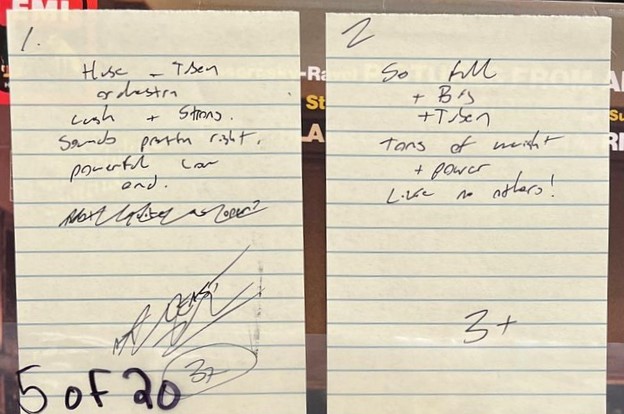
Here are the notes for our most recent Shootout Winning pressing to back up everything we say.
Side One
Huge and tubey orchestra
Lush and strong
Sounds pretty right
Powerful low end
Side Two
So full and big and tubey
Tons of weight and power
Like no others!
No doubt the enthusiastic nature of these notes is in response to the big finish for Pictures.
It is a very special piece of music, one that has thrilled me as an music-loving audiophile since I first heard it on record sometime in my twenties, and this was a very special pressing of the recording. In the old days a side two like this might have been given a grade of Four Pluses, but we don’t do that anymore, for reasons explained elsewhere on the blog.
Regardless of what grade we chose to give it, this side two was superior to either side of every other copy we played. It set a standard that no other side could meet. Yes, exceptional vintage pressings with sound that good are out there sitting in the record bins.
More from Our Listing
There is a slightly multi-miked quality to this recording. If you’ve been playing true Golden Age records all day you will notice that the instruments are more naturally and correctly spaced and sized on those recordings.
But, this is still a KNOCKOUT record which is guaranteed to bring any stereo to its knees. The dynamics, the deep bass and the sheer power of the orchestra have to be heard to be believed.
What does the typical EMI pressing of this album sound like? Not good. Sour brass, smeary or shrill strings, lacking in bass — mid-hall dead-as-a-doornail sound is fairly typical. Almost all the copies I’ve played are spacious, but so what? The sound of the instruments is often wrong and in my book that trumps any benefits concerning soundstaging or depth.
But the Hot Stampers give you the presence and immediacy you need to get involved in the work. The strings on the better copies have rosiny texture. The brass has weight — not the full measure of an RCA or London recording, but at least you get the impression that those instruments are trying to sound correct. And the bass drum really goes deep, unlike the Golden Age recordings I’ve heard.
But are they? The so-called “glorious, life-changing” sound of one Heavy Vinyl reissue after another seems to be the only kind of record audiophiles and the reviewers who write for them want to talk about these days.
Even twenty years ago reviewers noted that tracks on compilations such as this often had better sound than the albums from which they were taken, proof that they were listening critically and comparing pressings.
What happened to reviewers of that caliber?
I can tell you what happened to them: they left audio, driven out according to the principle that underlies Gresham’s Law:
Bad reviewers drive out good ones.
Which leaves you with the type that can’t tell how mediocre-at-best most modern Heavy Vinyl reissues are. A sad state of affairs if you ask me, but one that no longer impacts our business as we simply don’t bother to buy, sell or play most of these records.