seismic-sink

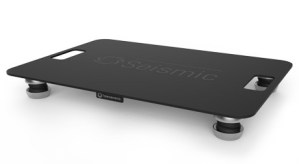
The Townshend Seismic Platform: Essential in Analog Playback

Robert Brook has a blog which he calls

A GUIDE FOR THE DEDICATED ANALOG AUDIOPHILE

The Townshend Seismic Platform: ESSENTIAL in ANALOG Playback

Robert mentions that his original commentary for the Seismic Platform has been lost. Here is what’s left of it.

I shared my story of starting out with the ‘bladder” version of the sink (now called a platform) back in the early 2000s, noting what a pain it was and how the amount of air in each of the three bladders changed the sound of the turntable.

Fortunately, those days are gone. It is now set and forget (although, like everything else in audio, you need to tweak it a bit to get the most benefit from it). You can contact Townshend for pricing and the cost of shipping direct to you, no middleman (that used to be us!) involved. We cannot recommend any piece of audio gear more highly.

(Please note that we do not make a dime from this product. We want you to buy them — yes, ideally you’re going to need more than one — so that your stereo can show you just how much better our vintage vinyl pressings are when directly compared to any and all others.)

Some background:

A few years back I discovered something wonderful about the Seismic Sink I was using under my turntable to control vibration. In our experience, vibration control is one of the most important revolutionary advancements in audio of the last twenty years or so. This commentary should help to give your tweaking efforts more context.

(more…)

How We Test Equipment Like the Townshend Seismic Platform

Basic Audio Advice — These Are the Fundamentals of Good Sound

A few years back I discovered something wonderful about the Seismic Sink I was using under my turntable to control vibration.

In our experience, vibration control is one of the most important revolutionary advancements in audio of the last twenty years or so.

We sell the Seismic Sink and this is what I wrote to a customer who recently bought one:

Play your most complex test discs, the ones that are the hardest to get to sound right. Classical is the toughest test if you have some, but Pet Sounds is tough too. [I knew he was a fan and had a good copy of the album.]

Listen to one or two for a good while, at least 20-30 minutes, to know exactly what you are hearing on the tracks you know are the most difficult to get to sound right, the ones with the most problems.

Put the sink under the table. (You can also put it under your receiver, that works great too.)

Then play those tracks again.

Go back and forth a few times.

It should be pretty obvious what is going on.

Then read Robert Brook’s post.

Here is a very special tip.

The sound changes depending on how the seismic sink is “loaded.”

This means two things:

Where the weights are sitting on the sink.

    • For my integrated amp I have it all the way to the front of the sink. Sounds clearly better that way.
    • For the turntable, I have it weighted down with thin but heavy steel plates, about one quarter inch thick, about 4 inches by 8 inches. You can get them at Home Depot and similar places.

(more…)

A Loaded Seismic Sink and the Remarkable Benefits of Testing and Tuning

Robert Brook has a blog which he calls

A GUIDE FOR THE DEDICATED ANALOG AUDIOPHILE

Below is a link to the review he’s written for one of our favorite ways to improve the sound of any stereo, the Townshend Seismic Platter.

LOADING the TOWNSHEND SEISMIC PLATTER Brings Your SYSTEM TO LIFE!

A few years back I discovered something wonderful about the Seismic Sink I was using under my turntable to control vibration.

In our experience, vibration control is one of the most important revolutionary advancements in audio of the last twenty years or so.

This commentary should help to give your tweaking efforts more context.

(more…)

The Townshend Seismic Isolation Platform Is Key to Better Orchestral Playback

Robert Brook has a blog which he calls

A GUIDE FOR THE DEDICATED ANALOG AUDIOPHILE

Below is a review Robert Brook wrote for one of our favorite tweaks. We have most — but not all — of our equipment sitting on one of these stands. We were big fans of the earlier model all the way back in the early 2000s, the kind that had three air bladders inside for isolation. You had to pump air into with a bicycle pump.

Those Cursed Bladders

The unfortunate aspect of that design was the fact that the amount of air in the bladders had a profound effect on the sound quality of the system. We would pump the thing up, and then listen, and if the sound wasn’t right we would let some air out. We would do this a couple of times, and if the sound refused to get better, we would pump the thing up and start the process all over again.

For every shootout.

The air pressure changed during the day with the heat, and the bladders did not hold air all that well, so you had to do a lot of pumping and air releasing if you wanted to get the best sound.

Crazy, huh? And that’s in combination with all the VTA adjustments that were needed for each title.

(more…)