lacks-rez

The records linked here are lacking in resolution.

After the Gold Rush – Because Sound Matters?

Hot Stamper Pressings of the Music of Neil Young Available Now

I don’t know why I wasted so much time critiquing the sound of this remastered (2009) pressing. Frankly, it really wasn’t worth it.

However, since I listen to records for a living, I figured I might as well listen to this one, head to head with an excellent vintage pressing, of course. What other way to do it is there?

Since we do shootouts for this album regularly, we know just how good the best pressings of After the Gold Rush can sound, and this newly remastered vinyl is missing almost everything that makes the album essential to any right thinking music lover’s collection.

We can summarize the sound of this dreadful record in one word: boring.

Since some of you reading this review are no doubt fans of Chris Bellman, the engineer credited on the album, and a man apparently held in some esteem by a great many audiophiles, perhaps we owe it to his fans to break down the sonic strengths and weaknesses of this pressing in more detail.

What It Does Right

It’s tonally correct. Unlike many modern pressings, it is not overly smooth.

Uh, can’t think of anything else…

What It Does Wrong

Where to begin?

(more…)

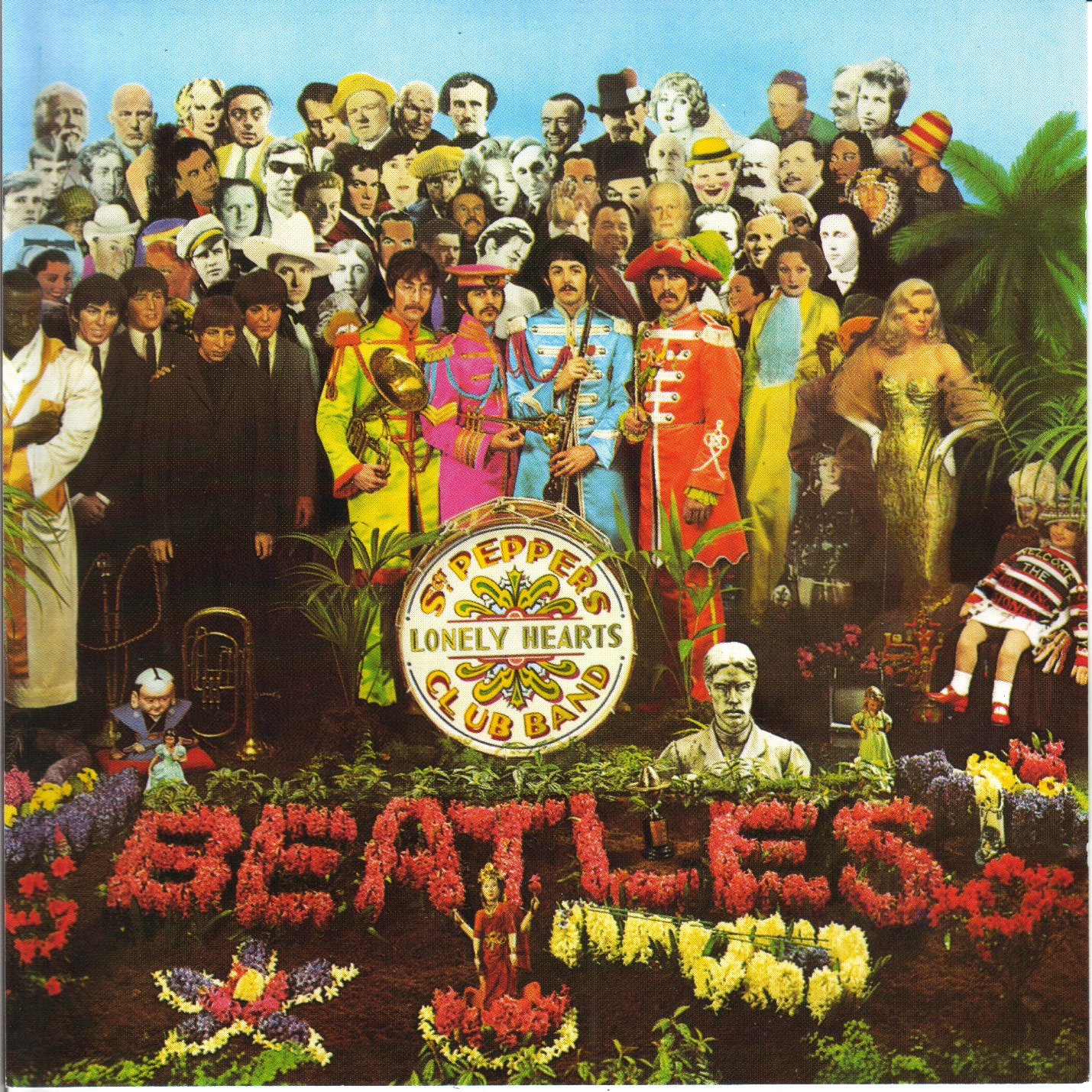
Is the Heavy Vinyl from 2012 the Best Sounding Sgt. Pepper?

beatlessgtHot Stamper Pressings of Sgt. Peppers Available Now

You might agree with some reviewers that EMI’s engineers did a pretty good job with the new stereo pressing of Sgt. Pepper mastered by Sean Magee from the 2009 digitally remastered tapes.

In the March 2013 issue of Stereophile Art Dudley weighed in, finding little to fault on this title but being less impressed with most of the others in the new box set. His reference disc? The MoFi UHQR! Oh, and he also has some old mono pressings and a domestic Let It Be.

Now there’s a man who knows his Beatles. Fanatical? Of course he is! We’re talkin’ The Beatles for Chrissakes.

When I read the reviews by writers such as these, I often get the sense that I must’ve fallen through some sort of Audio Time Warp and landed back in 1982. How is it that our so-called experts evince so little understanding of how records are made, how variable the pressings can be, and, more importantly, how absolutely crucial it is to understand and implement rigorous protocols when attempting to carry out comparisons among pressings.

Critically comparing LPs is difficult and time-consuming. It requires highly developed listening skills. I didn’t know how to do it in 1982. I see no evidence that the audiophile reviewers of today are much better at it now than I was in 1982.

Just to take one example: They all seem to be operating under the same evidence-free conceit: that the original is the benchmark against which other pressings must be compared.

To those of us who have played Beatles pressings by the hundreds, this is patent nonsense. To cite just one instance, a recent Hot Stamper listing notes [inaccurately as it turns out, see below]:

We defy any original to step into the ring with it. One thing we can tell you, it would not be a fair fight. The cutting equipment to make a record of this quality did not exist in 1967, not at EMI anyway.

We had the opportunity not long ago to audition a very clean original early pressing of the album and were frankly taken aback by how AWFUL it was in virtually every respect. No top end above 8k or so, flabby bass, murky mids — this was as far from Hot Stamper sound as one could imagine. If it were a Heavy Vinyl or Audiophile pressing we would surely have graded it F and put it in our Hall of Shame.

To be fair we have played exactly one early copy of the record on our current system. (Played a copy or two long ago but on much different equipment, so any judgments we might have made must be considered highly suspect.) Perhaps there are good ones. We have no way of knowing whether there are, and we are certainly not motivated to find out given the price that original Sgt. Pepper’s are fetching these days.

We can tell you this much: no original British pressing of any Beatles album up through Pepper has ever impressed us sonically. We’ve played plenty and have yet to hear one that’s not congested, crude, distorted, bandwidth-limited and full of tube smear. (The monos suffer from all of these problems and more of course, which is only natural; they too are made with the Old School cutting equipment of the day.)

If that’s your sound more power to you. It’s definitely not ours. The hotter the stamper, the less congested, crude, distorted, bandwidth-limited and smeary it will be. (Or your money back.)


UPDATE 2023

There is a copy of a Beatles album on the original label that was competitive with our best 70s pressings, this one. We explained why it’s not a problem to admit we were wrong about the album in question, For Sale, this way:

This finding about For Sale is precisely why live and learn is our motto.

We don’t know it all, and we’ve never claimed that we did. We constantly learn things about pressings in our daily shootouts. That should not be too surprising, as record shootouts are the only way to learn anything about the sound of records that’s actually worth knowing.

Start doing your own experiments and your record knowledge might just take off the way ours has. 99% of what we think we know about the sound of records we’ve learned in shootouts over the course of the last twenty years.

Here is our advice on getting started.

Before this, the only Beatles record we would sell on the Yellow and Black Parlophone label was A Collection of Oldies… But Goldies. That title does have the best sound on the early label. In numerous shootouts, no Black and Silver label pressing from the ’70s was competitive with the best stereo copies made in the ’60s.

Until now, it was clearly the exception to our rule. From With the Beatles up through Yellow Submarine, the best sounding Beatles pressings would always be found on the 70s reissue label.


The Best Pepper Pressings

How did we come to find the best Sgt. Peppers pressings? Our recent commentary about a wonderful Benny Carter record on the original Contemporary Black Label may serve to shed some light on the process.

(more…)

Steppenwolf Gold – Their Great (But Awful Sounding) Hits

Record Collecting for Audiophiles – A Guide to the Fundamentals

There is an interesting story behind how I got my mitts on this particular Heavy Vinyl pressing.

Months ago [now years], a fellow contacted us to buy some of our Hot Stamper pressings.  We sent him one or two, and he soon wrote back to say he was not happy with the sound. We exchanged emails with him for a while, trying to rectify the situation in the hopes that we could get him some records that he would be happy with.

In the middle of all this back and forth, we thought it would be worthwhile knowing what this gentleman thought was a good sounding record, seeing as how ours were not meeting his standards. Our discussion soon crossed over into Heavy Vinyl territory. We asked, “Were there any that he liked the sound of?”  Why yes, there were.

You guessed it. The above-pictured album from Analogue Productions is one he recommended. (There was another he also said we should try, but after playing this one we decided against buying any more records he recommended, for reasons that will soon be evident.)

So we bought a copy. Soon enough we found ourselves playing our newly remastered Heavy Vinyl LP.

Right from the get-go, thick, murky, compressed, lifeless, ambience-free, dead-as-a-doornail sound was now coming out of my speakers. Like sludge from a sewer you might say. The stereo had sounded fine moments before. What the hell was happening?

I quickly grabbed a Super Hot copy of the album off the shelf and put it on the table.

Here was the energy, clarity, presence, space and more that had been missing mere moments ago while the Heavy Vinyl pressing played. Now, coming out my speakers was everything that makes a good vintage pressing such a joy to listen to.

I felt like turning it up and rocking out. The first song is Born to Be Wild. Who doesn’t love to blast Born to Be Wild?

What a difference. Night and Day. Maybe more!

If this Steppenwolf LP isn’t the perfect example of a Pass/Not-Yet record, I can’t imagine what would be.

As I was thinking about the turgid, compressed, veiled, overly smooth but not tonally incorrect sound coming out of my speakers, I thought back about the kinds of stereo systems that can produce that sound on command. They often look like the one you see below.

(more…)

Rickie Lee Jones on Rhino Records – Not Our Idea of Good Sound, and We Hope Not Yours

Hot Stamper Pressings of the Music of Rickie Lee Jones Available Now

We were fairly unimpressed with the Rickie Lee Jones on Warners that came out a few years back [2008 in fact, time flies!].

It has that same phony modern mastering we find so unappealing on the Heavy Vinyl reissue of Blue. (We seem to be pretty much alone in not liking that one, and we’re proud to say we still don’t like it. We encourage you to play The Blue Game and maybe you’ll see why we feel the way we do.)

We liked the new Sweet Baby James Hoffman and Gray cut. We note in our review that:

Hoffman and Gray can take pride in this Sweet Baby James. It’s some of the best work I’ve heard from them to date. If more DCC and Heavy Vinyl reissues sounded like this, we wouldn’t be so critical of them. Unfortunately they don’t, and there are scores of pages of commentary on the site to back up that statement for those of you interested in the subject.

We went on to say

The amazing transparency and dynamic energy of the best originals will probably never be equaled by an audiophile pressing like this. (It hasn’t happened yet and we remain skeptical of the possibility.) Considering that this pressing is sure to beat most reissues, imports and other such like, we have no problem heartily recommending it to our customers, especially at the price.

So, What’s Wrong With Rickie Lee?

Simple. They took a somewhat artificial, hi-fi-ish, close-miked, heavy-on-the-reverb recording and made it sound even more artificial, phony and hi-fi-ish (but less-heavy-on-the-reverb; there is always a noticeable loss of resolution in these modern mastering jobs).

What were they thinking?

The best copies have warmth, richness and sweetness to balance out the more unnatural elements in the recording. Copies with these qualities are not that common, but we’ve run across plenty of them in our shootouts and proudly offered them for sale, where of course they sold quickly for lots of money. Major league audiophile appeal, this one. In its day it was heavily demo’ed in every stereo store in town, and for good reason — the sound positively jumps out of the speakers.

It’s a Trap

The average copy of this album is a sonic disaster, akin to the average copy of Famous Blue Raincoat or — gulp, even worse — Graceland. If you’re a detail freak, this Rhino pressing may be just what you are looking for. It’s got detail all right.

But all that phony detail obscures what is wrong with the sound. Overly detailed sound is a trap that is all too easy to fall into.

Plenty of recordings designed to appeal to audiophiles strike us as being phony in this way. Stan Ricker cut a lot of overly-detailed records for Mobile Fidelity in the 70s and 80s, records that may have sounded fine on the lo-rez stereos of that era (like the one I owned), but are positively painful to play on the top quality equipment that is available (but rare) today. [1]

I would hope that the audiophile community would have developed their listening skills to a level sufficient to recognize what this pressing doesn’t have — warmth, richness and sweetness — but I get the feeling I will be proved wrong yet again in that regard.

This Performance Is High?

Rhino Records has really made a mockery of the analog medium. Rhino bills their releases as pressed on “180 gram High Performance Vinyl.” However, if they are using performance to refer to sound quality, we have found the performance of their vinyl to be quite low, lower than the average copy one might stumble upon in the used record bins.

The CD versions of most of the LP titles they released early on are far better sounding than the lifeless, flat, pinched, so-called audiophile pressings they released starting around 2000. The mastering engineer for this garbage actually has the nerve to feature his name in the ads for the records. He should be run out of town, not promoted as a keeper of the faith and defender of the virtues of “vinyl.”

If this is what vinyl sounds like I would switch to CD fast enough to make your head spin.

And the amazing thing is, as bad as these records are, there are people who like them. I’ve read postings on the internet from people who say the sound on these records is just fine.

Their Grateful Dead titles sound worse than the cheapest Super Saver reissue copies I have ever heard.

The Yes Album sounds like a cassette, a mere ghost of the real thing.

(more…)

Boston’s First Album on MoFi Anadisq

Hot Stamper Pressings of the Music of Boston Available Now

Sonic Grade: F

The MoFi Anadisc of Boston’s first album has the same problems that seem to have plagued the whole of the Anadisq 200 series. The sound was:

  • thick,
  • opaque,
  • blurry, and
  • murky.

A real slogfest. Audiophile trash of the worst kind. If this isn’t the worst version of the album ever made, I cannot imagine what would be.

Many of the worst releases from MoFi in this era were mastered by Ken Lee. If you happen to come across a record in a store with his name in the credits, or his initials in the deadwax, you are best advised to drop it back in the bin and keep moving. Anything else is just asking for trouble.

Do people still pay good money for this kind of awful sound?

Yes they do!

Go to ebay and see the high prices these kinds of records are fetching. This is in equal parts both shocking and disgusting. 

Here is what is available for the MoFi pressing on Discogs today (2/2/2022). If you have $400 you can order one there.

Marketplace 3 For Sale from $399.99

And people complain about our prices? At least we send you a great sounding record for all the money we charge.

(more…)

Sibelius / Violin Concerto on Classic Records Heavy Vinyl

Hot Stamper Pressings Featuring the Violin

An Audiophile Hall of Shame pressing and another Classic Records Classical LP badly mastered to the detriment of those lured by the promise of easy answers and quick fixes.

Classic remastered this title in the ’90s — of course they did, it’s clearly one of the better Heifetz recordings.

As expected, their version was awful, as bad as LSC 1903, 1992, 2129 and others too numerous to list.  

It’s both aggressive and lacking in texture at the same time, the worst of both worlds.

Bernie’s cutting system is what I would call Low Resolution — the harmonics and subtleties of the sound simply disappear.

The world is full of them.

In these four words we can describe the sound of the average Classic Records pressing. If you have the Classic, do your own shootout. We guarantee any of our Hot Stamper pressings will murder theirs.

(more…)

If You Can’t Make a Good Record, Why Make Any Record At All?

Hot Stamper Pressings of the Music of Steely Dan Available Now

This Speakers Corner Heavy Vinyl pressing has to be one of the worst sounding versions of the album ever pressed.

You think the average ABC or MCA pressing is opaque, flat and lifeless, not to mention compromised at both ends of the frequency spectrum?

You ain’t heard nothin’ yet!

As bad as the typical copy of this album is, the Speakers Corner Heavy Vinyl is even worse, with not a single redeeming quality to its credit.

If this is what passes for an Audiophile Record these days, and it is, it’s just one more nail in the coffin for Heavy Vinyl.

But that’s not the half of it.

Go to Acoustic Sounds’ website and read all the positive customer reviews — they love it! Is there any heavy vinyl pressing on the planet that a sizable contingent of audiophiles won’t say something nice about, no matter how bad it sounds? I can’t think of one.

To sum up, this record is nothing less than an affront to analog itself. I guarantee you the CD is better, if you get a good one. I own four or five and the best of them has far more musical energy than this thick, dull, opaque and boring piece of audiophile analog trash.

It was probably made from a digital copy of the master, or more likely a digital copy of an analog dub of the master — three generations, that’s sure what it sounds like — but that’s no excuse.

If you can’t make a good record, don’t make any record at all. Shelve the project. The audiophile vinyl world is drowning in bad sounding pressings; we don’t need any more, thank you very much.

(more…)

Beethoven’s Violin Concerto – Classic Records Reviewed

Hot Stamper Pressings Featuring the Violin

An Audiophile Hall of Shame pressing and another Classic Records Classical LP we found seriously lacking in some of the most important qualities we listen for on the classical and orchestral recordings we audition.

The Classic pressing of this album does not present the listener with the sound of a real, wood instrument, bowed by horsehair, in a physical space.

It is an airless fraud, a cheap fake reproduction that’s incapable of fooling anyone currently in possession of two good ears, a properly set up hi-fi system and a decent collection of Golden Age violin concerto recordings.

The fact that a great many writers identifying themselves as audiophiles embraced Classic’s mediocre-at-best reissues tells me that they were lacking some or all of the above.

Notes from a Recent Hot Stamper Pressing (more…)

100% No Fun – A Classic Records Disaster

More Bad Sounding Records Audiophiles Should Avoid


UPDATE 2025

I can find no record of the existence of any regular Zoo label pressing. The only ones on Discogs are mastered by Bernie Grundman, on 150 or 180 gram vinyl.

My advice now would be to buy the CD. I own one and it’s great.


Our Zoo label original LP MURDERED the Classic heavy vinyl reissue. It’s not even close.

(more…)

Jethro Tull – One of the Worst Releases on DCC (and That’s Saying Something!)

Sonic Grade: F

The DCC pressing is a complete disaster, one of the worst sounding versions of the album ever made.

As bad as the MoFi is, the DCC is even worse. Murky and bloated, to my ear it does almost nothing right, not on vinyl anyway. The DCC Gold CD is better, and it’s certainly nothing to write home about. 

Our Hot Stamper commentary below sorts out the DCC, the Classic Records Heavy Vinyl pressing and the MoFi Half-Speed Mastered LP, as well as British and domestic originals.

We love this album and we’ve played every kind of pressing we could get our hands on. The winner? Read on!

Over the course of the last 25 years we was wrong three ways from Sunday about our down-and-out friend Aqualung here. We originally liked the MoFi.

When the DCC 180g came along we liked that one better, and a few years back I was somewhat enamored with some original British imports.

Our first big shootout disabused us of any notion that the British originals were properly mastered. As we noted in our Hot Stamper commentary, “The original Brits we played were pretty hopeless too: Tubey Magical but midrangy, bass-shy and compressed.”

Another myth bites the dust.

The same is true for Thick As A Brick; the best domestic copies are much more energetic and tonally correct.