blurry-bass

Diamonds and Rust – Another TAS Listed Anadisq Disaster

Hot Stamper Pressings of the Music of Joan Baez Available Now

Mobile Fidelity released their version of Diamonds and Rust on Anadisq in 1995, and if you want to hear a pressing that’s not murky, compressed and opaque, you would be wise to avoid their Heavy Vinyl Half-Speed.

Somehow it ended up on the TAS Super Disc List, but we could find nothing “super” about it. We felt it more properly belonged on our list of records that have no business being called Super Discs.

It was a real muckfest, as was to be expected from a record mastered by this awful label during the Anadisq era, the darkest chapter in the disgraceful history of Mobile Fidelity, which, considering the consistently dismal quality of their output, is really saying something.

Ken Lee Strikes Again

Many of the worst of them were mastered by a Mr. Ken Lee. If you happen to come across a record in a store with his name in the credits, or his initials in the deadwax, you are best advised to drop it back in the bin and keep moving. Anything else is just asking for trouble.

To be fair, MoFi made some reasonably good sounding records too. For those of you whose budget is on the limited side, if you find an affordable copy of any of these MoFis, you are probably not wasting your money.

Although I had a long way to go in this hobby in the early days of my audiophile record business, even then I could tell how bad the Anadisq series that Mobile Fidelity released in the 90s was. They produced one awful sounding record after another, with not a single winner that I knew of. I sold them — my bad, an ethical lapse for which I must apologize — but I sure never recommended them or had anything good to say about them.

(more…)

The Nautilus Half-Speed of Harvest Is Not Bad!

Hot Stamper Pressings of the Music of Neil Young Available Now

Sonic Grade: B

We haven’t played a copy of this record in more than a decade [make that two], but back in the day we liked it, so let’s call it a “B” with the caveat that the older the review, the more likely we are to see things differently now. 

In the early 2000s we wrote the following (please excuse the all-caps, I could barely type back then):

This is a SURPRISINGLY good sounding Nautilus Half-Speed mastered LP with AMAZING transparency.

The sound here is DRAMATICALLY more natural than your average audiophile pressing. Just listen to the phony top end found on most MoFis to see what we mean.

On this record you’ll hear none of the hyped-up highs that are MoFi’s claim to fame.

This Nautilus is sure to destroy the typical domestic pressing, which (before cleaning) will tend to sound opaque, thick and dull.

This Half-Speed wouldn’t really match up to our Hottest Stampers, but you could sure do a lot worse.

Although it’s a tad fat at the bottom, it still retains much of the warmth and richness found on the best copies.

(more…)

Mobile Fidelity’s Approach to Mastering – I Have a Theory

Hot Stamper Pressings of the Music of Little Feat Available Now

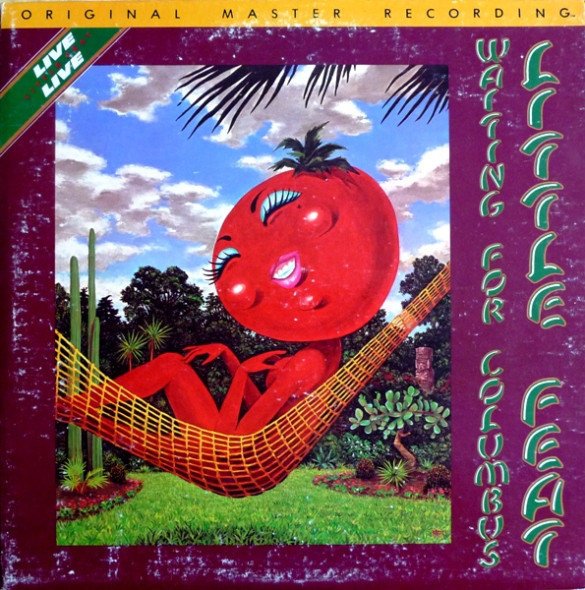
I have a theory about why MoFi’s mastering approach tended to work for the Waiting for Columbus album when it failed so miserably for so many others. It goes a little something like this. 

Back in their early days, MoFi tended to add bass and treble to practically every record they mastered, regardless of whether or not the master tape they were using needed a boost.

A little extra sparkle up top and a little extra kick down low was what the audiophile public seemed to want.  We call this the smile curve and lots of audiophile records have a case of it.

Truth be told, I was a member of that group and I know I did.

Fortunately for them, Waiting for Columbus is an album that can ofteny use a little at both ends. Rarely did The Mastering Lab supply it, making the original domestic pressings somewhat bass-shy and dull on the extreme top. The MoFi clearly corrected the poor EQ choices The Mastering Lab had often made. 


UPDATE 2024: Poor EQ Choices?

Or perhaps it could have been one or more of the following:

  • Perhaps the band liked it better that way.
  • Perhaps The Mastering Lab found it easier to cut that way.
  • Perhaps the cause of the records lacking extension on both ends comes from some other factors that cannot be known.

Or, if you don’t like those three, just make up some other reasons that sound plausible, or ones that fit in with other ideas you may have, even though there is probably not an iota of evidence to support any of it.

This is the way of the audiophile record collector — theories galore, but not much experimental evidence to back them up (or falsify them as the case may be). We are more inclined to the No Theory approach to finding good records, which you can read about here. We believe it has served us well and can do the same for you.

(more…)

MoFi’s Pictures at an Exhibition Is as Wrong as Wrong Can Be

moussmofiHot Stamper Pressings of the Music of Mussorgsky Available Now

If you like orchestral spectaculars, have we got the record for you.

It’s the same recording of the works, but the one you want is on the real EMI label and pressed on UK import vinyl, not this awful Half-Speed recut from Japan.

The record you see pictured is awful sounding, a true hall of shame pressing.

And why are the colors of the album jacket so washed out? Compare their cover to the real thing below. As we often find ourselves asking after reviewing one of these MoFi records: What were they thinking?

The MoFi mastering of Pictures at an Exhibition and The Firebird here are a bad joke played on credulous audiophiles. And yes, I bought them both back when they came out. I was as credulous as everybody else buying these so-called superior pressings.

All that phony boosted top end makes the strings sound funny and causes mischief in virtually every other part of the orchestra as well. Not surprisingly, those boosted highs are missing from the real EMIs.

These appear to be the unbearably bright strings that Stan Ricker favors — why, we have no idea.

The proof? Find me a Mobile Fidelity classical record with that little SR/2 in the dead wax that does not have bright string tone. I have yet to hear one.

The last time I played a copy of the MFSL I found the sound so hi-fi-ish I couldn’t stand to be in the room with it for more than a minute. Of course the bass is jello as well.

The EMI with the right stampers is worlds better.

(Warning: The domestic Angel regular version and the 45 are both awful.)

MoFi had a bad habit of making bright classical records. (More reviews here.) I suppose you could say they had a bad habit of making bright records in general. A few are dull, some are just right, but most of them are bright in one way or another.

(more…)

Powerful People on MoFi – What Was I Thinking?

More Entries in the Mobile Fidelity Hall of Shame

UPDATE 2024:

I just found my old review notes from 2014! They can be seen below. Please to enjoy.

At the time of our last shootout in 2014, I still had the MoFi pressing of Powerful People in my personal, very small (at that point) record collection.

Almost all the best sounding records from my collection had been sold off long before, going to good homes that I can only assume would play them more than I had in the last ten years.

If it’s a record you see on our site, chances are good I’d have listened to it until I’d practically turned blue in the face.

But I had kept my Powerful People Half-Speed these 30+ years because the domestic pressings I’d played were just too damn midrangy to enjoy.

At least the MoFi had bass, top end and didn’t sound squawky or hard on the vocals.

Well, let me tell you, played against the best domestic pressings, the MoFi is laughable. (In that respect it shares much with the current crop of audiophile reissues.)

It’s unbelievably compressed, a problem that is easily heard on the biggest, most exciting parts of the tracks. They never get remotely as big or as loud on the MoFi as they do on the lowly A&M originals.

It’s also sucked out in the midrange, like most MoFis, and, like most MoFis and Half-Speeds in general, the bass is not well-defined, punchy, and it never goes very deep.

There is also the issue of the MoFi 10k boost on the top end — it’s clearly audible and as bothersome as ever.

In summation, like most of the better audiophile records — from long ago as well as those being produced today — the most you can hope for from these reissues is that they can fix a few problems you might be saddled with on the particular pressing you own.

(more…)

Brain Salad Surgery on Shout Heavy Vinyl

Hot Stamper Pressings of the Music of Emerson, Lake and Palmer Available Now

If you’re a fan of Emerson, Lake and Palmer’s fifth album, and you know, or at least suspect, that the British original pressings are more than likely to be better sounding than most, you might find yourself in a bit of a quandary, pocketbook-wise.

Early British pressings in audiophile playing condition aren’t easy to find, and they don’t tend to be cheap when you do find them.

Ah, but there is a fairly cheap and exceptionally easy solution: just buy the Shout Heavy Vinyl reissue from 2008.

It says it’s made from the master tape, it has a replica of the original packaging, and even comes with a poster.

What could go wrong?

The sound could be shit — NFG in our shorthand — that’s what could go wrong.

  • The top end could be overly-textured, tizzy and hot, the kind that constantly calls attention to itself.
  • The bass could be smeary and thick.
  • And the overall presentation of the music could be veiled and recessed.

Alas, the money you thought you were saving buying this potentially wonderful flat, quiet pressing made from the master tapes ends up flushed down the tubes. Now what?

Now you have to do what you should have done to begin with: find yourself a real British pressing.

(more…)

Beethoven’s Symphony No. 4 – The Classic Pressing Can Have Very Good Sound

More of the music of Ludwig van Beethoven (1770-1827)

Somehow we managed to have a Classic Records pressing on hand to play in our most recent shootout for the Beethoven Symphony No. 4.

We knew all the way back in 1997 that Classic had done a good job with the record — we recommended it as one of the best Classic Records pressings in our catalogs at the time — but we sure didn’t expect it to do as well as it did, earning 2 pluses on one side and close to that on the other.

Years ago we wrote:

Here is the kind of sound that Classic Records could not ignore, even though the original was only ever made available as part of RCA’s budget reissue series, Victrola.

Don’t let its budget status fool you — this pressing puts to shame most of what came out on the full price Living Stereo label. (And handily beats any Classic Records reissue ever made.)

The top and bottom are wrong to varying degrees on both sides of the Classic, as you can see from our notes, which read:

(more…)

Boston’s First Album on MoFi Anadisq

Hot Stamper Pressings of the Music of Boston Available Now

Sonic Grade: F

The MoFi Anadisc of Boston’s first album has the same problems that seem to have plagued the whole of the Anadisq 200 series. The sound was:

  • thick,
  • opaque,
  • blurry, and
  • murky.

A real slogfest. Audiophile trash of the worst kind. If this isn’t the worst version of the album ever made, I cannot imagine what would be.

Many of the worst releases from MoFi in this era were mastered by Ken Lee. If you happen to come across a record in a store with his name in the credits, or his initials in the deadwax, you are best advised to drop it back in the bin and keep moving. Anything else is just asking for trouble.

Do people still pay good money for this kind of awful sound?

Yes they do!

Go to ebay and see the high prices these kinds of records are fetching. This is in equal parts both shocking and disgusting. 

Here is what is available for the MoFi pressing on Discogs today (2/2/2022). If you have $400 you can order one there.

Marketplace 3 For Sale from $399.99

And people complain about our prices? At least we send you a great sounding record for all the money we charge.

(more…)

Chicago – What We Heard Circa 2008

More of the Music of Chicago

In 2008, we had a lot of trouble finding good sound on the copies of the first album that we had on hand, more than a dozen I’m sure.

Over the next five to ten years we managed to do a much better job of cleaning and playing the band’s debut, to the delight of our listening panel as well as our Hot Stamper fans.

This is the kind of album that most audiophiles would be sorely tempted to give up on. Who can blame them?

So Many Faults, So Little Time

The average copy of this album is an unmitigated DISASTER. The smeary brass alone is enough to drive anyone from the room.

To a list of its faults you can confidently add some or all of the following:

1) blobby, blurry, out of control bass;
2) opaque, veiled mids;
3) rolled off highs, or no highs, whichever the case may be, common to virtually every pressing you find;
4) plain old distortion; and, last but not least,
5) the kind of compressed, lifeless sound that manages to make this groundbreaking album boring — and that’s not easy to do.

The music ROCKS! It’s the crappy records Columbia pressed that suck.

(more…)

Chad Has Served Poor Jethro Tull Most Barbarously

Hot Stamper Pressings of the Music of Jethro Tull Available Now

With a nod to our old friend, John Barleycorn.

We were finally able to get our hands on Analogue Productions’ newly remastered Stand Up, an album we know well, having played the British copies from every era by the score. Our notes for the sound can be seen below.

If ever a record deserved a “no” grade, as in “not acceptable,” this new 45 RPM pressing mastered by Kevin Gray deserves such a grade, because it’s just awful. (This link will take you to a great many more records best avoided by audiophiles in search of better sound. Although we’ve only linked to about 75 pressings here on the blog, it should be noted that the world is full of bad sounding records.)

But let’s put that grade in context. The last time a good sounding version of Stand Up was released, as far as we can tell, was 1989, and that version was the Mobile Fidelity Gold CD. I bought mine soon after it came out. I wasn’t even planning on buying a CD player when the Compact Disc was first invented, but then Mobile Fidelity played a dirty trick on me. Instead of releasing Loggins and Messina’s first album on vinyl, they put it out exclusively on CD as part of their Silver MFCD series.

As a die-hard MoFi fan, that sealed the deal: now I had to buy a CD player. I picked up a cheap Magnavox player, the 1040. I think it ran me less than $100, and played my new Sittin’ In CD, which, as I recall, sounded pretty good. (One of my other early CD purchases was Tumbleweed Connection, the regular label release, and it was dreadful.)

I still own Stand Up on Gold CD, and I still find it superb in every way. (Many of the MFSL Gold CDs from this era are excellent and worth seeking out.)

It sounds nothing like this new vinyl release, and that’s a good thing.

On vinyl, Stand Up has rarely been given the care it deserved. The last version of Stand Up to have sound we would want to listen to was pressed in the UK in the early ’70s. That was close to fifty years ago.

We sold some domestic pressings of the album back in the early 2000s, describing them at the time as made from dub tapes with all the shortcomings that entails, but mastered very well from dub tapes. The best domestic pressings are rich, smooth, tonally correct and natural sounding. They’re too dubby to sell as Hot Stampers, but they are not bad records. Some later Chrysalis pressings are big and open, but often they are too thin and bass-shy for the music to work. We’ve never taken them seriously.

It wasn’t long before we’d eliminated everything but the early UK pressings for our shootouts, and we quickly discovered that the earliest of the UK pressings on the older Island label were not good at all. We wrote about the problem with some originals more than ten years ago.

What was surprising about the shootouts we had done in past years was how disappointing most of the early British pressings we played were. They were flat, lacked energy and just didn’t rock the way they should have.

We learned the hard way that most British Pink label pressings aren’t especially rich, that some are small and recessed, and some are just so smeary, thick and opaque that they frustrate the hell out of you as you’re trying to hear what any of the musicians other than Ian Anderson is doing.

So when a reviewer comes along and says something positive about the new pressing compared to some unidentified original, we appreciate the problem that is at the root of his mistaken judgments:

Here’s the deal: if the goal was to duplicate the original pink label Island sound, this reissue misses that, which is good because this new double 45 reissue is far superior to the original in every possible way.

The tape was in great shape, that’s for sure. Clarity, transparency, high frequency extension and especially transient precision are all far superior to the original. Bass is honest, not hyped up and the mastering delivers full dynamics that are somewhat (but only slightly), compressed on the original. Ian Anderson’s vocals are naturally present as if you are on the other side of the microphone. Most importantly, the overall timbral balance sounds honest and correct. But especially great is the transient clarity on top and bottom.

If you’re fortunate to have an original pink label Island, at first you might think the sound is somewhat “laid back”, but that’s only because the mids and upper mids are not hyped up as they are on the original. That adds some excitement, but it clouds the picture and greatly obscures detail.

If you scroll down to our notes, you will see what we thought of the “laid back” sound this reviewer talks about. (Keep in mind that we first read the above review mere moments ago.)

We think “smaller, thick and stuck in the speakers” may be someone’s idea of “laid back,” but, just so there is no misunderstanding, it’s our idea of “awful.”

None of these are good things. Our Hot Stamper pressings are never small, thick or stuck in the speakers. They’re the records with the opposite of that sound. Our records are big, transparent and open. That’s why we can charge so much money for them and have people scooping them up from our Wednesday mailer the moment they become available.

They deliver the big, bold sound that the brilliant engineer for the album, Andy Johns, was known for. Laid back was not in his vocabulary.

Here is more of what we heard on side one.

Jeffrey Goes to Leicester Square

“Transients are sharp but body is dull. Kinda phony.”

Phony sound is the key here. Messing with the EQ in the mastering benefits some aspects of the sound at the expense of others.

Nothing new there. Audiophile pressings with wacky EQ are the norm. I would be surprised if any common Reprise pressing from back in the day wouldn’t sound more “right,” more tonally correct, more seamless. I’ve played quite a few and I don’t recall ever hearing one sound “phony.”

On side two we played the first two tracks.

(more…)