dubby-sound

Records that are made from sub-generation tapes, tapes dubbed from the masters, or dubbed from second generation tapes previously dubbed from the masters, tend to have what we call “dubby sound.”

They will usually be somewhat veiled, small, smeary and opaque. They tend to get congested in loud passages. They sometimes have more tape hiss.

Many of these shortcomings are the ones we regularly hear on the Modern Heavy Vinyl reissue.

We suspect that many of them are made from copy tapes, but whether they are or aren’t is immaterial. The bulk of them simply do not sound very good to us. Regardless of what tape was used, they should be avoided by those who are interested in high quality analog.

This Tsar Saltan Is Diffuse, Washed Out, Veiled, and Vague

Hot Stamper Pressings of the Music of Rimsky-Korsakov Available Now

Sonic Grade: C (at most)

Year ago we cracked open the Speakers Corner pressing of The Tale of Tsar Saltan in order to see how it would fare in a head to head comparison with a pair of wonderful sounding Londons we were in the process of shooting out at the time. Here are the differences we heard.

The soundstage, rarely much of a concern to us at here at Better Records but nevertheless instructive in this case, shrinks roughly 25% with the new pressing. Depth and ambience are reduced by about the same amount.

But what really bothered me was this:

The sound was just so vague.

There was a cloud of musical instruments, some here, some there, but they were very hard to SEE. On the Londons we played they were clear. You could point to each and every one. On this pressing that kind of pinpoint imaging was simply nowhere to be found. (Here are some other records that are good for testing vague imaging.)

Case in point: the snare drum, which on this recording is located toward the back of the stage, roughly halfway between dead center and the far left of the hall. As soon as I heard it on the reissue I recognized how blurry and smeary it was relative to the clarity and immediacy it had on the earlier London pressings we’d played. I’m not sure how else to describe it — diffuse, washed out, veiled — just vague.

(Here are some other records that are good for testing the sound of the snare drum.)

This particular Heavy Vinyl reissue is more or less tonally correct, which is not something you can say about many reissues these days. In that respect it’s tolerable and even enjoyable. I guess for thirty bucks it’s not a bad deal.

But… when I hear this kind of sound only one word comes to mind, a terrible word, a word that makes us recoil in shock and horror. That word is DUB. This reissue is made from copy tapes, not masters.

Copies in analog or copies in digital, who is to say, but it sure ain’t the master tape we’re hearing, of that we can be fairly certain. How else to explain such mediocre sound?

Yes, the cutting systems being used nowadays to master these vintage recordings aren’t very good; that seems safe to say.

Are the tapes too old and worn?

Is the vinyl of today simply not capable of storing the kind of magical sound we find so often in pressings from the 50s, 60s and 70s?

Could the real master tape not be found, and a safety copy used to master the album instead?

To all these questions and more we have but one answer: we don’t know.

We know we don’t like the sound of very many of these modern reissues and I guess that’s probably all that we need to know about them. If someone ever figures out how to make a good sounding modern reissue, we’ll ask them how they did it. Until then it seems the question is moot. (Someone did, which proves it can be done!)

Back in 2011 we stopped carrying Heavy Vinyl and most other audiophile LPs of all kinds. (These we like.)

So many of them don’t even sound this good, and this kind of sound bores us to tears.

(more…)

Straight Up – Porky Not So Prime Cut

Hot Stamper Pressings of the Music of Badfinger Available Now

UPDATE 2026

This commentary has been updated multiple times, most recently in 2025.


British band, British pressing… right?

Nope. It’s just another mistaken idea.

We evaluated an original British pressing in our shootout, unbeknownst to me as it was playing of course. And guess where it finished: dead last.

The most thick, congested, crude, distorted, compressed sound of ALL the copies we played.

We love the work of Porky, Pecko, et al. in general, but once again this is a case where a British Band recorded in England sounds best on domestic vinyl. (McCartney’s first album on Apple is the same way.)

Just saw this today (11/29/2021)

On November 18, 2019, a fellow on Discogs who goes by the name of Dodgerman had this to say referencing the original UK pressing of Straight Up, SAPCOR 19:

So Happy, to have a first UK press, of this lost gem. Porky/Pecko

Not sure what those two commas are doing there. Pausing for emphasis? Sure, why not? This is a big deal.

Like many record collectors, he is happy to have a mediocre-at-best, dubby-sounding original pressing, poorly mastered by a famous mastering engineer, George Peckham, a man we know from extensive experience to be responsible for cutting some of the best sounding records we’ve ever played. He is truly one of the greats.

Is Dodgerman an audiophile? He might be, or at least he might choose to describe himself as one.

Many audiophiles employ this kind of mistaken audiophile thinking, believing that a British band’s albums must sound their best on British vinyl for some reason, possibly a cosmic one.

(more…)

Helpful Stamper Information You Can Use – Episode 108

Hot Stamper Pressings of the Music of Genesis Available Now

British Pressing? Check.

Pink Label? Check.

Sound Quality?  Side One:: 1+ (dubby). Side One of another copy: NFG (no good).

Apparently something went wrong, but exactly what, nobody really knows.

And if for some reason somebody actually believes they know what went wrong, we tell them that that kind of thinking is detrimental to whatever success they hope to achieve in finding better sounding records, if our experience over the last fifty years has any bearing.

We don’t know it all and we’ve never pretended to. All our knowledge is provisional. We may not be the smartest guys in the room, but we’re sure as hell smart enough to know that much.

If somehow we did know it all, there would be no need for the two hundred entries in our live and learn section about all the mistakes we’ve made over the years trying to understand record pressings at the sonic level.

We take a different approach to searching out better sounding pressings. Instead of reading about them — who made them, how they were made, where they were made, all that sort of thing — we instead devoted our efforts to cleaning and playing them, so that we could make our own judgments about the sound and the music we heard.

Our experiments, conducted using the shootout process we’ve painstakingly developed over the course of the last twenty years, produce all the data we need: the winners, the losers, and the rankings for all the records in-between.

Free Stamper Info

By my count this is the 108th stamper sheet we have posted on The Skeptical Audiophile.

In the case of this title, these are what we would call bad stampers for Genesis’s 1973 prog album Selling England by the Pound (a record we rarely have in stock because the best stampers are just too hard to find, at least they are on copies in audiophile playing condition).

If you are looking for top quality sound — and seriously, what else would you be looking for if you are reading this blog? —  then make sure not to buy just any old early Pink Label UK pressing of the album. You may end up with one that sounds as bad as this one did.

(more…)

How Good Are the Robert Ludwig-Mastered Pressings of Alchemy?

Hot Stamper Pressings of the Music of Dire Straits Available Now

The best domestic pressings we played, the ones cut by Robert Ludwig at Masterdisk, were simply not competitive with any of the early British LPs.

The evidence is pretty clear that the master tapes stayed in England and that only the British pressings are made from them. If you’ve played as many records as we have, it’s not hard to recognize dubby sound when you hear it.

As a general rule, this domestic pressing will fall short in some or all of the following areas when played head to head against the imported pressings we offer. Much like the records linked here:

(more…)

Carnival of the Animals on Klavier Is Another Doug Sax-Mastered Disaster

Hot Stamper Pressings of the Music of Saint-Saens Available Now

Yet another murky, smeary audiophile piece of vinyl trash from the mastering lathe of the formerly brilliant Doug Sax. He used to cut the best sounding records in the world. (Exhibit A: this one.)

Then he started working for perhaps the worst record label of all time and to my knowledge never cut a good sounding record again.

This record may be on the TAS Super Disc list, but we don’t think it belongs there. Instead, it belongs on the bad TAS list that we created specifically for these far-from-super records.

To be fair, the real EMI is on there as well, ASD 2753. However, including the Klavier on the list brings into doubt the compentence of whoever is curating it these days.
This Klavier pressing, along with all the Classic Records titles, as well as other modern reissues, renders the advice found there all but useless. Is anyone calling attention to all the bad sounding records that have lately been recommended by The Absolute Sound? I think we might just be the only ones. If you know of any others, please email me at tom@better-records.com.

Doug Sax

For those of us who remember the consistently superb work Doug Sax was doing in the 70s, we sadly note that he passed away in 2015. I was honored to have met him a few years before then at a Chopin concert with Lincoln Mayorga performing on the piano. (Impressively performing, I might add. He played the complete Chopin Preludes from memory, all 24 of them.)

Both he and Lincoln were gentlemen and artists of the highest caliber. Needless to say, I hope this awful sounding Klavier is not the kind of record that he would want to be remembered by.

On this record, in Doug’s defense it should be noted that he had only second generation tapes to work with, which is neither here nor there as these pressings are not worth the dime’s worth of vinyl used to make them and should never have seen the light of day.

Can this dubbysmeary sound possibly be what EMI engineer Stuart Eltham was after?

Hard to believe. We’ve played plenty of his recordings and we cannot ever remember any of the non-audiophile pressings having this kind of sound.

But isn’t that just the way? The mainstream labels mass produce the good sounding pressings and the audiophile labels produce the limited edition junk.

Now there’s a rule of thumb you might want to keep in mind, especially if you’ve made the mistake of buying any of the Heavy Vinyl pressings we reviewed in 2024 and 2025, a parade of horribles that defy understanding.

Actually, if we understand that there is a need for vinyl product for the lo- to mid-fi record collector market, it makes perfect sense. That’s what Klavier was in the business of producing, and now everybody wants in on the action, hence the proliferation of crap Heavy Vinyl pressings coming to market, practically every one even worse sounding than the last.

(more…)

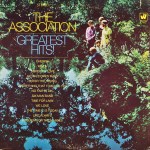
The Association Greatest Hits – Gold, Green or Palm Tree?

Hot Stamper Pressings of Sixties Pop Recordings Available Now

UPDATE 2025

This commentary was written way back in 2008. It appears to confirm much of the conventional wisdom we criticize when it comes to records and the sonic qualities of their various pressings, but sometimes the conventional wisdom turns out to be right.

Not just sometimes, but most of the time. That’s why rules of thumb seem to work more often than not.

It’s all the times that they don’t work that are the problem, the exceptions to the rule, especially if one of those exceptions just happens to be a favorite album of yours.

Then you’re really up a creek. You followed a general rule that sometimes works and sometimes fails and now you really don’t know of any other way to solve the problem. Fortunately for readers of this blog, we do.

For more on The Association, please click here.


The sound on this record is as good as this album gets. Don’t think you’re too cool to enjoy this 60s pop rock. These songs are still a blast and very enjoyable. The sound on this record is as good as this album gets. 

I did a shootout with this copy and a later pressing just now, after having just listed a Gold Label Original LP of Insight Out, which allowed me to compare the sound of three different generations of Warner Brothers records.

I heard pretty much what you would expect to hear. The best Gold Label pressings have the most sweetness, richness, the best bass (amazingly good for a ’60s pop recording) and the most Tubey Magic.

The Green Label Greatest Hits sounds very sweet and analog, but it’s obviously made from sub-generation copy tapes, as Greatest Hits albums usually are. Still the sound is very smooth and sweet. There is a loss of transparency but the tonality is correct.

The Palm Tree Label pressing, the best sounding one I’ve ever heard by the way, is brighter and more modern sounding. On some tracks that brightness helps cut through the murk, but most of the time it sounds more transistory and less musical.

So this Green Label copy has the best sound for all the hits. If you want better sound, you have to find the right pressings of the individual albums. Since most of those are full of filler, this is actually a pretty good way to go.

(more…)

The Wall Sounds Terrible on these “Audiophile” Rip-offs

Hot Stamper Pressings of the Music of Pink Floyd Available Now

This Japanese import is one of the dullest, muddiest, worst sounding copies of The Wall we have ever played. It is clearly made from a second generation tape (or worse!).

Is it the worst version of the album ever made? Hard to imagine it would have much competition.

And somehow this pressing, or one very much like it, ended up as on the TAS Super Disc List. I would hope that the copy Harry played sounded a whole lot better than this one.

The version on the TAS Super Disc list is EMI 4814, which I believe is the British original. Conventional wisdom? Is The Absolute Sound capable of any other?

And the CBS Half-Speed is every bit the mudfest that the Half-Speed is.

How is it that the worst sounding pressings are so often marketed to audiophiles as superior to their mass-produced counterparts? In our experience, more often than not they are just plain awful, inferior in every way but one: surface quality.

And the knock on these CBS Half-Speeds is that they are made from the same vinyl CBS used to press all their other records.

I remember buying them back in the late-70s at Tower Records. They were only $12.99 when Mobile Fidelity pressings were $17.99, garnering a premium price because they were pressed in Japan. Fool that I was, I bought plenty of both, not to mention those made by Nautilus, Direct Disk Labs and plenty of others too painful to think about.

Dear audiophiles, stop collecting crappy audiophile pressings with quiet vinyl and just switch to CD already. You’ll be getting better sound and saving yourself a lot of money to boot. You simply cannot defend analog with this kind of junk.

(more…)

Sidewinder on the Liberty Label Might Sound Dubby and Weird

Hot Stamper Pressings of Blue Note Recordings Available Now

The top copy from our most recent shootout went for $1500 and, in our opinion, was worth every penny of that amount, being one of the best sounding jazz records we have ever played

It probably took us ten years to get this latest shootout going, but the best copies we played were so impressive that they made all the time and money it took to pull it off worth the effort — what a record!

The copies that do not have VAN GELDER in the dead wax are very unlikely to be any good. The Liberty label pressing that we played in our shootout was minty and cost us a pretty penny, but the sound was No F***ing Good.

It’s yet another reason we don’t judge records by their labels.

Of course, as all our customers know, we judge records by one thing and one thing only: their sound.

Our shootout winner may have been a reissue, but it sure wasn’t one of those copies you can find on the Liberty label without VAN GELDER in the dead wax.

(more…)

How Good Are the Domestic Originals of City to City Cut by Artisan?

Hot Stamper Pressings of the Music of Gerry Rafferty Available Now

The original domestic pressings may be cut by Artisan, but they are brighter and dramatically more congested and distorted than the better UK imports, and should be avoided at any price.

They are clearly made from dubbed tapes, and there is no getting around what that does to the sound.

However, as good a cutting house as Artisan may be, it’s shocking how bad the sound is on most of the domestic copies of the album they mastered.

Atrocious, to be honest.

When it comes to stampers, labels, mastering credits, country of origin and the like, we make a point of rarely revealing any of this information on the site, for a number of good reasons we discuss in some depth here.

We will happily make an exception in this case. Stick with UK imports. Or buy a Hot Stamper pressing from us.

If you’re a Gerry Rafferty fan, or perhaps a fan of mid-70s British folk pop, this title, a personal favorite of mine since 1978, is surely a Must Own.

In our opinion, City to City is the man’s best sounding album, and probably the only Gerry Rafferty record you’ll ever need. Click on this link to see more titles we like to call one and done.

The sound, at least on some tracks, Baker Street amoung them, may be too heavily processed for some, making the album fairly difficult to reproduce, but the best sounding pressings — played at good, loud levels on big dynamic speakers in a large, heavily-treated room, as god intended — are a truly powerful listening experience.

1978 was a good year for music on vinyl — we have some excellent pressings of well-recorded albums available now for those who want the best and are willing to pay a premium price to get it.

(more…)

Speakers Corner Peer Gynt Reviewed, with Handy VTA Advice

Hot Stamper Pressings of the music of Edvard Grieg Available Now

Sonic Grade: C+

The Fjeldstad has long been one of our favorite performances of Peer Gynt here at Better Records. 

This record is handy for VTA set-up as well, a subject discussed below in our listing from 2010.

The sound is excellent for a modern reissue*, but in the loudest sections the orchestra can get to be a bit much, taking on a somewhat harsh quality. (The quieter passages are superb: sweet and spacious.)

So I adjusted the VTA a bit to see what would happen, and was surprised to find that even the slightest change in VTA caused the strings to lose practically all their rosiny texture and become unbearably smeared.

This is precisely why it’s a good heavy vinyl pressing for setting up your turntable.

If you can get the strings to play with reasonably good texture on this record you probably have your VTA set correctly.

VTA

Correct VTA adjustment for classical records (as well as all other kinds of records) is critical to their proper reproduction. If you do not have an arm that allows you to easily adjust its VTA, then you will just have to do it the hard way (which normally means loosening a set screw and moving the arm up and down until you get lucky with the right height).

Yes, it may be time consuming, it may in fact be a major pain in the ass, but there is no question in my mind that you will hear a dramatic improvement in the sound or your records once you have taken the time to correctly set the VTA, by ear, for each and every record you play.

We heard the improvement on this very record, and do on all the classical LPs (and all other kinds of records) we play.

The Big Caveat

As for the asterisk (*) above, it concerns the caveat “…for a modern reissue…” What exactly do we mean by that? Allow us to reprint what we wrote about another Heavy Vinyl classical pressing, one that we actually used to like.

(more…)