lacks-rez

The records linked here are lacking in resolution.

The Classic Records Pressing of Finlandia Is Dreadful

More of the music of Jean Sibelius (1865-1957)

More of the music of Edvard Grieg (1843-1907)

Sonic Grade: F

Classic Records ruined this album. Their version is dramatically more smeared and low-rez than our good vintage pressings, with almost none of the sweetness, richness and ambience that the best RCA pressings have in such abundance.

[This turns out not to be true, as we discovered to our chagrin in 2014.]

In fact their pressing is just plain awful, like most of the classical recordings they remastered, and should be avoided at anything other than a nominal price.

Our current favorite pressing is this one on a budget Decca reissue. Go figure.

(more…)

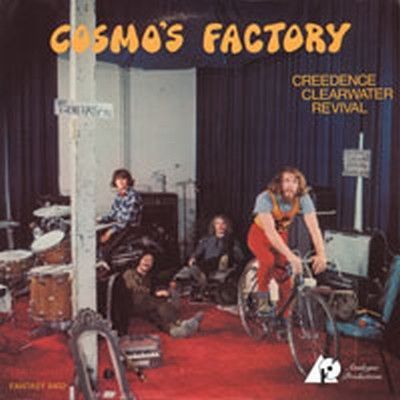
Why Would Anyone Want to Take All the Fun Out of CCR’s Music? Part Two

More of the Music of Creedence Clearwater Revival

This commentary is at least ten years old. Still holds up though!

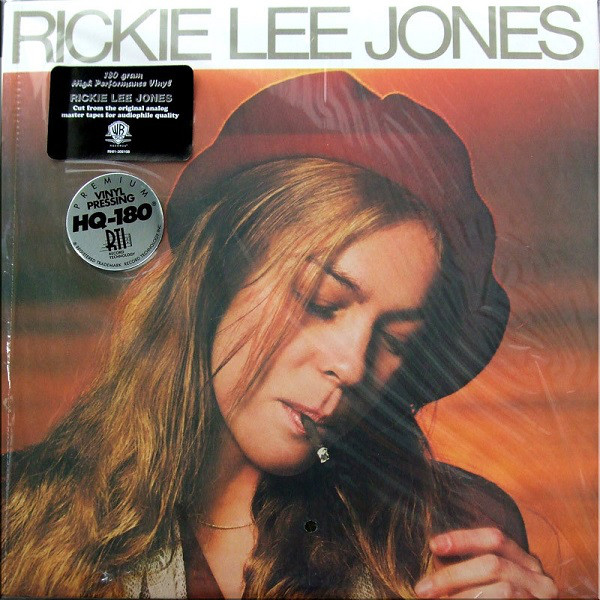
The last time I played one of Chad’s CCR pressings, which I confess was close to a decade ago, it had all the bad qualities of the Bonnie Raitt disc on DCC, a sound that I’ve grown to dislike more with each passing year.

But what the new AP version really gets wrong is the guitar sound.

Creedence’s music lives or dies by its grungy guitars, and the AP pressing is as wrong as they come.


Latest Findings as of 2022

This commentary used to end this way:

The fat, smeary, overly-smooth guitars you hear on the record, lacking any semblance of the grungy energy that are the true hallmarks of this band’s recordings, probably means that some audiophile mastering engineer got hold of the tapes and tried to “fix” what he didn’t like about the sound.

You know, the sound that is all over the radio to this very day. Something was apparently wrong with it. So now that it’s been fixed, everything that’s good about CCR’s recordings is missing, and everything that has replaced those sonic elements has made the sound worse.

Nice job! Keep up the good work. Chad is proud of ya, no doubt about it.

It has now become clear that the various mastering engineers Chad hires are not the ones trying to fix what they don’t like about the sound. Chad is El Jefe, the one telling them what to fix and rejecting their work until these remastered albums sound the way he wants them to sound.

There is no use complaining about the awful work Doug Sax, Steve Hoffman, Kevin Gray, George Marino or anyone else did when hired to master for Analogue Productions. Their task was to please Chad. He is the customer, he is the one paying their fees, and he is the one getting the sound he wants.

He apparently thinks he is saving the world from bad sound, but we sure don’t see it that way. Just the opposite in fact.

If Chad wanted better sounding records — records that are more lively, more tonally accurate, less bloated down low and less smoothed-over up top — veteran engineers such as the gentlemen named above would surely have been able to master these titles more correctly than the evidence provided by the records would lead you to believe.

But Chad, like many other audiophiles, is a My-Fi guy, not a Hi-Fi guy, and he likes the sound he likes, regardless of what is on the master tapes or what other pressings — mastered by a number of different engineers, often over the course of many decades — might sound like.

He wants the sound he wants, and their job is to give it to him.

Bernie Grundman, the man in charge of remastering Aja, is finding out that his way is not going to work for Chad. If it takes seven test pressings before Aja has the sound Chad likes, then he will just have to keep working it until Chad hears “his Aja” sounding the way it should.

When it finally comes out, I have no doubt that it will be very different from any pressing of Aja you or I have ever heard. It won’t sound much like the early pressings that Bernie Grundman mastered for ABC in 1977, which are of course the ones we sell. Unless I miss my guess, it will be very different from the master tape. (Something I freely admit I have no way of ever knowing.)

It will sound the way Chad likes music to sound. He paid a small fortune for the privilege of making Steely Dan sound the way he wants them to sound. Now that the die is cast, those of us with good stereos and basic critical listening skills can go pound sand. The mid-fi guys are being pandered to — in the audiophile world, that’s where the Heavy Vinyl money is — and expecting anything else from this atrocious label means you haven’t been listening very carefully to the records they’ve been releasing for more than 30 years.

Will I Like the New Steely Dan Remasters?

If you think this pressing of Tea for the Tillerman sounds good, it’s a near certainty you will want to be the first on your block to collect all the newly remastered Steely Dan Heavy Vinyls.

The same goes for this pressing of Stand Up. If this is the sound you are looking for, you can be sure Chad will give it to you, good and hard (apologies to H.L. Mencken).

Do these records sound fine to you? You’re happy with them, are you?

Then you have much to look forward to with the release of the complete Steely Dan LP collection!

These Analogue Productions releases will no doubt share many of the sonic characteristics of the above-mentioned titles.

How could they not? They are guaranteed to sound the way Chad wants them to sound. Chad is the customer, and the customer is always right.

If you’re Bernie Grundman, it might take you six or seven runs at it until you find that indescribable and elusive “Chad” sound, but you will have to keep at it until you do, assuming you want to get paid.

Our review for the first of the series that we’ve had the chance to play is in, and here it is.

Could it have been worse? Absolutely. Is it really very good? No, it’s not.

Considering his dismal track record, it’s probably as good sounding a record as Chad is able to make.

To paraphrase Cormac McCarthy:

It’s a mess of a record, ain’t it, Tom?

If it ain’t, it’ll do till a mess gets here.

(more…)

The First Classic Record We Ever Played – Thus Spake Zarathustra

Hot Stamper Pressings of Living Stereo Titles Available Now

Way back in 1994, long before we had anything like the system we do now, we were finding fault with the “Classic Records Sound.”

With each passing year — 28 and counting — we like that sound less.  Some Classic Records pressings may be on Harry’s TAS list — disgraceful but true — but that certainly has no bearing on whether or not they are very good records. 

I had a chance to play LSC 1806 (pictured above) not long ago and I was dumbfounded at how bright, shrill and aggressive it was.

I still remember playing my first Classic Records title, their first release, which would probably have been in 1994. The deep bass of the organ at the start of Also Sprach Zarathustra, the horns and the tympani blasting out from a dead silent background, put a lump in my throat. Had they actually managed to remaster these old recordings so well that the vintage pressings I was selling for such high prices would soon be worthless? I really do remember having that thought race through my mind.

But then the strings came in, shrieking and as bright as the worst Angel or DG pressing I’d ever heard. It was as if somebody had turned the treble control up on my preamp two or three clicks, into ear-bleeding territory. All my equipment at the time was vintage and tube, and even though my system erred on the dark side tonally, the first Classic release was clearly off the charts too bright and transistory, with none of the lovely texture and sheen that RCA was famous for in the early days of Living Stereo.

I knew right then that my vintage record business was safe.

Here is our review from the ’90s, written shortly after the release of Classic’s first three titles. (With minor additions and changes for clarity and context.)

Hall of Shame Pressings, Every One

I’m reminded of the nonsense I read in TAS and elsewhere in the mid-’90s regarding the reputed superiority of the Classic Records Living Stereo reissues. After playing their first three titles: 1806, 1817 and 2222 (if memory serves), I could find no resemblance between the reviews I read and the actual sound of the records I played. The sound was, in a word, awful.

To this day I consider them to be the single worst reissue series in history.


UPDATE 2025

Analogue Productions now holds that crown, surely. Still going strong, producing one crap pressing for the mid-fi collector market after another, there is simply no recording they won’t see fit to ruin.


When Harry Pearson (of all people! — this is the guy who started the Living Stereo craze by putting these forgotten old records on the TAS list in the first place) gave a rave review to LSC 1806, I had to stand up (in print anyway) and say that the emperor clearly had removed all his clothes, if he ever had any to begin with.

This got me kicked out of TAS by the way, as Harry does not take criticism well. I make a lot of enemies in this business with my commentary and reviews, but I see no way to avoid the fallout for calling a spade a spade.

Is anybody insane enough to stand up for LSC 1806 today? Considering that there is a die-hard contingent of people who still think Mobile Fidelity is the greatest label of all time, there may well be “audiophiles” with crude audio equipment or poorly developed critical listening skills, or both (probably both, as the two go hand in hand), that still find the sound of the shrill, screechy strings of the Classic pressing somehow pleasing to the ear. Hey, anything is possible.

As I’ve said again and again, the better a stereo gets, the more obvious the differences between good vintage pressings and most current reissues become. Modest front ends and mediocre playback systems can disguise these differences and mislead the amateur audiophile.

And the “professional” too. We’ve all had the experience of going back to play a record from years ago that we remember as being amazing, only to find it amazingly bad.

The Japanese Led Zeppelin series from the 90s comes immediately to mind. How could my system have been so dull that those bright pressings actually fooled me into thinking they sounded good all those years ago? I’ve done a few Mea Culpas over the years, and that’s one of the bigger ones.

Remember when Chesky Records were all the rage? Does anybody in his right mind play that shit anymore?

A short anecdote: A good customer called me up one night many years ago. He had just finished playing the Chesky pressing of Spain, and had pulled out his Shaded Dog original to compare. The sound of his Shaded Dog pressing was so much better that he took his Chesky and, with great satisfaction, ceremoniously dropped it in the trash can, noting, “Of course I could have sold it or traded it away, but nobody should have to listen to sound like that.”

Another anecdote: when Chesky first got started in the remastering business, a friend picked up their pressing of LSC 2150, Prokofiev’s Lt. Kije with Reiner. He played it for me when I came over to hear his system, and he and I were both shocked that his ’70s Red Seal pressing was better in every way.

We wanted to know: What kind of audiophile label can’t even go head to head with a cheap reissue put out twenty years after the initial release just to keep the bins stocked and satisfy the needs of the low-budget classical record buyer?

The answer: Plenty of them, and definitely Chesky. Playing most Classic Records classical titles is a painful experience these days. I do not recommend it to anyone with good equipment. If you love the Living Stereo sound and cannot afford vintage pressings, consider playing the CDs RCA remastered. The one I know well is clearly better than Classic’s and AP’s LPs.

(more…)

Live At The Village Gate on Audio Fidelity Heavy Vinyl

Hot Stamper Pressings of Jazz Albums Available Now

An Audiophile Hall of Shame pressing. It’s yet another Disastrous Heavy Vinyl release with godawful sound.

What a murky mess. Hard to imagine you couldn’t find a common domestic pressing that wouldn’t sound better.

I mention throughout this blog that, starting in the ’90s, the records put out by Cisco, DCC, S&P and finally Audio Fidelity had to fight their way through Kevin Gray’s opaque, airless, low-resolution cutting system. We discuss that subject in some depth here.

Compressedthickdullopaque, and almost completely lacking in ambience, this record has all the hallmarks of a Modern Heavy Vinyl Reissue pressed at RTI.

The average ’70s pressing on the Atlantic Red and Green label will kill this audiophile piece of junk, and it’s unlikely to cost you more than ten bucks. Whatever you do, don’t waste your money on this incompetently remastered reissue.


For 35 years we’ve been helping music loving audiophiles the world over avoid bad sounding records.

To see the records with bad sound or bad music we’ve reviewed that weren’t marketed to audiophiles, click here.

It’s yet another public service from Better Records, the home of the best sounding records ever pressed. Our records sound better than any others you’ve heard or you get your money back.

(more…)

The Voice (Isn’t What It Should Be) on Heavy Vinyl

More of the Music of Frank Sinatra

Reviews and Commentaries for the Music of Frank Sinatra

Sonic Grade: D

An audiophile hall of shame pressing and another Classic Records popular music LP badly remastered for the benefit of audiophiles looking for easy answers and quick fixes.

There is a boatload of TUBEY MAGIC to be heard on the early pressings, no doubt due to the fact that they are mastered with tube equipment, but you would never know it by playing this barely passable Classic repressing.

The difference is night and day.

It’s been quite a while since I played the Classic pressing, but I remember it as nothing special. Like a lot of the records put out by this label, it’s tonally fine but low-rez and lacking spacewarmth and above all, Tubey Magic.

I don’t think I’ve ever played an original that didn’t sound better, and that means that the best grade to give Classic’s pressing is probably a D, for below average. It sounds far too much like a CD.

Who can be bothered to play a record that has so few of the qualities we audiophiles are looking for on vinyl?

Back in 2007 we put the question this way: Why own a turntable if you’re going to play mediocrities like these?

(more…)

Giant Steps – Thick and Dull, Sorry, Not Really Our Sound

More of the Music of John Coltranecoltranegiant45x

John Coltrane – Giant Steps / Rhino 45 RPM 2 Disc Set 

The sound of the 45 RPM 2 disc version cut by Bernie Grundman does not exactly tickle our fancy. It sounds thick, dull, and entirely too smooth.

It reminds us of the awful Deja Vu Bernie remastered years ago for Classic Records.

As is the case with so many of the Heavy Vinyl reissues released these days, the studio ambience you hear on these pressings is a pitiful fraction of the ambience the real pressings are capable of revealing. Real pressings like, you know, the ones mass-produced by Atlantic, original and reissue alike. What’s Bernie’s excuse?

Rhino bills their releases as being pressed on “180 gram High Performance Vinyl.” However, if they are using “performance” to refer to sound quality, we have found the performance of their vinyl to be quite low, lower than the average copy one might stumble upon in the used record bins.


If you are stuck in a Heavy Vinyl rut, we can help you get out of it. We did precisely that for these folks, and we can do it for you.

(Like the gentleman who sent me the Steppenwolf album, you may of course not be aware that you are stuck in a rut. Most audiophiles aren’t.)

The best way out of that predicament is to hear how mediocre these modern records sound compared to the vintage Hot Stampers we offer.

Once you hear the difference, your days of buying newly remastered releases will most likely be over.

Even if our pricey curated pressings are too dear, as a Brit might put it, you can avail yourself of the methods we describe to find killer records on your own.

(more…)

Today’s Heavy Vinyl Disaster from Classic Records… Zep IV

Hot Stamper Pressings of the Music of Led Zeppelin Available Now

A classic case of live and learn

Back in the day I thought the Classic 180 and then 200 gram pressing was the king on this title. In late 2006 I wrote:

“You can hear how much cleaner and more correct the mastering is right away…”

Folks, I must have been out of my mind.

No, that’s not quite fair. I wasn’t out of my mind. I just hadn’t gotten my system to the place where it needed to be to allow the right original pressings to show me how much better they can sound.

Our EAR 324 phono stage and constantly evolving tweaks to both the system and room are entirely responsible for our ability to reproduce this album correctly. If your equipment, cleaning regimen, room treatments and the like are mostly “old school” in any way, getting the album to sound right will be all but impossible. Without the myriad audio advances of the last decade or so you are just plain out of luck with a Nearly Impossible to Reproduce album such as this.

All of the above are courtesy of the phenomenal revolutions in audio that have come about over the last twenty years or so. It’s what progress in audio in all about.

The exact same 200 gram review copy now [this was written about ten years ago] sounds every bit as tonally correct as it used to, and fairly clean too, as described above, but where is the magic?

You can adjust your VTA until you’re blue in the face, nothing will bring this dead-as-a-doornail Classic LP to life.

(more…)

Presence – Classic Records Reviewed

More of the Music of Led Zeppelin

More Led Zeppelin on Classic Records Reviewed

Sonic Grade: D

This was one of only three Classic Records 180 gram (later 200 gram) titles that I used to recommend back in the day.

Now when I play the heavy vinyl pressing, I find the subtleties of both the music and the sound that I expect to hear have simply gone missing.

It may be tonally correct, which for a Led Zeppelin pressing on the Classic Records label is unusual in our experience (II and Houses being ridiculously bright), but it, like Physical Graffiti and some others, badly lacks resolution compared to the real thing, the real thing being a run-of-the-mill early pressing.

(more…)

Teaser and the Firecat and the Mobile Fidelity Hall of Shame

Hot Stamper Pressings of the Music of Cat Stevens Available Now

Our Mobile Fidelity hall of shame listings totaled more than 40 back in 2010, and we noted at the time that the real number would be at least double that and probably more like triple that figure if we took the time to make listings for all the bad records this label has released, It stands at 50 or so as of 2022.


UPDATE 2026

As of 2026 the number is 58, and we have a couple of real dogs waiting in the wings to list.

Since I’ve retired, the crew has been playing many of the newer Heavy Vinyl releases from many different labels (including Mobile Fidelity of course) and finding the sound is every bit as bad or worse these days since this commentary was written.


In case you don’t already know, one of the worst sounding, if not THE worst sounding pressing of all time, of our beloved Teaser and the Firecat is the Mobile Fidelity Anadisq pressing that came out in the ’90s.

If you own that record, you really owe it to yourself to pull it out and play it. It’s just a mess and it should sound like a mess, whether you have anything to compare it to or not.

If I were in charge of the TAS Super Disc List, I would strike this record from it in a heartbeat.

Here are some others that we do not think qualify as Super Discs.

We offer a number of Hot Stamper pressings of TAS List titles that actually have audiophile sound quality, guaranteed. And if for some reason you disagree with us about how good they sound, we will be happy to give you your money back.

Sonny Rollins Plus 4 – Defending the Indefensible

Hot Stamper Pressings of the Music of Sonny Rollins Available Now

We reviewed this album in 2014 or thereabouts.


I cannot recall hearing a more ridiculously thick, opaque and unnatural sounding pair of audiophile records than this 45 RPM Analogue Productions Heavy Vinyl release, and I’ve heard a ton of them. 

Surely someone must have noticed how awful these records sound.

So, being an enterprising sort, with a few idle moments to spare, I did a google search. To my surprise it came up pretty much empty. Sure, dealers are selling it, every last one of the bigger mail-order types.

But how is it that no reviewer has taken it to task for its oh-so-obvious shortcomings?

And no one on any forum seems to have anything bad to say about it either. How could that be?

We don’t feel it’s incumbent upon us to defend the sound of these pressings. We think that for the most part they are awful and want nothing to do with them.

But don’t those who DO think these remastered pressings sound good — the audiophile reviewers and the forum posters specifically — have at least some obligation to point out to the rest of the audiophile community that at least one of them is spectacularly bad, as is surely the case here.

Is it herd mentality? Is it that they don’t want to rock the boat? They can’t say something bad about even one of these Heavy Vinyl pressings because that might reflect badly on all of them?

I’m starting to feel like Mr. Jones: Something’s going on, but I don’t know what it is. Dear reader, this is the audiophile world we live in today. If you expect anyone to tell you the truth about the current crop of remastered vinyl, you are in for some real disappointment.

We don’t have the time to critique what’s out there, and it seems that the reviewers and forum posters lack the — what? desire, courage, or maybe just the basic critical listening skills — to do it properly.

Which means that in the world of Heavy Vinyl, it’s every man for himself.

And a very different world from the world of vintage vinyl, the kind we offer. In our world we are behind you all the way. We guarantee your satisfaction or your money back.

Now which world would you rather live in?


UPDATE 2025

Still not a single review on Discogs for this pressing.

(more…)