lacks-bass

Is the Heavy Vinyl from 2012 the Best Sounding Sgt. Pepper?

beatlessgtHot Stamper Pressings of Sgt. Peppers Available Now

You might agree with some reviewers that EMI’s engineers did a pretty good job with the new stereo pressing of Sgt. Pepper mastered by Sean Magee from the 2009 digitally remastered tapes.

In the March 2013 issue of Stereophile Art Dudley weighed in, finding little to fault on this title but being less impressed with most of the others in the new box set. His reference disc? The MoFi UHQR! Oh, and he also has some old mono pressings and a domestic Let It Be.

Now there’s a man who knows his Beatles. Fanatical? Of course he is! We’re talkin’ The Beatles for Chrissakes.

When I read the reviews by writers such as these, I often get the sense that I must’ve fallen through some sort of Audio Time Warp and landed back in 1982. How is it that our so-called experts evince so little understanding of how records are made, how variable the pressings can be, and, more importantly, how absolutely crucial it is to understand and implement rigorous protocols when attempting to carry out comparisons among pressings.

Critically comparing LPs is difficult and time-consuming. It requires highly developed listening skills. I didn’t know how to do it in 1982. I see no evidence that the audiophile reviewers of today are much better at it now than I was in 1982.

Just to take one example: They all seem to be operating under the same evidence-free conceit: that the original is the benchmark against which other pressings must be compared.

To those of us who have played Beatles pressings by the hundreds, this is patent nonsense. To cite just one instance, a recent Hot Stamper listing notes [inaccurately as it turns out, see below]:

We defy any original to step into the ring with it. One thing we can tell you, it would not be a fair fight. The cutting equipment to make a record of this quality did not exist in 1967, not at EMI anyway.

We had the opportunity not long ago to audition a very clean original early pressing of the album and were frankly taken aback by how AWFUL it was in virtually every respect. No top end above 8k or so, flabby bass, murky mids — this was as far from Hot Stamper sound as one could imagine. If it were a Heavy Vinyl or Audiophile pressing we would surely have graded it F and put it in our Hall of Shame.

To be fair we have played exactly one early copy of the record on our current system. (Played a copy or two long ago but on much different equipment, so any judgments we might have made must be considered highly suspect.) Perhaps there are good ones. We have no way of knowing whether there are, and we are certainly not motivated to find out given the price that original Sgt. Pepper’s are fetching these days.

We can tell you this much: no original British pressing of any Beatles album up through Pepper has ever impressed us sonically. We’ve played plenty and have yet to hear one that’s not congested, crude, distorted, bandwidth-limited and full of tube smear. (The monos suffer from all of these problems and more of course, which is only natural; they too are made with the Old School cutting equipment of the day.)

If that’s your sound more power to you. It’s definitely not ours. The hotter the stamper, the less congested, crude, distorted, bandwidth-limited and smeary it will be. (Or your money back.)


UPDATE 2023

There is a copy of a Beatles album on the original label that was competitive with our best 70s pressings, this one. We explained why it’s not a problem to admit we were wrong about the album in question, For Sale, this way:

This finding about For Sale is precisely why live and learn is our motto.

We don’t know it all, and we’ve never claimed that we did. We constantly learn things about pressings in our daily shootouts. That should not be too surprising, as record shootouts are the only way to learn anything about the sound of records that’s actually worth knowing.

Start doing your own experiments and your record knowledge might just take off the way ours has. 99% of what we think we know about the sound of records we’ve learned in shootouts over the course of the last twenty years.

Here is our advice on getting started.

Before this, the only Beatles record we would sell on the Yellow and Black Parlophone label was A Collection of Oldies… But Goldies. That title does have the best sound on the early label. In numerous shootouts, no Black and Silver label pressing from the ’70s was competitive with the best stereo copies made in the ’60s.

Until now, it was clearly the exception to our rule. From With the Beatles up through Yellow Submarine, the best sounding Beatles pressings would always be found on the 70s reissue label.


The Best Pepper Pressings

How did we come to find the best Sgt. Peppers pressings? Our recent commentary about a wonderful Benny Carter record on the original Contemporary Black Label may serve to shed some light on the process.

(more…)

If You Can’t Make a Good Record, Why Make Any Record At All?

Hot Stamper Pressings of the Music of Steely Dan Available Now

This Speakers Corner Heavy Vinyl pressing has to be one of the worst sounding versions of the album ever pressed.

You think the average ABC or MCA pressing is opaque, flat and lifeless, not to mention compromised at both ends of the frequency spectrum?

You ain’t heard nothin’ yet!

As bad as the typical copy of this album is, the Speakers Corner Heavy Vinyl is even worse, with not a single redeeming quality to its credit.

If this is what passes for an Audiophile Record these days, and it is, it’s just one more nail in the coffin for Heavy Vinyl.

But that’s not the half of it.

Go to Acoustic Sounds’ website and read all the positive customer reviews — they love it! Is there any heavy vinyl pressing on the planet that a sizable contingent of audiophiles won’t say something nice about, no matter how bad it sounds? I can’t think of one.

To sum up, this record is nothing less than an affront to analog itself. I guarantee you the CD is better, if you get a good one. I own four or five and the best of them has far more musical energy than this thick, dull, opaque and boring piece of audiophile analog trash.

It was probably made from a digital copy of the master, or more likely a digital copy of an analog dub of the master — three generations, that’s sure what it sounds like — but that’s no excuse.

If you can’t make a good record, don’t make any record at all. Shelve the project. The audiophile vinyl world is drowning in bad sounding pressings; we don’t need any more, thank you very much.

(more…)

Our Take on Classic Records in 2005

Hot Stamper Pressings of the Music of The Who Available Now

Back when we were carrying a select group of Heavy Vinyl pressings in 2005, Who’s Next on Classic Records was one of the ones we recommended.

We felt the Classic Records pressings of this album and the others mentioned below were a good value for those who had thirty bucks to spend on a record.

By 2007 we had already changed our minds about Who’s Next on Classic — and a whole lot more.

Two CDs that Sound Nothing Like Their Vinyl Counterparts

Reviews and Commentaries for Sticky Fingers

Reviews and Commentaries for Back in Black

I made the mistake of buying both Back in Black and Sticky Fingers on CD to listen to in the car, and both are a disaster — no bass, no rock weight, with boosted upper mids, no doubt in a misguided attempt to provide more “clarity” and “detail.”

But trying to achieve more clarity at the expense of the rock and roll firepower that makes both of these albums Must Own Rock Records is beyond foolish.

These albums did not need a new sound or a more modern sound. The sound of the original pressings of both of them is superb, as close to faultless as you are likely to find in this world.

Mobile Fidelity managed to get more transparency in the midrange for their pressing, and look what it got them: our award for the worst version ever.

On both of these CDs, even in the car I couldn’t get past the third song.

If this is what the digital lovers of the world think those albums actually sound like, they are living in some kind of parallel universe.

The best pressings on vinyl sound nothing like them. In fact the best pressings sound so good they are on our Rock and Pop Top 100. Rest assured that you don’t get to be on our Top 100 with anemic, upper midrangy sound.


New to the Blog? Start Here

(more…)

The Doors’ Debut – MoFi Reviewed

More of the Music of The Doors

Sonic Grade: D 

If anyone still thinks that this pressing is anything but a bad joke played on the audiophile public — so sucked out in the midrange, bass shy and compressed to death — that person still has a way to go in this hobby.

A very long way.

You can hear that something is off with this pressing from another room. The sound is bad enough to have earned a place in our Mobile Fidelity Hall of Shame.

But wait just a gosh darn minute.

I liked the MoFi just fine when it came out. I guess I had a way to go in this hobby too.

That was back in the early ’80s. I like to think I’ve learned a thing or two in the last forty years.

Some reviewers and a great many audiophiles may be stuck in the 80s, but I sure as hell don’t think I am one of them.

(more…)

What Do You Mean by “Boxy” Sound?

More of the Music of Tchaikovsky

Many Golden Age classical records simply do not have very good sound, and this is one of them.

We’ve never heard a good sounding copy of LSC 2216, and we’ve played quite a number of them over the decades that we’ve been in the business of selling them. (LSC 1901, with Monteux conducting, is no better.)

A copy came in a while back so I figured it was time to give it a spin and see if there was any reason to change my opinion. Hey, maybe this one had Hot Stampers!

Can’t say it wouldn’t be possible. Unlikely, yes, impossible, no.

So here’s what I heard. No real top above 6k, hardly any bottom, but with a very wide stage – the textbook definition of “boxy sound.” (Dry and thin too, on a vintage RCA pressing no less!)

If you are a fan of Living Stereo pressings, have you noticed that many of them – this one for example – don’t sound good?

If you’re an audiophile with good equipment, you should have. But did you? Or did you buy into the hype surrounding these rare LSC pressings and just ignore the problems with the sound?

(more…)

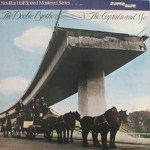
The Captain and Me – A Nautilus Disaster

Hot Stamper Pressing of the Music of The Doobie Brothers Available Now

We actually recommended the Nautilus Half-Speed in the old days, but the last time we played one (2012 maybe?) the sound was Pure Audiophile BS — compressed to death and totally whomp-free.

The average domestic copy is terrible too, but that’s no reason to recommend this crappy remaster.

Stick to the green label originals.  They can rock with the best of them.

(more…)

Tchaikovsky / Symphony No. 5 / Monteux

The Music of Tchaikovsky Available Now

Album Reviews of the Music of Tchaikovsky

Near Demo Quality. This is one of those mid-hall RCA recordings, and if you like that orchestral perspective, a very natural one to my mind, this record is for you. The string tone is superb.

What holds this record back is a lack of orchestral weight. But the strings on this copy are very sweet and the vinyl is exceptionally quiet.

It’s a lovely sounding copy, and dynamic as hell. Monteux’s performance is beyond reproach.

This is an Older Classical/Orchestral Review

Most of the older reviews you see are for records that did not go through the shootout process, the revolutionary approach to finding better sounding pressings we started developing in the early 2000s and have since turned into a veritable science.

We found the records you see in these older listings by cleaning and playing a pressing or two of the album, which we then described and priced based on how good the sound and surfaces were. (For out Hot Stamper listings, the Sonic Grades and Vinyl Playgrades are listed separately.)

(more…)

Strauss / Death and Transfiguration and Till Eulenspiegel / Reiner

This Plum Label Victrola has SUPERB better than Super Hot Stamper sound on side two, the side with Death and Transfiguration. It’s Tubey Magical, rich and sweet in the best Living Stereo tradition of recordings made during the Golden Age, in this case 1958. We had a Shaded Dog pressing of the recording in hand, LSC 2077, and it was better on side one but this Victrola was clearly better on side two.

And Reiner’s performance with the Vienna Phil is outstanding in every way. I have never heard the work performed better or sound better than it does on this very copy.

Side Two

A++ to A+++, nearly White Hot, and with a little more bottom end it might have won the shootout.

Clear, transparent, rich, big, spacious, tonally correct, with Tubey Magical textured strings, this record is doing practically everything we want it to.

Side One

A+ to A++, very much like side two but even more bass shy, which may become wearisome over the course of the whole side, depending on how loud you play the record and how full-bodied your system is.

A superb performance of the famous piece, played with verve. (more…)

L.A. Woman on German Heavy Vinyl, Part Two

Part One can be found here.

I have a Super Saver budget reissue domestic pressing of LA Woman. Want to guess what it sounds like? It sounds exactly like this German version. When I described the sound of the German version to Steve, he immediately recognized what I was talking about. There is a tape — they call it “the master tape” — of L.A. Woman that has exactly the bad qualities I have described above. I’m guessing that my Super Saver copy is a flat transfer of that bad tape. (When budget reissues are mastered, it’s often the case that the transfer is flat or something very close to it, because little time and expense is justified for a cheap reissue.)

Now if the Super Saver is a flat transfer and sounds just like this German pressing, I think we can safely infer that this new 180 gram remastered record is a flat transfer. It’s a flat transfer of a bad tape. Nothing more, nothing less.

And nothing new. There are tons of badly remastered records out there. I’m sure you’ve bought some. I could spend days listing them in the Records We Don’t Sell section. Most of the records found on my competitor’s Web sites could be cut and pasted into that section if I wanted to take the time to do it.

But how is it that such a bad record seems to have met with such favor among audiophiles? I’m frankly at a loss to understand it. I’m sure some of you reading this commentary own the record. Some of you no doubt LIKE the record. So let me think of a few reasons why you might not have noticed how bad sounding a record it is.

(more…)