Robert Brook and I have now started a YouTube channel whose purpose is to help audiophiles gain a better understanding of analog records and the many difficulties one encounters when playing them. Here I speak from experience, as does Robert.
We felt that it would be worthwhile to briefly talk about our backstories, so that viewers could appreciate why we choose to call ourselves “Skeptical Audiophiles” in the first place. This is Episode 2. Episode 1 can be found here.
If you’re looking for a different take on the subjects we will be addressing with our new channel, we happily offer them for your viewing pleasure.
If you would like to know more about audio and records, please feel free to ask any questions you have in the comments section, or send them directly to me at tom@better-records.com. (The blog has hundreds of letters — from customers and critics alike — you may enjoy reading as well.)
Robert has methodically and carefully — one might even say scientifically — approached the various problems he’s encountered in this hobby by doing the following:
Robert and I have now started a YouTube channel. Its purpose is to help audiophiles gain a better understanding of analog records and the many difficulties one encounters when playing them. Here I speak from experience, as does Robert. Hence the maiden voyage of our new channel!
We felt that it would be worthwhile to briefly talk about our backstories, so that viewers could appreciate why we choose to call ourselves “Skeptical Audiophiles” in the first place.
Speaking for myself, I hope to encourage our audiophile viewers to be more skeptical of the claims made by the many experts who have popped up on youtube seemingly out of nowhere, as if there had been a big bang in the record universe. Vast numbers of these channels have exploded onto the scene, all positively overflowing with record and audio advice. Where on earth have so many accomplished, knowledgeable experts been hiding all these years?
When I see the claims made by these individuals, rarely do they comport with my fifty years of experience in the world of audio. With these videos I hope to be able to explain what I mean by that in greater detail. (The blog you are now on has a great many commentaries discussing every aspect of records and audio that I could manage to come up with, all of it informed by actually playing lots of records and working at improving my stereo, starting all the way back in the early 70s.)
Lately I have been listening to this piece of music from start to finish over and over again, at this point easily ten times through, immersed in the glorious display of more orchestral color than one could possibly imagine in a single piece of music (including The Planets I dare say), in all of 35 minutes no less.
What triggered this behavior you ask? Hearing it performed live a few months back (5/2026?) planted the seed, and rediscovering the CD in my collection allowed me to get obsessed with it, something I tend to do when a piece of music is as full of life as this one is. We describe Muti’s performance of the work this way:
The EMI import pressing you see here gives you the complete Pictures at an Exhibition with a top performance and superb sonics.
Pictures is a piece of music that has been recorded countless times. I’ve played scores of different recordings starting at about the age of twenty, but the only one that still satisfies is this one, Muti’s 1979 recording with the Philadelphia Orchestra. Much like Previn and the LSO’s performance of The Planets, he brings out musical qualities in the work better than any other conductor with which I am familiar.
If I were limited to only one record to test a system with, it would be hard to choose a better one than a top copy of the Muti on EMI. (It’s almost, but not quite, all you would need.)
My advice would be to go and find yourself a clean UK pressing as quickly as possible.
It may eventually become your favorite orchestral recording of all time the way it has become mine, at the tender age of 72 in my case!
In the meantime, check out the wonderful performance recorded by the Oslo Philharmonic available on youtube. If you have big speakers hooked up to your TV and are willing and able to play them good and loud, you are in for a treat.
The performance is easily one of the best I’ve ever heard, although a bit slower and more measured than ideal. However, it would clearly be superior to those on offer by second- and third-rate orchestras, of which there are many in my experience.
Here is the precision and energy that is surely missing from those performances, as well as most recordings truth be told, whether analog or digital. (The CD on EMI by the way is excellent and highly recommended.) As I said, the pacing is a bit slow, but the ability to see all the players and their instruments is a huge bonus on a powerful work such as this.
List of Instruments (AI Assisted)
Woodwinds: 3 Flutes (1 doubling piccolo), 3 Oboes (1 doubling English horn), 2 Clarinets, 1 Bass Clarinet, 2 Bassoons, 1 Contrabassoon, and 1 Alto Saxophone (featured prominently in The Old Castle).
Brass: 4 Horns, 3 Trumpets, 3 Trombones, 1 Tuba, and 1 Euphononium (or Saxhorn, often performed on Euphonium or Tuba for the Bydło soloist movement).
If you guessed the Cisco LP from 2007, one of the worst sounding versions of the album ever pressed, you win a prize!
When I go searching the web to find out something about a record, occasionally I come across something I had no idea existed.
Look what I found today: a survey of various pressings of Aja!
Aja is an album I think I know pretty well. I’ve been playing it since the day it came out in 1977 and still listen to it regularly.
Play the video and tell me if you think you are learning anything useful from the guy. Does he seem to understand much about the sound of the pressings he is reviewing?
I didn’t think so. If you know much about records you should be appalled at the nonsense coming out of this guy’s mouth. This video will no doubt garner many ten of thousands of hits, but that is to be expected.
Phony record gurus like this guy — as opposed to authentic record gurus like us — have found a home in every corner of the web, spewing out bad advice for those foolish enough to take it.
It doesn’t to me, but I admit to some bias when it comes to Dark Side of the Moon. I must have played more than a hundred different pressings over the last forty-odd years.
Year after year I was sure I understood exactly which copies had the best sound, and again and again I was proved wrong. (To be clear, I proved myself wrong. Shootouts have a way of doing that.)
We only found out what the best sounding versions were about five or six years ago [make that ten]. We did that by doing shootout after shootout with every version we could lay our hands on, starting around 2005. We even did a shootout for two different Mobile Fidelity pressings many years ago, which we think makes for some good reading to this day.
It’s especially good reading for those who don’t appreciate how dramatic pressing variations can be for even quality controlled limited editions. The comparison of the two MoFi’s centers around the idea that midrange tonality is by far the most important quality to listen for on Dark Side, and that, surprisingly to some audiophiles, but obviously not to us, there are MoFi pressings with a correct midrange and there are some without.
Is this fellow listening for midrange tonality? If you watch the video and he says he is, then you can let me know! And if not, you can ask him in the comments why he wasn’t. Maybe he just likes the chiming clocks and the deep bass of the heartbeat.
The opening track on side one of Every Picture Tells a Story has drums that put to shame 99% of the rock drums ever recorded.
The same is true of I Know I’m Losing You on side two. It just doesn’t get any better for rock drumming, musically or sonically. Micky Waller is brilliant throughout. Kenney Jones, who only plays on the showstopping “(I Know) I’m Losing You,” is clearly out of his mind.
Some of the best rock bass ever recorded can be found here too — punchy, note-like and solid as a rock. If you have the system for it you are going to have a great time playing this one for your friends, audiophiles and otherwise.
Click on the link below and give this system a listen for a minute or two.
Have you ever heard live music that sounded like this?
Who in his right mind wants a stereo with this kind of ridiculously artificial sound?
If you’re reading this blog, I hope it’s not you, because you will never find a record on our site with sound this unnatural.
If you like the sound of an album such as Aerial Boundaries, then buy this speaker. It will make all your records sound just like it!
Here is how we described the sound of Aerial Boundaries years ago:
It sounds as if someone went into the biggest room in the studio they could book, sat Michael Hedges down on a stool out in the middle of it, and then took all the mics and aimed them at the walls. Roll tape! (Assuming they used tape, who knows what kind of crap digital system they were using.)
And the best part is that it was nominated for an engineering Grammy!
If you think the average music lover today wouldn’t know good sound if it bit him in the ass, this album is proof that nothing has changed, not since 1984 anyway.
Some commentary I found on the web
Aerial Boundaries is the second album by guitarist Michael Hedges released on the Windham Hill label in 1984. It was nominated for a Grammy Award as Best Engineered Recording.
We’ve done a number of shootouts for A Collection of Beatles Oldies over the last ten years or so, and our experimental approach using many dozens of copies provides us with strong evidence to support the following conclusions regarding the sound of the originals vis-a-vis the reissues:
The best of the early pressings always win our shootouts. No reissue has ever earned our top grade of A+++ and it is unlikely any reissue ever will.
The reissues can be quite good however. The best of them have earned grades of Double Plus (A++).
The worst of the early pressings also earned grades of Double Plus (A++).
Conclusion: if you have a bad original and a good reissue, you might be fooled into thinking the sound quality was comparable.
The spindle trails are the strongest evidence that this record is more than likely completely worn out and noisy as hell.
At a cost of roughly $50 to send it back, and more than $150 to buy it and have it shipped across the Atlantic in the first place, this is the kind of pain we have to be willing to accept.
We eat noisy records like this week in and week out. There is simply no way around it. If there was another way to find the well cared for pressings that we offer our customers, I think we would have found it by now. If you know of one, please drop us a line.
Once you discover that Machine Head only sounds its best on the early British pressings, and you therefore would like to acquire one for your collection, you have your work cut out for you, my friend. Ask lots of questions and hope you get honest answers.
We know of none better, outside of our own humble attempt to enlighten that portion of the audiophile community who love hearing music reproduced with the highest fidelity and are willing to go the extra mile to make that happen.
Robert has methodically and carefully — one might even say scientifically — approached the various problems he’s encountered in this hobby by doing the following:
 More Youtube Videos from The Audiophile Skeptics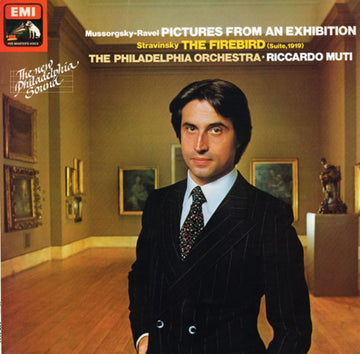


 Advice We Think Can Help You Make More Audio Progress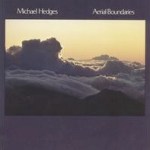


 Robert Brook runs a blog called The Broken Record, with a subtitle explaining that his blog is: