bad-jpn

Letter of the Week – “To think I spent all those years playing a record that was bright and edgy, none the wiser to matrix numbers and pressing variations.”

Hot Stamper Pressings of the Music of Michael Jackson Available Now

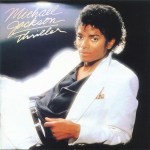
Our good customer who goes by the handle ab_ba on the web wrote to us about his experience with the White Hot Stamper pressing of Michael Jackson’s Thriller he recently acquired.

Part one of his letter can be found here.

Here he tells us about the shootout he conducted, which included a “pricey Japanese pressing” and a pressing that the forums recommended as the “holy grail.”

A few weeks later, on the eve of the closing of the return window, I shot it out against the best of my other copies. They range from the copy I grew up with, one of the few records from childhood that I held onto, to a pricey Japanese pressing in great shape (purchased long ago, when I thought Japanese pressing were where it’s at), to some copies I’ve picked up over the years because they looked to be in good shape and they were just five bucks, and a pressing that the forums told me was the “holy grail.”

None stacked up to the white hot stamper. In fact, they really weren’t even close. Here’s what I found:

The copy I grew up with is bright and edgy. To think, I spent all those years playing and re-playing a record that was bright and edgy, none the wiser to matrix numbers and pressing variations.

Some other lucky kid back then was surely listening to the copy I now own. I wonder if he ever said to himself, “wow, there’s something about this record. It sounds really special.”

The pressing with a sought-after matrix code had phenomenal bass, but the vocals were recessed. I’d so easy to be impressed with those huge drums on Billie Jean, but that alone is not enough to tell you it’s a great pressing. A lot of pressings seem to get that right.

My Japanese pressing was clear and full. But too smooth. The guitars don’t bite. Also, it fatigued me by about halfway through the side. This is energetic music. It might exhaust you, but it doesn’t have to fatigue you. This is an example of where if you don’t have a white hot stamper to compare it to, you’ll just assume your version sounds as good as it can get.

Dear ab_ba,

Most Japanese pressings cater to the sound a mid-fi system would need to sound good and a hi-fi system would find disastrous. They are almost always made from dubbed tapes, which are then brightened up in the mastering phase since that is the sound that appeals to the Japanese market for some reason unknown to me. (Old school audio equipment — horn speakers and vintage tube electronics — would be my guess.)

(more…)

Obscured By Cloudy Japanese Vinyl

Hot Stamper Pressings of the Music of Pink Floyd Available Now

When I was just getting up to speed in audio and exploring the world of music available on vinyl in the 70s, many of the stereo stores I frequented carried Japanese pressings. They were widely believed to have superior sound relative to their domestic counterparts — in this case, the mass-produced pressings I would see at the Tower Records right across from the Sports Arena in my hometown of San Diego. I went there at least once a week, probably more like two or three times.

Tower was far and away the best place to go record shopping in those days. The store was huge and they had dramatically more stock than Licorice Pizza or The Wherehouse.

They also had a separate section for Half-Speed mastered pressings from a number of labels, which of course was the first place in the store I would visit, digging through the bins to see what new remastered titles may have been produced for audiophiles searching for the ultimate in sound quality.

Of course, I identified as just such a person. In terms of sound quality, and with the extremely limited knowledge I had acquired at the time, I believed I set a high standard for the sound of the records I bought. I was willing — eager even, you could even say excited — to pay whatever premium price I had to for a record that was sure to deliver superior sound quality. To me, in the late 70s, that meant two things: direct to disc recordings, and Half-Speed mastered pressings.

(There was a another category of records that did not fall into the above two, best exemplified by American Grammaphone and the Fresh Aire series, but the less said about those schlocky releases the better, other than to point out that some of their titles are TAS list carryovers from HP’s time running the Super Disc list, specifically Fresh Aire 2 and 3, both best avoided.)

And, like any other open-minded individual, when it came to Japanese vinyl I was willing to give a few a spin.

However, the more of them I bought, the more clear it became to me that even the best of them sounded mediocre (veiled, smeary and dubby from second generation tapes) and more often than not they were just plain awful. (Second generation tape issues being the main problem, of course, with the additional insult of poor tonality, the result of being mastered using wacky equalization, typically with added brightness where none was needed.)

Pink Floyd

The notes for the Pink Floyd album you see below, Obscured by Clouds, were written sometime in March of 2025 as part of the shootout we conducted for the album.

If we assume it would be an audiophile who would be attracted to this pressing, perhaps for its quieter playing surfaces, perhaps operating under the assumption that the Japanese engineers mastering the record would be more likely to do a better job as well, then what we have here is a textbook case of an audiophile bullshit pressing.

One that sounds nothing like the album is supposed to, based on having played a number of exceptionally good sounding copies, all British and all on the Green Harvest label, mastered from good tapes, sometimes by the legendary Harry T. Moss. We feel we are more than qualified to make these judgments. If we can’t make them, nobody can.
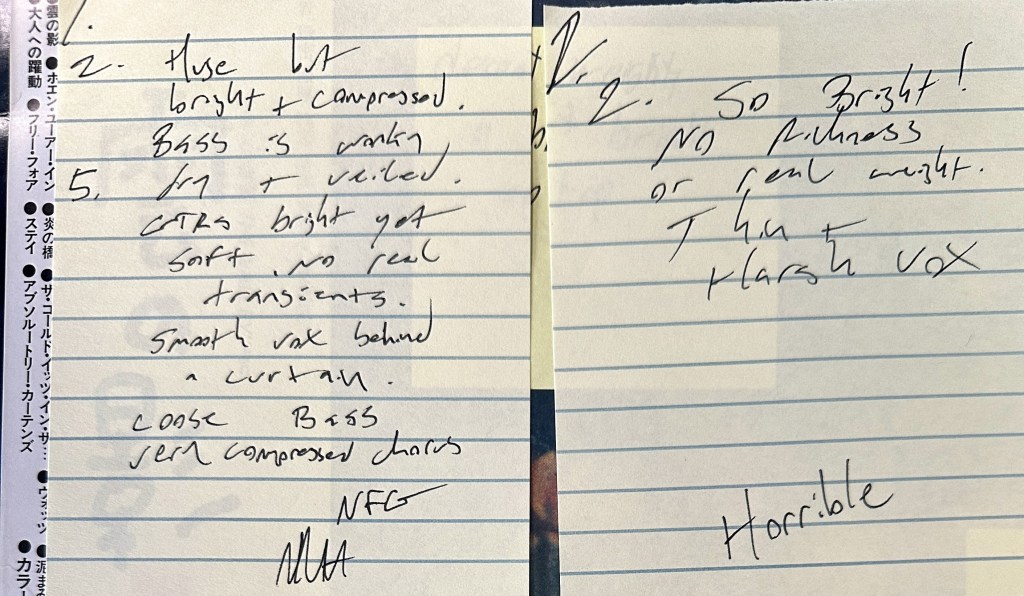
Discogs allows us to glean some information regarding the desirability of this Japanese reissue with the record buying public currently in the market for Pink Floyd vinyl who register on their site.

(more…)

An RCA Direct Disc with Bad Music & Bad Sound, Like Most Audiophile Albums from the ’70s

Hot Stamper Pressings of the Music of The Beatles Available Now

The records being marketed to audiophiles these days may have second- and third-rate sound, but at least they now have good music. That’s progress, right?

It is progress, because this RCA direct to disc recording is the kind of crap that used to qualify as an “audiophile record” when I was starting out in the mid-70s. These records were displayed on the walls of all the hi-fi stores I used to frequent back in the day.

They cost a lot more than regular records did too. Many were pressed in Japan, and I vaguely recall that the retail prices were in the range of $15 to $18. That’s $77 to $92 in today’s money. Can you imagine paying that for a record with such poor sound and music?

The Beatles Medley is particularly misguided. These guys have no idea what to do with the music of The Beatles.

A record such as this clearly belongs in our audiophile hall of shame, which is a general catchall section for the many bad sounding records that have been marketed to audiophiles over the last fifty years. We’ve played and reviewed more than 300 to date, which of course is but a mere fraction of the many thousands of questionable pressings that have been produced since the 70s. There has always been a mid-fi collector market, and no shortage of enterprising types to take advantage of it.

It turns out that many of the most shameful offenders for sound are more recent releases that have only come our way in the last few years. Here are some of their stories.

(more…)

Universal Japan and the Economics of Buying a Pig in a Poke

Skeptical Thinking Is Critical to Finding Better Records

One of my good customers sent me this email shortly after this series came out, circa 2000:

I noticed that Universal Japan has come out with several new titles, stuff I’m interested in, like Stevie Wonder / Innervisions… Stan Getz, James Brown… and many others — that are on acousticsounds.com.

Generally, for these somewhat expensive heavy vinyl releases (relative to used prices), I’m trying to stick with stuff where your site has favorable comments regarding the sound quality, but you don’t seem to carry these new items.

Do you think they are bad, or you just have not had a chance to check them out yet?”

I replied as follows:

We have a longstanding antipathy toward records pressed in Japan that were not recorded in Japan. (Here is one of the exceptions because the mastering was done by the real mastering engineer, using the real tape, here in America. There are also some excellent direct to disc albums that were recorded here in the states and subsequently pressed in Japan.)

Japanese pressings almost NEVER sound good to these ears. The only report I’ve heard concerned Aja, which was that it was awful, bright as bright can be.

A Japanese pressing that’s too bright? Shocking. Say it isn’t so.

We are going to be carrying almost no new releases of Heavy Vinyl pressings from now on.

They just don’t sound good to us and we don’t want to waste our time playing bad records when there are so many good ones sitting around that need a loving home.

If you pay $30 for Heavy Vinyl reissues and only one out of five sounds good — an optimistic estimate if you ask me — you’re really paying $150 for the one good one, right?

This makes no sense to me. And since the real odds are one out of ten, it’s really $300 for the good one.

(more…)

Led Zeppelin on Prestigious Japanese Limited Edition Vinyl

Hot Stamper Pressings of the Music of Led Zeppelin Available Now

A classic case of live and learn. In 2006 I finally woke up to how ridiculously bad these Japanese pressings I was selling back in the 90s actually were.

It’s what real progress in audio is all about, in this case about ten years’ worth. Those are ten years that really shook my world, and by 2007 we had discovered much better cleaning technologies and given up on Heavy Vinyl and audiophile bullshit pressings such as these, whew!

Our story from 2006:

I used to sell the German Import reissues of the Zep catalog in the 90s. At the time I thought they we’re pretty good, but then the Japanese AMJY Series came out and I thought they were clearly better.

I couldn’t have been more wrong. I now realize those Japanese pressings are bright as bright can be. Now, not-too-surprisingly, the German pressings sound more or less right (on some of their titles).

They tend to be tonally correct, which is more than you can say for most Zep pressings, especially some of the Classics [linked here], which have the same brightness issue (as well as many other problems).


UPDATE 2024

Only one of the German-pressed Zeppelin records is good enough to win shootouts, the only title of theirs on German vinyl that we buy these days. Of course we tried them all, at no small expense I might add, because there were a great many pressings cut by many different engineers over the course of decades that were pressed in Germany, and the only way we could judge them was to buy them and have them shipped over. In the end only one had the big, bold, dynamic sound we were after.

(more…)

The Wall Sounds Terrible on these “Audiophile” Rip-offs

Hot Stamper Pressings of the Music of Pink Floyd Available Now

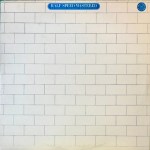
This Japanese import is one of the dullest, muddiest, worst sounding copies of The Wall we have ever played. It is clearly made from a second generation tape (or worse!).

Is it the worst version of the album ever made? Hard to imagine it would have much competition.

And somehow this pressing, or one very much like it, ended up as on the TAS Super Disc List. I would hope that the copy Harry played sounded a whole lot better than this one.

The version on the TAS Super Disc list is EMI 4814, which I believe is the British original. Conventional wisdom? Is The Absolute Sound capable of any other?

And the CBS Half-Speed is every bit the mudfest that the Half-Speed is.

How is it that the worst sounding pressings are so often marketed to audiophiles as superior to their mass-produced counterparts? In our experience, more often than not they are just plain awful, inferior in every way but one: surface quality.

And the knock on these CBS Half-Speeds is that they are made from the same vinyl CBS used to press all their other records.

I remember buying them back in the late-70s at Tower Records. They were only $12.99 when Mobile Fidelity pressings were $17.99, garnering a premium price because they were pressed in Japan. Fool that I was, I bought plenty of both, not to mention those made by Nautilus, Direct Disk Labs and plenty of others too painful to think about.

Dear audiophiles, stop collecting crappy audiophile pressings with quiet vinyl and just switch to CD already. You’ll be getting better sound and saving yourself a lot of money to boot. You simply cannot defend analog with this kind of junk.

(more…)

Letter of the Week – “I can’t listen to 99 percent of my audiophile or Japanese pressings…”

Hot Stamper Pressings of Jazz Rock Fusion Albums Available Now

One of our good customers had this to say about some Hot Stampers he purchased recently:

Hey Tom, 

Now, meaning in the past year…

I can’t listen to 99 percent of my audiophile or Japanese pressings… 

I hear how wrong they sound…

I, of course, have since replaced just about all and 999 out of 1000 sound better than the average copy.

Why did I think a Japanese pressing was better? My god, all my Crusader Japan pressings next to plain old original releases nooooo comparison.

Btw, can’t believe your customers don’t want Southern Comfort, Crusaders 1 and Crusaders 2… all are unreal powerful double LPs.. and many in their catalogue almost equal to those… Crusaders: the best of the best.

Regards
Andy

Andy, we tried to do shootouts for some of their records a few years back and were underwhelmed by the sound, the music, or both.  I’m afraid you will have to do your own shootouts for now.

And of course we’ve long been of the opinion that Japanese pressings mostly suck. Maybe one out of fifty is great, and those odds do not make them an attractive proposition for audiophiles.

You know what we know: vintage pressings — when you find good ones — will beat anything and everything you can throw at them.

(more…)

The Four Seasons Direct to Disc at 45 RPM

Hot Stamper Pressings of the Music of Antonio Vivaldi Available Now

This RCA Direct-to-Disc 45 RPM Double LP has awful sound, with exceptionally hard and shrill string tone.

This is precisely why we dislike Japanese pressings as a rule — they sound like this audiophile trash.

If you own this album, it should make a good one for testing string tone and texture. The strings on this record are awful, and they should sound awful on your stereo too.

The Big Picture from a Lifelong Audiophile

You may have seen this text in another listing, but it bears repeating.

There is nothing new under the sun, and that is especially true when it comes to bad sounding audiophile records. The world is full of them.

There has been one big change from the days when I self-identified as a freshly minted audiophile in the ’70s.

Yes, the records being marketed to audiophiles these days may have second- and third-rate sound, but at least now they have good music. That’s progress, right?

The title reviewed above is a good example of the kind of crap we newbie audiophiles used to put up with back in the old days, long before we had anything resembling a clue.

This one clearly belongs on our list of bad audiophile records.

You might be asking: What kind of audio fool was I? to buy a dumbass record like this.

It’s a fair question. Yes, I admit I was foolish enough to buy records like this and expect it to have good music, or at least good sound. Of course it had neither. Practically none of these kinds of records ever did. Sheffield and a few others made some good ones, but most Direct to Disc recordings were crap.

As clueless as I was, even back in the day I could tell that I had just thrown my money away on this lipsticked-pig in a poke.

But I was an audiophile, and like a certain Mr. Mulder, I wanted to believe. These special super-hi-fidelity records were being made for me, for special people like me, because I had expensive equipment and regular records are never going to be good enough to play on my special equipment, right?

To say I was wrong to think about audio that way is obviously an understatement. Over the course of the last forty years, I (and to be fair, my friends and my staff) have been wrong about a lots of things in the worlds of records and audio.

You can read more about many of the things we got wrong under the heading: live and learn.

The good news? Audio progress is real and anyone who goes about doing audio the right way can achieve a great deal.

(more…)

The Planets on Pro-Use Japanese Vinyl at 45 RPM Is Just Awful

More of the music of Gustav Holst (1874-1934)

This EMI 45 RPM Japanese Import 2 LP set is considered one of the great Planets by many audiophiles, but it’s not, based on our playing of a copy we had years ago, which means it belongs in our audiophile hall of shame.

The best copies on British or Dutch EMI vinyl are clearly better than this “audiophile” pressing.

What could be less surprising?

This is precisely why we dislike Japanese pressings as a rule — they sound like this audiophile trash.

Our favorite performance of The Planets can be found here.

The Big Picture from a Lifelong Audiophile

You may have seen the following text in another listing, but it bears repeating.

There is nothing new under the sun, and that is especially true when it comes to bad sounding audiophile records. The world is full of them.

There has been one big change from the days when I self-identified as a freshly minted audiophile in the 70s.

Yes, the records being marketed to audiophiles these days may have second- and third-rate sound, but at least now they have good music. That’s progress, right?

The title reviewed above is a good example of the kind of crap we newbie audiophiles used to put up with back in the old days, long before we had anything resembling a clue.

This one clearly belongs on our list of bad audiophile records.

You might be asking: What kind of audio fool was I? to buy a dumbass record like this.

It’s a fair question. Yes, I admit I was foolish enough to buy records like this and expect it to have good music, or at least good sound. Of course it had neither. Practically none of these kinds of records ever did. Sheffield and a few others made some good ones, but most Direct to Disc recordings were crap.

As clueless as I was, even back in the day I could tell that I had just thrown my money away on this lipsticked-pig in a poke.

But I was an audiophile, and like a certain Mr. Mulder, I wanted to believe. These special super-hi-fidelity records were being made for me, for special people like me, because I had expensive equipment and regular records are never going to be good enough to play on my special equipment, right?

To say I was wrong to think about audio that way is obviously an understatement. Over the course of the last forty years, I (and to be fair, my friends and my staff) have been wrong about a lots of things in the worlds of records and audio.

You can read more about many of the things we got wrong under the heading: live and learn.

The good news? Audio progress is real and anyone who goes about doing audio the right way can achieve the equivalent of miracles.

(more…)

Getz Au Go Go – Live and Learn

Hot Stamper Pressings of Bossa Nova Albums Available Now

A classic case of We Was Wrong.

Many years ago we had written these silly lines in a review:

Of course, you would never know this is a good recording by playing the average domestic copy. This Japanese LP is one of the few pressings that can show you that this wonderful smoky night club jazz LP really can have Demo Disc sound.

Ridiculous, right? Well, at the time we believed it. Now our understanding is quite a bit more sophisticated, in the sense that the Japanese pressing is clearly better than many originals, but certainly not all of them.

More importantly, there are amazing sounding domestic reissues of the album that we’ve auditioned over the last ten years or so that really blew our minds and helped to set an even higher standard for the sound of Getz Au Go Go.

Our old story:

Way back in 2005 I discussed this very subject when listing a sealed copy:

There are pressing variations for this title on Japanese vinyl, and there’s no way to know what this one sounds like but all of them are better than any other pressing I know of. As I played the open copy we have listed on the site (1/12/05) I couldn’t help but marvel at the quality of the sound.

These days we would crack open a sealed one, clean it up and shoot it out with any others we could lay our hands on, because finding a copy with sound like this is a positive THRILL.

I’m no fan of Japanese pressings as readers of this Web site know very well, but the Japanese sure got this one right!

The domestic copies of this album are mediocre at best — there’s simply no real top end to be found on any Verve pressing I have ever heard.

The top end is precisely where the magic is! Astrud Gilberto’s breathy voice needs high frequencies to sound breathy.

Gary Burton’s vibes need high frequencies to emerge from the mix, otherwise you can hardly hear them.

And Stan Getz’s sax shouldn’t sound like it’s being played under a blanket.

The only version of this album that allows you to hear all the players right is a Japanese pressing, and then only when you get a good one.

That was our understanding in 2005, after being seriously into audio and records for 30 years, as a professional audiophile record dealer for 18 of them. Clearly we had a lot to learn, and we were on the road to learning it, having embarked on our first real Hot Stamper shootout just the year before. (We had been doing them less formally since the ’90s of course. It was only in 2004 that we were able to do them with the requisite scientific protocols in place.)

In 2005, we simply did not have the cleaning system or the playback system capable of showing us what was wrong with the sound of the Japanese pressing we were so impressed by at the time.

(more…)