boosted-upper-mids

L.A. Woman Is a Disaster on German Heavy Vinyl, Part One

Hot Stamper Pressings of the Music of The Doors Available Now

There was a German 180 gram pressing of L.A. Woman that was so bad, I called this commentary from 2005 The Audiophile Apocalypse. [Minor edits have been made since then.]

The fact that some audiophiles and audiophile reviewers appeared to like this pressing was a sign that, to me at least, The End Is Near, or May Be. There is no hope for audiophiles if they can’t tell a good record from a bad one, and this is clearly a bad one.

If this isn’t a good example of a pass/not-yet record, I don’t know what would be.

As noted at the top, this commentary was written a long time ago. Much of our thinking about the recordings of The Doors has evolved since then, having played scores of their records in shootouts and learned something new from practically each one. Click here to read more.

Dateline: January, 2005

When I first played it I thought there must be something wrong with my stereo. There was no deep bass. (This recording has amazing deep bass.) The sound was upper midrangey and distorted. There was no extreme top at all.

This surprised me, as I had heard that this was supposed to be a good record.

What I heard coming off the copy that I was playing was pure garbage. I was confused.

So I grabbed a couple of DCC Doors pressings. The first one I played was Waiting For The Sun, my favorite on DCC. Ahh, that’s more like it. Sweet, open, plenty of bass, extended highs, Steve Hoffman’s beautifully liquid midrange — everything I expected to hear on his version was there just exactly the way it should be.

So I knew it wasn’t my stereo. Then I pulled out the DCC LA Woman. What’s the difference you ask? Well, the DCC has a top end. Listen to the cymbals. They ring sweetly and correctly. You can hear that the tape hiss sounds correct, a sure sign that the top end is accurate.

The midrange is a bit recessed compared to the German pressing. Steve says he took out a half DB in the upper mids. There’s distortion on the vocals and he was trying to soften the effect. It might have been better to leave it flat, but either way is preferable to the boosted, aggressive, edgy upper midrange to be found on the German pressing.

The German LP sounds like something playing over the radio. AM, not FM. Part of the problem is that there’s no lower midrange on the German pressing to properly balance out the vocals. Perhaps it’s not on the tape they used. I’m guessing it probably isn’t.

But any mastering engineer worthy of the name should know how to fix a problem like that. Steve did. Apparently this German fellow did not.

And worst of all, there is no deep bass on this record AT ALL. The whole lower octave is missing. Now to be fair, the DCC LP has the same problem. There’s no lower bass on it either. That’s why I don’t recommend that you listen to LA Woman on vinyl. I don’t know of any copy that sounds right.


UPDATE 2025

This was true in 2005 because we had yet to do the work it takes to find the right copies, the ones with plenty of bass and everything else too. I think it took us another ten years to find the pressings with the right stampers. Scroll to the bottom of this listing to see our notes for the copy that won our last shootout in 2024.

(more…)

A Fun and Easy Test for Abbey Road: MoFi Versus Apple

More of the Music of The Beatles

There is a relatively simple test you can use to find out if you have a good Mobile Fidelity pressing of Abbey Road. Yes, as shocking as it may seem, they actually do exist, we’ve played them, but they are few and far between (and never as good as the best Brits).

The test involves doing a little shootout of the song Golden Slumbers between whatever MoFi pressing you have and whatever British Parlophone pressing you have. If you don’t have both LPs, this shootout will be difficult to do.

The idea is to compare aspects of the sound of both pressings head to head, which should shed light on which one of them is more natural and which is more hi-fi-ish sounding.

The Golden Slumbers Test

I’ve come to realize that this is a Key Track for side two, because what it shows you is whether the midrange of your pressing — or your system — is correct.

At the beginning Paul’s voice is naked, front and center, before the strings come in.

Most Mobile Fidelity pressings, as good as they may be in other areas, are not tonally correct in the middle of the midrange.

The middle of the voice is a little sucked out and the top of the voice is a little boosted.

It’s really hard to notice this fact unless one plays a good British pressing side by side with the MoFi.

Then the typical MoFi EQ anomaly become obvious. It may add some texture to the strings, but the song is not about the strings.

Having heard a number of audiophile systems (especially recently) that have trouble getting this part of the spectrum right, it would not be surprising that many of you do not find the typical MoFi objectionable, and may even prefer it to the good British copies. The point I’m belaboring here is that when it’s right, it’s RIGHT and everything else becomes more obviously wrong, even if only slightly wrong.

The Heart of the Midrange

For a while in my record reviewing system many years ago I had a relatively cheap Grado moving magnet cartridge. The midrange of that cartridge is still some of the best midrange reproduction I have ever heard. It was completely free of any “audiophile” sound. It was real in a way that took me by surprise. I played Abbey Road with that cartridge in the system and heard The Beatles sound EXACTLY the way I wanted them to sound.

(more…)

Something Phony This Way Comes

Here’s what we learned from a shootout many years ago.

Some copies sounded like they were Half-Speed mastered by Mobile Fidelity.

(This is not a compliment. We hate that label’s phony sound and we don’t know why so many audiophiles would want to put up with the colorations MFSL’s records were notorious for.)

  • They had a little something phony added to the top of Linda’s voice.
  • They had a little bit of suckout right in the middle of the midrange, the middle of her voice, and
  • They had a somewhat diffuse, vague quality, with sound that lacked the solidity we heard on the best pressings.

These hi-fi-ish qualities that we heard on so many copies reminded us of the kind of audiophile sound we decry at every turn. We’ve played literally hundreds and hundreds of MoFi’s and other Half-Speed mastered records over the course of the last forty plus years, and one thing we know well is what they sound like.

But think about it. What if you only had one copy of the album — why would you have more than one anyway? — and it had that Half-Speed sound?

You would simply accept that the recording obviously had those qualities. (This assumes you could be expected to recognize them in the first place.)

Let’s face it, most audiophiles can’t, or all these companies would have gone out of business and stayed out of business, and their out of print records would sell for peanuts, not the collector prices they bring on ebay and audiophile web sites.

(more…)

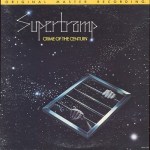
Dreamer Tells You What You Need to Know About this MoFi

Hot Stamper Pressings of the Music of Supertramp Available Now

This commentary was written about 2000, when the Speakers Corner pressing had just come out. We liked it back then, but I doubt we would care much for it now.

Listen to the vocals at the end of Dreamer.

If they are too bright, the bells at the end of the song sound super-extended and harmonically clear and clean.

But at what price? Now the vocals are too bright. Which is more important, good vocals or good bells?

There has to be balance. This is something audiophiles — and audiophile labels, who should obviously know better — seem to have difficulty appreciating.

We used to get these MoFis in on a regular basis, and they usually sound as phony and wrong as can be. They’re the perfect example of a hyped-up audiophile record that appeals to people with lifeless stereos, the kind that need amped-up records to get them to come to life.

I’ve been telling people for years that the MoFi was junk, and that they should get rid of their copy and replace it with a tonally correct version, easily done since there is a very good sounding Speakers Corner 180g reissue currently in print which does not suffer from the ridiculously boosted top end and bloated bass that characterizes the typical MoFi COTC pressing.

Brighter and more detailed is rarely better. Most of the time it’s just brighter. Not many Half-Speed mastered audiophile records are dull. They’re bright because the audiophiles who bought them preferred that sound. I did too, a couple of decades ago [make that four decades ago].

Hopefully we’ve all learned our lesson by now, expensive and embarrassing as such lessons so often turn out to be.

If your system is dull, dull, deadly dull, the way many of our older systems tended to be, this record has the hyped-up sound to bring it to life in a hurry.

There are scores of commentaries on the site about the huge improvements in audio available to the discerning (and well-healed) audiophile. It’s the reason Hot Stampers can and do sound dramatically better than their Heavy Vinyl or audiophile counterparts: because your stereo is good enough to show you the difference.

(more…)

Ridiculously Phony and Compressed Sound – The White Album on MoFi

Sonic Grade: F

An Audiophile Hall of Shame pressing and another MoFi LP reviewed and found seriously wanting. The phony sound here is perfectly suited to the stone age stereos of the past. I should know. I had a stereo like that back in 1982 when this record came out, and I thought it sounded great.

The last time I played a copy of the MoFi, I could not believe how ridiculously bright, phony and compressed it was.

As sibilant as any Beatles record they ever did. Cry Baby Cry spits like crazy!

And to think I used to like their version when it came out back in the 80s.

A good example: on Yer Blues, the MFSL pressing positively wreaks havoc with all the added bass and top end The Beatles put on this track. The MoFi version is already too bright, and has sloppy bass to start with, so the result on this track is way too much BAD bass and way too much BAD spitty 10k-boosted treble. The MoFi is nothing like the good imports, which have way too much GOOD bass and treble.

Yer Blues ROCKS! Listen to the big jam at the end of the song, where John’s vocal mic is turned off but his performance is still caught by a room or overheard mic. They obviously did this on purpose, killing his vocal track so that the “leaked” vocal could be heard. (We have since learned from Ken Scott that it was mistake, but one they liked and left in.)

Those crazy Beatles! It’s more than just a cool “effect.” It actually seems to kick the energy and power of the song up a notch. It’s clearly an accident, but an accident that works. I rather doubt George Martin approved. That kind of “throw the rule book out” approach is what makes Beatles recordings so fascinating, and The White Album the most fascinating of them all.

The EQ for this song is also a good example of something The Beatles were experimenting with, as detailed in their recording sessions and later interviews with the engineers. They were pushing the boundaries of normal EQ, of how much bass and treble a track could have. This track has seriously boosted bass, way too much, but somehow it works.
(more…)

In Through The Out Door – Another Classic Records Bomb

More of the Music of Led Zeppelin

Reviews and Commentaries for the Music of Led Zeppelin

Sonic Grade: F

After finishing our first shootout for this album in August of 2007, our faces were sure red. We used to think the Classic version was pretty decent, but the best originals SLAUGHTER it! We had never done a shootout for this album before that. We didn’t feel up to the challenge, because most pressings tend to be miserable — gritty, grainy, hard sounding, with congested mids, dull, and so on.

The best pressings of this album sound AMAZING, but they are few and far between. The test is an easy one — a copy that makes you want to turn up the volume is likely a winner. The Classic does not pass that test.

We threw one on and just couldn’t deal with the edgy vocals and upper midrange boost. As far as we’re concerned, there’s no substitute for The Real Thing.

As hard as it may be to find great sounding copies of this album, it’s positively impossible to sit through Classic’s version.


I used to think the Classic Records pressing was a decent enough record.

Then my stereo got a lot better, which I write about under the heading Progress in Audio.

Eventually it became obvious to me what was wrong with practically all of the Heavy Vinyl pressings that were put out by that label.

The good ones can be found in this group, along with other Heavy Vinyl pressings we liked or used to like.

The bad ones can be found in this group.

And those in the middle end up in this group.

Audio and record collecting (they go hand in hand) are hard. If you think either one is easy you are very likely not doing it right,, but what makes our twin hobbies compelling enough to keep us involved over the course of a lifetime is one simple fact, which is this: Although we know so little at the start, and we have so much to learn, the journey itself into the world of music and sound turns out to be both addictive and a great deal of fun.

Every listing in this section is about knowing now what I didn’t know then, and there is enough of that material to fill its own blog if I would simply take the time to write it all down.

Every album shootout we do is a chance to learn something new about records. When you do them all day, every day, you learn things that no one else could possibly know who hasn’t done the work of comparing thousands of pressings with thousands of other pressings.

The Law of large numbers[ tells us that in the world of records, more is better. We’ve taken that law and turned it into a business.

It’s the only way to find Better Records.

Not the records that you think are better.

No, truly better records are the records that proved themselves to be better empirically. We employ rigorous scientific methodologies that we have laid out in detail for anyone to read and follow.

Being willing to make lots of mistakes is part of our secret, and we admit to making a lot of them

(more…)

Two CDs that Sound Nothing Like Their Vinyl Counterparts

Reviews and Commentaries for Sticky Fingers

Reviews and Commentaries for Back in Black

I made the mistake of buying both Back in Black and Sticky Fingers on CD to listen to in the car, and both are a disaster — no bass, no rock weight, with boosted upper mids, no doubt in a misguided attempt to provide more “clarity” and “detail.”

But trying to achieve more clarity at the expense of the rock and roll firepower that makes both of these albums Must Own Rock Records is beyond foolish.

These albums did not need a new sound or a more modern sound. The sound of the original pressings of both of them is superb, as close to faultless as you are likely to find in this world.

Mobile Fidelity managed to get more transparency in the midrange for their pressing, and look what it got them: our award for the worst version ever.

On both of these CDs, even in the car I couldn’t get past the third song.

If this is what the digital lovers of the world think those albums actually sound like, they are living in some kind of parallel universe.

The best pressings on vinyl sound nothing like them. In fact the best pressings sound so good they are on our Rock and Pop Top 100. Rest assured that you don’t get to be on our Top 100 with anemic, upper midrangy sound.


New to the Blog? Start Here

(more…)

Led Zeppelin II on MoFi — Back to the Stone Age!

Reviews and Commentaries for Led Zeppelin II

More of the Music of Led Zeppelin

An Audiophile Hall of Shame pressing and another MoFi LP reviewed.

Yes, it’s yet another record perfectly suited to the Stone Age Stereos of the Past.

This version of Zep’s sophomore release from 1969 has to be one of the worst audiophile remastering jobs in the history of the world. There is NOT ONE aspect of the sound that isn’t wrong. Not one!

The highs are boosted, the upper midrange is boosted, the mid-bass is boosted, the low bass is missing — what part of the frequency spectrum is even close to correct on this pressing? The answer: none.

If you’re in the market for a Hot Stamper pressing of Led Zeppelin II, we can help you, but prices these days are steep and show no sign of coming down. We typically pay $1000+ or more for the used copies we buy if that tells you anything about what to expect a Hot Stamper pressing will cost you.

Records are getting awfully expensive these days, and it’s not just our Hot Stampers that seem priced for perfection.

If you are still buying these modern remastered pressings, making the same mistakes that I was making before I knew better, take the advice of some of our customers and stop throwing your money away on Heavy Vinyl and Half-Speed Mastered LPs.

At the very least let us send you a Hot Stamper pressing — of any album you choose — that can show you what is wrong with your copy. of the album.

And if for some reason you disagree with us that our record sounds better than yours, we will happily give you all your money back and wish you the best.

(more…)

The Reiner Sound – Classic Records Reviewed

Hot Stamper Pressings of Living Stereo Recordings Available Now

There is simply an amazing amount of TOP END on the original pressing we played a while back (reviewed below). Rarely do I hear Golden Age recordings with this kind of ENERGY and extension up top.

This is of course one of the reasons the Classic reissue is such a disaster. With all that top end energy, Bernie’s gritty cutting system and penchant for boosted upper midrange frequencies positively guarantees that the Classic Reiner Sound will be all but unplayable on a good system.  

Boosting the bass and highs and adding transistory harshness is the last thing in the world that The Reiner Sound needs.

You may have read on the site that, unlike many soi-disant audiophiles who buy into HP’s classical choices, I am not the biggest Reiner fan. On these works, though, I would have to say the performances are Top Drawer, some of the best I have ever heard.

The amount of energy he manages to coax from the Chicago Symphony Orchestra is nothing less than BREATHTAKING.

(more…)