rosiny-strings

The Strings on Elton John’s Second Album Are a Tough Test

Hot Stamper Pressings of the Music of Elton John Available Now

What’s especially remarkable about this album is the quality of Paul Buckmaster‘s string arrangements. I don’t know of another pop record that uses strings better or has better string tone and texture. Strings are all over this record, not only adding uniquely interesting qualities to the backgrounds of the arrangements but actually taking the foreground on some of the songs, most notably Sixty Years On.

When the strings give in to a lovely Spanish guitar in the left channel (which sounds like a harp!) just before Elton starts singing, the effect is positively glorious. It’s the nexus where amazing Tubey Magical sound meets the best in popular music suffused with brilliant orchestral instrumentation. Who did it better than The Beatles and Elton John? They stand alone.

Correct string tone and texture are key to the best-sounding copies. The arrangements are often subtle, so only the most transparent copies can provide a window into the backgrounds of the songs that reproduce the texture of the strings.

Without extension on the top, the strings can sound shrill and hard, a common problem with many pressings.

Without a good solid bottom end, the rockers (“Take Me to the Pilot”) don’t work either of course, but you can even hear problems in the lower strings when the bass is lightweight.

String tone on a pop record is a tough nut to crack, even more so on a record like this where the strings play such a prominent role. It’s the rare copy that allows you to forget the recording and let you just enjoy the music.

For that you really need a Hot Stamper.

These Are Some of the Qualities We’re Listening For on Elton’s Albums

There are probably closer to a dozen, but some of the more important ones would be these:

(more…)

Liszt / The Music of Franz Liszt / Fiedler

More of the Music of Franz Liszt

  • This vintage Shaded Dog pressing of these wonderful orchestral showpieces boasts two outstanding Double Plus (A++) sides or close to them
  • It’s also fairly quiet at Mint Minus Minus, a grade that even our most well-cared-for vintage classical titles have trouble playing at
  • Classic superb Living Stereo sound on this side one – big and open with an especially clean and extended top end (great fun on those huge cymbal crashes Liszt favored), and side two is not far behind in all those areas
  • Powerful, rich, dynamic and life-like orchestral reproduction, set in a huge hall – no Heavy Vinyl pressing can hold a candle to sound as good as this (particularly on side one)
  • “The Hungarian-born composer and pianist Franz Liszt was strongly influenced by the music heard in his youth, particularly Hungarian folk music, with its unique gypsy scale, rhythmic spontaneity and direct, seductive expression.”
  • If you’re a fan of orchestral showpieces such as these, this Living Stereo from 1960 belongs in your collection.

This is, in our opinion, one of the most underrated Living Stereo treasures in the Golden Age canon — but not by this critic (here reviewing the CD):

In the early days of stereo, RCA released an all-Liszt LP by Arthur Fiedler and the Boston Pops that has remained in my memory as one of the finest things the popular maestro ever committed to disc…

Two works, the Hungarian Rhapsody No. 2 and the high energy Rákoczy March, have been out for some time, coupled with “Hi-Fi Fiedler”. Now RCA has added to this current disc the two main pieces, Mazeppa and Les Preludes, from the original collection. They are as wonderful as ever – among the best, if not the best, performances of this music. Fiedler doesn’t dawdle or toy around with the melodies; he lets Liszt’s Romantic vision speak for itself, helping it along with brisk tempos and incisive phrasing. Seldom have the fanfares in Les Préludes had such bite and majesty.

ClassicsToday

The richly textured, rosin-on-the-bow lower strings on this record are to die for.

Find me a modern record with that sound and I will eat it. And by “modern record” we hasten to include both modern recordings and modern remasterings of older recordings. NO ONE alive today can make a record that sound like this. To call it a lost art is to understand something that few vinyl-loving audiophiles appear to have fully grasped since the advent of the Modern Reissue, which is simply this: compared head to head, they are simply not competitive.

After twenty years of trying and literally hundreds of failed examples, both the boutique and major labels of today have yet to make a record that sounds as powerful or as life-like as this RCA from the old days.

Fortunately for us record lovers and collectors, we at Better Records are not trying to make a record sound the way these sides do, we’re just trying to find ones that do, and folks, we found some very, very good sides here.

(more…)

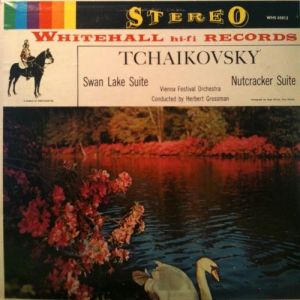
Tchaikovsky / Mendelssohn, et al. / 1812 Overture / Fingal’s Cave Overture & more / Reiner

More of the Music of Tchaikovsky

  • A rare and wonderful early Shaded Dog pressing that boasts excellent Double Plus (A++) sound from start to finish
  • Remarkably rich, Tubey Magical and oh-so-rosiny Living Stereo strings and powerful, dynamic brass make this a real Demo Disc quality orchestral heavyweight
  • The real stars here are NOT the 1812, but the three coupling works, which demonstrate, on this copy at least, The Real Power of the Orchestra

Lizst’s Mephisto Waltz, Mendelssohn’s The Hebrides Overture, and the Tragic Overture by Brahms are the Must Own 36 minutes worth of music on this record.

It’s an outstanding performance from Reiner and the CSO on everything but the 1812.

Say what?

Yes, it’s true. After hearing the amazing Decca pressing with Alwyn conducting, we knew early on that Reiner and the CSO were simply not competitive in terms of performance, and the RCA engineers also failed to capture the deep bass of the organ on their pressing.

What we were impressed with were the three other works, all played with verve and technical skill and as enjoyable as any music you can find on this site. Go to YouTube to listen to them if you are not familiar with the works. All of them belong in any serious music collection, and these recordings (and our Hot Stamper pressings) do them proud.

(more…)

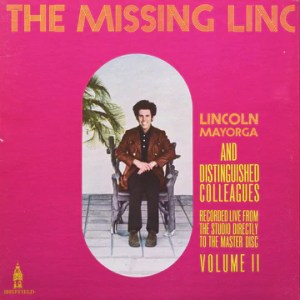
Lincoln Mayorga – The Missing Linc

More of the Music of Lincoln Mayorga

  • With two STUNNING Shootout Winning Triple Plus (A+++) sides, this Sheffield Direct to Disc recording is certainly as good a copy as we have ever heard
  • Guaranteed to be dramatically richer, fuller and more Tubey Magical than any other copy you have heard, with especially punchy drums and rosiny-textured strings
  • The bass on side one extends all the way into whomp land for that big bass drum at the end of “Limehouse Blues” – what a sound!
  • The top end is key to the better pressings too – lots of string harmonics and bells and other high frequency stuff gets lost on most pressings, but not this one, it’s all there on this pressing
  • The audiophile “Sgt. Pepper” of its day, a record that was so much better than anything else you’d ever heard it made you rethink the possibilities (and they did the same thing with Volume III two years later)
  • If you’re a Sheffield Labs fan, and what audiophile wouldn’t be?, this title from 1972 is clearly one of their best
  • If you’re a fan of big drums in a big room, with jump out of the speakers sound, this is the album for you.

This is definitely not your typical Sheffield pressing. Some of them are aggressive, many of them are dull and lack the spark of live music, some of them have wonky bass or are lacking in the lowest octave — they are prey to every fault that befalls other pressings.

Which shouldn’t be too surprising. Records are records. Pressing variations exist for every album ever made. If you haven’t noticed that yet, start playing multiple copies of the same album while listening carefully and critically.

Just listen to the texture on the saxophone on “Limehouse Blues” — you can really hear the leading edge transients of the brass that are so important to the sound of those instruments. Track after track, the sound gets surprisingly more open and airy. The harpsichord has such great presence it jumps out of the speakers. 

I was selling audio equipment (Audio Research, Fulton speakers) back in the ’70s and this was a favorite demo disc in our store. The bass drum at the end of track two would shake the foundation with a big speaker like the Fulton J.

Every bit as amazing to me was the string quartet on side 2. You could actually hear the musicians breathing and turning the pages on their music stands, just as if you were actually in their “living presence.”

This is one of the albums that made me realize how good audio in the home could really be. In a way this was the Audiophile “Sgt. Pepper” of its day, a record that was so much better than anything else you’d ever heard it made you rethink the possibilities.

(more…)

Now That’s the Way a Piano Should Sound!

On the best copies the rich texture of the strings is out of this world — you will have a very hard time finding a DG with better string tone.

The best pressings of this recording have none of the shortcomings of the average DG: it’s not hard, shrill, or sour.

DG made plenty of good records in the 50s and 60s, then proceeded to fall apart, like most labels did. This is one of their finest. It proves conclusively that at one time — 1962 to be exact — they clearly knew exactly what they were doing.

Without question this is a phenomenal piano recording in every way.

I don’t know of another recording of the work that gets the sound of the piano better. On the better copies, the percussive quality of the instrument really comes through.

It’s amazing how many piano recordings have poorly-miked pianos.

These bad sounding pianos are either too distant, lack proper reproduction of the lower registers, or somehow smear the pounding of the keys into a blurry mess.

Are they badly recorded?

Or perhaps it is a mastering issue?

Maybe a pressing issue?

To be honest, it’s probably all three.

Lately we have been writing quite a bit about how good pianos are for testing your system, room, tweaks, electricity and all the rest, not to mention turntable setup and adjustment.

  • We like our pianos to sound natural (however one chooses to define the term)
  • We like them to be solidly weighted
  • We like them to be free of smear, a quality that is rarely mentioned in the audiophile reviews we read

Other records that we have found to be good for testing and improving your playback can be found here.

(more…)

Compression Works Its Magic on The Christmas Eve Suite

Hot Stamper Pressings of the Music of Rimsky-Korsakov Available Now

Some notes about the compression effects we heard on side two of a Blueback pressing of The Christmas Eve Suite album back in 2012. We wrote:

Side two is even more transparent and high-rez than side one. The texture on the strings and the breathy quality of the woodwinds make this a very special pressing indeed.

The horns are somewhat smeary and do get a bit congested when loud.

There is more compression on this side two than there was on the best copy we played, and that means low level detail is superb, but louder parts, such as when the more powerful brass instruments come in, can present problems.

Note how good The Flight of the Bumble Bee sounds here.

Compression is helping bring out all the ambience and detail in the recording, and there’s no downside because the orchestra is playing softly, unlike the piece that precedes it.

A classic case of compression having sonic tradeoffs.

(more…)

Symphonie Fantastique in Living Stereo – “So Sweet and Tubey”

Hot Stamper Pressings of Living Stereo Recordings Available Now

The size and power of a large orchestra in Living Stereo sound. Maybe it’s the gorgeous Living Stereo strings and hall acoustics that let us forget about the possibility of compromises occurring in other areas.

So open and spacious, with gorgeous, richly textured strings — this is the VIVID sound we love from the Golden Age. The hall is huge, the brass solid and powerful, the top and bottom extends properly, the stage is wide and clear — what more can you ask for? 

Here are the notes from our shootout winning copy from our last go around for the RCA.

Side One

  • Big and tubey brass and bass
  • Very lively and transparent and spacious
  • So sweet and tubey

Side Two

  • Huge and tubey and lively
  • So big and 3-D
  • Deep rich bass
  • Huge peak is the least distorted

That last point is a good one. There is distortion at the climax of the work on side two. It is there on every copy. On some copies it will be worse than on other copies.

You want a pressing with the least amount of distortion on that peak but one that is also dynamic and lively.

This is the reason we do shootouts. We’re listening for how each pressing handles that problem in the recording and then using that metric, along with many others, to grade them.

The copy that had the best sound on side two was the most dynamic and the least distorted, as well as having all the other good qualities we noted.

That is what you are paying for when you buy a White Hot Stamper pressing. You’re not buying a perfect record, there’s no such thing.

Rather, it’s the one that comes closest to perfection as can be found.

(more…)

Wagner – The Sound of Stokowski and Wagner

More Richard Wagner

More Orchestral Spectaculars

  • With two stunning Nearly Triple Plus (A++ to A+++) sides, this vintage Shaded Dog pressing of this sought-after classic of the Living Stereo canon is close to the BEST we have ever heard, right up there with our Shootout Winner
  • Lewis Layton engineered this blockbuster recording, and after hearing his brilliant work for The Pines of Rome with Reiner, we can see why they gave him the job
  • The rich, textured sheen of the strings that the advent of Living Stereo brought into being in the ’50s and early ’60s is clearly evident throughout these pieces, something that the Heavy Vinyl crowd will never experience — simply because that sound just does not exist on modern records
  • These shorter pieces are ideal for those who want to listen to Wagner’s music and don’t have the two hours one of his better-known operas requires of its audience

(more…)

Sergio Mendes – Look Around

More Sergio Mendes and Brasil ’66

  • This vintage copy boasts superb Double Plus (A++) sound throughout – exceptionally quiet vinyl too
  • We go crazy for the breathy multi-tracked female vocals and the layers of harmonies, the brilliant percussion, as well as the piano work and arrangements of Sergio himself
  • “The Look of Love” and “With a Little Help from My Friends” are the epitome of Bossa Nova Magic on this superb pressing
  • 4 1/2 stars: “Sergio Mendes took a deep breath, expanded his sound to include strings lavishly arranged by the young Dave Grusin and Dick Hazard, went further into Brazil, and out came a gorgeous record of Brasil ’66 at the peak of its form.”
  • If you’re a fan of Sergio and crew, this early pressing from 1967 surely belong in your collection

As you may have noticed, we here at Better Records are HUGE Sergio Mendes fans. Nowhere else in the world of music can you find the wonderfully diverse thrills that this group offers. We go CRAZY for the girls’ breathy multi-tracked vocals and the layers and layers of harmonies, the brilliant percussion, and, let us never forget, the crucially important, always tasteful keyboards and arrangements of Sergio himself.

Most copies of Look Around are grainy, shrill, thin, veiled, smeary and full of compressor distortion in the loudest parts. Clearly, this is not a recipe for audiophile listening pleasure.

Our Hot Stamper pressings are the ones that are as far from that kind of sound as we can find them. We’re looking for the records that have none of those bad qualities. I’m happy to report that we have managed to find some awfully good sounding copies for our Hot Stamper customers. (more…)

The Grieg Piano Concerto – With a Correctly Sized Piano for a Change

More of the music of Edvard Grieg (1843-1907)

This Shaded Dog pressing has exceptionally lively and dynamic sound on side two, which earned an A++ grade and plays quietly to boot.

The sound is BIG and BOLD enough to fill up your listening room and then some.

The piano is clean and clear, the strings are rich and textured.

And his performance of this work is superb, as is his performance of the shorter coupling works on side two (which actually have the best sound here). 

This is wonderfully recorded music. It has a very natural orchestral perspective and superb string tone.

It also boasts a correctly-sized piano, which is quite unusual for Rubinstein’s recordings in our experience.

Some of the titles we’ve auditioned that had noticeably over-sized imaging can be found here.

(more…)