dry-str

Do Pressings Remastered at 45 RPM Have Better Sound?

More Reviews and Commentaries for 45 RPM Pressings

No doubt some do, but based on our admittedly limited experience, we rather doubt any of the titles shown here, or from this series, are likely to be very good sounding.

I was going to write about the awful Holst The Planets with Previn from this series that I had played a few years back, but never got around to it.

Lots of punchy, powerful and deep bass — yes, 45 RPM mastering is known for that — but the dry, overly clean, clear, modern sound and the screechy strings made me take it off the turntable halfway through the first side. (We write more about EMI and Angel pressings here.)

If you want a good sounding pressing of The Planets, our favorite by far is Previn’s reading on EMI from 1974.

As usual, our advice is to accept no substitutes. There are a lot of bad sounding, poorly performed Planets out there.


(more…)

Listening for Dry Strings on Espana

 Hot Stamper Pressings of the Music of Chabrier Available Now

On many copies the strings are dry, lacking some of the Tubey Magic heard on the better copies.

This is decidedly not our sound, although it can easily be heard on many London pressings, the kind we’ve played by the hundreds over the years.

If you have a rich sounding cartridge, perhaps with that little dip in the upper midrange that so many moving coils have these days, you will not notice this tonality issue nearly as much as we do.

Our 17Dx is ruler flat and quite unforgiving in this regard.  

It makes our shootouts much easier, but brings out the flaws in even the best pressings, exactly the job we require it to do.

We discussed the issue in a commentary entitled Hi-Fi beats My-Fi (if you are at all serious about audio).

Here are some of the other records we’ve discovered that are good for testing string tone and texture.

(more…)

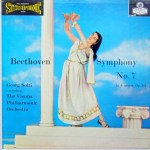
Beethoven Symphony No. 7 – This London with Solti Didn’t Make the Grade

Hot Stamper Classical and Orchestral Imports on Decca & London

In our survey for the work, we played a number of the better known recordings from the top conductors and orchestras around the world.

Here is what we heard when we dropped the needle on an early pressing of CS 6093, released in 1959.

Our notes read:

  • Awful,
  • so dry,
  • steely,
  • crude,
  • bad

In other words, it just sounded like an old record. The world is full of records that don’t sound very good. As a matter of fact they undoubtedly make up the bulk of large record collections.

And if you just happen to be the proud owner of a big record collection, how can you possibly find the time to play more than a small fraction of it in any given year. Or even over the course of a decade for that matter.

The fact is that you can’t. Which, on the upside, means that, as far as you know, all your records sound great!

No need to buy another copy of whatever title you care to name. What for? You haven’t played it in twenty years and probably won’t get around to pulling it off the shelf for a spin for at least another twenty.

Here’s hoping your kids like old records because they are going to end up with an awful lot of them.

Back to the Beethoven 7th. What a beautiful cover!

But what good is a beautiful cover when the record sounds as bad as this one does?

(more…)

The MHS Recording of Chopin’s First Piano Concerto Had the Most Natural Piano of Them All

Hot Stamper Pressings of the Music of Frederic Chopin Available Now

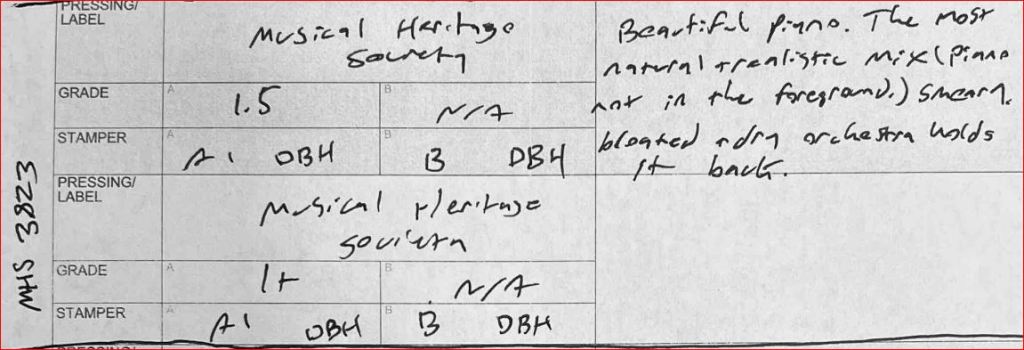
There are some wonderful Musical Heritage Society records sitting in the bins of your local record store or Goodwill, and this one is worth picking up just to hear how well recorded the piano is.

We described it this way:

Beautiful piano. The most natural and realistic mix with the piano not in the foreground.

But there is more to the recording than the sound of the piano.

Smeary, bloated and dry orchestra holds it back.

Well, at least we tried. (Note that side two was deemed not worth grading.)
Our favorite recording for performance and sound is the Living Stereo from 1961, LSC 2575, with Rubinstein at the piano and Skrowaczewski conducting the New Symphony Orchestra of London.

This is what we had to say about the sound of our Shootout Winner:

We love the huge, solid and powerful sound of the piano on this recording. This piano has weight and heft. As a result, it sounds like a real piano.

For some reason, a great many Rubinstein recordings are not capable of reproducing those seemingly all-important qualities in the sound of the piano.

Those are, as I hope everyone understands by now, the ones we don’t sell. If the piano in a piano concerto recording doesn’t sound solid and powerful, what is the point of playing such a record?

Or, to be more accurate, what is the point of an audiophile playing such a record? (Those of you who would like to avoid bad sounding vintage classical and orchestral records have come to the right place. We’ve compiled a very long list of them for precisely that purpose, and we add to it regularly.)

(more…)
The Riddle of the Vastly Different Sides Has Been Solved

Hot Stamper Pressings of Recordings Featuring the Violin

About ten or fifteen years ago we came across a puzzling Shaded Dog pressing of the Bruch / Vieuxtemps recording from 1962 with Heifetz, LSC 2603.

We were surprised at the time how much worse one side sounded than the other. That had rarely if ever happened back in those early Living Stereo shootout days.

We sold the record as a one-sided disc with one complete performance in top quality sound, The Scottish Fantasy. Obviously the Vieuxtemps / Concerto No. 5 wasn’t worth playing; the sound was sub-par, a pale shadow of the sound of the other side of the record. You can read all about it here.

Well, we ran into those stampers again, or at the very least we ran into a copy with the same bad stampers for side one, 5s. Something sure went wrong somewhere, as you can see from our notes below.

At the time we described this curious pressing this way:

The violin is captured beautifully on side two. More importantly there is a lovely lyricism in Heifetz’s playing which suits Bruch’s Romantic work perfectly. I know of no better performance.

The performance of the Vieuxtemps Concerto No. 5 is also wonderful, but the sound is not. Want proof that two sides of the same record can have vastly different sound? Here it is. Note how oversized the violin on side one is, how smeary the orchestra, how little texture there is to anything in the soundfield. This side one is no Hot Stamper.

All true, and now that we know that 5s etched stampers are responsible for the bad sound and not just some pressing anomaly, we can all sleep peacefully once again.

(more…)

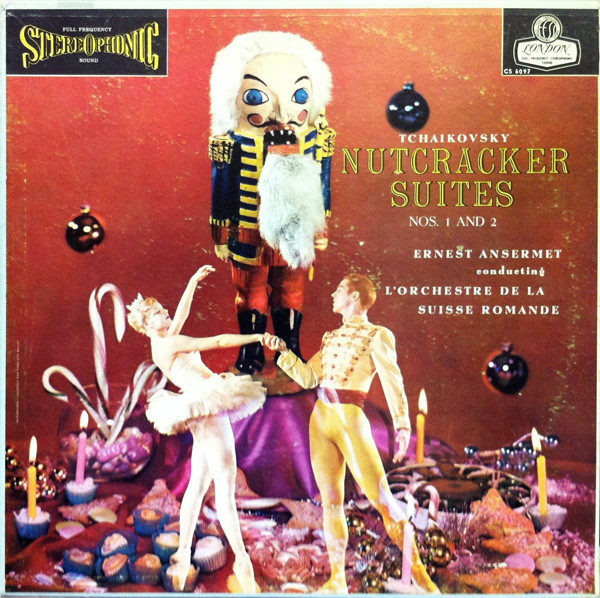
Does Anybody Ever Talk About the Dry String Tone on London LPs?

Hot Stamper Pressings of the Music of Tchaikovsky Available Now

Not that we know of.

If audiophiles and the reviewers who write for them are listening carefully to these famous recordings on the supposedly high quality (and often very high-dollar) equipment they use, why do they never talk about this problem?

Here is what we noticed when we played a big batch of Nutcracker recordings on London and Decca:

On some copies of this album the strings are dry, lacking in that wonderful quality we like to call Tubey Magic. Dry is decidedly not our sound, although it can often be heard on the hundreds of London pressings we’ve played over the years.

And we imagined that this might be the culprit:

If you have a rich sounding cartridge, perhaps with that little dip in the upper midrange, the one that so many moving coils have these days, you may not notice this tonality issue nearly as often as we do.

Our Dynavector 17Dx Karat is ruler flat and quite tonally unforgiving in this regard. It makes our shootouts much easier, but brings out the flaws in all but the best pressings, exactly the job we require it to do.

We discussed the issue in a commentary entitled Hi-fi beats my-fi if you are at all serious about audio.

(more…)

The RCA Later Label Pressings from the 70s Fall Short Yet Again

Hot Stamper Pressings Featuring the Violin Available Now

Many of the later RCA pressings we’ve played recently have left a lot to be desired.

We’re on record as telling audiophiles that it’s never a good idea to judge records by their labels, so when it came time to do a shootout for this famous Heifetz recording from 1963, LSC 2652, it was only fitting that we force ourselves to clean and play every pressing we had on the shelf, including the White Dogs and Red Seal reissues.

The White Dog did fine (2+ for the Bruch on side one, 1.5+ for the Mozart on side two).

The Red Seal had all the hallmarks of the transistory sound RCA apparently preferred in the 70s.

There are Red Seal pressings with excellent sound — some of them have won shootouts — but this one had too many similarities to the awful Classic Record classical titles produced in the 90s. You know the ones I’m talking about. They have bright, screechy string tone that no self-respecting audiophile with even passable equipment should find tolerable.

(The fact that many of them remain on the TAS list speaks volumes about the self-identified experts’ ability to distinguish a good record from a bad one. More on that subject below.)

More of the Same

Below you will find links to other records we’ve played that had the same problems as this RCA and are best avoided by audiophiles looking for high quality pressings to play.

There is no shortage of other records that we’ve run into over the years with these kinds of obvious shortcomings.

(more…)

Audiophiles Should Give Monteux’s Surprise and Clock Symphonies a Miss

Hot Stamper Pressings of the Music of Joseph Haydn Available Now

None of the pressings we played of this RCA (LSC 2394) were remotely competitive with Fjelstad’s recording for RCA from 1959.

The sound of the RCA Shaded Dog we played was consistently compressed and veiled, a case of the “old record” sound we find on far too many vintage pressings.

The world is full of old records that just sound like old records. We’ve suffered through them by the tens of thousands.

Our website, as well as this blog, are devoted to helping audiophiles find pressings that don’t sound anything like the millions of run-of-the-mill LPs that have been stamped out for the last seven decades.

Even a million dollar stereo can’t make the average record sound good, and the more accurate and revealing the system, the more limited and lifeless the average record will show itself to be.

The White Dog pressing was even worse. It was hot, dry and flat. Who wants to play a record that sounds like that?

Only an old school audio system can hide the faults of pressings such as these. The world is full of those too, even though they might comprise all the latest and most expensive components.

(more…)

Do All the Early Stamper Shaded Dog Pressings of this Title Sound Good?

Hot Stamper Pressings of Living Stereo Recordings Available Now

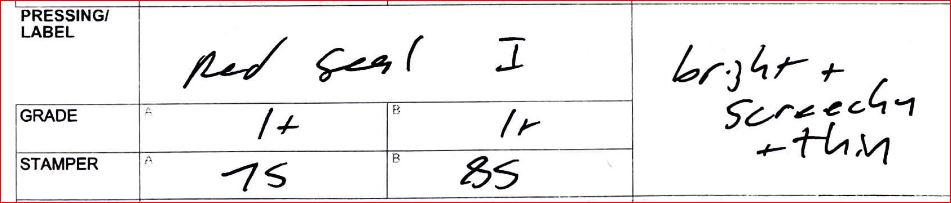
Below you will see the complete stamper sheet for a shootout we did recently.

Note that the album you see pictured — LSC 2265 — is not the record we did this particular shootout for.

We are not revealing what record had these stampers and earned these grades for the simple reason that we rarely if ever give out the specific information that identifies the best sounding pressing of any album.

As I’m sure you can understand, we want you to buy the copy with the Hottest Stampers from us, not find one on your own! We’re happy to be somwhat helpful, but naturally we find it necessary to draw the line somewhere, and giving out “the shootout winning stampers” are where we choose to draw it.

One set of stampers for the mystery Shaded Dog pressings we played in our most recent shootout sounded consistently subpar.

The sound on 3s was boxy and the violin was dry. This was surprising as the stampers are quite low: 3s/1s.

Many RCA chamber recordings can be dry, and if one owned a nice early stamper pressing of the album with boxy, dry sound, one might conclude that this RCA is just another chamber recording with those shortcomings.

But one would be wrong, because the 1s stamper shootout winner sounded amazing, not dry or boxy in the least.

How Come?

Since, as we discovered recently, 1s wins, and handily, why does 3s/1s do so much worse?

Who knows?

And why is the White Dog barely passable on side one and just awful on side two?

Your guess is as good as mine.

More of the Same

Below you will find links to other records we’ve played that had the same problems as our mystery RCA here.

(more…)

You Can Do a Lot Better than this Tchaikovsky 5th

Hot Stamper Classical and Orchestral Pressings Available Now
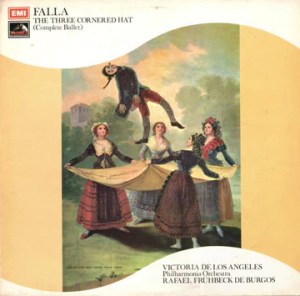
We played a few copies of the album we had sitting in the backroom and none of them quite worked for us.  The sound was somewhat veiled and dry. (The 1s/1s pressing was the worst of the bunch, by the way.)

A decent record, not much more than that, and not really not worth putting in a shootout with the better pressings of the work we have discovered over the years. The best of the bunch might earn a grade of 1.5+, so why even bother?

Yes, we still have no Hot Stamper pressings of the work to offer, but we know they are coming, someday. Our current favorite is a performance by Mravinsky on DG from 1961.

It’s a “good, not great” vintage classical record, best played on an old school stereo system that can hide its shortcomings.

The much more revealing systems of today, like the one we employed to audition this very copy, simply make it too easy to spot its many faults.

(more…)