dry-sound

These are some of the records that we’ve found to have dry sound. We felt they could benefit greatly from more Tubey Magic somewhere in the recording chain.

The 2002 OJC Pressings Can Be Very Good but They Don’t Win Shootouts

Hot Stamper Pressings of the Music of Bill Evans Available Now

For a Hot Stamper pressing we put up recently, we noted:

Moon Beams is one of the best sounding Bill Evans records we’ve ever played. You can see why we chose it to be the first OJC Hot Stamper of his work to hit the site back in 2015. Play “It Might As Well Be Spring” for the kind of sublime musical experience you only find on 20th century analog recordings.

All of that is true for the best of the 20th century pressings we played. (Which, by the way, does not include any originals as those are consistently inferior to the later pressings we’ve auditioned.)

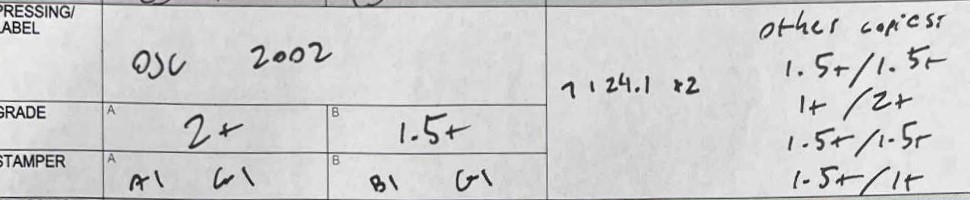
As for the 21st century, the sound of the best 2002 pressings on OJC are somewhat opaque and dry compared to the best that came before. This is something we rarely point out in the listings we have on sale on the site. You generally have to come to the blog to get a fuller picture of the specific shortcomings we might have of some of our Hot Stamper pressings.

We know both dry sound and opaque sound well, having played hundreds of pressings that suffer from such conditions.

The sound may be decent on most of these 2002 pressings, and fairly good on the best of them, but that’s not really what we were hoping to find. We spent a lot of money and we spent a lot of time, to quote a famous line by a famous rock band, but the six 2002 pressings we cleaned and played nevertheless came up a bit short. That’s just how it goes sometimes. (And sometimes it goes completely off the tracks.)

The way we approach a shootout such as this typically involves playing a copy or two some pressing, the 2002 OJC in this case, and hearing sound good enough to make us think it might have the potential for greatness. As you can see by the marks we gave out, the average copy earned a grade of 1.5+, which is a good, not great Hot Stamper grade.  Greatness was just not in the cards.
Do Pressings Remastered at 45 RPM Have Better Sound?

More Reviews and Commentaries for 45 RPM Pressings

No doubt some do, but based on our admittedly limited experience, we rather doubt any of the titles shown here, or from this series, are likely to be very good sounding.

I was going to write about the awful Holst The Planets with Previn from this series that I had played a few years back, but never got around to it.

Lots of punchy, powerful and deep bass — yes, 45 RPM mastering is known for that — but the dry, overly clean, clear, modern sound and the screechy strings made me take it off the turntable halfway through the first side. (We write more about EMI and Angel pressings here.)

If you want a good sounding pressing of The Planets, our favorite by far is Previn’s reading on EMI from 1974.

As usual, our advice is to accept no substitutes. There are a lot of bad sounding, poorly performed Planets out there.


(more…)

Audiophiles Should Skip Swingin’ the ’20s on OJC

Hot Stamper Pressings of Contemporary Jazz Records Available Now

This album is fairly common on the OJC pressing from 1988, but more recently we’ve found the sound of the OJC pressings we’ve played seriously wanting. They have the kind of bad reissue sound that plays right into the prejudices of record collectors and audiophiles alike, the kind for whom nothing but an original will do.

They were dramatically smaller, flatter, more recessed and more lifeless than even the worst of the ’70s LPs we played. (We tend to like those, by the way.)

The lesson? Not all reissues are created equal. Some OJC pressings are great — including even some of the new ones — some are awful, and the only way to judge them fairly is to judge them individually, which requires actually playing a large sample.

Since virtually no record collectors or audiophiles like doing that, they make faulty judgments – OJC’s are cheap reissues sourced from digital tapes, run for the hills! – based on their biases and reliance on inadequate sample sizes.

You can find those who subscribe to this approach on every audiophile forum there is. The methods they have adopted do not produce good results, but as long as they stick to them, they will never have to worry about discovering that inconvenient truth.

(more…)

Mercury Did Not Produce an Especially Good Brahms Symphony No. 2

Hot Stamper Pressings of Mercury Living Presence Records Available Now

The sound of this 1959 Mercury recording (SR 90171) was not impressive.

The sound was decent enough, although somewhat dry and opaque on even the best copies of the record we played. Which makes it a passable sounding record, not much more than that, and not worth doing a shootout for.

It’s best played on an old school stereo that can hide its shortcomings.

The much more revealing systems of today, much like the one we used to audition this very copy, simply make it too easy to recognize its many shortcomings.

Vintage Vinyl

We are not fans of vintage vinyl because we like the sound of old records. Lots of old records don’t sound good to us at all, and we review them by the hundreds on this blog.

We like old records because they have the potential to sound better than any other kind of record, including the ones that have been made and marketed to audiophiles for the last thirty years, especially the ridiculously bad pressings we’ve reviewed more recently.


It Was a Very Good Year

1959 just happens to be one of the truly great years for analog recordings, as can be seen from this amazing group of albums, each of which was recorded or released that year.

(more…)

Obscured By Cloudy Japanese Vinyl

Hot Stamper Pressings of the Music of Pink Floyd Available Now

When I was just getting up to speed in audio and exploring the world of music available on vinyl in the 70s, many of the stereo stores I frequented carried Japanese pressings. They were widely believed to have superior sound relative to their domestic counterparts — in this case, the mass-produced pressings I would see at the Tower Records right across from the Sports Arena in my hometown of San Diego. I went there at least once a week, probably more like two or three times.

Tower was far and away the best place to go record shopping in those days. The store was huge and they had dramatically more stock than Licorice Pizza or The Wherehouse.

They also had a separate section for Half-Speed mastered pressings from a number of labels, which of course was the first place in the store I would visit, digging through the bins to see what new remastered titles may have been produced for audiophiles searching for the ultimate in sound quality.

Of course, I identified as just such a person. In terms of sound quality, and with the extremely limited knowledge I had acquired at the time, I believed I set a high standard for the sound of the records I bought. I was willing — eager even, you could even say excited — to pay whatever premium price I had to for a record that was sure to deliver superior sound quality. To me, in the late 70s, that meant two things: direct to disc recordings, and Half-Speed mastered pressings.

(There was a another category of records that did not fall into the above two, best exemplified by American Grammaphone and the Fresh Aire series, but the less said about those schlocky releases the better, other than to point out that some of their titles are TAS list carryovers from HP’s time running the Super Disc list, specifically Fresh Aire 2 and 3, both best avoided.)

And, like any other open-minded individual, when it came to Japanese vinyl I was willing to give a few a spin.

However, the more of them I bought, the more clear it became to me that even the best of them sounded mediocre (veiled, smeary and dubby from second generation tapes) and more often than not they were just plain awful. (Second generation tape issues being the main problem, of course, with the additional insult of poor tonality, the result of being mastered using wacky equalization, typically with added brightness where none was needed.)

Pink Floyd

The notes for the Pink Floyd album you see below, Obscured by Clouds, were written sometime in March of 2025 as part of the shootout we conducted for the album.

If we assume it would be an audiophile who would be attracted to this pressing, perhaps for its quieter playing surfaces, perhaps operating under the assumption that the Japanese engineers mastering the record would be more likely to do a better job as well, then what we have here is a textbook case of an audiophile bullshit pressing.

One that sounds nothing like the album is supposed to, based on having played a number of exceptionally good sounding copies, all British and all on the Green Harvest label, mastered from good tapes, sometimes by the legendary Harry T. Moss. We feel we are more than qualified to make these judgments. If we can’t make them, nobody can.

Discogs allows us to glean some information regarding the desirability of this Japanese reissue with the record buying public currently in the market for Pink Floyd vinyl who register on their site.

(more…)

Stan Ricker’s Fingers Are All Over these Paintings

Hot Stamper Pressings of Jazz Guitar Recordings Available Now

We have been planning on doing a shootout for this Earl Klugh’s 1977 Blue Note release, Finger Paintings, for more than a year, and over that time we were fortunate enough to pick up a MoFi pressing of the album locally for the very reasonable price of ten bucks. (The price tag on the jacket is visible at the bottom of this post.)

The notes for our 2025 Shootout Winner included phrases such as “huge, weighty and punchy, ” along with “natural, rich and sweet.” Most copies may not have those qualities, but the best ones sure do.

Contrast that with the Mobile Fidelity pressing that Stan Ricker mastered in 1980. It was one of their biggest early sellers, and one that they no doubt felt had such good sound that it would be sure to sell at triple the price of the regular Mobile Fidelity pressing!

WTF you say? Yes, it would be released in 1981 in a box (not a box set!) as a Numbered, Limited Edition, Ultra High Quality Record (UHQR) at the retail price of $50. $178 in 2026 dollars, if you can believe that records used to cost that kind of dough (cough).

OK, that’s all well and good, but this is supposed to be a blog for audiophiles, so forget all that history stuff and just tell us what the record sounds like.

Fair enough. After having played a big batch of standard issue pressings and getting to know the sound of the record well, feast your eyes on the notes we took.

This MoFi may actually set a new standard for screwing up a perfectly good sounding record. (I was going to say tape but I have never heard the tape and have no idea what it sounds like. John Golden (JG) at Kendun cut the originals. Maybe he was able to somehow make a silk purse out of a sow’s ear. The possibility exists.)

Side One

Track Four

  • Really sucked out and clean
  • How bizarrely awful!

(more…)

We Don’t Offer Domestic Pressings of Pour Down Like Silver for One Very Simple Reason

Hot Stamper Pressings of the Music of Richard Thompson Available Now

In spite of the fact that the domestic pressings of this Richard and Linda Thompson classic from 1974 were mastered by the likes of Kendun and Sterling — two of the greatest mastering houses of all time, — they have never impressed us with their sound quality.

The biggest problems with this record would be obvious to even the casual listener: gritty, spitty vocals; lack of richness; bright tonality; lack of bass; no real space or transparency, etc.

The domestic Island pressings did not do nearly as well in our shootout as the best Island imports, no surprise there as the early UK records were mastered by one of our favorite engineers.

Avoid the Carthage pressings mastered by Sterling. They came in last in our shootout.

The domestic breakdown follows:

Black Island Domestic #1

  • Tubey but hot and spitty.

Black Island Domestic #2

  • Flat, dry and hot (glary or bright)

Carthage Domestic recut from 1983, Sterling on both sides

  • So sandy and lean! They really wanted to add some top end (!)

Defending the Indefensible

(more…)

Stick with Porky on East Side Story

More Hot Stamper Pressings We Only Offer on Import Vinyl Available Now

Porky cut the original British pressings of this Squeeze album, one of countless personal favorites of yours truly. They are records (and cassettes and CDs) I have played hundreds of times and still listen to regularly to this very day, in this case more than forty years after I purchased my first copy. (Good albums age well.)

I would have picked the record out of the bin at my local Tower Records, probably based on the radio play Tempted was getting.

That copy undoubtedly would have been domestic and made from a sub-generation tape, although I’m quite sure I could not have recognized what constituted dubby sound back then. In 1981, what I understood about the importance of different record pressings would have fit comfortably in a thimble.

I had my MoFi’s, and although I hate to admit it, that’s about as far as I had gotten in my quest for superior sounding pressings. You could add Nautilus and a few other Half-Speeds to the list of what pressing I thought were impressive, leaving plenty of room in that thimble unfilled.

Thankfully those bad old days are gone, and the music can now, finally, live and breath on the best of these imports from the UK. Of course they are the only ones we buy these days for our shootouts. The others are what are known around these parts as “mistakes.”

Sometimes the imported pressings are mastered by Porky and sometimes they are not. The ones that are not tend to have a lot of problems, as you can see from our stamper sheet below.

When Porky is not on side one, that side will tend to be hard, lean and bright. Side two of that copy had decent sound, earning a minimal Hot Stamper grade of 1.5+.

(more…)

Listening for Dry Strings on Espana

 Hot Stamper Pressings of the Music of Chabrier Available Now

On many copies the strings are dry, lacking some of the Tubey Magic heard on the better copies.

This is decidedly not our sound, although it can easily be heard on many London pressings, the kind we’ve played by the hundreds over the years.

If you have a rich sounding cartridge, perhaps with that little dip in the upper midrange that so many moving coils have these days, you will not notice this tonality issue nearly as much as we do.

Our 17Dx is ruler flat and quite unforgiving in this regard.  

It makes our shootouts much easier, but brings out the flaws in even the best pressings, exactly the job we require it to do.

We discussed the issue in a commentary entitled Hi-Fi beats My-Fi (if you are at all serious about audio).

Here are some of the other records we’ve discovered that are good for testing string tone and texture.

(more…)

For Audiophile Quality Sound on “Jaws,” You Might Want to Look Elsewhere

Hot Stamper Pressings of Top Quality Jazz Albums Available Now

For good music? We will leave that judgment to you. Music is personal. What moves me in music and what moves you in music may be related but they are surely not identical.

In 1959 Eddie Lockjaw Davis & Shirley Scott recorded an album for Prestige and they called it “Jaws.”

The sound of the vintage pressing we played was not very good, with hard panning to the left and right. It was also dry and had too much reverb.

We were playing an early stereo copy, mastered by Van Gelder, but I honestly cannot remember the label.

Maybe the mono is better? It would not surprise me. If we see a mono pressing for cheap we will probably pick it up and give it a spin.

If you’re a fan of either of these two fine players, you might want to do the same. I believe we played the OJC pressing years ago and were not impressed, so best to skip that one too.

What we can say is that any album with sound as weak as the pressing we played leads us to believe that finding top quality sound is too unlikely for us to pursue the album further. Maybe at a bargain price, but vintage jazz records are rarely found for cheap these days. Best to move on.

(more…)