small-sound

These pressings suffer from sound that is too small.

Audiophiles Should Skip Swingin’ the ’20s on OJC

Hot Stamper Pressings of Contemporary Jazz Records Available Now

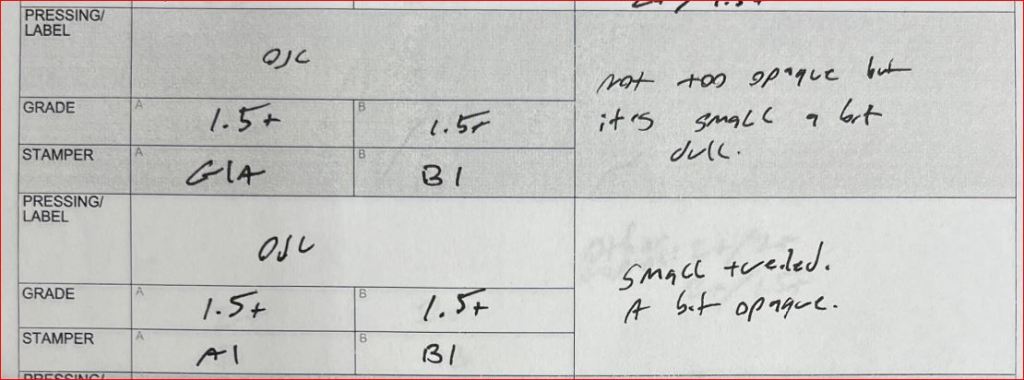
This album is fairly common on the OJC pressing from 1988, but more recently we’ve found the sound of the OJC pressings we’ve played seriously wanting. They have the kind of bad reissue sound that plays right into the prejudices of record collectors and audiophiles alike, the kind for whom nothing but an original will do.

They were dramatically smaller, flatter, more recessed and more lifeless than even the worst of the ’70s LPs we played. (We tend to like those, by the way.)

The lesson? Not all reissues are created equal. Some OJC pressings are great — including even some of the new ones — some are awful, and the only way to judge them fairly is to judge them individually, which requires actually playing a large sample.

Since virtually no record collectors or audiophiles like doing that, they make faulty judgments – OJC’s are cheap reissues sourced from digital tapes, run for the hills! – based on their biases and reliance on inadequate sample sizes.

You can find those who subscribe to this approach on every audiophile forum there is. The methods they have adopted do not produce good results, but as long as they stick to them, they will never have to worry about discovering that inconvenient truth.

(more…)

Getz Au Go Go on Polygram – Isn’t This Record Supposed to Be Stereo?

Hot Stamper Pressings of Bossa Nova Albums Available Now

As part of our recent [probably from 2011] shootout for the album, one of the pressings we played was a later reissue, most likely from the late 70s or early 80s.   

As a general rule we make a point to go out of our way to play practically any copy we can get our hands on, in the off chance that a reissue will beat the original. It’s happened plenty of times. Those of you with White Hot Stamper shootout winning copies of some of our favorite titles know what I’m talkin’ about.

Imagine our surprise when this pressing — in a stereo jacket, with a label with the word “stereo” printed right on it — turned out to be dead MONO.

The sound was godawful — small, flat, and bereft of the ambience that makes this recording so enjoyable. The same would probably be true for the mono originals, but since I haven’t played one of those in decades I will just say that that would be no more than a guess, albeit an educated one.

Yet another reason not to believe a word you read on an album jacket or label.

A public service from your record loving audiophile friends here at Better Records. (more…)

Does Year of the Cat on Mobile Fidelity Have Audiophile Sound?

Hot Stamper Pressings of the Music of Al Stewart Available Now

Our answer, judging by the copy we played not long ago, would be solidly in the negative. The final grade we awarded both sides was No, our way of saying the record is Not Good.

Below is a description for what a top copy of the album sounds like, based on our most recent shootout:

Incredible sound throughout this vintage Janus pressing of Stewart’s 1976 Masterpiece. With engineering by Alan Parsons, the top pressings are every bit the audiophile Demo Discs you remember. The best sides have sweet vocals, huge amounts of space, breathtaking transparency, and so much more.

Tubey Magical acoustic guitar reproduction is superb on the better copies of this recording. Simply phenomenal amounts of Tubey Magic can be heard on every strum, along with richness, body and harmonic coherency that have all but disappeared from modern recordings (and especially from modern remasterings).

But if you own the wrong Mobile Fidelity pressing — this one was reissued in 1981, the original came out in 1978, so there may be some other pressings that sound better than this one — you would never know how good sounding the album can be. We put a copy we had laying around in a shootout recently and the results were, not to put too fine a point on it, pretty painful.

As the notes make clear, the Mobile Fidelity pressing, with the stampers you see on the sheet above, is:

(more…)

The Original Jazz Classics Series Put Out a Passable Relaxin’ in ’85

Hot Stamper Pressings of the Music of Miles Davis Available Now

We much prefer the 70s Two-Fer reissue (PR 24001) to the OJCs of both Cookin’ and Relaxin’. Previously we had written:

These 70s reissue pressings are practically as good as any we have ever heard. Full-bodied, warm and natural, with plenty of space around all of the players, this is the sound of vintage analog.

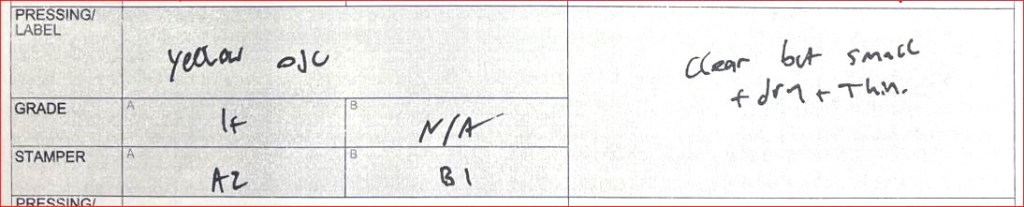
It had been a while since we last played the OJC pressing of either album, so we picked up a copy of Relaxin’ and threw it into the shootout, where it did about as badly as expected.

The first side earned our 1+ grade, which means that, like a lot of reissues it’s passable, but really not good enough for a serious audiophile (hopefully meaning you) to bother with, which is why we didn’t even play side two (the N/A you see noted where the grade should be).

The OJC is clearly better suited to the old school audio systems of the 60s and 70s rather than the modern systems in use today. These kinds of reissues used to sound good on those older systems, and I should know, I used to have an old school stereo, and some of the records I used to think sounded good back in the day don’t sound too good to me anymore (although this one never did).

(more…)

When Fisher Took Over from Goodall, He Really Let the Side Down

Hot Stamper Pressings of Recordings by Decca Available Now

Please keep in mind that, as per our usual, the record you see pictured is not the record we are discussing in this posting.

The stamper numbers you see below belong to a different album.

The quick takeaway: Stan Goodall (“E”) cut the Shootout Winning early pressings.

Then, for reasons known only to the folks at Decca, Harry Fisher (“W”) took the reins and managed to cut some side twos that were very good. Not as good, but still very good: 2+ most of the time, some slightly worse. They were not as weighty or rich, and we take a lot of points off for records that are not as weighty or rich as they should be.

By the time Decca had changed its label to the Decca in a Box design, Mr. Fisher was cutting all the pressings, and, in our experience, not doing an especially good job. We do not even offer records with grades that low.

The sound might be passable, and would probably still be better than whatever Heavy Vinyl pressings might have been made from the tapes in the last twenty years, but that’s not good enough for us here at Better Records, not at the prices we charge anyway.

We described Fisher’s sound as dry and hot on side one, and thin and very small on side two of the 5W-stamped pressing we played. We only had the one, and the reason we had even one after having heard other Boxed Decca pressings do poorly, is that it’s a good way to stay honest and to have a better baseline to work with.

If we played nothing but 3E/1E originals, most of those 1E side twos would have earned a 2+ grade, but they would have sounded much better than the 2W-graded copies, and that seriously screws up the grading scale, especially when clean originals cost us a hundred bucks or more these days.

(more…)

The Mono Recut of Revolver from 1981 Is a Ripoff

Hot Stamper Pressings of Revolver Available Now

A great sounding record in stereo, potentially anyway, but this later reissue in mono is so awful it deserves a special place in our hall of shame.

My notes for side one: hard, sour, no bass.

Side two: dumbass small mono, so unclear.

Is it the worst version of the album ever made? That’s hard to say. There is no shortage of competition, that’s for sure.

But it may be the worst sounding version of the album we’ve ever played, and that should be good enough for any audiophile contemplating spending money on this kind of rubbish.

We love the mono mix of For No One, but not when it sounds like this.

The only Beatles vinyl we offer on our site are stereo pressings. Our reasons for doing this are straightforward enough.

The Beatles records in mono, contrary to the opinion of audiophiles and music lovers alike, virtually never have the presence, energy and resolution found on the best stereo copies. If your stereo cannot resolve all the information on the tape, sure, Twin Track Stereo (used on the first two albums, hard-panned multi-track afterwards) ends up sounding like some of the instruments are stuck in the speakers, hard left and hard right, with nothing but a hole in the middle.

But there is a great deal of information spreading into the middle when we play those records here, and nothing feels stuck in the speakers that doesn’t sound like it was supposed to be heard coming directly from one of the speakers.

It is our contention that the best audio equipment, properly tweaked, can show you a world of musical information that exists only on the stereo pressings, information that the mono mixes mostly obscure.

(more…)

Waiting For Columbus Gets the Bernie Treatment Care of Rhino Records

Hot Stamper Pressings of the Music of Little Feat Available Now

A Hot Stamper pressing of this amazing sounding album, a title we regret to say we have in stock only rarely, might be described this way:

Some of the best sounding live rock and roll sound you will ever hear outside of a concert venue. If you want to understand the unique appeal of the band, there’s no better place to start than right here.

It’s one of our all-time favorite live recordings and their single best release – a true Masterpiece.

I have lately been listening to this album in its entirety at the gym (playing the standard cassette over headphones) and enjoying the hell out of it. As good as their best studio albums are, and I count myself as big a fan of the band as there is, Waiting for Columbus is surely the pinnacle of their recorded output. It is as close to perfect as any live album I know.

(The Last Record Album is my personal favorite of their studio albums, but since nobody seems to want to buy it at the prices we charge, I regret to say we had to stop doing shootouts for it years ago. We were losing too much money that way.)

But Bernie Grundman’s version is just another one in a very long line of disastrous recuts, the kind of crap he has been churning out for the last thirty years. It’s all but unplayable on modern high quality equipment. (If it’s not on your system, you might consideer the idea that you still have plenty of work left to do, audio-wise.)

As you can see from the notes below, record one may be passable, but record two is NFG. How is it possible to turn such a wonderful recording into such a ridiculously bad sounding pressing? Even Mobile Fidelity did a better job with the album, and they’re one of the most incompetent remastering outfits that the audiophile world has even known.

We’re frankly at a loss to understand any of it.Bernie Grundman used to make good sounding records. We know that for a fact, having played them by the hundreds. Apparently those days are gone, and, based on this album and plenty of others, there is very little chance of them returning.

Notes on the Sound

(more…)

How Do the Original Mono Pressings of Mingus Dynasty Sound?

Hot Stamper Pressings of the Music of Charles Mingus Available Now

Although this album is fairly common in mono, we found the sound of the mono pressing we played seriously wanting. It’s dramatically smaller and more compressed than even the worst of the other pressings we played in our shootout.

We will never buy another, and of course we would never sell a record that sounds as bad as this mono pressing does.

For those looking for the best sound, the mono pressing is hard to take seriously, and for that reason, we say skip it.

For records reviewed on the blog that sound their worst in mono, click here.

Are You a Jazz Collector or an Audiophile?

If you’re a jazz collector, of course you want the mono. If you’re an audiophile who likes jazz, you should want the stereo.

And if you are a very serious audiophile who has a great deal of time and money tied up in his equipment and room, someone whose motto might best be summarized as “nothing but the best,” then you need one of our killer Hot Stamper pressings of the album.

(more…)

VICS-1030 Can Have Passable Sound for Chopin’s Piano Concerto No. 1

Hot Stamper Pressings of Living Stereo Recordings Available Now

Our favorite recording for performance and sound is the Living Stereo from 1961, LSC 2575, with Rubinstein at the piano and Skrowaczewski conducting the New Symphony Orchestra of London.

This Victrola pressing, VICS-1030, with Graffman performing, had good, not great sound. We’ve played them before and none of them was ever better than middling.

Some specifics we noted in the sound:

  • The piano was loud and clear, close-miked.
  • Boxy sound, could be richer
  • Orchestration not too compressed but veiled and small.
  • Not a standout performance.

A decent-enough record I suppose, but lacking in too many of the qualities our customers are looking for, especially at the prices we charge.


This is what we had to say about the sound of our Shootout Winner for LSC 2575:

We love the huge, solid and powerful sound of the piano on this recording. This piano has weight and heft. As a result, it sounds like a real piano.

For some reason, a great many Rubinstein recordings are not capable of reproducing those seemingly all-important qualities in the sound of the piano.

Those are, as I hope everyone understands by now, the ones we don’t sell. If the piano in a piano concerto recording doesn’t sound solid and powerful, what is the point of playing such a record?

Or, to be more accurate, what is the point of an audiophile playing such a record? (Those of you who would like to avoid bad sounding vintage classical and orchestral records have come to the right place. We’ve compiled a very long list of them for precisely that purpose, and we add to it regularly, a public service from your friends here at Better Records.)

(more…)

John Coltrane – Expression on the Green Label

Hot Stamper Pressings of the Music of John Coltrane Available Now

The best pressings have huge space, size and clarity, with Tubey Magical richness befitting the 1967 recording dates of these sessions at Van Gelder Studio.

That Tubey Magic is surely long gone by now, so those of you looking for this kind of sound on a modern pressing should face facts — that ship has sailed.

The Green Label ABC/Impulse label pressings did not retain much of the magic that we heard on the  real Impulse pressings, so best to avoid them.

They’re clean but dry and small, not big and bold like the real thing. The CD is probably better.

4 stars: “Recorded at two sessions in early 1967, Expression represents John Coltrane’s final recording sessions just months before his death. It’s remarkable that [the album] is not some world-weary harbinger of death and sickness, but an endlessly jubilant affair. Even in what must have been a time of tremendous pain and darkness, Coltrane’s single-minded quest for understanding and transcendence took him to places of new exploration and light.”


(more…)