sibilant-sound

Sibilance Is a Bitch on Nick Of Time

Hot Stamper Pressings of the Music of Bonnie Raitt Available Now

We here present some advice on what to listen for to help you separate the best pressings of some of our favorite rock and pop records from those that are merely good.

On side two listen for the sibilance on Bonnie’s voice on Too Soon to Tell.

Some copies have gritty, spitty sibilance on her voice, while others keep the spit well under control, allowing much more of the silky quality of her vocal to be heard.

Sibilance is a great test for pressings that you may be comparing for sound quality. Sibilant pressings tend to be crudely mastered and that crude quality is sure to show up in other areas of the recording.

(Half-Speed mastered pressings are almost always spitty and should be avoided, for sibilance problems as well as their many other shortcomings we have documented in detail on this blog.)

Also, pay special attention to how silky the cymbal crashes can be on the better copies.

We also recommend that you listen for how all the elements of the recording are clearly laid out and audible, never forced or hyped in any way. The sound can be surprisingly 3-D for a modern recording.

(more…)

When Did You First Hear that 10k Boost on Sittin’ In?

Hot Stamper Pressings of the Music of Loggins and Messina Available Now

UPDATE 2026

It took us a long time to recognize it, I can tell you that. 30 years? Maybe even more.

And how about the boost to the low end?

This commentary is from many years ago, perhaps as far back as 2010.

Of course it could not have been written until the stereo had reached the level where these anomalies and others like them could be easily recognized, the clearest kind of evidence of progress in audio.

If you’re not noticing these kinds of things on the vintage vinyl you play, then it’s probably time for a serious upgrade or two.

The anomalies are there, of that there can be no doubt. They’re everywhere. You just need a more accurate and revealing system and room to show them to you.

In that respect, you my find our shootout notes are helpful at pointing you in the right direction as to what you should be listening for. They are especially helpful in recognizing when one side or another falls short in some specific area.

(more…)

We Don’t Offer Domestic Pressings of Pour Down Like Silver for One Very Simple Reason

Hot Stamper Pressings of the Music of Richard Thompson Available Now

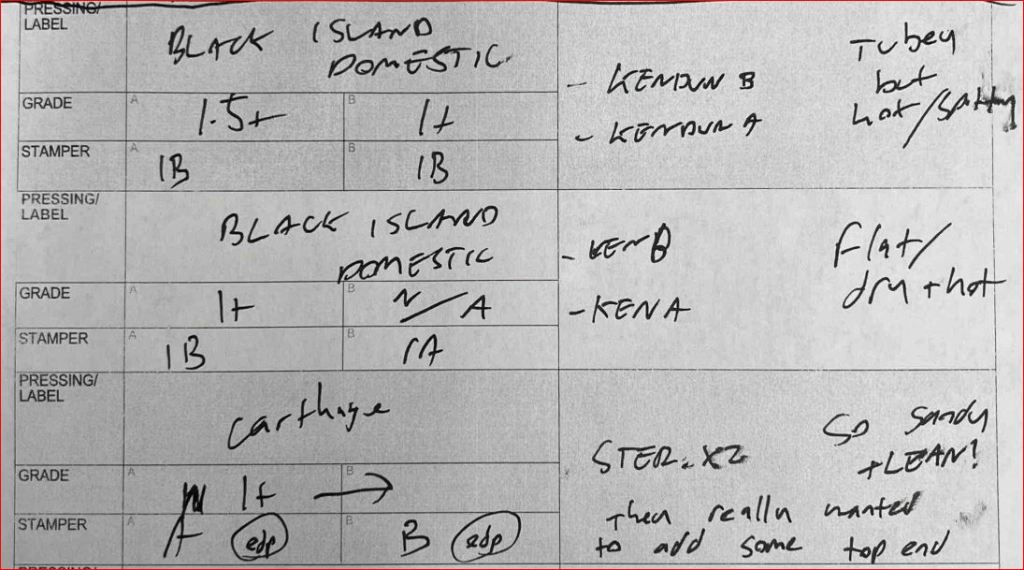
In spite of the fact that the domestic pressings of this Richard and Linda Thompson classic from 1974 were mastered by the likes of Kendun and Sterling — two of the greatest mastering houses of all time, — they have never impressed us with their sound quality.

The biggest problems with this record would be obvious to even the casual listener: gritty, spitty vocals; lack of richness; bright tonality; lack of bass; no real space or transparency, etc.

The domestic Island pressings did not do nearly as well in our shootout as the best Island imports, no surprise there as the early UK records were mastered by one of our favorite engineers.

Avoid the Carthage pressings mastered by Sterling. They came in last in our shootout.

The domestic breakdown follows:

Black Island Domestic #1

  • Tubey but hot and spitty.

Black Island Domestic #2

  • Flat, dry and hot (glary or bright)

Carthage Domestic recut from 1983, Sterling on both sides

  • So sandy and lean! They really wanted to add some top end (!)

Defending the Indefensible

(more…)

Does Year of the Cat on Mobile Fidelity Have Audiophile Sound?

Hot Stamper Pressings of the Music of Al Stewart Available Now

Our answer, judging by the copy we played not long ago, would be solidly in the negative. The final grade we awarded both sides was No, our way of saying the record is Not Good.

Below is a description for what a top copy of the album sounds like, based on our most recent shootout:

Incredible sound throughout this vintage Janus pressing of Stewart’s 1976 Masterpiece. With engineering by Alan Parsons, the top pressings are every bit the audiophile Demo Discs you remember. The best sides have sweet vocals, huge amounts of space, breathtaking transparency, and so much more.

Tubey Magical acoustic guitar reproduction is superb on the better copies of this recording. Simply phenomenal amounts of Tubey Magic can be heard on every strum, along with richness, body and harmonic coherency that have all but disappeared from modern recordings (and especially from modern remasterings).

But if you own the wrong Mobile Fidelity pressing — this one was reissued in 1981, the original came out in 1978, so there may be some other pressings that sound better than this one — you would never know how good sounding the album can be. We put a copy we had laying around in a shootout recently and the results were, not to put too fine a point on it, pretty painful.

As the notes make clear, the Mobile Fidelity pressing, with the stampers you see on the sheet above, is:

(more…)

Michael Jackson / Thriller – A Rock, Pop and Soul Masterpiece

More of the Music of Michael Jackson

  • With solid Double Plus (A++) grades from top to bottom, we guarantee you’ve never heard Michael Jackson’s Masterpiece of hard rockin’ funky pop sound this good – exceptionally quiet vinyl too
  • The sound is huge – big, wide, deep, and open, with a punchy bottom end and rhythmic energy to spare, as well as cleaner, smoother, sweeter upper mids and a more extended top
  • Top 100 title and 5 stars on AMG: “This was a record that had something for everybody, building on the basic blueprint of Off the Wall by adding harder funk, hard rock, softer ballads, and smoother soul — expanding the approach to have something for every audience.”
  • In our estimation, there are about 40 Must Own rock, pop and soul records from the 80s, and if there’s any album that belongs on that list, it’s Thriller
  • There is a version cut at Half-Speed by Mobile Fidelity, and as you can imagine, we did not much care for it

This is some of the best High-Production-Value rock/pop/soul music of the 80s. The amount of effort that went into the recording of Thriller is comparable to that expended by the engineers and producers of bands like Supertramp, The Who, Jethro Tull, Ambrosia, Pink Floyd and far too many others of our favorites to list. It seems that no effort or cost was spared in making the home listening experience as compelling as the recording technology of the day permitted.

Sound that came lumping-out-of-the-speakers coupled with driving rhythmic energy were the hallmarks of the best copies. These qualities really brought this complex music to life, gave it room to breathe, and made it possible for us to enjoy the hell out of it. This is yet another definition of a Hot Stamper — it’s the copy that lets the music work as music. (more…)

Please Please Me on MoFi – Another Disgracefully Spitty Half-Speed

Hot Stamper Pressings of the Music of The Beatles Available Now

Sonic Grade: C

If you own the Mobile Fidelity LP, do yourself a favor and buy one of our Hot Stamper pressings. (Actually any good British import pressing will do.)

What’s the first thing you will notice other than correct tonality, better bass and a lot more “life” overall?

No spit!

As we’ve commented elsewhere, because of the wacky cutting system they used, Mobile Fidelity pressings are full of sibilance. 

As I was playing a British pressing of this record many years ago, maybe by about the fifth or sixth song it occurred to me that I hadn’t been hearing the spit that I was used to from my MoFi LP. You don’t notice it when it’s not there.

But your MoFi sure has a bad case of spitty vocals. If you never noticed them before, you will now.

We discuss the sibilance problems of MoFi records all the time. Have you ever read Word One about this problem elsewhere? Of course not.

Audiophiles and audiophile reviewers just seem to put up with these problems, or ignore them, or — even worse — fail to recognize them at all.

Play around with your table setup for a few hours and you will no doubt be able to reduce the severity of the sibilance on your favorite test and demo discs. All your other records will thank you for it too.

Especially your Beatles records. Many Beatles pressings are spitty, and the MoFi Beatles pressings are REALLY spitty. Of course MoFi fans never seem to notice this fact. Critical listening skills and a collection of MoFi pressings are rarely if ever found together. For reasons that should be obvious to anyone spending time on this site, you either have one or the other.

(more…)

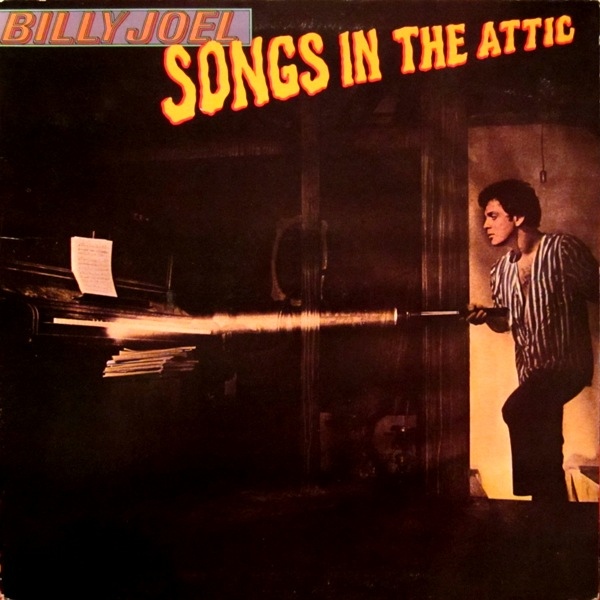
Here’s How You Know You Have a Hot Stamper of Songs in the Attic

joelsongs600Hot Stamper Pressings of the Music of Billy Joel Available Now

It’s the side you play through to the end.

When the sound is right you want to hear more.

Since the opening track of this record is one of the keys to knowing whether it’s mastered and pressed properly, once you get past the sibilance hurdle on track one, the next step is to find out how the challenges presented by the rest of the tracks are handled on any given pressing. Some advice follows.

Actually, what you really want to know is how good each song can sound — what it sounds like when it’s right.

Once the quality of the mastering has been established, the fun part is to play the rest of the album, to hear it really come alive.

Side One

Miami 2017

This is usually the brightest cut on the first side, commonly found with some sibilance problems. On the high-res copies the sibilance is lessened, and the sound of the sibilance itself is much less transistory and spitty, with more of a silky quality, which is simply another way of saying it’s less distorted.

Of course one wouldn’t want the sibilance to be lessened by having a dull top end, but few of these pressings are dull. Most of them suffer from a brightness problem. The best copies keep the sibilance under control and balance the upper mids with extended highs. Without extension on the highs the sound will tend to be aggressive.

(more…)

Listening in Depth to Famous Blue Raincoat

Hot Stamper Pressings of the Music of Leonard Cohen Available Now

I’m a huge fan of this FBR. It’s the only album Jennifer Warnes ever made that I would consider a Must Own recording or a Desert Island Disc. Without question this is her Masterpiece.

Key Test for Side One

Listen to the snare drum on Bird on a Wire. On most copies it sound thin and bright, not very much like a real snare. Let’s face it: most copies of this record are thin and bright, and that’s just not our sound here at Better Records. If the snare on Bird sounds solid and meaty, at the very least you have a copy that is probably not too bright, and on this album that puts it well ahead of the pack.

While you’re listening for the sound of that snare, notice the amazing drum work of Vinnie Colaiuta, session drummer extraordinaire. The guy’s work on this track — especially with the high hat — is genius.

Key Test for Side Two

Listen to the sound of the piano on Song of Bernadette. If it’s rich and full-bodied with the weight of a real piano, you might just have yourself a winner. At the very least you won’t have to suffer through the anemically thin sound of the average copy.

Side One

First We Take Manhattan

Don’t expect this song to be tonally correct. It runs the gamut from bright to too bright to excrutiatingly bright. Steve Hoffman told me that he took out something like 6 DB at 6K when he mastered it for a compilation he made, and I’m guessing that that’s the minimum that would need to come out. It’s made to be a hit single, and like so many hit single wannabes, it’s mixed brighter than we audiophiles might like.

(more…)

Off the Wall Vs. Thriller – Which One Has More Tubey Magic?

Hot Stamper Pressing of the Music of Michael Jackson Available Now

Many years ago we came across an amazing sounding copy of Off the Wall, which prompted a few thoughts about its sound compared to Thriller.

ABSOLUTELY STUNNING SOUND for this White Hot Stamper pressing!

Both sides cannot be beat — both have the BIG M.J. SOUND that jumps out of the speakers and fills the room. We’ve never heard a copy that was so full of ANALOG MAGIC!

The vocals are PERFECTION — breathy, full-bodied, and present. The top end is extended and sweet, with tons of ambience the likes of which I’ve never heard before.

Normally when you have a copy with strong midrange presence it will be somewhat sibilant in places. Not so here. For some reason this copy has all the highs, but it’s cut so clean it practically doesn’t spit at all. Even on the song I Can’t Help It, which normally has a problem in that respect. Since that’s my favorite song on this album, and probably my favorite MJ song of all time, hearing it sound so good was a revelation.

Better Sound than Thriller?

Yes. As consistently brilliant as Thriller may be musically — it is the biggest selling album of all time after all — speaking strictly in terms of sonics the sound of the best copies of Off the Wall is substantially sweeter, tubier, more natural, richer, and more ANALOG than Thriller.

Thriller is clearly more aggressive and processed-sounding than Off the Wall. The Girl Is Mine or Human Nature from Thriller would fit just fine anywhere on Off the Wall, but could the same be said for Beat It or Thriller? Just thinking about them you can hear the artificiality of the sound of both those songs in your head. Think about the snare that opens Beat It. I’ve never heard a snare sound like that in my life. Practically no instrument on Off the Wall has that kind of overly processed EQ’d sound.

Choruses Are Key

The richness, sweetness and freedom from artificiality is most apparent on Off the Wall where you most always hear it on a pop record: in the biggest, loudest, densest, climactic choruses.

We set the playback volume so that the loudest parts of the record are as huge and powerful as is possible for them to become without crossing the line into distortion or congestion.

On some records, Dark Side of the Moon comes instantly to mind, the guitar solos on Money are the loudest thing on the record.

On Breakfast in America the sax toward the end of The Logical Song is the biggest and loudest element in the mix, louder even than Roger Hodgson’s near-hysterical multi-track screaming “Who I am” about three quarters of the way through the track.

Those are clearly exceptions though. Usually it’s the final chorus that gets bigger and louder than anything else.

A pop song is usually structured so as to build up more and more energy as it works its way through its verses and choruses, past the bridge, coming back around to make one final push, releasing all its power in the final chorus, the climax of the song.

On a good recording — one with real dynamics — that part should be very loud and very powerful.

(more…)

On Porgy and Bess, Stick with the Early Pressings on the Black Label

Hot Stamper Pressings of the Music of Harry Belafonte Available Now

A Living Stereo knockout! We sometimes forget to spend time with records like this when there are so many Zeppelin and Floyd records waiting to be played (and a lot more customers waiting to get hold of them to add to their collection).

We’ve always enjoyed Belafonte At Carnegie Hall, but when we’ve dug further into his catalog we’ve been left cold more often than not. However, when we finally got around to dropping the needle on a few of these many years ago we were very impressed by the music and blown away by the sound on the better pressings.

Just make sure that you avoid the orange label reissues.

They are dry, gritty and spitty. The notes below show a side one earning a single plus (1+) not-quite-Hot Stamper grade. We discuss its faults on the far right, and the other orange label pressing we played was even worse, earning a grade of NFG.

(more…)