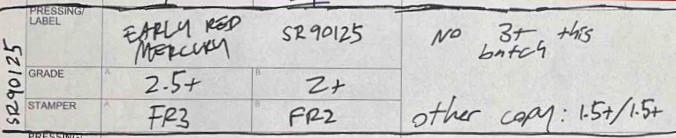
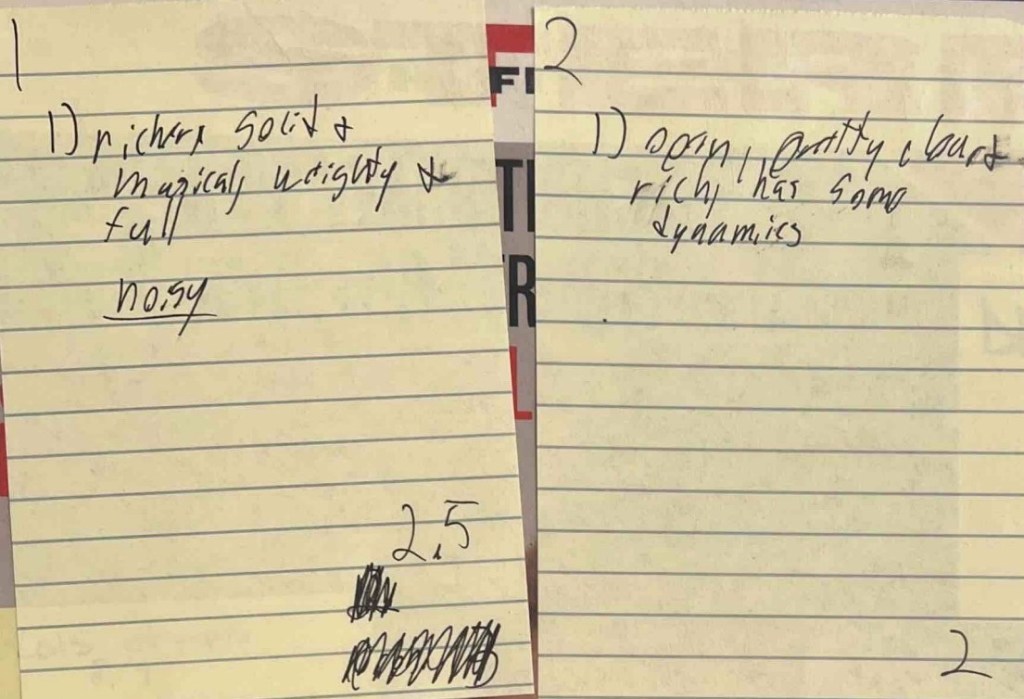
vin-Merc-w

We judged these vintage Mercury records to have unacceptable sound based solely on the specific pressings we played.

We can’t say that other pressings won’t sound better. We just don’t plan on playing any more copies to find out.

The “Not-So-Golden-Age” of RCA, Mercury, London and Others

Hot Stamper Pressings of Living Stereo Titles Available Now

We ran into a number of copies of this title that had what we like to call “old record sound,” which is surprisingly common on even the most revered Golden Age labels, RCA included.

No top, no real bottom, congested climaxes and a general shrillness to the sound — we’ve played Living Stereos by the dozens that have these shortcomings and many more.

Some audiophiles may be impressed by the average Shaded Dog pressing, but I can assure you that we here at Better Records are decidedly not of that persuasion.

Something in the range of five to ten per cent of the major label Golden Age recordings we play will eventually make it to the site. The vast majority just don’t sound all that good to us. (Many have second- and third-rate performances and those get tossed without ever making it to a shootout.)

The One Out of Ten Rule

If you have too many classical records taking up too much space and need to winnow them down to a more manageable size, pick a composer and play half a dozen of his works.

Most classical records display an irredeemable mediocrity right from the start. It does not take a pair of golden ears to hear it.

If you’re after the best sound, it’s the rare record that will have it, which makes clearing shelf space a lot easier than you might imagine. If you keep more than one out of ten, you’re probably setting the bar too low, if our experience is any guide.

(more…)

Hungarian Rhapsodies 1, 4, 5 & 6 – Wait a Minute

Hot Stamper Pressings of Orchestral Spectaculars Available Now

1963 was a phenomenal year for audiophile quality recordings, but this is not one of the better records produced that year. Far from it.

The sound of our vintage Mercury here, SR 90371, was awful. The overall sound was crude and the strings were shrill.

It has been our experience that many Mercury recordings suffer from these shortcomings.

But wait a minute.

Dorati recorded Hungarian Rhapsodies 2 and 3 with the London Symphony for Mercury, and those can sound amazing when you get hold of a good one.

How did they get this one so wrong?

We don’t know, and we doubt anyone else does either.

Like so many realities of the world of records, it’s a mystery, one that is very unlikely to be solved.

One of the best reasons mysteries such as this have little chance of being solved is that no one with any real expertise, using methodologies that are reliable and reproducible in any serious way, is taking on this kind of work — besides us.

We actually like testing records, and we refined* a method for doing it that is as reliable and reproducible as any method can be in the world of audio: the record shootout.

(more…)

Mercury Produced a Truly Awful Collection of Verdi Overtures in 1959

Hot Stamper Classical and Orchestral Pressings Available Now

The sound of this 1959 Mercury release, SR 90156, is terrible. It’s crude and hot like an “old record,” a sound we find on far too many vintage pressings. The world is full of old records that just sound like old records. We’ve suffered through them by the tens of thousands.

Our website, as well as this blog, are devoted to helping audiophiles find pressings that don’t sound anything like the millions of run-of-the-mill LPs that have been stamped out over the last seven decades.

Even a million dollar stereo can’t make the average record sound good, and the more accurate and revealing the system, the more limited and lifeless the average record will show itself to be.

There are quite a number of others that we’ve run into over the years with similar shortcomings. Here they are, broken down by label.

(more…)

This Mercury Copland Record Had Screechy, Shrill Strings

Hot Stamper Classical and Orchestral Pressings Available Now

Our notes for SR 90246 read:

Lively and clear but screechy strings. Dry and bright sound.

To help you avoid records with these sonic faults, we’ve linked below to others with similar problems.

Here are some titles we’ve found that tend to have dry sound, and here are some that tend to have bright sound.

And of course shrill strings are the kiss of death on any orchestral record. (Classic Records, I’m talking to you!)

None?

None of the copies of SR 90246 we played were any good, but the RFR3 / RFR6 was the worst of the bunch.

Are there good sounding pressings of the recording?

There may well be. We didn’t hear any, but that doesn’t mean they don’t exist.

However, we have no intention of spending more money trying to find them. If you know of some killer stampers for the album, please shoot us an email.

We tend to like Dorati’s work with the London Symphony Orchestra, but in this case the better Dorati/Copland record was recorded in Minneapolis in 1959, SR 90172.

If You’re a Fan

If you’re a fan of Mercury Living Presence records — and what right-thinking audiophile wouldn’t be? — have you noticed that many of them, this one for example, don’t sound very good?

If you’re an audiophile with good equipment, you should have.

But did you? Or did you buy into the hype surrounding these rare pressings and just ignore the problems with the sound?

(more…)

Mercury Unfortunately Did Not Produce a Good Rossini Overtures

Hot Stamper Pressings of Mercury Living Presence Records Available Now


1960 just happens to be one of the truly great years for quality analog recordings, as can be seen from this amazing group of albums, each of which was recorded or released that year.

However, the sound of this Mercury recording, SR 90139, released that very year, was far from acceptable.

The loud passages are simply full of compressor distortion.

To be fair, we haven’t played this album by the dozens the way we have many of the records we review (more than a hundred in the case of most Beatles album).

Let’s just say I remember being disappointed by a copy or two back in the day — whenever that was — and the latest copy we auditioned was no better, so, as a practical matter, this is not a vein rich enough for us to be mining, not when there are literally hundreds of other recordings we are still pursuing. As always, if you believe you have a killer pressing, please let us know what it is so we can get one in ourselves.

It seems that many early Mercury recordings suffer from this shortcoming, and when they do, we put them in the trade-in pile and move on.

By the way, for those who are interested in these works, our favorite performance of Rossini’s Overtures on record is the one with Maag conducting the Paris Conservatoire.


This Mercury might be passable on an old school system, but it was too unpleasant to be played on the high quality modern equipment we use.

There are quite a number of others that we’ve run into over the years with similar shortcomings. Here they are, broken down by label.

  • London/Decca records with weak sound or performances
  • Mercury records with weak sound or performances
  • RCA records with weak sound or performances

Have You Noticed…

If you’re a fan of Mercury Living Presence records — and what right-thinking audiophile wouldn’t be? — have you noticed that many of them, this one for example, don’t sound very good?

If you’re an audiophile with good equipment, you should have.

But did you? Or did you buy into the hype surrounding these rare pressings and just ignore the problems with the sound?

There is plenty of hype surrounding the hundreds of Heavy Vinyl pressings currently in print. I read a lot about how wonderful their sound is, but when I actually play them, I rarely find them to be any better than mediocre, and most of them are downright awful.

It seems as if the audiophile public has bought completely into the hype for these modern Heavy Vinyl pressings. Audiophiles have too often made the mistake of approaching these records without the slightest trace of skepticism. How could so many be fooled so badly? Surely some of these people have good enough equipment to allow them to hear how bad these records sound.

I would say Mercury’s track record during the ’50s and ’60s is a pretty good one, offering (potentially) excellent sound for roughly one out of every three titles or so.

But that means that odds are there would be a lot of dogs in their catalog. This is definitely one of them.

To see the 50+ Living Presence classical titles we’ve reviewed to date, click here.

(more…)

Don’t Waste Your Money on these Mozart Symphonies

More of the Music of Wolfgang Amadeus Mozart

Neither the sound nor the performance of this 1958 Mercury are impressive.

1959 just happens to be one of the all time great years for recording in analog.

If you have any doubt, check out this amazing group of albums, all recorded or released that year.

This Mercury might be passable on an old school system, but it was too unpleasant to be played on the high quality modern equipment we use.

There are quite a number of others that we’ve run into over the years with similar shortcomings. Here they are, broken down by label.

  • London/Decca records with weak sound or performances
  • Mercury records with weak sound or performances
  • RCA records with weak sound or performances

Have You Noticed…

If you’re a fan of Mercury Living Presence records — and what right-thinking audiophile wouldn’t be? — have you noticed that many of them, this one for example, don’t sound very good?

If you’re an audiophile with good equipment, you should have.

But did you? Or did you buy into the hype surrounding these rare pressings and just ignore the problems with the sound?

(more…)

Blary Brass Ruins Another Mercury – This Time It’s Pictures at an Exhibition

Hot Stamper Pressings of the Music of Modest Mussorgsky Available Now

The sound of the pressings we’ve played over the years has always been awful.

On SR 90217, the brass is just too sour and blary. To our knowledge, no copies of the album do not suffer from these problems.  They may exist — who can say they don’t? — but we’ve yet to play one and have no intention of seeking them out, not when there are other superior performances with top quality sound.

The performance is awful, too.

When the horns have clarity, correct tonality, plenty of space around them and a solid, full-bodied sound, probably every other instrument in the soundscape will too.

One minute into side one we knew that this Mercury had failed the brass test.

It was simply much too unpleasant to be played on modern high quality equipment.

The less revealing systems some audiophiles seem to favor can make the shortcomings of a recording such as this more tolerable, but we’ve worked very hard for many decades to make sure our system is as truthful and unforgiving as possible.

We knew right from the get-go this Mercury was not going to make the grade. Here are some others that we’ve found seriously wanting. We’ve also compiled a list of more than 40 of the worst sounding Heavy Vinyl pressings of orchestral and classical music, and it can be found here.

(more…)

Remind Me, What Is the Point of Listening to a Quiet Record with Mediocre Sound?

Hot Stamper Pressings of the Music of Igor Stravinsky Available Now

A lackluster reissue from Philips, bad enough to qualify for our hall of shame.

This is some truly dead as a doornail sound, sound which is not remotely competitive with the real Mercury pressings we’ve played. The FR pressings of the recording can be phenomenally good.  Even the later M2 pressings from Philips can be excellent. 

Back in the 80s and 90s, I actually used to like some of the Golden Import pressings.  That was a long time go, and thankfully our playback system is quite a bit more revealing than the one I had back in those days.

After playing literally tens of thousands of records since then, my critical listening skills are better too.

Now when I play these imports, they sound veiled, overly smooth, smeary and compressed, not too different from the average Philips pressing, which of course is exactly what they are. They’re all remastered by Philips, to give the Mercury tapes the sound that Philips thinks they should have. Sadly, not much of the Mercury Living Presence sound has survived.

We complain about mixing and mastering engineers who felt compelled to bring a new sound to old favorites.

The Philips label that produced the Golden Import series are serial offenders in this regard.

The Golden Import pressings might be good for audiophiles who care more about quiet surfaces than good sound.  We are firmly staked at the opposite side of that trade-off.

Quiet vinyl means nothing if the sound is poor, or, at the very least, wrong for the recording.

(more…)

We Were Way Off the Mark with this Rodrigo Recording in 2010

More of the music of Joaquín Rodrigo (1901-1999)

In 2010 we did a shootout for this title and thought we had found a good one. We wrote:

A good side one backed with a lovely side two! We shot out a stack of these recently and side two of this copy was one of the few sides that really impressed us. The sound is transparent and full of energy. Side one is pretty good but a bit crude in the louder passages.

This is a wonderful record. The performance here by the first family of guitar is legendary. More importantly, the music is delightful and belongs in any serious classical collection.

RFR-1 stampers. What the best originals like this one give you is immediacy. The attack of the guitar is more real.

Comparing this with the Golden Import shows you that some of the transients are smoothed over on that pressing.

If you’ve got the front end that can deal with the Mercury upper midrange and transient attack, the strings will sound textured and clear, not harsh or shrill. (A badly mastered version of this record would make your ears bleed.)

More importantly, this copy captures the sounds of the guitars perfectly. I doubt if anybody could do it as well as Mercury.

Recently we did the shootout again and came up with very different findings:

Now those same stampers are tubey and weighty, but the strings are too hot (bright and shrill) and flat (lacking richness).

We can sum up the sound of these stampers — on a different copy of course, something to keep in mind — in one word:

Ouch.

Please allow us to help you avoid making the same mistakes we did:

  • More records with bright sound can be found here
  • More records with flat sound can be found here

What’s So Golden About These Imports Anyway?

And by the way, we would never even bother to reserve the studio time to play a Golden Import pressing these days. I can count on one hand the titles that actually sound good to me and it’s just not worth the labor to find the one out of fifty that has hi-fidelity sound as we currently define it.

This commentary gets at our disappointed feelings about the label.

(more…)

This Mercury Is Not a Good Way to Enjoy Tchaikovsky’s 4th

More of the Music of Tchaikovsky Available Now

The pressings we’ve played of SR 90279 over the years tended to have crude and shrill sound. The string tone was bright and steely.

In our most recent shootout for the work, since we happened to have one in stock, we figured we would give the Mercury one more chance, just in case we had finally stumbled on some good stampers or that other improvements to our playback would allow the hidden virtues of the recording to be revealed. (Yes, thankfully that is still happening. So is the reverse; some records don’t do as well in shootouts as they used to, a reality every audiophile has to be on the alert for, a subject we discuss here.)

It probably lasted less than five minutes on the table.

It was simply too unpleasant to be played on the revealing modern equipment we use.

It seems that many early Mercury recordings suffer from these shortcomings. My guess would be at least half, maybe even closer to two out of three.

Waking Up

If your system is dull, dull, deadly dull, the way some audiophile systems tend to be, this record has the hyped-up, bright and aggressive sound to bring it to life in no time. (If you’re a fan of MoFi pressings from the 70s and 80s, you definitely have a much smoother top end than we do. Most of the records they made in those years are way too bright and full of the kind of phony detail that some systems need to wake them up. I should know; I had one of those systems myself, but of course I didn’t know it at the time and would have gone to the mat to deny the accusation.)

There are scores of commentaries on the site detailing the huge improvements in audio available to the discerning (and well-healed) audiophile. It’s the reason Hot Stampers can and do sound dramatically better than their Heavy Vinyl or audiophile counterparts: because your stereo is now good enough to show you the difference.

With a too-forgiving system, you will most likely continue to be fooled by bad records, just as I and all my audio buds were fooled thirty and forty years ago. Audio has improved immensely in that time. If you’re still playing Heavy Vinyl and audiophile pressings, there’s a world of sound you clearly don’t know you’re missing.

My advice is to get better equipment and spend as much time as you can learning to tweak and tune it. That will allow you to be better at recognizing bad records when you play them.

The Heavy Vinyl Route

If more vintage Mercurys had sound as bad as this one, we would happily admit that going the Heavy Vinyl route might make sense.

And there certainly are a lot of bad vintage pressings — we should know, we’ve played them by the hundreds — but the number of bad modern Heavy Vinyl pressings would give them a run for their money and then some.

Beyond this Tchaicovsky title, there are plenty of others we’ve run into over the years with too many sonic shortcomings. As a public service, here are about 60 of them, broken down by label.

(more…)