chopipiano1

For Concerto No. 1, This Is the Way the Piano Should Sound

Hot Stamper Living Stereo Classical and Orchestral Titles Available Now

We love the huge, solid and powerful sound of the piano on this recording. This piano has weight and heft. As a result, it sounds like a real piano.

For some reason, a great many Rubinstein recordings are not capable of reproducing those all-important qualities in the sound of the piano.

Those are, as I hope everyone understands by now, the ones we don’t sell. If the piano in a piano concerto recording doesn’t sound solid and powerful, what is the point of playing such a record?

Or, to be more accurate, what is the point of an audiophile playing such a record? (Those of you who would like to avoid bad sounding vintage classical and orchestra records have come to the right place. We’ve compiled a very long list of them precisely for that purpose, and we’ve been adding to it regularly.)
No doubt Kenneth Wilkinson made sure the recording captured the weight of the piano he was listening to as it played all those years ago in the wonderful acoustics of Kingsway Hall.

The strings have lovely Living Stereo (Decca-engineered) texture as well.

As befits a Wilkinson recording from 1961, there is no shortage of clarity to balance out the Tubey Magical warmth and richness.

When you add in the tremendous hall space, weight and energy, this becomes a Demo Disc orchestral recording by any standard.


Notes from a 2024 Shootout

Our notes above point out that:
(more…)

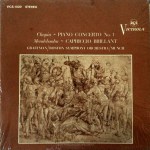
VICS-1030 Can Have Passable Sound for Chopin’s Piano Concerto No. 1

Hot Stamper Pressings of Living Stereo Recordings Available Now

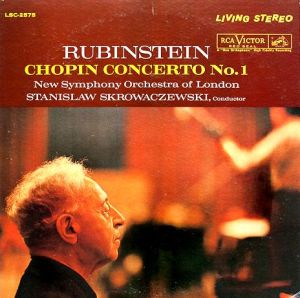
Our favorite recording for performance and sound is the Living Stereo from 1961, LSC 2575, with Rubinstein at the piano and Skrowaczewski conducting the New Symphony Orchestra of London.

This Victrola pressing, VICS-1030, with Graffman performing, had good, not great sound. We’ve played them before and none of them was ever better than middling.

Some specifics we noted in the sound:

  • The piano was loud and clear, close-miked.
  • Boxy sound, could be richer
  • Orchestration not too compressed but veiled and small.
  • Not a standout performance.

A decent-enough record I suppose, but lacking in too many of the qualities our customers are looking for, especially at the prices we charge.


This is what we had to say about the sound of our Shootout Winner for LSC 2575:

We love the huge, solid and powerful sound of the piano on this recording. This piano has weight and heft. As a result, it sounds like a real piano.

For some reason, a great many Rubinstein recordings are not capable of reproducing those seemingly all-important qualities in the sound of the piano.

Those are, as I hope everyone understands by now, the ones we don’t sell. If the piano in a piano concerto recording doesn’t sound solid and powerful, what is the point of playing such a record?

Or, to be more accurate, what is the point of an audiophile playing such a record? (Those of you who would like to avoid bad sounding vintage classical and orchestral records have come to the right place. We’ve compiled a very long list of them for precisely that purpose, and we add to it regularly, a public service from your friends here at Better Records.)

(more…)

The MHS Recording of Chopin’s First Piano Concerto Had the Most Natural Piano of Them All

Hot Stamper Pressings of the Music of Frederic Chopin Available Now

There are some wonderful Musical Heritage Society records sitting in the bins of your local record store or Goodwill, and this one is worth picking up just to hear how well recorded the piano is.

We described it this way:

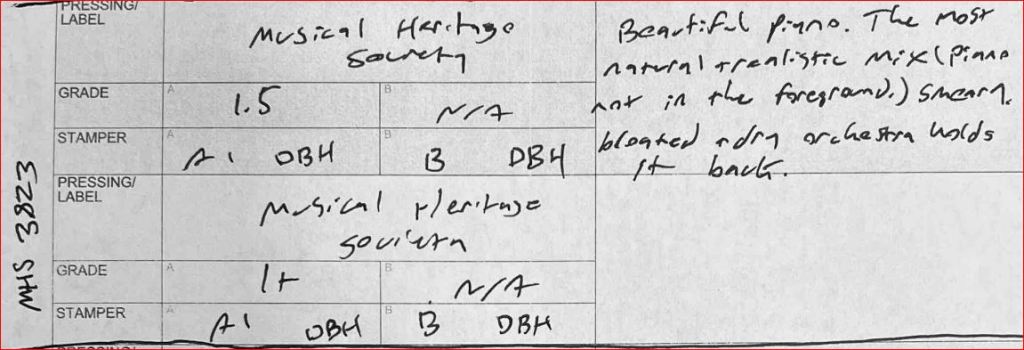
Beautiful piano. The most natural and realistic mix with the piano not in the foreground.

But there is more to the recording than the sound of the piano.

Smeary, bloated and dry orchestra holds it back.

Well, at least we tried. (Note that side two was deemed not worth grading.)

Our favorite recording for performance and sound is the Living Stereo from 1961, LSC 2575, with Rubinstein at the piano and Skrowaczewski conducting the New Symphony Orchestra of London.

This is what we had to say about the sound of our Shootout Winner:

We love the huge, solid and powerful sound of the piano on this recording. This piano has weight and heft. As a result, it sounds like a real piano.

For some reason, a great many Rubinstein recordings are not capable of reproducing those seemingly all-important qualities in the sound of the piano.

Those are, as I hope everyone understands by now, the ones we don’t sell. If the piano in a piano concerto recording doesn’t sound solid and powerful, what is the point of playing such a record?

Or, to be more accurate, what is the point of an audiophile playing such a record? (Those of you who would like to avoid bad sounding vintage classical and orchestral records have come to the right place. We’ve compiled a very long list of them for precisely that purpose, and we add to it regularly.)

(more…)

Chopin / Concerto No. 1 / Rubinstein / Skrowaczewski

Living Stereo Classical and Orchestral Titles Available Now

  • Rubinstein’s superb performance of Chopin’s concerto for piano is finally back in the site after a three year hiatus, here with INCREDIBLE Shootout Winning Triple Plus (A+++) Living Stereo sound or close to it on both sides of this original Shaded Dog pressing
  • Here are just a few of the things we had to say about this stunning copy in our notes: “3D rich piano”…”big and tubey and dynamic”…”lush brash and strings”…”very full bodied”…”zero smear” (side one)
  • So big and transparent, with weight and heft to the brass, we guarantee you have never heard a better piano concerto recording (unless you already one of our White Hot Stamper LPs)
  • The secret to the superior sound of this particular Rubinstein recording over so many others is the engineering by Kenneth Wilkinson – the glorious hall the London Symphony plays in doesn’t hurt either
  • Chopin, according to Arthur Hedley, “had the rare gift of a very personal melody, expressive of heart-felt emotion, and his music is penetrated by a poetic feeling that has an almost universal appeal…”

“Present-day evaluation places him among the immortals of music by reason of his insight into the secret places of the heart and because of his awareness of the magical new sonorities to be drawn from the piano.”

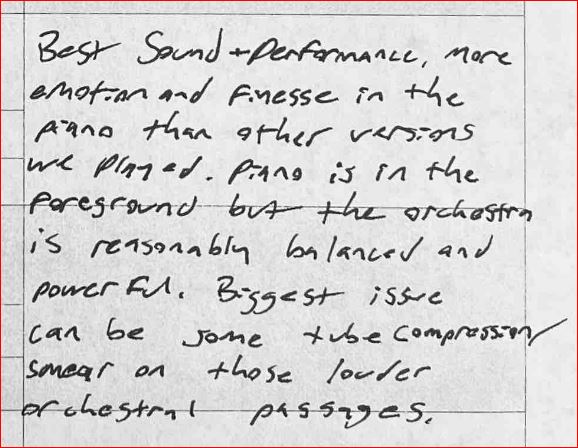
The latest notes for this RCA recording point out that this is the best combination of sound and performance for Chopin’s first piano concerto, with more emotion and finesse in the playing than other versions we auditioned.

The piano is in the foreground, with the orchestra reasonably balanced and clearly more powerful than some of the other recordings we played.

The biggest issue for the lesser pressings — which means the ones that did not win the shootout — is the possibility of some tube compressor smear on the loudest orchestral passages. (This is a subect we discuss on the blog quite a bit, by the way,)

The strings have lovely Living Stereo (Decca-engineered) texture as well. As befits a Wilkinson recording from 1961, there is no shortage of clarity to balance out the Tubey Magical warmth and richness.

We have lately been surveying some of his recordings from the late-60s and 70s to our great disappointment. The All Tube Recording Chain was gone. Opacity and lack of warmth prevented us from proceeding with any shootouts we might have attempted.

We love the huge, Tubey Magical sound of this recording. The piano is solid and powerful — like a real piano.

With tremendous hall space, weight and energy, this is Demo Disc quality sound by any standard.

(more…)