boxy-sound

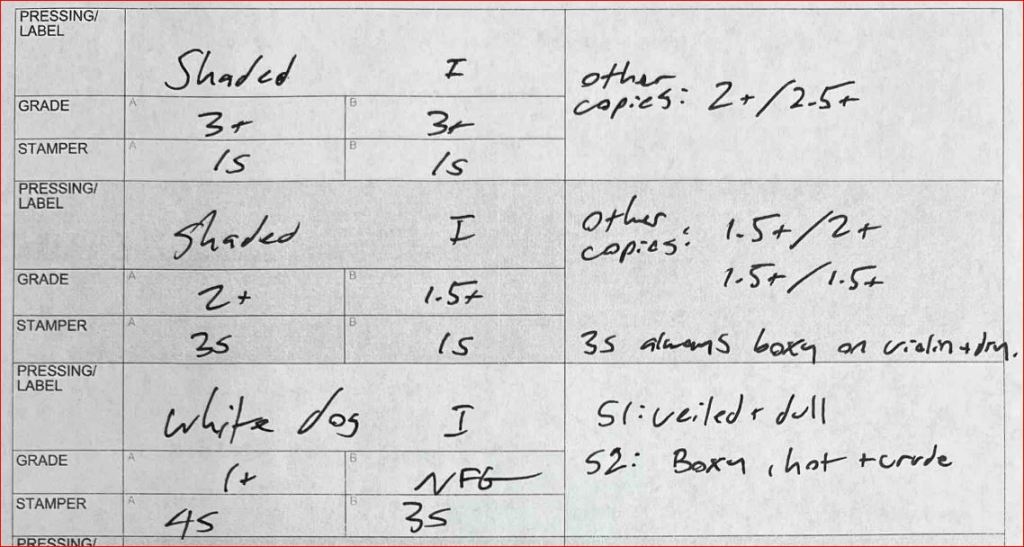
Linked here are pressings we found to have “boxy sound,” defined as sound that lacks much in the way of top and bottom, leaving a “box” for the sound in the middle.

Are these Strauss Waltzes as Good as Some Say? As Good as We Thought?

The original, favorable review for this album you see further down is from at least ten years ago and probably more like fifteen.

When we revisited the copies we had of this title more recently, we felt the sound was badly lacking in many respects, with no real extension up top nor much weight to the bottom, the very definition of boxy sound.

Many of the vintage classical records we audition have sound that we liked well enough in the past but now no longer meet our standards. Those pressings might sound fine on an old school stereo (or its modern equivalent), but we have something very different to play our records on, courtesy of the many revolutionary changes in audio that have dramatically altered the quality of analog playback over the last twenty five years.

We much prefer Boskovsky’s performances for Decca for waltzes and the like, by Strauss or anyone else.

TAS List Thoughts

We wanted to like the record, it’s on the TAS List for cryin’ out loud, shouldn’t it at least be pretty good?

It very well may be amazingly good, we can’t say it is or it isn’t. In order to be more sure of our opinion, we would need a great deal more data to back it up. We would need to have a large number of copies on hand, clean them all and play them in order to make it possible to find the killer stamper that may be hiding in the pile, assuming one might be.

(more…)

This Blueback of Le Cid Was Just Awful

Hot Stamper Classical and Orchestral Imports on Decca & London

Don’t buy into that record collector/audiophile canard that the originals are always the best sounding pressings.

This original Blueback pressing — true, we only had the one, so take it for what it’s worth — was a complete disaster: shrill, with no top or bottom to speak of, the very definition of boxy sound.

Our current favorite for sound and performance is the one Fremaux conducted for EMI in 1971.

It had been on the TAS List for some time, but we confess we didn’t bother finding out how good it was until about five years ago when it became clear to us what a wonderful conductor Louis Fremaux could be.

Here are some other Hot Stamper pressings of TAS list titles that we like.

Back to London

The sound of the London original you see above was much too unpleasant to be played on high quality modern equipment. There are quite a number of others that we’ve run into over the years with similar shortcomings.

(more…)

What Do You Mean by “Boxy” Sound?

More of the Music of Tchaikovsky

Many Golden Age classical records simply do not have very good sound, and this is one of them.

We’ve never heard a good sounding copy of LSC 2216, and we’ve played quite a number of them over the decades that we’ve been in the business of selling them. (LSC 1901, with Monteux conducting, is no better.)

A copy came in a while back so I figured it was time to give it a spin and see if there was any reason to change my opinion. Hey, maybe this one had Hot Stampers!

Can’t say it wouldn’t be possible. Unlikely, yes, impossible, no.

So here’s what I heard. No real top above 6k, hardly any bottom, but with a very wide stage – the textbook definition of “boxy sound.” (Dry and thin too, on a vintage RCA pressing no less!)

If you are a fan of Living Stereo pressings, have you noticed that many of them – this one for example – don’t sound good?

If you’re an audiophile with good equipment, you should have. But did you? Or did you buy into the hype surrounding these rare LSC pressings and just ignore the problems with the sound?

(more…)

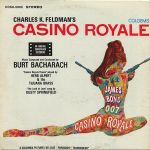
Casino Royale Can Be Amazing on the Right Copy, If You’ve Got the System For It…

Hot Stamper Pressings of the Music of Burt Bacharach Available Now

This is a record that has its share of problems, but if you’ve got the system for it (huge, heavily tweaked, fast, free from obvious colorations and capable of tremendous resolution), the best pressings are sure to impress.

Having heard the best sounding pressings I now understand why this has been such a highly regarded long-term resident of the TAS Superdisc List. The best copies are SUPERDISCS… while the average copy of this album is anything but. Who could take such harsh, grainy, thin, veiled, compressed sound seriously? What was Harry Pearson smokin’?

I can honestly and truthfully say that until we discovered the Hot Stampers for this album, I never thought this record deserved the praise Harry heaped upon it. Now I do. I once was blind but now I see, or something like that.

And by the way, does his copy sound as good as this one? Let’s face it: the late Harry Pearson was simply not the kind of guy who would sit down with five or ten copies and shoot them out.

When you listen to the average pressing of Casino Royale, you get the feeling that you’re hearing a standard-issue, boxy, lightweight, blary ’60s soundtrack. Perhaps you hear some promise in the recording, but it’s a promise that’s unfulfilled by the record on your turntable. This copy will completely redefine what you know about the sound of this music.

The space is big and the sound relatively rich (although the sound does vary quite a bit from track to track). The vocals have notably less hardness than most and the orchestra is not as brash as it can be on so many of the copies we audition. Huge amounts of Tubey Magic as well, which is key to the best sounding copies, and critical to The Look of Love.

The sound needs weight, warmth and tubes or you might as well be playing a CD.

(more…)

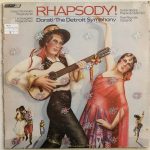
Rhapsody! – The Story of an Old Fave We Were Wrong About

Hot Stamper Classical and Orchestral Imports on Decca & London

A great example of an album We Was Wrong about.

As you can see by the commentary below, I used to think this was a wonderful sounding London “Sleeper” classical recording.

That was many years ago – five, six, seven, I cannot be sure. I ended up acquiring a half dozen copies of the album or so over the course of those years, had them cleaned up and proceeded to do a shootout.

It did not go well. Immediately I noticed that the pressings I was playing were sounding clean, clear and lively, but much too modern, too much like a good CD and not enough like the good Golden Age classical recordings we audition regularly.

Those recordings, on the right pressings, will take your breath away.  Rhapsody! was leaving me asking myself what was wrong. The more I listened the more obvious the faults of the recording became.

The pressings I played lacked warmth, richness, sweetness, space, and a number of other analog qualities I won’t belabor here. Too much of what makes listening to vintage vinyl so involving was just not on these records no matter how much I may have wanted them to be.

The extreme top and bottom were also lacking, giving the sound a “boxy” quality. The presentation was wide but not tall. Of the five levels of sound we discuss on the site in various listings, levels one and five were not as evident as they should have been.

This is, again, what progress in audio in all about. As your stereo improves, some records should get better, some should get worse. It’s the nature of the beast for those of us who constantly make improvements to our playback and critically listen to records all day.

We cannot rely on our previous judgments. With all the changes we’ve made over the years, we can now clean our records better and play our records better than ever before.

That means that some will rise and some will fall. This one fell, pretty hard in fact. Not a bad record, but not a good one either, and far from as good as I once thought.

Below is our previous commentary.  All of this was true for my old stereo and room, my critical listening skills at the time, my old cleaning regimen. And by old I mean my approach from only about five or six years ago!

Things have changed, dramatically, and nothing in all of audio could make me happier.

DEMO QUALITY SOUND! This is one of the greatest SLEEPER albums of all time.

This London reissue from 1979 of recordings from 1978 in Detroit, the year in which Dorati became director of the Detroit Symphony has the kind of orchestral sound we drool over here at Better Records. Dark and rich strings — the basses growl just like the real thing. Dynamic. Deep solid bass. Fluffy tape hiss, which sounds exactly the way it should. This tells you that the top end is untweaked. (Almost all Classic Records have funny sounding tape hiss as you may or may not know. It”s a dead give away that the top end is boosted. Tape hiss is like pink noise: it always sounds the same, unless somebody has fooled with it. Steve Hoffman taught me to listen for this quality and it was a lesson important to my growth as a critical listener.) (more…)

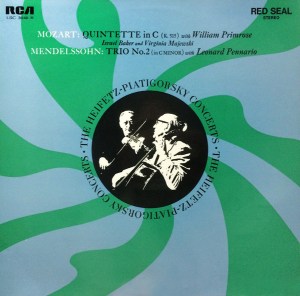
Mozart / Mendelssohn / The Heifetz-Piatigorsky Concerts

Hot Stamper Pressings Featuring the Violin

Superb Recordings with Jascha Heifetz Performing

Reviewed in 2011.

The Mozart side of this Red Seal pressing from 1975 sounds AMAZING. I have never heard better staging for a chamber work of this kind. All five instruments are so clearly set apart from each other and tonally correct (for the most part) that it is nothing less than fascinating to be able to follow each instrument as it weaves its way through the score.

If you’ve suffered through the horrendously sour and screechy recordings Heifetz and Piatigorsky are known for in audiophile circles — LDS 2513 and LDS 6159 — you will be glad to know that this side one sounds NOTHING like them.   

(Reversing your polarity on LDS 6159 helps but it can’t fix sound that’s that bad.)

Side one is, as we say, wonderfully clear and transparent. It does not have as much warmth and fullness as one might want, so for those of you who have plenty of tubey magic to bring to the recordings you play, this may just be the best chamber work you have ever heard. It is a touch hot in the 3-4k region but this is a minor quibble. Tons of recordings from this era are, including most RCAs and Mercuries; Deccas and Londons less so.

Side Two Sucks

Side two of this pressing is smeary, boxy and opaque, a sound we come across quite often when playing the scores of Golden Age classical recordings we audition every month here at Better Records.

(more…)