Art Rock – Reviews and Commentaries

Listen to Winwood’s Left Hand on “Glad”

More of the Music of Steve Winwood

Many years ago, perhaps in 2015, while playing an especially transparent copy of John Barleycorn, we learned something new about the album. Although it was a title I had been playing since it came out all the way back in 1970, apparently things had changed.

This pressing made it clear — really, for the first time — exactly what Winwood was doing with his left hand on the piano during the song Glad.

There are two musical figures that one can focus on: one involving the lower notes, which tend to be blurry, obscured and murky on most pressings, and two, the right-handed higher notes, which are typically much more clear and audible in the mix.

Only the very best copies let us “see” the bass notes of the piano so clearly and correctly. Next time you’re in the mood to compare different pressings of Barleycorn, pay special attention to the lower notes of the piano on Glad. It is our contention, backed by mountains of evidence, that no two copies of the album will get that piano to sound the same. (It will also help if you have large dynamic speakers with which to do the test.)

Lately we have been writing quite a bit about how pianos are good for testing your system, room, tweaks, electricity and all the rest, not to mention turntable setup and adjustment.

  • We like our pianos to sound natural (however one chooses to define the term).
  • We like them to be solidly weighted.
  • We like them to be free of smear, a quality that is rarely mentioned in the audiophile record reviews we read.

(more…)

I Misunderstood – Clarity Was Never the Point

Hot Stamper Pressings of Live Recordings Available Now

Some audiophiles get worked up listening for details in their favorite recordings. I should know; I was as guilty as anyone of that behavior.

But is that where the music is – in the details? Lots of details come out when one copy is brighter than another. Brighter ain’t necessarily better. Most of the time it’s just brighter

Listening for the details in a recording can be a trap, one that is very easy to fall into if we are not careful or don’t know better.

801 Live isn’t about clarity. It’s about the sound of a rock concert.

It’s about the raw power of one of the most phenomenal rhythm sections ever captured in performance on analog tape.

That’s what makes it a good test disc. When you play the hardest rocking tracks, the harder they rock, the better.

Next time you try out some audiophile wire or a new tweak, play this record to make sure you haven’t lost the essential energy, weight and power of the sound. This album doesn’t care about your love of detail. It wants you to feel the energy of the band pulling out all the stops. If the new wire or the new tweak can’t get that right, it’s not right and it’s got to go.

(more…)

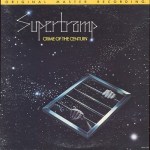
Dreamer Tells You What You Need to Know About this MoFi

Hot Stamper Pressings of the Music of Supertramp Available Now

This commentary was written about 2000, when the Speakers Corner pressing had just come out. We liked it back then, but I doubt we would care much for it now.

Listen to the vocals at the end of Dreamer.

If they are too bright, the bells at the end of the song sound super-extended and harmonically clear and clean.

But at what price? Now the vocals are too bright. Which is more important, good vocals or good bells?

There has to be balance. This is something audiophiles — and audiophile labels, who should obviously know better — seem to have difficulty appreciating.

We used to get these MoFis in on a regular basis, and they usually sound as phony and wrong as can be. They’re the perfect example of a hyped-up audiophile record that appeals to people with lifeless stereos, the kind that need amped-up records to get them to come to life.

I’ve been telling people for years that the MoFi was junk, and that they should get rid of their copy and replace it with a tonally correct version, easily done since there is a very good sounding Speakers Corner 180g reissue currently in print which does not suffer from the ridiculously boosted top end and bloated bass that characterizes the typical MoFi COTC pressing.

Brighter and more detailed is rarely better. Most of the time it’s just brighter. Not many Half-Speed mastered audiophile records are dull. They’re bright because the audiophiles who bought them preferred that sound. I did too, a couple of decades ago [make that four decades ago].

Hopefully we’ve all learned our lesson by now, expensive and embarrassing as such lessons so often turn out to be.

If your system is dull, dull, deadly dull, the way many of our older systems tended to be, this record has the hyped-up sound to bring it to life in a hurry.

There are scores of commentaries on the site about the huge improvements in audio available to the discerning (and well-healed) audiophile. It’s the reason Hot Stampers can and do sound dramatically better than their Heavy Vinyl or audiophile counterparts: because your stereo is good enough to show you the difference.

(more…)

Listening in Depth to A New World Record – ELO’s Masterpiece

More of the Music of The Electric Light Orchestra

More Albums with Key Tracks for Critical Listening

As a result of Jeff Lynne’s everything-but-the-kitchen-sink production approach, it will be the rare copy that provides enough transparency and resolution to bring out all the elements in these incredibly dense mixes, strings included.

But when you find a copy that does, what a THRILL it is. This is the band’s MASTERPIECE in my humble opinion. For audiophiles ELO on LP doesn’t get any better.

Side One

Tightrope

Both sides start off with a uptempo rocker, and this side’s is Tightrope.

Watch your string tone. If it’s shrill or grainy you are going to find yourself in trouble on practically every song on A New World Record — they all have strings and lots of them.

You need richness in the lower mids, harmonic extension up top, and just plain highly resolving sound if the strings are going to sound right in the mix.

Note that sometimes the highs get better on a record as it plays. Check to see if you don’t have more top end by the second track, or even halfway through this one. Happens to us all the time.

Telephone Line

My single favorite ELO song of all time. Full of emotion and beautifully produced. Lynne is the master of this kind of material.

Allmusic raves: “Telephone Line might be the best Lennon-McCartney collaboration that never was, lyrical and soaring in a way that manages to echo elements of Revolver and the Beatles without ever mimicking them.”

(more…)

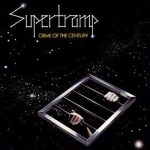
Crime of the Century Is Ken Scott’s Producing / Engineering Masterpiece

Hot Stamper Pressings of the Music of Supertramp Available Now

The review for the WHS copy here is well over ten years old, so take it with a very large grain of salt.

Back in those days we still had not found the right British stampers for Crime of the Century, which turned out to have numbers that we thought would not be competitive with the earlier stampers.

It turns out that our foolish bias against the later stampers was nothing more than an embarrassing case of mistaken audiophile thinking.

Up until 2020, the right domestic pressings could still win shootouts.

Now we believe the Brits have the potential for the best sound. A recent example that went for big bucks. All it takes is for the right domestic pressing to win a shootout and we will be back to saying what is probably the best way to think about the album — both domestics and imports can sound amazingly good. It all comes down to the copies you have on hand, how you clean them and how well you can play them.

Our review from about ten years ago follows:


Amazing White Hot Stampers for the greatest Ken Scott production in history. This is his (and the band’s) Masterpiece, and now we have a pressing that allows us to revel in the glory that is Crime of the Century! 

Case in point: The vocals here sound amazing — natural and correct with lots of texture. Even the best MoFi copies are going to sound a bit phony when played against a killer copy such as this. Of course it’s a high-definition, high-resolution sound cut with super low distortion; it has to be to sound this good. Folks, this is the copy that lets you appreciate every last detail of the recording without hitting you over the head with “sonic effects”. It’s musical in a way that no audiophile pressing ever seems to be.

And of course the bass is awesome. Loud levels and big woofers will have your house quaking. Add to that the kind of ENERGY that the best pressings have in their grooves and you have an album that is guaranteed to bring the average audiophile system to its knees, begging for mercy. This is The Audio Challenge before you. If you don’t have a system designed to play records with this kind of SONIC POWER, steer clear of Crime of the Century. It wants to rock your world, and that’s exactly what Hot Stamper pressings like this one are here to do.

It’s ALIVE! It has BIG, PUNCHY sound that will fill up your living room and then some. It’s exceptionally transparent with superb clarity and lots of extension on the top end.

The typical Brit copy is dull, and that quality just takes all the magic out of the recording. The three dimensional space and clarity of the recording rely heavily on the quality of the top end.

The MoFi, on the best copies, shows you what is missing from the typical Brit, domestic or other import LP. This is what impressed me back in the 70s when I bought my MoFi. It was only years later that I realized what was missing and what was wrong.

Last time around the best copies were British. That was not the case this time except on side two, where one British copy was competitive, but not better than, our best domestic pressing.

Side One

White Hot A Triple Plus Sound! BIG and BOLD like crazy. When track one finishes you will ask yourself, as we did, “how can it get any better?”

The answer will come quickly enough. Track two has a bit of edge to the vocals in some places, but with MONSTROUS size and energy, and prodigious bass power, we still had to call it A+++. It’s not perfect but it is so amazing that picking nits simply misses the point. This side is ALIVE.

Side Two

Side two gets rid of any edge problems in the vocals — the sound is exceptionally full and rich, with HUGE and solid drums like practically none you have ever heard. (Ken Scott can record toms like nobody else in the studio. If you have the system to play it, this album is all the proof you will ever need.)

Huge amounts of space, the MOST top end extension and the LEAST phony sound of any copy we played make this a side two that simply cannot be beat. One Brit copy was as good, albeit in different ways of course, but no copy was better.
Ambrosia Is Right at the Top of Our Difficulty of Reproduction Scale

Hot Stamper Pressings of the Music of Ambrosia Available Now

You can play hard-to-reproduce records all day long if your system is tuned up and working fine.

Ours has to be, all day, every day. Our shootouts require that everything is working properly or we wouldn’t be able to trust the results.

But you can’t play this record on such a system without testing everything, because this is the Single Most Difficult to Reproduce Recording I know of.

This is what makes it such a great test disc; to call it a challenge doesn’t begin to convey the difficulty of playing a record that places such heavy demands on a system.

Which means I had to retweak a lot of my table setup to make sure it was 100% right, by ear. Getting the VTA right on this record was fundamentally critical to hearing it sound its best.

(None of those silly setup tools for us here at Better Records. You can hear when it’s right and if you can’t then you need to keep at it until you can.)

Detail Freaks Beware

This is the kind of record that will eat the detail freaks alive. If your system has any extra presence, or boost in the top end — the kind that some audiophiles mistake for “detail” — this record with beat you over the head with it until blood runs out of your ears.

You need balance to get the most out of this album.

The more your system is out of whack, the more this album will make those shortcomings evident.

Once you have balance, then you can unleash the energy in a way that’s enjoyable, not painful.

When this record is sounding right, you want to play it as loud as you can. It’s pedal to the metal time. This music wants to overwhelm your senses. When the system is up to it, it can, and will.

This is what a Test Disc is all about. It shows you what’s wrong, and once you’ve fixed it, it shows you that now it’s right. We audiophiles need records like this. They make us better listeners, and they force us to become better tweakers. You cannot buy equipment that will give you this kind of sound. You can only tweak the right equipment to get it. At most 20% of the sound of your stereo is what you bought. At least 80% is what you’ve done with it.

(more…)

The Dark Side of the Moon – An Overview

Hot Stamper Pressings of the Music of Pink Floyd Available Now

I admit to some bias when it comes to DSOTM. I must have played more than a hundred copies over the last forty-odd years. Whenever I was sure I understood exactly which copies had the best sound, again and again I would be proved wrong.

We only found out what the best sounding versions were about five ten years ago. We did that by doing shootout after shootout with every version we could lay our hands on, starting around 2005. We even did a shootout for two different Mobile Fidelity pressings many years ago, which we think still makes for some good reading twenty years later.

It’s especially good reading for those who don’t appreciate how dramatic pressing variations can be for even quality-controlled limited editions. The comparison of the two MoFi’s centers around the idea that midrange tonality is by far the most important quality on Dark Side, and that, surprisingly to some audiophiles, but obviously not to us, there are MoFi pressings with a correct midrange and there are those without.

Our Take on DSOTM Pressings

The domestic pressings we have auditioned over the years have never made it into a real shootout. They have always sounded far too flat and veiled to be taken seriously. There are some very good sounding Pink Floyd pressings on domestic vinyl — Wish You Were Here and The Wall can both sound amazing on domestic vinyl — but Dark Side is not one of them in our experience.

The Doug Sax-mastered Heavy Vinyl version from 2003 we played when it came out was way too bright and phony to these ears. We hated it and made that clear to our readers at the time.

We came across a very early British pressing about fifteen years ago, the one with the solid blue triangle label, but it was not as good as other pressings we were playing back then and we never bought another one.

We’ve liked a lot of later UK pressings over the years, but we don’t go out of our way to buy those anymore now that we have heard the really amazing pressings we like now.

As I said, we discovered the killer stampers about five ten years ago, and that showed us an out of this world Dark Side we had no idea could even exist.

We have a name for records like those. We call them breakthrough pressings, and we used to award them a sonic grade of more than Three Pluses in some cases.

(more…)

The UK Imports of On the Third Day Are Made from Dubs

Hot Stamper Pressings of the Music of The Electric Light Orchestra Available Now

It’s obvious, or should be, that the British vinyl pressings are made from sub-generation copy tapes.

The imports make it sound as if someone threw a blanket over your speakers.

We know this because we had a bunch of them cleaned up for our shootout many years ago and they all sucked.

We tend to buy Electric Light Orchestra records on import vinyl; those are the ones that have proven themselves to have the best sound.

Most of the domestic pressings of their albums sound as though they were mastered from dub tapes.

But On The Third Day is proof that this is not always the case, just as Siren proves that the best Roxy Music albums are not always British.

(more…)

Roxy Music, Rhett Davies, Yanick Etienne and the Making of Avalon

Hot Stamper Pressings of Roxy Music’s Albums Available Now

I consider Roxy Music to be one of the greatest Art Rock bands in the history of music.

The general public and most audiophiles would no doubt cast their vote for Avalon as the band’s masterpiece, but I much prefer their eponymous first album, along with Stranded, Country Life and Siren to the more “accessible” music found on Avalon.

To be fair, that’s splitting hairs, because any of those five titles are absolute Must Own albums that belong in any serious popular music collection.  

Roxy Music’s “Avalon”

By Rick Clark

When asked in 1982 about the concept of Avalon, Ferry responded, “I’ve often thought I should do an album where the songs are all bound together in the style of West Side Story, but it’s always seemed like too much bother to work that way. So instead, I have these 10 poems, or short stories, that could, with a bit more work, be fashioned into a novel.

“Avalon is part of the King Arthur legend and is a very romantic thing,” Ferry added. “When King Arthur dies, the Queens ferry him off to Avalon, which is sort of an enchanted island. It’s the ultimate romantic fantasy place.”

Regardless, the entire album sustains a cohesive mood that isn’t just a product of Ferry’s lyrical thematic vision. It was a product of the process that Davies and the band employed in laying down grooves and having players interact with them, and then shaping those performances in a way that would ultimately inspire Ferry to articulate his melodies and words.

“We were creating tracks back then,” Davies says. “We didn’t have the songs. The songs were virtually the last things to go on there. We were very much creating a musical atmosphere that we wanted the musicians to respond to.

“In those days, Bryan and Roxy would have a musician in for a day or two and they would want that musician to play on all the songs and see what came out of that,” Davies continues. “I would have to be able to throw the tracks up pretty quickly and they had to sound the same every time. Rather than spending half-an-hour putting the track up and then another half-an-hour getting the bass sound, we wanted to work fast. In the initial stage of throwing a track at somebody, it was always that first response that you got when someone was fresh that was very important. Then we would spend days and weeks agonizing over it and fiddling around with it,” he adds with a laugh. “But the initial process we wanted to keep fast.” (more…)

On Heroes, It Took Us Ages to Break the Sound Barrier

More of the Music of David Bowie

Because the conventional wisdom turned out to be so wrong.

Our intuition that the British originals would sound the best was incorrect.

The experiments we carried out falsified that prediction.

In the audiophile record collecting world, intuitions have a bad track record, but more than a few audiophiles — many of whom are addicted to sharing their “record knowledge” on audiophile forums — seem unaware of this reality.

Taking a page from one of the greatest minds of the 20th century, we’ve opted to use a more scientific approach to discovering the best sounding record pressings, and we encourage you to do likewise. 

We pioneered the evidence-based approach to finding the best sounding pressings, and, like all good scientists, we shared it with everyone. Some in the audiophile community have taken it to heart, but most have chosen to put their faith in reviewers, forum posters, common sense and logic.

None of these produce consistently good results, but those who use these methods are loathe to doubt them and only rarely if ever learn the error of their ways.

Once a decision has been made and a specific pressing acquired — you could call it door number three I suppose — cognitive dissonance and confirmation bias immediately kick in to justify the result, and soon enough the game is over. The prize has been won. It’s the best prize ever. It does everything right, everything you’d hoped for.

But the best sounding copy of the record was not behind door number three.

You don’t have the best sounding pressing (well, you might, but if you did it would be entirely the result of chance, since you have no experimental evidence), but as long as you think you do, and, like most audiophiles, you play records only for yourself, and purely for enjoyment, you have no way of  discovering where on the spectrum of best to worst your record sits.

As long as you think you have the best, you have the best. How could there ever be any evidence offered to the contrary?

(more…)