break-2015

These are some of the breakthrough pressing discoveries we made in 2015.

Expanding Space Itself on The Dark Side of the Moon

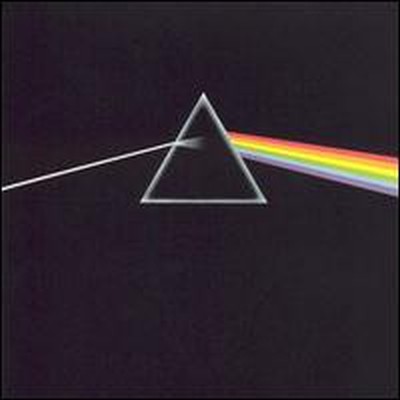
Many years ago, right around 2015 I believe, we played a copy with all the presence, all the richness, all the size and all the energy we could have ever hoped to hear on a pressing of Dark Side of the Moon.

It did it all and then some.

The raging guitar solos (there are three of them) on Money seemed to somehow expand the system itself, making it bigger and more powerful than I had ever heard.

Even our best copies of Blood Sweat and Tears have never managed to create such a huge space with that kind of raw power. This copy broke through all the barriers, taking the stereo system to an entirely new level of sound.

Listen to the clocks on Time. There are whirring mechanisms that can be heard deep in the soundstage on this copy that I’ve never heard as clearly before. On most copies you can’t even tell they are there.

Talk about transparency — I bet you’ve never heard so many chimes so clearly and cleanly, with such little distortion on this track.

One thing that separates the best copies from the merely good ones is super-low-distortion, extended high frequencies. How some copies manage to correctly capture the overtones of all the clocks, while others, often with the same stamper numbers, do no more than hint at them, is something no one can explain. But the records do not lie. Believe your own two ears. If you hear it, it’s there. When you don’t — the reason we do shootouts in a nutshell — it’s not.

The best sounding parts of this record are nothing less than ASTONISHING. Money is the best example I can think of for side two. When you hear the sax player rip into his solo as Money gets rockin’, it’s almost SCARY! He’s blowin’ his brains out in a way that has never, in my experience anyway, been captured on a piece of plastic. After hearing this copy, I remembered exactly why we felt this album must rank as one of the five best Rock Demo Discs to demonstrate the superiority of analog. There is no CD, and there will never be a CD, that sounds like this.

In fact, when you play the other “good sounding” copies, you realize that the sound you hear is what would naturally be considered as good as this album could get. But now we know better. This pressing took Dark Side to places we never imagined it could go.

(more…)

In 2008 We Had a Lot More R&D Ahead of Us

Hot Stamper Pressings of the Music of Led Zeppelin Available Now

A classic example of live and learn.

In 2008 we simply had not done our homework well enough. I had been an audiophile for at least 33 years by then, and a professional audiophile record dealer for 21, but we still hadn’t cracked the code for Zep III.

Sure, by 2008 we had auditioned plenty of the pressings that we thought were the most likely to sound good: the original and later domestic pressings, the early and later British LPs, some early and later German pressings, maybe a Japanese import or two. In other words, the usual suspects.

We already knew the Classic Records Heavy Vinyl was unbelievably bad; no need to put that in a shootout. It earned an “F” right out of the gate for its bright and harsh sound.

The result? We were roughly in the same position as most serious record collecting audiophiles, if not actually in a better one: who do you know that has played at least ten different pressing Led Zeppelin III, or any other album for that matter?

We had auditioned a number pressings of the album and thought we knew enough about the sound to pick a winner. We thought the best original British Plum and Orange label pressings had the goods that no other copies could or would have. (Years later we would get hold of another one, clean it up and put it in a shootout.)

But of course, like most audiophiles who judge records with an insufficiently large sample size, we turned out to be quite mistaken.

Logic hadn’t worked. None of the originals would end up winning another shootout once we’d discovered the right reissues.

But in 2008, we hadn’t stumbled upon the best pressings because we hadn’t put enough effort into the only approach that actually works.

What approach is that? It’s trial and error. Trial and error would eventually put us on the path to success. We had simply not conducted enough trials and made enough errors by 2008 to find out what we know now.

We hadn’t made the breakthrough we needed to make in order to know just how good the album could sound.

Can you blame us? The pressings that have been winning shootouts for years are from the wrong country (not the UK) and the wrong era (not the original).

We reproduce below the commentary for the 2008 listing that gets it wrong.

The best British originals are good records, but none of them would win a shootout these days up against the superior import pressings we discovered around 2015 or so.

(more…)

A Killer Can’t Buy a Thrill (and Some Lessons We Learned)

Hot Stamper Pressings of the Music of Steely Dan Available Now

During our shootouts, when we drop the needle on a copy and don’t hear that “Hot Stamper” sound, we toss that one and move on to the next. The difference between a truly Hot Stamper and most copies is so obvious that we rarely waste time on the pressings that clearly don’t have any real magic in their grooves.

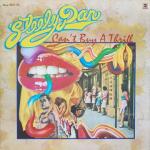
Like we’ve said after some of our other Steely Dan Hot Stamper shootouts, you would never imagine how good this album can sound after playing the average copy, which is grainy, compressed and dead as the proverbial doornail. It’s positively criminal the way this well-recorded music sounds on the typical LP.

And how can you possibly be expected to appreciate the music when you can’t hear it right? The reason we audiophiles go through the trouble of owning and tweaking our temperamental equipment is we know how hard it is to appreciate good music through bad sound. Bad sound is a barrier to understanding and enjoyment, to us audiophiles anyway.

We Was Wrong About the Sound

Years ago – starting with our first shootout in 2007 for the album as a matter of fact – we had put this warning in our listings:

One thing to note: this isn’t Aja, Pretzel Logic or Gaucho (their three best sounding recordings). We doubt you’ll be using a copy of Can’t Buy A Thrill to demo your stereo.

We happily admit now that we got Can’t Buy a Thrill wrong. It’s actually a very good sounding record – rich, smooth, natural, with an especially unprocessed quality.

In that sense it is superior to most of their catalog; better than Countdown to Ecstasy, Katy Lied, Royal Scam and maybe even Gaucho (which is a bit too artificial and glossy for our tastes, although it might make owners of less revealing equipment or those who find that kind of sound more appealing positively swoon).

You could easily use Can’t Buy a Thrill to demo your stereo, depending on what you were trying to demonstrate. A realistic, solidly-weighted piano comes to mind — there are many songs with an exceptionally well recorded piano on the album.

Mistakes Were No Longer Made

We used to think it sounded flat, cardboardy, veiled and compressed. It’s actually none of those things on the best copies. The reason we didn’t find those problems during our most recent shootouts is that we must have improved our playback. Precisely how I don’t really know.

Maybe the main improvements happened just last week with the cartridge being dialed in better. Or maybe it was that in combination with the few new room tweaks. Or maybe those changes built upon other changes that had happened earlier; there’s really no way to know. 

(more…)

Listen to Winwood’s Left Hand on “Glad”

More of the Music of Steve Winwood

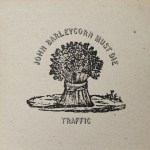
Many years ago, perhaps in 2015, while playing an especially transparent copy of John Barleycorn, we learned something new about the album. Although it was a title I had been playing since it came out all the way back in 1970, apparently things had changed.

This pressing made it clear — really, for the first time — exactly what Winwood was doing with his left hand on the piano during the song Glad.

There are two musical figures that one can focus on: one involving the lower notes, which tend to be blurry, obscured and murky on most pressings, and two, the right-handed higher notes, which are typically much more clear and audible in the mix.

Only the very best copies let us “see” the bass notes of the piano so clearly and correctly. Next time you’re in the mood to compare different pressings of Barleycorn, pay special attention to the lower notes of the piano on Glad. It is our contention, backed by mountains of evidence, that no two copies of the album will get that piano to sound the same. (It will also help if you have large dynamic speakers with which to do the test.)

Lately we have been writing quite a bit about how pianos are good for testing your system, room, tweaks, electricity and all the rest, not to mention turntable setup and adjustment.

  • We like our pianos to sound natural (however one chooses to define the term).
  • We like them to be solidly weighted.
  • We like them to be free of smear, a quality that is rarely mentioned in the audiophile record reviews we read.

(more…)

The Best Sounding Album Geoff Emerick Ever Recorded?

More of the Music of Robin Trower

A Permanent Member of Our Rock & Pop Top 100 List

We had been wandering around in the dark for more than a decade with Bridge of Sighs — that is, until we found a clean early UK Chrysalis pressing around about 2015.

Now we know just how good this album can sound, and that means ASTOUNDINGLY good. Off the top of my head I can’t think of any Geoff Emerick album that sounds as big and clear as this one.

The three dimensional space is really something else on the better UK copies.

That same year, 2015, we found the best sounding pressing of this Pink Floyd album we had ever heard, and it too blew our minds.

There is a substantial amount of Tubey Magic and liquidity on the tape, recalling the kind of hi-rez vintage analog sound that makes the luminous A Space in Time such a mind-expanding experience. Recorded a few years earlier, both albums have the kind of High Production Value sound that we go crazy for here at Better Records.


No domestic pressing could touch our better British imports I’m sorry to say, and I’m sorry to say it because finding the right Brit copies in good condition is going to be a very expensive proposition going forward. I expect I shall be paying much too much to get a fairly high percentage of noisy, heavily played old records shipped to me. But that’s the business we’re in.

Fortunately for our Rock Guitar loving customers, when the sound and the music are this good, it’s more than worth all the effort and expense.

Size and Space

One of the qualities that we don’t talk about on the site nearly enough is the SIZE of the record’s presentation. Some copies of the album just sound small — they don’t extend all the way to the outside edges of the speakers, and they don’t seem to take up all the space from the floor to the ceiling. In addition, the sound can often be recessed, with a lack of presence and immediacy in the center.

(more…)

Why Are We Guessing (Again)?

More of the Music of The Pretenders

German pressings? Not British?

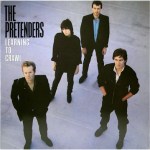
We discovered that only the best German pressings convey the energy and enthusiasm of the band while avoiding the grunge, flatness and hardness that make the typical pressing of this album all but unlistenable at loud volumes.

Isn’t this a British band that just happens to be led by an American? And wasn’t the album produced by the clearly British Chris Thomas and recorded at George Martin’s AIR studios in London? How is it possible that the best German pressings consistently sound better than the best British pressings?

Your guess is as good as mine. And, if you stop to think about it, who in his right mind would think that any answer they might give to such a question is anything other than a guess?

But that’s not the half of it. It’s not simply the fact that the Germans seem to be the only ones able to work their magic on this title. Most German pressings are not nearly as good sounding as this one. It is only this specific German pressing that does everything right. It has won every shootout for the last five years if that tells you anything.

What to Listen For

In the chorus of Time the Avenger, the better copies do not get as harmonically distorted, edgy and hard as most. The best really “bloom,” but they are few and far between.

A Top Pretenders Title

This is where Chrissie Hynde matured into a top class songwriter; every track is good and many are brilliant. With Robbie McIntosh having joined the band, this is first and foremost a guitar rock record; his jangly, grungy riffs drive every song. Great songs and great guitar work — what more do you need in a rock record?

Think of Middle of the Road — everything that’s good about this band on this album is there in that song: it’s uptempo, with a driving beat, a rock solid rhythm section and a beautifully distorted guitar out front and high up in the mix.

(more…)

Fandango! – Another Warners Heavy Vinyl Mediocrity

More of the Music of ZZ Top

Sonic Grade: C

Warner Brothers remastered Fandango in 2008, so we took some domestic pressings and put them up against their Heavy Vinyl LP.

The results were mixed; most of our original pressings were lackluster, many were noisy, and we just weren’t hearing anything with the sound we thought deserved to be called a Hot Stamper.

We shelved the project for another day.

In the interim we kept buying domestic pressings — originals and reissues — in the hopes that something good would come our way.

Fast forward to 2015. We drop the needle on a random pressing and finally — finally — hear a copy that rocks like we knew a ZZ Top album should. With that LP as a benchmark, we got a shootout up and running and the result is the record you see here.

How did the WB remaster fare once we had some truly Hot Stamper pressings to play it against?

Not well. It’s tonally correct, with a real top and bottom, something that a substantial number of copies cannot claim to be.

But the sound is stuck behind the speakers, veiled, and sorely lacking in energy and excitement.

The transparency is of course compromised on all these new reissues, and without transparency and resolution, much of the audience participation on the first side is lost.

I won’t say the new pressing is boring. Let’s just say it’s a lot more boring than it should be. (more…)

The Supertramp You Don’t Know – Even In The Quietest Moments

Hot Stamper Pressings of the Music of Supertramp Available Now

After discovering killer Hot Stampers for this Forgotten Classic we feel the album can hold its own with any of Supertramp’s classic ’70s releases, from Crime of the Century all the way through to Breakfast in America.

Our White Hot stamper pressings showed us some of the best Supertramp sound we have ever heard on any of their albums, which is saying a lot. Supertramp is one of the most well-recorded bands in the history of pop music. GEOFF EMERICK took over most of the recording duties after the band decided to work with a different engineer for this, their 1977 album.

KEN SCOTT recorded the two albums that came before this one, Crime and Crisis, and as has been well documented on this very site, he knocked the two of them out of the park.

As I’m sure you know, both famously engineered The Beatles.

What we didn’t know, not until 2015 anyway, was how amazingly well recorded this album was.

In 2005 we noted that we had basically given up on ever finding a good sounding copy of Even in the Quietest Moments. It’s now ten years later. Having gone gone through more copies than we care to remember we think we’ve got EITQM’s ticket. We think we know which stampers have the potential to sound good as well as the ones to avoid. Finding the right stampers has been a positive boon.

Once we discovered the right stampers we were in a much better position to hear just how well recorded the album is. Now we know beyond all doubt that this recording — the first without Ken Scott producing and engineering for this iteration of the band — is of the highest quality, in league with the best.

Until recently we would never have made such a bold statement. Now it’s nothing less than obvious.

(more…)

Lt. Kije at 45 RPM – An Amazing Discovery from 2015

More of the music of Sergei Prokofiev (1891-1953)

[PLEASE NOTE: We no longer give Four Pluses out as a matter of policy, but that doesn’t mean we don’t come across records that deserve them from time to time.]

We award this copy our very special Four Plus A++++ grade, which is strictly limited to pressings (really, individual sides of pressings) that take a given recording to a level we’ve never experienced before and had no idea could even exist. We estimate that about one per cent of the Hot Stamper pressings we come across in our shootouts earn this grade. You can’t get much more rare than that.

This Japanese 45 RPM remastering of our favorite recording of Prokofiev’s wonderful Lt. Kije Suite has DEMONSTRATION QUALITY SOUND. For starters, there are very few records with dynamics comparable to these. Since this is my favorite performance of all time, I can’t recommend the record any more highly.   

Most of what’s “bad” about a DG recording from 1978 is ameliorated with this pressing. The bass drum (drums?) here must be heard to be believed. We know of no Golden Age recording with as believable a presentation of the instrument as this.

When a particular pressing we’re auditioning takes the recording to a level significantly higher than our expectations, it gets our attention, big time. This can only happen with a record we know well. We thought we knew how good Lt. Kije on Japanese 45 could sound but we were wrong — this pressing is clearly better than the copy we would be proud to call White Hot, which means this one deserves an impossible sonic rating of eleven on a scale of one to ten.

Forget the logic. It’s not about that, it’s about the sound and the music, and we make no apologies for calling this copy Beyond White Hot. It blew our minds.

(more…)

Rhapsody in Blue – We Finally Broke Through in 2015

Hot Stamper Pressings of the Music of George Gershwin Available Now

This original Six Eye LP has the smooth brass and full-bodied strings that allow this wonderful music to astound. This is our favorite performance of Rhapsody in Blue.

Smooth and solid, not brash or blary, what really impressed about the sound here was how full it was, yet it was never thick or murky. Instead it was transparent in the lower mids and below, and that sound was just glorious after listening to too many thin and brash pressings. The piano is solid, rich, high-rez and very percussive — there is no tubey Old School smear to be heard, and that too was a surprise.

I’ve always loved these performances, but the shrill Columbia sound has been hard to get past. So many copies suffer from upper-midrangy, glary, hard sound and blary brass. I’ve come to accept that this is nothing more than the “Columbia Sound,” and as a consequence we rarely put much effort into surveying their recordings, even their more famous ones.

I won’t say all that’s changed; it really hasn’t. The vast majority of Columbia classical pressings are still going to sound as awful as they have in the past.

What has changed is that finally, with this copy (and the stereo/room we have in 2015) we’ve found the sound that we’d been looking for on the legendary MS 6091. (more…)