Art Rock – Reviews and Commentaries

Letter of the Week – “I just wanted to thank you for enriching the lives of us audiophiles.”

Hot Stamper Pressings of Pink Floyd Albums Available Now

Reviews and Commentaries for the Music of Pink Floyd

One of our good customers had this to say about some Hot Stampers he purchased not long ago:

Hey Tom, 

I just wanted to thank you for enriching the lives of us audiophiles.

As I upgrade my system (and this time I made quite a breakthrough), I am beyond astounded each time one of the Hot Stampers you all sent me comes right along for the ride and blows my mind all over again.

I recently ordered a Hot Stamper of Dark Side Of The Moon. You know I’ve been dreaming of the day I can buy a grand copy from you. Until then, I buy the just nearly not as good copies you sell.

The A Side 1 and A to A+ Side 2 of DSOTM that you sold me a while back still has the power to blow my mind at parts. I am looking forward to seeing what a copy that costs almost four times the price can do. If it can! But I believe it one exists, you are the ones that found it.

You guys rock.

Best, Jeremiah

Thanks, Jeremiah. We aim to please, and, if I may say so myself, we do rock.

Thanks very much for writing. We’ve published a number of other letters like yours, written to us about Dark Side of the Moon. It’s a title we have difficulty keeping in stock.

As you point out, making progress in audio is key to getting these amazing vintage recordings to sound their best. We’re glad to know that you are hearing our records sounding better and better, something the Heavy Vinyl crowd doesn’t appreciate, especially those who still cling to the idea that this is a good pressing of Dark Side.

Here is an overview of the album you may enjoy reading.

(more…)

We Get It, This Band Is Not For Everyone

Hot Stamper Pressings of Art Rock Records Available Now

To my mind, speaking as both a fan and an audiophile, both the first two Crack the Sky albums succeed brilliantly on every level: production, originality, songwriting, technical virtuosity, musical consistency and, perhaps most importantly for those of you who have managed to make it this far, top quality audiophile sound.

This is simply a great album of adventurous, highly melodic Proggy Arty rock. If you like the well known bands that made the classic albums cited below there’s a very good chance you will like this much less well known band’s second album also. Especially if you have the taste for something different — I know of no other album quite like it. It may have been strongly influenced by many of the 70s Classics of both Prog and Art Rock, but it is stylistically unique.

This is high-production-value rock that pulls out all the stops and then some, with a massive Beatlesque string section, horns, synths, backward guitars and studio effects that rival those of 10cc.

Much like Ambrosia’s debut (another poorly understood band on a small label), such an ambitious project was clearly an effort to make a grand musical statement along the lines of Tumbleweed Connection, Sgt. Pepper, Crime of the Century, Close to the Edge, The Original Soundtrack or Dark Side of the Moon — all albums I suspect this band played countless times in hopes of recreating some of that magic themselves in the studio. I am of the opinion that they succeeded marvelously.

In the 70s I was a huge fan of those albums too. (Still am of course; check out our Top 100 if you don’t believe me. They’re all in there.) I played them more times than I can remember, with Crack The Sky’s albums spending plenty of time — in heavy rotation you could say — on the turntable in those early days.

Fun tip: Listen for the Elton-John-like piano chords on the first track. Can you name that song? (Hint: it’s on Tumbleweed Connection.)

(more…)

Wish You Were Here – An Overview

Hot Stamper Pressings of the Music of Pink Floyd Available Now

We have added some moderately helpful title specific advice at the bottom of the listing for those of you want to find your own Hot Stamper pressing.

This is the perfect example of everything we look for in a recording here at Better Records: it’s dynamic, present, transparent, rich, full-bodied, super low-distortion, sweet — good copies of this record have exactly what we need to make us audiophiles forget what our stereos are doing and focus instead on what the musicians are doing.

For those of you who aren’t familiar with the album, Pink Floyd managed to record one of the most amazing sounding records in the history of rock music. The song Wish You Were Here starts out with radio noise and other sound effects, then suddenly an acoustic guitar appears, floating in the middle of your living room between the speakers, clear as a bell and as real as you have ever heard. It’s obviously an “effect,” but for us audiophiles it’s pure ear candy.   

Shine on You Crazy Diamond, Pts. 1-5

Right from the dynamic intro you can tell this is going to be a wild ride. David Gilmour’s haunting guitar line that comes cutting from out of the abyss should be warm with tons of room for his phasers to do their phasing.

After the band comes in and the vocals begin (listen for the man chuckling in the left channel) you should pay attention to the balance of the mix. Most copies tend to be very midrangy which can make the guitars aggressive and harsh, often times taking emphasis away from the vocals. The good copies have lots of transparency and allow everything to sit in their respectively places. This is probably most noticeable during the saxophone solo.

The tenor that starts off this section needs to be breathy, full-bodied, and sitting delicately in the center of your speakers. It does NOT need be be honky and hard sounding without any top extension. As the solo slowly crescendos, notice the guitar line spread across the soundstage that actually bookends the saxophone. The more dynamic copies really let you hear the intricacy and delicacy of his picking that foreshadows the time signature shift about to come.

When the time does change to 6/4, the saxophone player changes to alto, totally changing the sound of the solo! You can clearly hear on the better copies that he is further away from the mic than during the previous section, but if you listen closely, it sounds as though he is moving on and off axis. Whether this is part of his mic technique or him just dancin’ and groovin’ to the music, we may never know. I certainly hope for the latter.

Other Pressings

Most copies of the CBS Half-Speed lack deep bass, and for that matter bass in general.

They’re also consistently brighter. The upper mids and highs call attention to themselves at every turn. When you switch back to a good domestic copy or import, you might not notice as much detail, but everything will sound correct and balanced: less like a recording and more like music.

Phony highs cause listener fatigue for the same reason that bright CDs get tiresome.

Just listen to the sax break on side one. If your pressing is too bright that sax will tear your head off.

The Seventies – What a Decade!

Tubey Magical acoustic guitar reproduction is superb on the better copies of this recording. Simply phenomenal amounts of Tubey Magic can be heard on every strum, along with richness, body and harmonic coherency that have all but disappeared from modern recordings (and especially from modern remasterings).

Big Production Tubey Magical British Prog Rock just doesn’t get much better than Wish You Were Here.

A Big Speaker Record

Let’s face it, this is a big speaker recording. It requires a pair of speakers that can move air with authority below 250 cycles and play at loud levels. If you don’t own speakers that can do that, this record will never really sound the way it should.

It demands to be played loud. It simply cannot come to life the way the producers, engineers and artists involved intended if you play it at moderate levels.

Obsessed? You Better Believe It

Wish You Were Here is yet another record we admit to being obsessed with.

Currently we have identified about 150 that fit that description, so if you have some spare time, check them out.

(more…)

Letter of the Week – “It’s crazy that once upon a time I thought it sounded really great.”

Hot Stamper Pressings of the Music of Peter Gabriel Available Now

One of our good customers had this to say about a Hot Stamper pressing he purchased recently:

Hi Tom,
Just a note. I forgot I had Red Rain/Sledgehammer on a 45 rpm clarity vinyl from Classic.

So I compared them. What the fuck! It was absolutely, completely lifeless. I was amazed at how lifeless it was.

It’s crazy that once upon a time I thought it sounded really great.

The journey continues to amaze.

Take Care,
Michel

Michel,

Thanks for your letter. You are not the first person to notice that Heavy Vinyl and Half-Speed mastered records do not hold up well when played head to head with the Hot Stamper pressings we offer.

Bernie Grundman has a fairly spotty record in the modern era. Starting with the work he did for Classic Records in the 90s, it’s hard to think of too many BG-mastered titles that sounded all that good to us. If pressed, I might be able to name five, but please don’t press me, coming up with five would be more work than I’d want to do.

The record you played probably sounded a lot like the pressing of So he remastered for Classic in 2002. We didn’t like it then and we doubt it has gotten better with age. Flat as a pancake and dead as a doornail are our go-to descriptions for the mostly irritating records that the various audiophile labels were putting out in those days, and not too surprisingly, the records they are making now are no better.

(To be honest, we were fooled plenty of times ourselves and have the embarrassing catalog entries to prove it.)

You were amazed by how lifeless it was, yet you used to like it.

Aren’t other audiophiles in exactly the same boat you were in until just a few days ago? Until you paid all that money to us for a copy that blew your Classic right out of the water?

Without knowing it, what you actually bought was a copy that sounded the way the Classic should have.

You thought you were getting top quality sound with Classic’s releases, especially when it has the advantage of being one song on a 12″ disc mastered at 45RPM. That record should have been killer, a Demo Disc of a great song guaranteed to blow your own as well as your audiophile friends’ minds.

Maybe it would have. Maybe, like you, they would think the Classic sounds amazing.

What’s amazing most of the time is just how relative “amazing” can be.

So, now you own the record that is a true Demo Disc, and one that can demonstrate not just top quality sound, but how inferior these modern-mastered titles really are up against the real deal — the real deal being a plain old mass-produced record that everybody and his uncle could have bought for relatively cheap in 1986. No fancy packaging, no high price tag, no virgin vinyl, just a record properly-pressed and properly-mastered. The world is full of them.

Audiophiles may be incredulous at the thought, but all it would take to show them how wrong their approach to collecting better pressings has been is the right pressing. Those are the ones we sell.

(more…)

What to Listen For on Songs from the Big Chair

More of the Music of Tears For Fears

More of Our Favorite Art Rock Albums

Below you will find an excerpt from the commentary associated with a shootout winning pressing we discovered a while back:

There is one quality that the best copies always have and that the worst copies always lack: Frequency Extension, especially on the top end.

When you get a copy like this one, with superb extension up top, the grit and edge on the highs almost disappears. You can test for that quality on side one very easily with the percussive opening to Shout. If the harmonics and air are present at the opening, you are very likely hearing a top quality copy.

Side one here has smooth, sweet, analog richness and spaciousness I didn’t think was possible for this recording. The bass is full and punchy. When it really starts cooking, like in the louder, more dynamic sections of Shout or Mothers Talk, it doesn’t get harsh and abrasive like practically every other copy I’ve heard. It’s got energy and life, and it gets loud when it needs to without making your ears bleed.

There is wonderful transparency and presence in the vocals, not to mention a really deep soundstage. This copy trounced nearly all of the other pressings we played in terms of bringing the music to life while still keeping the aggressiveness of the presentation under control.

A Classic

This is a classic in the Tears for Fears canon, probably the album most people regard as their best. I myself prefer Seeds of Love, a near perfect pop masterpiece and one I have played hundreds of times from start to finish. (It helps to have it on cassette.)

All of which takes nothing away from Big Chair — it’s one of the top albums from the 80s no matter how you slice it. It went to Number One on the charts for a reason. There’s really not a bad song on either side, and quite a few absolutely brilliant ones.

(more…)

On Fillmore East, Transparency Is Key

More of the Music of Frank Zappa

We’re big fans of this album, and Zappa in general, but it’s incredibly difficult to find copies that do justice to the music. 

So many pressings don’t let you hear INTO the music. This is a live recording with musicians sprinkled all over the stage — three-dimensional transparency is absolutely KEY to the best pressings, the ones that let you immerse yourself in the spectacle, never losing sight of the individual performances of Zappa and his merry band of obscene nut jobs. This band works BLUE. It will have you in hysterics if you get into the down and dirty spirit of the show. If that doesn’t sound like your thing, steer clear of this one. It’s raunchy as hell, and the raunchiest bits are the most hilarious.

The Greatest Rock Opera Ever

As for the music, it’s a 10 on a scale of 1 to 10. This to me is the ultimate rock opera. In point of fact it’s actually a parody of a rock opera, which makes it doubly enjoyable.

The two former leaders of The Turtles (aka Flo and Eddie) variously play groupies (What Kind Of Girl Do You Think We Are) and members of the band. As the saying goes, hilarity ensues.

What makes this album so special is that the rock songs that are generated out of this story are actually great rock songs. They’re not filler. They’re not connecting tissue. They’re good songs with strong melodies that stand up on their own. Moreover, connected to each other through this crazy story sung by men pretending to be women, they become something even greater: a True Rock Opera. Better than that: A True Rock Opera Parody that’s as hilarious as it is musically satisfying. Zappa missed his calling — he should have dedicated himself to musical theatre. He has a real gift for it. This album is proof.

The entertainment value of this record is as good as it gets. Off the scale. If you’re a fan of The Firesign Theater, Zappa, improv comedy and such like, you will love this album.

Fillmore East – June 1971 checks off some important boxes for us here at Better Records:

(more…)

Before and After Science – Rules Are Made to Be Broken

Hot Stamper Pressings of Art Rock Recordings Available Now

The domestic pressings of Before And After Science are typically grainy, low-rez and hard sounding — they’re simply not competitive with the smoother British Polydors.

But our best Hot Stamper pressing isn’t an import; it was made right here in the good old US of A.

Say what? Yes, it’s true. We were SHOCKED to find such hot stamper sound lurking in the grooves of a domestic Eno LP. It’s the One and Only.

In thirty plus years of record playing I can’t think of any domestic Eno LP that ever sounded this good.

Now hold on just a minute. The British pressings of Eno’s albums are always the best, aren’t they?

For the first three albums, absolutely. But rules were made to be broken. This pressing has the knockout sound we associate with the best British originals of Eno’s albums, not the flat, cardboardy qualities of the typical domestic reissue.

Kinda Blind Testing

Since the person listening and making notes during the shootouts has no idea what the label or the pressing of the record is that he is evaluating — this is after all a quasi-scientific enterprise, with blind testing being the order of the day — when that domestic later label showed up at the top of the heap, our jaws hit the floor.

(more…)

Listening in Depth to John Barleycorn Must Die

The toughest test on side two is the first track, Stranger to Himself.

Getting the voices right is practically impossible. If the voices are full, smooth, yet breathy and clear, you have that rare copy that actually gets the midrange right. Not many do.

Side One

Glad

The last portion of this track has some really interesting percussion and organ effects. Traffic were trying to break out of the standard pop song format by letting this song wander into psychedelic territory for a few minutes at the end. It’s now become my favorite part of the song.

The reason you want to pay close attention to this part is because it helps you to judge the transparency, immediacy, and top end extension for the whole side. It should be amazingly clear and open-sounding. On too many pressings, the percussion instruments are blurred and lost in the mix. On a Hot Stamper copy they’ll be right in front of you, allowing you to appreciate the interplay among the musicians as they contributed their various parts.

Freedom Rider

You’ll need lots of top end extension for this song to sound right. On many copies the double tracked flute solo in the middle of the song will be aggressive and irritating, but on a Hot Stamper pressing, the flutes will sound airy and breathy with a reasonably good sustain.

Empty Pages

The quality of the voice is what really sets the best copies apart. Winwood is much more present on the better copies. He’s recessed on most and that’s just not where he needs to be for the song to work musically. He needs to be right up front, surrounded by the air and ambience of the studio. The transparency found on the better copies will give you precisely that.

Side Two

Stranger to Himself

John Barleycorn

The acoustic guitars that open up this song are absolute perfection on the best copies — this is the sound of Tubey Magical analog at its best.

This is the real test for side two.

The acoustic guitars should sound rich and sweet. You’ll notice at the beginning of the song that they are a little dull. The last thing in the world you want to do, however, is to brighten them up, because when you do that, as some mastering engineers have in the past, the harmony vocals and the percussion and the tambourine become much too bright later on in the song.

You have to strike a balance between all the elements. That means Steve’s voice at the beginning needs to be a little reserved so that the harmony vocals later on will come in right.

(more…)

Listening in Depth to Ambrosia

AMBROSIA is an album we admit to being obsessed with — just look at the number of commentaries we’ve written about it. It’s also part of our extensive Listening in Depth series. There is no question that this band, their producers and their engineers sweated every detail of this remarkable recording. They went the distance. In the end they brought in Alan Parsons to mix it, and Doug Sax to master it. The result is a masterpiece, an album that stands above all others.

It’s not prog. It’s not pop. It’s not rock. It’s Ambrosia — the food of the gods.

The one album that I would say it most resembles is Dark Side of the Moon. (Note the Parsons connection.) Like DSOTM, Ambrosia is neither Pop nor Prog but a wonderful mix of both and more. 

Perhaps hearing Dark Side was what made you realize how good a record could sound. Looking back on it over the last thirty years, it’s clear to me now that this album, along with a handful of others, is one of the surest reasons I became an audiophile, and managed to stick with it for so long. What could be better than hearing music like this sound so good?

Although I didn’t discover the album until some time later in the 90s, I recognized the challenge it presented to my system, setup and room immediately, a subject I write about here.

The band’s first album is yet another record the deserves a great deal of credit for helping me become a better listener.

Side One

Nice, Nice, Very Nice

Once you know this record well, you can easily tell if you have a good side one within the first minute of this song. Side one has a tendency to be somewhat bright and even aggressive in places. This problem is further exacerbated by the typical copy’s lack of bass. The best copies have incredibly tight, punchy bass at the beginning of this song, and plenty of it. Phenomenal bass. Demo Disc quality bass.

If that’s not what you hear, you know you will soon be in for more problems. The vocals need to start out smooth, because they get brighter later on. Missing bass or added brightness are sure signs of trouble ahead. The lines “I wanted all things to make sense/ so we’d be happy instead of tense” will be aggressive on copies that are not tonally correct. And copies without tons of bass are not tonally correct, because the recording has tons of bass. It’s essential to the music. Any stereo incapable of providing the power in the lower octaves demanded by this recording is going to make a real mess of this one.

(more…)

Letter of the Week – “The real point for me is that I can keep enjoying these new listening experiences over and over again.”

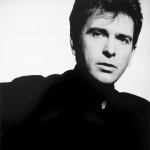
Our new customer Michel wrote to tell us how much he likes his Hot Stamper pressing of So.

Hi Tom,

Many of the BR titles I bought I had stopped listening to due to lack of engagement with the music. It just didn’t do it for me anymore. But then I’d buy one of your LPs… it would then destroy my other copies… and now I listen to that LP on a regular basis, enjoying music I love but had stopped listening to.

When I put on a BR record, I am engaged with the music… and of course I keep hearing new nuances, etc. with every play.

Why pay so much for an album?  Well if music floats your boat, then no explanation needed. Just bring your ears to my living room…then you’ll get it!

The real point for me is that I can keep enjoying these new listening experiences over and over again. It is an immeasurable joy really to hear beautiful music reveal itself in all its splendor.

How the f*** does yours sound so much better? Virtually as soon as the music began the difference was obvious.

I remember liking some aspects of the UK… and the same goes for the US… I liked the warmth and rolled back highs in comparison the UK, but it seemed muddy/veiled/mishmashy which was bothersome, so then I stopped listening.

The BR copy somehow has it all. It is by far the most listenable copy of this I’ve ever heard. It can be turned up all the way from start to finish without any worries about what you might hear.

Plenty of shrill-free highs, lots of killer bass… deep low tones with analog warmth, boomy wide room filling sound, etc, etc.  No muddiness in the presentation… clarity with warmth, nothing veiled.

Thank You!!
Michel

Michel,

You make a point that I have been banging on for years. Better sounding pressings are the only way to rediscover music that you’ve lost interest in because the copies you own didn’t have the sound you needed.

If your old copies of So had sounded better, you would have played them, but they didn’t, and so they sat on the shelf.

Knowing the sound was off, you simply stopped playing them. You lost track of So.

Hot Stamper pressings get played. They have the life of the music in their grooves and demand to be heard!

We say music does the driving in this hobby, but that’s not really the whole story for us audiophiles, is it?

Music with good sound is what really does the driving.

Joy to Your World

When you get hold of the pressing that presents the music the way you want to hear it, that’s the record that gets played beause that’s the record that brings joy to the listener.

The other pressings of So sit on the shelf, reminders that badly-mastered, badly-pressed records are the norm, not the exception.

The exceptional pressing is the one that can bring the music you love back from the purgatory of the overcrowded record shelf.

Think of the audiophiles that have thousands and thousands of records on their shelves and never find time to play them. Why is that?

Maybe it’s because there is nothing special about those pressings. Some collectors are so proud of having so many records — look at them all! — but what good are they? To our way of thinking, the man with ten or twenty exceptionally good records is far better off than than the one with a thousand or five thousand mediocrities.

If you want a powerful, immersive, thrilling musical experience, you will need a record that is powerful, immersive, and thrilling.

The thousands of records sitting on your shelf, the ones you haven’t played in years, are the silent reminders that they aren’t nearly as good as you think they are. If they were better, they would call out to you from that graveyard you call a record collection and fight their way back to your turntable.

So Is Back

Now, after all these years, you finally have a pressing of So that demands to be played.

If others of you out there haven’t played your copy of So in a long time, maybe there’s a reason for that.

Thanks for your letter.

Best, TP

(more…)