s

Applying skeptical thinking to the search for better sounding records.

Symphonie Fantastique – Three Mastering Options

Hot Stamper Pressings of the Music of Berlioz Available Now

UPDATE 2026

Years ago we played a reissue of the title you see pictured which prompted us to make some observations and ask some questions about the approach the mastering engineer might have taken.


And this one comes complete with the bonus 7″ entitled “Berlioz Takes a Trip,” in which Bernstein explores the work “with musical illustrations by the New York Philharmonic.”

Clocking in at around 45 minutes, Symphonie Fantastique is a difficult work to fit onto a single LP,  which means that the mastering engineer has three options when cutting the record:

  1. Compress the dynamics,
  2. Lower the level, or
  3. Filter the deep bass.

On this side two it seems that none of those approaches were taken by the engineer who cut this record in the early 80s — there’s plenty of bass, as well as powerful dynamics, and the levels seem fine.

How he do it? Who knows? Like so much in the world of records, it’s a mystery.

What’s Your Theory Then?

Side one, however, is bass shy. Did the engineer filter out the lower frequencies, or is it just a case of pressing variation being the culprit. Who can say?

If we had many more copies with these same stampers for side one, all with less bass, we might be able to draw a conclusion about that, one that might be highly probable but of course not dispositive, black swans being a regular part of our experience.

The very next copy we might find with those stampers could have plenty of bass.

Then we would be forced to say that our highly probable theory had been falsified conclusively.

(more…)

Hot Stampers Simply Do Not Exist for Some Audiophiles

Please Consider Taking Some of Our Hard-won Audio Advice

It is an unfortunate fact that, at least for some audiophiles, Hot Stampers simply do not exist.

They may be lovers of sound, the dictionary definition of an audiophile, but their systems are not revealing and accurate enough to allow them to hear how good a properly-mastered, properly-pressed, properly-cleaned vintage (or maybe not so vintage) pressing can sound relative to whatever other version of the music they may have — Heavy Vinyl, cassette, CD, etc.

They simply do not possess a system (power, equipment, room, tweaks) of the quality required to play them at their best. 

Others won’t have developed the rudimentary listening skills needed to recognize the superior sound of a Hot Stamper pressing when it’s playing on their turntable.

Speculation? Opinion? Not really. Not when the evidence is this overwhelming. Let’s look at some of the facts.

A great many analog-oriented audiophiles are quite happy with the sound of Heavy Vinyl LPs, the kind that we regularly trash around here.

Those pressings set a decidedly low standard for sound quality, to our ears anyway, so if the typical audiophile is happy with them, what does that tell you about the quality of his audio chain and the nature of his critical listening skills?

It may be hard to wrap your head around this unfortunate and depressing fact, but many of the audiophile records being made today are even worse sounding than the audiophile pressings that were made back in the bad old days of the 70s, 80s and 90s. (Maybe the bad old days, like the poor, will always be with us.)

Boat Rocking

Our Hot Stampers will of course sound quite a bit better on even a run-of-the-mill audiophile system than practically any Heavy Vinyl pressing you care to name. But if you’re happy with a $30 reissue, what’s your incentive to spend five or ten or twenty times that amount based on nothing more than our say-so?

Even with a 100% Money Back Guarantee, why rock your own boat?

On the site we take great pains to make it clear that there are many ways that an audiophile — even a novice — can prove to himself that what we say about pressing variations is true, using records he already owns.

You don’t have to spend a dime to discover the reality underlying the concept of Hot Stampers.

We not only tell you how to go about finding them, we also help you to do a better job of playing them.

Have You Noticed?

But perhaps you may have noticed, as we have, that most audio skeptics rarely go out of their way to prove themselves wrong.

And a little something psychologists and cognitive scientists call confirmation bias practically guarantees that they won’t hear something they don’t want to hear.

Which is fine. At Better Records we don’t let that slow us down. Instead, we happily go about our business turning skeptics into believers (one record at a time of course), taking a few moments out to debunk the hell out of practically any audiophile LP we run into, for sport if for no other reason.

(more…)

Acoustic Sounds Was Selling This Ridiculously Bad “TAS List” Record Back in the Day

Hot Stamper Pressings of the Music of Cat Stevens Available Now

This commentary was written circa 2001. 

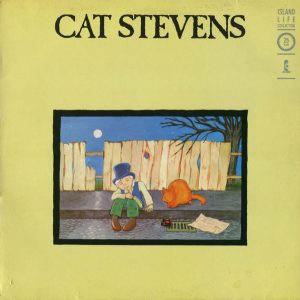
I remember 15 years ago when Acoustic Sounds was selling the then in-print 25th Anniversary Island pressing (with 7U stampers as I recall) for $15, claiming that it was a TAS List record. If you’ve ever heard the pressing, you know it has no business going anywhere near a Super Disc List. It’s mediocre at best and has virtually none of the magic of the good originals.

NEWSFLASH: Just looked it up on Discogs, a site that did not exist when I wrote this commentary. My memory is apparently better than I thought it was. The 25th Anniversary Island Life Collection pressing came out in 1986.

    • Matrix / Runout (Runout side A, variant 1): ILPM 9154 A-1 ILPM•9154•A1
    • Matrix / Runout (Runout side B, variant 1): ILPM 9154 B-7U-1-1-3
    • Matrix / Runout (Runout side A, variant 2): ILPM 9154 A-8U-1- G10
    • Matrix / Runout (Runout side B, variant 2): ILPM 9154 B-7U-1-

By the way, I am not aware of any of these pressings from the 80s being especially good sounding. I remember playing some of them but I don’t remember liking any of them. They were cheap reissues that satisfied those looking for import vinyl, not audiophile quality sound.

I refused to sell it back in those days, for no other reason than the fact that it’s far from a Better Sounding Record. I don’t like misrepresenting records and I don’t like ripping off my customers. It’s bad for business.

That pressing was a fraud and I was having none of it.

Chad probably didn’t even know the difference.

When you don’t know much about records, you can say all sorts of things and not get called out for them. Audiophiles are a credulous bunch and always have been. They still believe the same nonsense that I foolishly fell for back in the 80s. (And I admit that even as late as 2006 I was still a fan of certain Heavy Vinyl pressings.)

(more…)

Cognitive Dissonance Defined

More Basic Concepts and Realities Explained 

Wikipedia’s entry for cognitive dissonance:

Cognitive dissonance is a psychological term describing the uncomfortable tension that may result from having two conflicting thoughts (cognition) at the same time or engaging in behavior that conflicts with one’s beliefs. In simple terms, it can be the filtering of information that conflicts with what one already believes, in an effort to ignore that information and reinforce one’s beliefs. In detailed terms, it is the perception of incompatibility between two cognitions, where “cognition” is defined as any element of knowledge, including attitude, emotion, belief, or behavior.

The theory of cognitive dissonance states that contradicting cognitions serve as a driving force that compels the mind to acquire or invent new thoughts or beliefs, or to modify existing beliefs, so as to reduce the amount of dissonance (conflict) between cognitions. Experiments have attempted to quantify this hypothetical drive. Some of these have examined how beliefs often change to match behavior when beliefs and behavior are in conflict.

In popular usage, it can be associated with the tendency for people to resist information that they don’t want to think about, because if they did it would create cognitive dissonance, and perhaps require them to act in ways that depart from their comfortable habits. They usually have at least partial awareness of the information, without having moved to full acceptance of it, and are thus in a state of denial about it.

This guy was comfortable with his penchant for Mobile Fidelity pressings, a sad story if ever I’ve heard one, but one we can all learn from. (And I have to admit I was every bit as clueless myself back in the my nascent audiophile days.)

Empiricism

Some approaches to this audio hobby tend to produce better results than others. When your thinking about audio and records does not comport with reality, you are much less likely to achieve the improvements you seek.

Without a good stereo, it is hard to find better records. Without better records, it is hard to improve your stereo.

You need both, and thinking about them the right way, using the results of carefully run experiments — not feelings, opinions, theories, received wisdom or dogma — is surely the best way to acquire better sound.

An empirically-based approach to audio will surely result in notable improvements to the quality of your playback.

This will in turn make the job of recognizing high quality pressings — the ones you find for yourself, or the ones we find for you — much, much easier.

(more…)

Are You an Audiophile Soldier or an Audiophile Scout?

More Entries from Tom’s Audiophile Notebook

The guy you see pictured to the left has spent much of the last forty years wandering around used record stores looking for better records. Before that he wandered around stores selling new records because he didn’t know how much better used records could be.

Here are some of the things he’s learned since he started collecting at the age of ten a mere sixty years ago. (First purchase: She Loves You on 45, still in the collection, although it cracked long ago and is no longer playable.) 

Click on the picture to make it easier to read.

As you may have read on the site elsewhere, the three most important words in the world of audio are compared to what?

No matter how good a particular copy of a record may sound to you, when you clean and play enough of them you will almost always find one that’s better, and often surprisingly better.

You must keep testing all the reissues you can find, and you must keep testing all the originals you can find.

Shootouts are the only way to find these kinds of very special records. That’s why you must do them.

Nothing else works. If you’re not doing shootouts (or buying the winners of shootouts from us), you simply don’t have top quality copies in your collection, except in the rare instances in which you just got lucky.

In the world of records luck can only take you so far. The rest of the journey requires effort.

(more…)

Should We Follow George Martin’s Expert Advice?

Hot Stamper Pressings of the Music of The Beatles Available Now

Scroll down to the bottom and click on the lighter text for “2 Comments” to read someone’s defense of the mono mixes, followed by our reply.


One of our good customers had this to say about the new Revolver pressing and The Beatles in mono:

Hey Tom,

I think the Revolver new thing doesn’t sound terrible. It’s just what you’re comparing it with. Most people are going off original pressings maybe and the acclaimed mono and stereo box stuff that came out in the last 10 years. IF you don’t try one of those Harry Moss records or a 1970s pressing, you probably think the new Revolver is fine or even good. That’s my theory. Who knows.

And as far as mono vs. stereo… you know the answer to this but I’m not sure. Were those earliest records meant to be mono or recorded as if they would be put out as mono and later records – maybe Rubber Soul on – meant to be stereo? I don’t know the answer to that. But maybe that’s why people are so loyal to mono. They feel like “this is how it was meant to be heard by the artist.”

George Martin was very clear about that, the first two albums for sure and really, the first four are, for him, better heard in mono than stereo.

Dear Sir,

I disagree. I think George heard the playback on studio monitors stuck on a wall five feet from his head.

Who cares what that sounds like?

Nobody who isn’t mixing a record would ever listen to music that way, certainly not in this day and age.

More importantly, who are you going to believe, your lying ears or George Martin?

This is fundamental to understanding everything to do with audio and records.

Richard Feynman summed it up beautifully:

Science is the belief in the ignorance of experts.

Watch the Let It Be documentary produced by Peter Jackson, especially the last part where they play the album back for everyone who was involved in the making of it.

With four crappy monitor speakers lined up left to right and shoved up against a wall.

This is how they listened to the album in order to approve Glyn Johns’ mix and the takes he chose to use?

(more…)

I Knew This Guy Was Full of Sh*t, But I Had to Be Sure

Skeptical Thinking Is Critical to Achieving Better Sound

Recently a fellow named Jared tried to correct our assertion that Rod Stewart’s early albums from the US are made from dubbed tapes, as is our contention.

Here is his letter:

Hey there. Just wanted to point out some errors on your listing for Rod Stewart’s “An Old Raincoat…” LP. The UK pressings are the ones made from dupes.

The first generation masters for all of Rod’s Mercury albums are in the US. All vinyl vintage pressings, UK or US, are made from EQ dupes.

The original US Polygram CDs mastered by Dennis Drake are straight off the original masters.
Thanks!

Naturally this information took us by surprise. We replied:

Jared,

Can you refer me to the source of your information?

Thanks,

TP

There was no answer to my query. Nor was I able to find any source for this information.
I hadn’t played a domestic copy of The Rod Stewart album, the title Old Raincoat was released under in the states, in at least twenty years, probably more like thirty. It had sure sounded dubby to me back then. I stopped buying them a long time ago.

Was I remembering the sound right? The odds were very high that I was, but I had to know for sure, even though I had no idea who Jared was or where his information came from.

I asked my main man Fred to get one in and give it a listen. Here is his report:

We played The Rod Stewart Album (domestic Old Raincoat) we got in and it sounds absolutely terrible. Super spitty and bright.

Are they all this bad? Who can say?

Could my UK pressing be made from copy tapes?

I suppose it’s possible. It doesn’t sound dubby to me, but it is not an especially good sounding record, unlike Rod’s third album, which is about as good sounding a rock record as is possible to make. (In the case of Every Picture, it’s the imports that are made from dubs. Go figure.)

Maybe Dennis Drake actually did get hold of the real master tapes when making his CD. He is a very talented engineer; I have many compact discs mastered by him and I don’t know of any that aren’t at least good sounding. For those of you who play CDs, you are free to give his version of An Old Raincost a try. Please let me know what you hear.

What’s that Smell?

But the reason Jared letter is being published is that it reeks of information that has not been verified by anyone’s ears. Certainly not Jared’s.

If, like Jared, you read something that sounds plausible, that you think might be true, why would you be so willing to believe it without any real evidence to back it up?

Even worse, the comments Jared makes weren’t even prefaced with “I’ve read that…” or “People seem to agree that…” No, Jared leaves no room for doubt. The information is presented as true.

Can anyone who has played both versions of Old Raincoat not hear how much better the UK pressing is?

We couldn’t. Nothing could have been more obvious to us than that one version is made from good tapes and one version is made from bad tapes.

(more…)

Arrogant and Elitist Skeptics – They’re the Worst!

Our Thoughts on Tubes in Audio

Below you will find a link to a reasonably fair and balanced look at the battle between transistors and tubes from Brian Dunning’s skeptoid website, worthwhile reading for those of us who favor a skeptical approach to life (and especially this hobby).

Thirty plus years ago, when I started my little record business, I knew that most records marketed to audiophiles offered junk sound (half-speed masters, Japanese pressings) or junk music (direct to discs by artists nobody ever heard of).

As our playback has improved, fewer and fewer of these “specialty” pressings have survived the test of time, a subject we write about endlessly on our site and here on this blog.

For the longest time our motto has been “Records for Audiophiles, Not Audiophile Records,” and we see no reason to change it.  If anything, the modern manufacturers of Heavy Vinyl pressings are making records that get worse sounding by the day. Many of the most egregious offenders can be found here.

More commentaries about Heavy Vinyl can be found here. We are not fans of the stuff, not because it’s our competition, but because it just doesn’t sound very good.

Here is the article.

I confess I sped through it quickly, barely skimming it, because I have heard plenty on the subject of  tubes versus transistors, most of it, in my opinion, misguided if I’m being honest.

This is my fifth decade in audio and I know where I stand on the subject. I offer it to those who might be interested in a less conventional view.

(more…)

Speakers Corner Ruins a Classic Mercury, Part One

More of the Music of Sergei Rachmaninoff (1873-1943)

This commentary was written in 2004.

We carried Heavy Vinyl back then, and for that, knowing what I know now, I can only apologize.

Back then, I thought I knew a great deal more about records and  how to reproduce them than I actually did.  Yes, I have to admit it: I suffered from the Dunning-Kruger effect.

On the bright side, there is one very powerful benefit that I gained from being so mistaken. Having failed to recognize my own shortcomings, the signs that someone thinks they know more than they do are easy for me to spot. Here is one of my favorite examples. I link to it a lot.

If you want to see the effect played out in the cyber world, go to any audiophile forum and start reading any thread about records you find there. The D-K effect is hard to miss. Some of the experts on these forums have even convinced themselves that they know things that cannot be known, which is always a sure sign they know a great deal less than they think they do.  

Our Old Commentary

Some thoughts on the new 180 gram Mercury reissues by Speakers Corner and a bunch of other record related stuff.

The Absolute Sound weighed in with their view of the series:

Speakers Corner has given these recordings the respect they deserve. The packaging is gorgeous: a black album titled “The Living Presence of 20th Century Music” and displaying the Mercury logo holds the three records with their original covers and liner notes. In addition, there are informative annotations on the music and Dorati, and a history of Mercury Living Presence…They sound at least as good and in some ways better than the originals…There are no negatives and not enough superlatives to describe these magnificent reissues. It’s rare that performance, sound, and musical value combine at this level in a recording.

Arthur B. Lintgen, The Absolute Sound, February/March 2004

Let me start by saying that I have not listened to a single one of the new Mercury titles.

Now that that’s out of the way, let me state for the record that the chances of the above statements being true are so close to zero that they cannot be calculated by anything but the latest Cray computer.

Has Speakers Corner produced a single classical record that’s better than a well-mastered, properly-pressed vintage pressing? One or two. Maybe. [These days we would say zero is the right number.]  So what are the chances they did so with these? Almost none I would say.

The above review reminds me of the nonsense I read in TAS and elsewhere in the mid-’90s regarding the supposed superiority of the Classic Living Stereo reissues. After playing their first three titles: 1806, 1817 and 2222, I could find no resemblance between the reviews I read and the actual sound of the records I heard.

The sound was, in a word, awful. To this day I consider them to be the Single Worst Reissue Series in the History of the World. [Presently there are too many contenders for that title to hold that view anymore.]

(more…)

On Heroes, It Took Us Ages to Break the Sound Barrier

More of the Music of David Bowie

Because the conventional wisdom turned out to be so wrong.

Our intuition that the British originals would sound the best was incorrect.

The experiments we carried out falsified that prediction.

In the audiophile record collecting world, intuitions have a bad track record, but more than a few audiophiles — many of whom are addicted to sharing their “record knowledge” on audiophile forums — seem unaware of this reality.

Taking a page from one of the greatest minds of the 20th century, we’ve opted to use a more scientific approach to discovering the best sounding record pressings, and we encourage you to do likewise. 

We pioneered the evidence-based approach to finding the best sounding pressings, and, like all good scientists, we shared it with everyone. Some in the audiophile community have taken it to heart, but most have chosen to put their faith in reviewers, forum posters, common sense and logic.

None of these produce consistently good results, but those who use these methods are loathe to doubt them and only rarely if ever learn the error of their ways.

Once a decision has been made and a specific pressing acquired — you could call it door number three I suppose — cognitive dissonance and confirmation bias immediately kick in to justify the result, and soon enough the game is over. The prize has been won. It’s the best prize ever. It does everything right, everything you’d hoped for.

But the best sounding copy of the record was not behind door number three.

You don’t have the best sounding pressing (well, you might, but if you did it would be entirely the result of chance, since you have no experimental evidence), but as long as you think you do, and, like most audiophiles, you play records only for yourself, and purely for enjoyment, you have no way of  discovering where on the spectrum of best to worst your record sits.

As long as you think you have the best, you have the best. How could there ever be any evidence offered to the contrary?

(more…)