*Audio Advice

Mostly unsolicited.

Some Stereo Systems Make It Difficult to Find Better Sounding Pressings

Hot Stamper Pressings on Decca & London Available Now

Many London and Decca pressings lack weight down low, resulting in an overall thinning of the sound and lower strings that get washed out.

On some sides of some copies of some titles the strings are dry, lacking Tubey Magic. This is decidedly not our sound, although it can easily be heard on many London pressings, the kind we’ve played by the hundreds over the years.

If you have a rich sounding cartridge, perhaps with that little dip in the upper midrange that so many moving coils have these days, you will not notice this tonality issue nearly as much as we do.

Our 17Dx is ruler flat and quite unforgiving in this regard. It makes our shootouts much easier, but brings out the flaws in all but the best pressings, exactly the job we require it to do.

Here are some other records that are good for testing string tone and texture.

If you have vintage tube equipment, or modern equipment that is trying to mimic the sound of vintage tubes, you never have to worry that the strings on your London orchestral recordings will sound too dry.

You haven’t solved the problem, obviously.  You’ve just made it much more difficult — impossible even — to hear what is really on your records.

Some audiophiles have gone down this road and may not even realize what road they are on, or where it leads. Assuming you want to make progress in this hobby, it is, from our point of view, a dead end.

If you want to find Better Records, you need equipment that can distinguish good records from bad ones.

Vintage tube equipment is good for many things, but helping you find the best sounding records is not one of them.

A rack full of equipment such as the one shown here — I suspect it is full of transistors but it really doesn’t matter whether it is or not — is very good at eliminating the subtleties and nuances that distinguish the best records from the much more common second- and third-rate pressings that often look identical to them.

If you have this kind of audio firepower, Heavy Vinyl pressings and Half-Speed mastered LPs don’t sound nearly as irritating as they do to those of us without the kind of filtering you get from the electronic overkill you see.

In my experience, this much hardware can’t help but create a barrier between you and the music you love.

It may be new and expensive, but the result is the kind of old school stereo sound I have been hearing all my life (and was perfectly happy with myself before the early 2000s.)

(more…)

Letter of the Week – “The Triplanar is bringing out more of the life and energy in the music than any other change I’ve made.”

Check Out Our New Audio Advice Section

When our customers ask for audio advice, we never hesitate to give it to them. (We also give out plenty of advice that nobody asked for.)

We want to help our customers pursue the kind of equipment that we know through decades of experience is probably superior to most of what is available in audiophile salons, regardless of price.

(In 1976, at the tender age of 22, I heard something at an audio salon that rocked my world: tube equipment. Everything changed that year.)

Robert Brook has taken our advice and ended up with much of the same equipment we currently use. He seems very happy with the analog sound he is getting these days, especially from his Triplanar tonearm.

And now Aaron B. has made a great leap forward into better sound. He wrote to tell me all about the differences he is hearing now that he has a system that is designed to reveal what’s actually on his records. His previous system was better at hiding the imperfections and shortcomings of many of the albums he was playing, but he’s decided he doesn’t want to go down that road anymore, and we couldn’t be happier for him. His letter:

I’m feeling another huge dose of gratitude for you, Tom.

I installed the Tri-Planar arm on Friday, and I could tell right away that things are sounding just wonderfully better.

My whole setup is getting really close to your full recommendation. Dynavector 17dx mounted in a Tri-Planar tonearm, mounted on a VPI Aries 1 table, going into an EAR 324, out to a [redacted] amp, driving Legacy speakers.

I managed to buy everything except the cartridge used and in good shape. The total cost for my current system is a hair above $10K, and it is sounding nearly as good as I’ve ever heard vinyl sound, or any recorded music for that matter.

The Triplanar tonearm is a game-changer. This is the most dramatic improvement since I first replaced my B&W bookshelf speakers with the Legacys. I’m frankly stunned by what a difference it makes.

The difference the tonearm makes is evident in nearly every aspect of the sound.

First, the problems I was having previously have cleared up. This includes vocal sibilance, occasional graininess to the sound, and what I mistook for groove wear, even on some hot stampers that otherwise sounded great.

Some that I returned to you, I now wish I could have back.
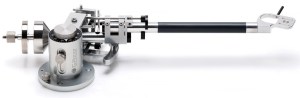
Beyond fixing the last of my playback problems, the Triplanar is bringing out more of the life and energy in the music than any other change I’ve made since you started advising me.

The attack on instruments is arresting. I’ve come to believe that the aspect of live music that’s hardest for any recording to capture is the attack. That’s where the energy of live music is to be found.

I am hearing more details and overtones to the music that I ordinarily needed to turn up the volume to hear. Also, there’s greater depth to the soundstage, even in my small room.

I’ve said this to you before, but it bears repeating. I love the records you sell. I’ve got 15 hot stampers now, and they are the crown jewels of my collection. But, it’s the education you’ve given me that’s truly transformed my music listening experience.

Today, for that, you have my deep gratitude.

Aaron

Aaron,

Thanks for taking the time to write and say all those nice things about our records and the equipment we have recommended you play them with. As you can clearly see now, it takes the right stereo to really bring our records to life. Glad to hear yours is working so well.

I have long held that the best way to do audio is to find a system in someone’s home that sounds amazing and just buy all the same stuff that person has and set it up the same way he did. If a stereo is sounding good, much of it has to be working right. Start there, then make your own improvements based on a proven model of success.

I did this to the extent it was possible back in the 80s, copying my friend George Louis’s system, comprising four 140 watt per channel transistor amps (four times the power I have now), an electronic crossover, two sets of adjustable electrostatic tweeter arrays (RTR for one and Janzen for the other), a large number of woofers in the main cabinet and a couple of dual 10″ subs thrown in for good measure.

(more…)

Soundstaging At All Costs – A Flawed Approach to Audio

More on the Subject of Vague Imaging

The first thing I noticed about this system is that the Hallographs are in the wrong place, or at least they are in the wrong place if you are only using one pair. The first pair should be to the outside and just behind the speakers.

What this system screams out to those of us who have heard a lot of stereos, in my case having spent about fifty years in high-end audio, is “Soundstage Freak.”

The speakers are too far apart to create a proper center image.

The sound will be exceptionally spacious this way, but it is also very likely to be washed out and vague.

If you listen exclusively to orchestral music, and you like to sit toward the back of the hall when you go to live performances, then yes, you can almost justify having the speakers this far apart.

For most other music this is not a good approach.

A good vocal recording is all you would need to demonstrate the serious shortcomings of placing your speakers this wide apart.

If this were your setup, But I Might Die Tonight could show you the error of your ways, the way it showed me some of mine (albeit different ones) when I had initially finished the speaker setup at our new studio.

I worked on my speaker placement and room treatments for weeks and months after that, but I knew something was wrong well before that two minute song was over.

Stardust would also be a good choice. Most of Julie London‘s records would work. Some of the more intimate Ella records would be ideal of course, but we rarely have much stock. Blue would work, as would any early Joni Mitchell album.

The recordings of singer songwriters rarely place them anywhere but in the center of the stage, the best of them as prominently as possible. Many of our Hot Stamper pressings would make excellent test discs for getting this aspect of speaker placement dialed in better.

(more…)

Good Audio Advice and Critical Listening Skills

More on the Subject of Developing Critical Listening Skills

[This is an updated version of a commentary written many years ago.]

The latest Mapleshade catalog (Spring 09) has, along with hundreds of recommendations, this little piece of audio advice that caught my eye:

For much improved bass and huge soundstage, put your listening chair or sofa right against the wall behind you. Move your speakers in to 5’ in front of you and 7’ or more apart. No room treatments will yield this much bass improvement.

I literally had to read through it a couple of times to be sure I wasn’t hallucinating. But every time I read it, it still said the same thing, so I know I can’t have been dreaming. This is crazy talk. What the hell is wrong with these people?

Well, it’s not all crazy. There is actually a factually true statement at the end of that paragraph. Yes, it is true that no room treatments will yield as much bass as sitting up against a wall. But why stop there? Bass, regardless of its source, immediately seeks out the corners of the room. That’s where the most bass will always be: where the room boundaries are. If you want to hear the maximum amount of bass your speakers are producing, put your head in the corner of the room down at the floor, where three boundaries intersect. Like the sound now? Getting enough bass are ya?

Along the same lines, for a “huge soundstage” try putting one speaker at one end of the room and the other speaker at the opposite end. Why stop at seven feet? My listening room is twenty feet deep; I can get a soundstage that’s twenty feet across without any problem at all.

I would just have to be dumb enough to think that doing such a thing would be a good idea.

Fellow audiophiles and music lovers, it is not. Let’s talk about why.

Room Reflections

The closer you are to anything that the sound coming from your speakers can bounce off of, right before or right after it reaches your ears, the worse the sound. You want to be as far away from everything as you can be, and this includes not only the back wall of your listening room, but the heads of other persons who may be listening with you. This is easily demonstrated. Have a friend or loved one sit next to you and listen critically to some music you know well. Now have that person leave the room. The sound will always get better (unless something else is very wrong). I have done this experiment many, many times and it only comes out one way: fewer near reflections, better sound.

This is why we have three pair of Hallographs in our listening room. They help control room reflections. Reflections are the main cause of bad sound in most listening rooms. The louder you play your stereo, the worse the reflections get and the more they screw up the sound.

We like to play our stereo very loud — much of the music we like demands it — and we simply could not turn up the volume the way we do without effective room treatments. Your first pair of Hallographs, even just “roughed in,” not at all tuned precisely the way they can be, will immediately allow you to play your stereo louder than you could before you installed them. (Since the first pair reflect the sound waves directly back to the listener, Hallographs do actually increase the sound level at the listening position, adding energy and dynamics.)

This is a good thing. It’s a clear sign they work.

One obvious reason that our turn up your volume makes for such a great test is that the louder the problem, the harder it is to ignore.

(more…)

Robert Brook Discusses His Evolving Understanding of Bass

More from Robert Brook

Robert Brook has a blog which he calls

A GUIDE FOR THE DEDICATED ANALOG AUDIOPHILE

Below you will find a link to Robert’s story about the famous Charlie Mingus record you see pictured.

He had a number of different pressings, each of which showed him some qualities that the others lacked. Ultimately you have to pick one to play, and he did.

“GETTING” BASS with Charles Mingus’ BLUES & ROOTS

Robert went from a $20,000 speaker with one eight inch woofer to the Legacy III’s, a speaker costing less than half as much, with three ten inch woofers, to the Legacy Focus, a speaker quite a bit less than $20k, with three twelve inch woofers.

Robert learned something about his Parsifals by playing a speaker that could do so much more down low:

But I’ve learned since that, for all their strengths, the Parsifal had at least one fatal flaw – they made just about every record sound good.

Adding:

Making every record sound good is, it turns out, not a good quality to have in a speaker, nor in any other piece of equipment you use. At least it’s not if you want the best possible sound from your analog system.

(more…)

Better Electricity Took Robert Brook’s Stereo to the Next Level

Robert Brook has a blog which he calls

A GUIDE FOR THE DEDICATED ANALOG AUDIOPHILE

Below you will find a link to Robert’s story about the improvements he heard in his stereo by doing some experiments we had recommended he do, experiments which, for reasons unknown to the wider audiophile community and generally dismissed by same, managed to take his system to places he never expected it could go.

All at the cost of exactly zero dollars. It’s quite a ride, check it out:

BETTER ELECTRICITY: Small Changes Yield Some VERY BIG RESULTS!

We have written a fair amount about the benefits of feeding the system better juice ourselves:

The value of experimenting with electricity is part and parcel of tweaking and tuning your system to reveal the many levels of improved sound locked within it. As we noted in our discussion of the Pareto effect:

(more…)

Two Minutes that Shook My World – “But I Might Die Tonight”

After building our new studio a few years ago, we soon found out we had a whole host of problems.

We needed to work on electrical issues. We needed to work on our room treatments. We needed to work on speaker placement.

We initially thought the room was doing everything right, because our Go To setup disc, Bob and Ray, sounded super spacious and clear, bigger and more lively than we’d ever heard it. That’s what a 12 foot high ceiling can do for a large group of musicians playing live in a huge studio, in 1959, on an All Tube Chain Living Stereo recording. The sound just soared.

But Cat Stevens wasn’t sounding right, and if Cat Stevens isn’t sounding right, we knew we had a huge problem.

Some stereos play some kinds of records well and others not so well. Our stereo has to play every kind of record well because we sell every kind of record there is. You name the kind of music, we probably sell it.

And if we offer it for sale, we had to have played it and liked the sound, because no record makes it to our site without being auditioned and found to have excellent sound.

But I Might Die Tonight

The one song we played over and over again, easily a hundred times or more, was But I Might Die Tonight, the leadoff track for side two. It’s short, less than two minutes long, but a lot happens in those two minutes. More importantly, getting everything that happens in those two minutes to sound not just right, but as good as you have ever heard it, turned out to be a tall order indeed.

I could write for days about what to listen for in the song, but for now let me just point the reader to one of the most difficult parts to reproduce.

At about 50 seconds into the track, Cat repeats the first verse:

I don’t want to work away
Doing just what they all say
Work hard boy and you’ll find
One day you’ll have a job like mine, job like mine, a job like mine

Only this time he now has a multi-tracked harmony vocal singing along with him, his own of course, and he himself is also singing the lead part louder and more passionately. Getting the regular vocal, call it the “lower part,” to be in balance with the multi-tracked backing vocal, call it the “higher part,” turned out to be the key to getting the bottom, middle and top of the midrange right.

When doing this kind of critical listening we play our records very loud. Live Performance level loud. As loud as Cat could sing, that’s how loud it should be when he is singing his loudest toward the end of the song for the final “But I might die tonight!” If he is going to sing loudly, I want my stereo to be able to reproduce him singing as loud as he is actually singing on the record.

No compression.

No distortion.

All the energy.

Yes, that’s the way I want to hear it!

The last fifteen seconds or so of the song has the pianist (Cat himself) banging out some heavy chords on the piano. If you have your levels right it should sound like there is a real piano at the back of the room and that someone is really banging on it, a powerful coda perfectly fitting for such an emotionally stirring song.

(more…)

Turntable Set Up Guide Part 1: Why You Need to Do It Yourself

More from Robert Brook

One of our good customers has a blog which he calls

A GUIDE FOR THE DEDICATED ANALOG AUDIOPHILE

Below you will find a link to an article about turntable setup in which I am quoted on the subject. I would have loved to write something along these lines myself, but just never found the time to do so.

Robert Brook took the job upon himself and has explained it well, so if you would like to learn more about turntable setup, I encourage you to visit his blog and read more about it.

Turntable Setup Guide Part 1: You NEED to DO IT Yourself!


Further Reading

(more…)

The VPI Super Platter and Testing Advice

Revolutions in Audio, Anyone?

This review was written in 2005, perhaps before. To see what comprises our current system, click here.


We love the new VPI Super Platter. It’s a big step up over the acrylic platter, which makes records sound more like CDs, kind of thin, vague, edgy. The original TNT type Aries platter is a very similar design to the Super Platter, and so when I got my super platter it was obviously better after the first five seconds of play but not dramatically better. On a customer’s TNT with the acrylic platter it was huge.

The bigger and more powerful the stereo, the bigger will be the difference, because it has to do with weight and heft and solidness and those sorts of sonic qualities, the kind that too many modern audiophiles ignore. (The CD guys don’t even know what those things are because CDs so rarely have those qualities, certainly never in abundance the way good records do.)

It has been our experience that VPI upgrades tend to be actual sonic improvements over the earlier versions of their equipment, unlike so much of what passes for “better” audio in the land of Hi-Fi, which is often just different and in many cases actually worse. [I cannot back up that claim now, as we have been out of the turntable-auditioning business for more than a decade. I simply have no idea whether VPI’s products are any good these days. Caveat emptor, as always.]

These are the kind of upgrades we love to do, and the reason is no doubt obvious to all you audiophiles out there. Pop the new platter on and thirty seconds later you can hear the difference. Not sure about the change? Don’t like it? Thirty seconds later you can have your old platter spinning to see exactly what happened to the sound.

It’s the kind of testing we do here all day long with Hot Stamper and other pressings. [1] Take ten copies of any title and play them, making notes as to their strengths and weaknesses. Assign each one an overall sonic grade. Think numbers 2 and 7 are the best of the bunch on side one, but not quite sure which of the two is better? No problem. Take one of them, throw it back on the table, listen for a minute, then pop on the other. That kind of head-to-head shootout is the easiest, most reliable way to find out which record really has the Hot Stamper Magic and which one only appears to.

(more…)

Big Speakers and Loud Levels Bring Out the Power of the Orchestra

Hot Stamper LPs that Sound Their Best on Big Speakers at Loud Levels

The darker brass instruments like tubas, trombones and french horns are superb here. Other Golden Age recordings of the work, as enjoyable as they may be in other respects, do not fully reproduce the weighty quality of the brass, probably due to limiting, poor eq, poor miking, or some combination of the three.

The brass on this record has a power like practically no other.

It’s also tonally correct. It’s not aggressive. It’s not irritating. It’s just immediate and powerful the way the real thing is when you hear it live. That’s what really caught my ear when I first played the recording.

There is a blast of brass at the end of Catacombs that is so big and real, it makes you forget you’re listening to a recording. You hear every brass instrument, full size, full weight. I still remember the night I was playing the album, good and loud of course, when that part of the work played through. The power of it was truly startling.

Back then I had the Legacy Whisper speaker system, the one with eight 15″ woofers. They moved air like nobody’s business. If you want to reproduce the power of the trombone, the loudest instrument in the orchestra, they’re the speaker that can do it.

Some of Ansermet’s recordings with the Suisse Romande are absolutely the best I’ve ever heard. It was a magical combination of the right hall, the right engineers, the right orchestra and the right technology — the pure tube ANALOG technology of the 50s and 60s!

Dynamics

Another thing this recording has going for it is dynamic power. This is a dynamic piece of music. Few recordings I have ever heard have the dynamic contrasts that this one does. It really gets loud when it needs to. The best pressings sound completely uncompressed. Although I’m sure there has to be compression of one kind or another, the listener is rarely made aware of it.

Dynamics such as these are thrilling. They let the music come alive.

(more…)