audio-testing

Audio testing protocols.

How We Test Equipment Like the Townshend Seismic Platform

Basic Audio Advice — These Are the Fundamentals of Good Sound

A few years back I discovered something wonderful about the Seismic Sink I was using under my turntable to control vibration.

In our experience, vibration control is one of the most important revolutionary advancements in audio of the last twenty years or so.
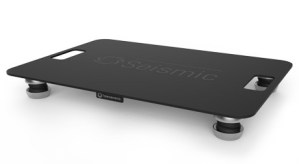
We sell the Seismic Sink and this is what I wrote to a customer who recently bought one:

Play your most complex test discs, the ones that are the hardest to get to sound right. Classical is the toughest test if you have some, but Pet Sounds is tough too. [I knew he was a fan and had a good copy of the album.]

Listen to one or two for a good while, at least 20-30 minutes, to know exactly what you are hearing on the tracks you know are the most difficult to get to sound right, the ones with the most problems.

Put the sink under the table. (You can also put it under your receiver, that works great too.)

Then play those tracks again.

Go back and forth a few times.

It should be pretty obvious what is going on.

Then read Robert Brook’s post.

Here is a very special tip.

The sound changes depending on how the seismic sink is “loaded.”

This means two things:

Where the weights are sitting on the sink.

    • For my integrated amp I have it all the way to the front of the sink. Sounds clearly better that way.
    • For the turntable, I have it weighted down with thin but heavy steel plates, about one quarter inch thick, about 4 inches by 8 inches. You can get them at Home Depot and similar places.

(more…)

The VPI Super Platter and Testing Advice

Revolutions in Audio, Anyone?

This review was written in 2005, perhaps before. To see what comprises our current system, click here.


We love the new VPI Super Platter. It’s a big step up over the acrylic platter, which makes records sound more like CDs, kind of thin, vague, edgy. The original TNT type Aries platter is a very similar design to the Super Platter, and so when I got my super platter it was obviously better after the first five seconds of play but not dramatically better. On a customer’s TNT with the acrylic platter it was huge.

The bigger and more powerful the stereo, the bigger will be the difference, because it has to do with weight and heft and solidness and those sorts of sonic qualities, the kind that too many modern audiophiles ignore. (The CD guys don’t even know what those things are because CDs so rarely have those qualities, certainly never in abundance the way good records do.)

It has been our experience that VPI upgrades tend to be actual sonic improvements over the earlier versions of their equipment, unlike so much of what passes for “better” audio in the land of Hi-Fi, which is often just different and in many cases actually worse. [I cannot back up that claim now, as we have been out of the turntable-auditioning business for more than a decade. I simply have no idea whether VPI’s products are any good these days. Caveat emptor, as always.]

These are the kind of upgrades we love to do, and the reason is no doubt obvious to all you audiophiles out there. Pop the new platter on and thirty seconds later you can hear the difference. Not sure about the change? Don’t like it? Thirty seconds later you can have your old platter spinning to see exactly what happened to the sound.

It’s the kind of testing we do here all day long with Hot Stamper and other pressings. [1] Take ten copies of any title and play them, making notes as to their strengths and weaknesses. Assign each one an overall sonic grade. Think numbers 2 and 7 are the best of the bunch on side one, but not quite sure which of the two is better? No problem. Take one of them, throw it back on the table, listen for a minute, then pop on the other. That kind of head-to-head shootout is the easiest, most reliable way to find out which record really has the Hot Stamper Magic and which one only appears to.

(more…)

A Loaded Seismic Sink and the Remarkable Benefits of Testing and Tuning

Robert Brook has a blog which he calls

A GUIDE FOR THE DEDICATED ANALOG AUDIOPHILE

Below is a link to the review he’s written for one of our favorite ways to improve the sound of any stereo, the Townshend Seismic Platter.

LOADING the TOWNSHEND SEISMIC PLATTER Brings Your SYSTEM TO LIFE!

A few years back I discovered something wonderful about the Seismic Sink I was using under my turntable to control vibration.

In our experience, vibration control is one of the most important revolutionary advancements in audio of the last twenty years or so.

This commentary should help to give your tweaking efforts more context.

(more…)