Month: October 2023

Thelma Houston – I’ve Got The Music In Me

More Thelma Houston

More Direct-to-Disc Recordings

houstivego

  • This Sheffield direct-to-disc pressing boasts outstanding sound from start to finish – fairly quiet vinyl too
  • Loads of presence, with richness and fullness that showed us just how good the Direct to Disc medium at its best can be. It had everything going for it from top to bottom, with big bass, dynamics, clarity, top end extension (so silky up there!) and ENERGY
  • Make no mistake, this here is a real Demo Disc. The sound extends from Wall to Wall!

This wonderful pressing fulfills the promise of the direct-to-disc recording approach in a way that few direct-to-disc pressings actually do.

To be honest, most copies of this title were quite good; only a few didn’t do most things at least well enough to earn a good grade. This has not been the case with many of the Sheffield pressings we’ve done shootouts for in the past. Often the weaker copies have little going for them. They don’t even sound like Direct Discs!

Some copies lack energy, some lack presence, and most suffer from some amount of smear on the transients. But wait a minute. This is a direct disc. How can it be compressed, or lack transients? Aren’t those tape recorder problems that are supposed to be eliminated by the direct-to-disc process?

“Supposed to be eliminated” is a long way from “were eliminated.” Even though the mastering is fixed at the live event, there are many other variables which affect the sound. The album is pressed in three different countries: the United States, Japan, and Germany. Many mothers were pulled from the plated acetates (the “fathers”) and many, many stampers made from those mothers.

Bottom line? You got to play ’em, just like any other record. If no two records sound the same, it follows that no two audiophile records sound the same, a fact that became abundantly clear very early on in the listening. Of course, not many audiophiles are in a position to shootout eight or ten copies of I’ve Got The Music In Me, and I’m not sure most audiophiles would even want to. Here at Better Records we have a whole system set up to do exactly that, so we waited until we had a pile of them gathered together, cleaned them all up, and off to the races we went.


(more…)

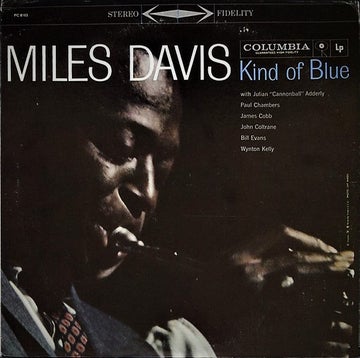
Is Kind of Blue a Good Test Record?

Hot Stamper Pressing of Miles’s Albums Available Now

One of our good customers had this to say about a Hot Stamper pressing of Kind of Blue he purchased recently:

Hey Tom, 

Listening to Kind Of Blue. Who needs an equipment upgrade with records like these?

Our reply at the time:

So true!

But on further reflection, it became clear to me that there is more to this idea than one might think upon first hearing it.

When records sound as good as Kind of Blue on vintage vinyl (not this piece of trash), it’s easy to think that everything in the system must be working properly, or, and more to the point I would like to discuss, reproducing the sound of the album at a high level.

If only more records were as well recorded as KOB, we could save ourselves a lot of time and money, time and money that we’re currently spending on tweaking, tuning and upgrading the various components of our systems. (Assuming you are in fact doing these things. I certainly hope you are. Achieving higher quality sound is one of the greatest joys to be had in all of audio.)

This is undoubtedly true, as far as it goes. But we must live in the world of records as we find it, not the one we want to exist.

Finding good sound for most of the records you wish to enjoy takes a great deal of effort, assuming you are setting your standards for sound at a fairly high level. Your standards don’t have to be as high as ours — we’re the guys who put their reputations on the line for extravagantly priced Hot Stampers, not you — but the records you are playing have to sound good enough to allow you to forget they are records in the first place. You want to be able to get immersed in the music without having to fight the sound to do it. You shouldn’t have to work at it. It should just happen. In our experience, that takes a good record.

With every improvement you make to your system, you eventually will find yourself banging your head up against the psychological effect of Hedonic Adaptation.* Once you have achieved better sound, it doesn’t take long before you get used to it, and now your much-improved “new normal” isn’t as thrilling as it was when you first experienced it.

(more…)

ZZ Top – Tejas

More ZZ Top

More Rock and Pop

  • Boasting two seriously good Double Plus (A++) sides, this vintage pressing was giving us the sound we were looking for on the band’s fifth studio album – fairly quiet vinyl too
  • This copy is full-bodied and natural, with a nicely extended top end, plenty of space around the instruments and vocals, and few of the problems that plagued many of the pressings we played
  • Turn it up to hear sound that is powerful and natural, with exciting presence, energy and weight down low
  • “On Tejas, ZZ Top countrified the bluesy posture of their previous albums, resulting in a slight detour between the madcap spirit of Fandango and the psychedelic strut of Deguello … ‘Arrested for Driving While Blind’ is one of ZZ’s classic anthems…”

(more…)

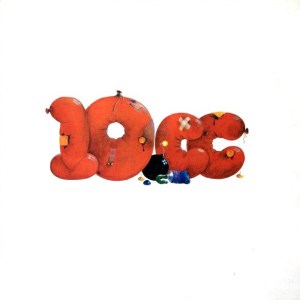
10cc – Self-Titled

More 10cc

More Debut Albums of Interest

  • An early UK Records pressing with seriously good (A++) grades throughout – exceptionally quiet vinyl too
  • We shot out a number of other imports and this one had the presence, bass, and dynamics that were missing from most other copies we played
  • The sound is big, lively, clear and present, and probably as close to what the band was going for as you can hope to experience
  • 4 stars: “Displaying a command of pop styles and satire, 10cc showed that they are a force to be reckoned with on their first album. Hooks abound, harmonies shine, and instrumentation is dazzling without being overdone. Whether doing loving parodies of the music they grew up with or satirizing contemporary issues, 10cc show themselves to be top-level purveyors of pop on their debut recording.”

One interesting finding from this, our most recent shootout, was that some of the domestic pressings could actually sound quite good, something we would not have expected to be true for this album (or Sheet Music for that matter).

Good, but clearly not as good as the better UK pressings.

(more…)

I Knew This Guy Was Full of Sh*t, But I Had to Be Sure

Skeptical Thinking Is Critical to Achieving Better Sound
Recently a fellow named Jared tried to correct our assertion that Rod Stewart’s early albums from the US are made from dubbed tapes, as is our contention.

Here is his letter:

Hey there. Just wanted to point out some errors on your listing for Rod Stewart’s “An Old Raincoat…” LP. The UK pressings are the ones made from dupes.

The first generation masters for all of Rod’s Mercury albums are in the US. All vinyl vintage pressings, UK or US, are made from EQ dupes.

The original US Polygram CDs mastered by Dennis Drake are straight off the original masters.
Thanks!

Naturally this information took us by surprise. We replied:

Jared,

Can you refer me to the source of your information?

Thanks,

TP

There was no answer to my query. Nor was I able to find any source for this information.

I hadn’t played a domestic copy of The Rod Stewart album, the title Old Raincoat was released under in the states, in at least twenty years, probably more like thirty. It had sure sounded dubby to me back then. I stopped buying them a long time ago.

Was I remembering the sound right? The odds were very high that I was, but I had to know for sure, even though I had no idea who Jared was or where his information came from.

I asked my main man Fred to get one in and give it a listen. Here is his report:

We played The Rod Stewart Album (domestic Old Raincoat) we got in and it sounds absolutely terrible. Super spitty and bright.

Are they all this bad? Who can say?

Could my UK pressing be made from copy tapes?

I suppose it’s possible. It doesn’t sound dubby to me, but it is not an especially good sounding record, unlike Rod’s third album, which is about as good sounding a rock record as is possible to make. (In the case of Every Picture, it’s the imports that are made from dubs. Go figure.)

Maybe Dennis Drake actually did get hold of the real master tapes when making his CD. He is a very talented engineer; I have many compact discs mastered by him and I don’t know of any that aren’t at least good sounding. For those of you who play CDs, you are free to give his version of An Old Raincost a try. Please let me know what you hear.

What’s that Smell?

But the reason Jared letter is being published is that it reeks of information that has not been verified by anyone’s ears. Certainly not Jared’s.

If, like Jared, you read something that sounds plausible, that you think might be true, why would you be so willing to believe it without any real evidence to back it up?

Even worse, the comments Jared makes weren’t even prefaced with “I’ve read that…” or “People seem to agree that…” No, Jared leaves no room for doubt. The information is presented as true.

Can anyone who has played both versions of Old Raincoat not hear how much better the UK pressing is?

We couldn’t. Nothing could have been more obvious to us than that one version is made from good tapes and one version is made from bad tapes.

(more…)

Letter of the Week – “Listenability is a great way to cut through the noise and put your record-buying money where it matters.”

Thoughts on Hot Stampers Versus Collector Pressings

We received this letter a while back:

Although I have a very collectable collection that I hope and expect will hold its value over the years to come, it is with joy, relief, and a sense of relaxation that I shift my record-buying focus now to listenability rather than collectability. As we cope with the ever-growing onslaught of new pressings and inflation in the prices we’re seeing on discogs, listenability is a great way to cut through the noise and put your record-buying money where it matters.

It is really hard to buy for listenability anywhere other than on Better Records. Maybe if you have a friend who wants to sell you some of his records, you could do it. But, if you’re buying on Discogs or ebay, you’re not buying for how things sound. Occasionally, you can hear listening descriptions as part of the seller’s grading, but those are not comparisons to other pressings of the same title. And, as much as I like to support my local record stores, when it comes to listening first as a basis for buying, you can basically forget about it.

I’ve been formulating these thoughts for a while, but not sure why I’d want to post them. I mean, who wants to drive more customers to this guy when I still want to buy his merchandise, and some titles already sell out within seconds of listing, before I can even make up my mind? But, here you have it. Merry Christmas, I guess. Add my voice to the choir – you can buy better records hot stampers with confidence.

Dear Ab_ba,

Thanks for writing about your experiences playing our Hot Stamper pressings against others in your collection.

We constantly encourage our customers to do their own shootouts. It is the only way to know exactly what the strengths and weaknesses of any pressing you may own might be.

Naturally, we enthusiastically welcome the challenge when someone wants to play our records head to head with whatever other pressings they may own.

Shootouts are the only way to answer the most important question in all of audio: “compared to what?

(more…)

Prokofiev / Piano Concerto No. 3 / Cliburn

More of the music of Sergei Prokofiev (1891-1953)

Reviews and Commentaries for the Music of Sergei Prokofiev

  • An early Shaded Dog pressing of these wonderful performances by pianist Van Cliburn and the Chicago Symphony Orchestra under the direction of Walter Hendl, here with INSANELY GOOD Shootout Winning Triple Plus (A+++) Living Stereo sound from first note to last
  • Both of these sides boast full brass and an especially clear, solid, present piano, one with practically no trace of vintage analog tube smear
  • Most of the Van Cliburn recordings for RCA that we’ve played over the years did not sound very good to us, which is why you haven’t seen one our site since 2005 (!)
  • Back in the days when the TAS Super Disc List meant something, this record was on it and deservedly so
  • To read the 60-odd reviews and commentaries we’ve written for piano concertos, please click here
  • The best sounding piano concerto records that we’ve auditioned to date can be found here

(more…)

The Pentangle / Pentangling

More British Folk Rock

  • Boasting INCREDIBLE Shootout Winning Triple Plus (A+++) sound on the second side and solid Double Plus (A++) sound on the first, this vintage UK import pressing had close to the BEST sound we have heard for Pentangle’s shockingly well-recorded music
  • The unprocessed quality found throughout the album has its audiophile credentials fully in order, especially in the area of guitar harmonics, as well as drums that sound like real drums actually sound
  • The true foundation of the music is provided by two legendary guitar heavyweights, Bert Jansch and John Renbourn, with Jacqui McShee’s almost unbearably sweet vocals soaring above them
  • The best material from Pentangle’s amazing first six albums, with sound that’s full of British Analog Tubey Magic that no modern record can begin to reproduce
  • Not many compilation albums offer top quality sound, but this one does, and these are some others
  • This is a Personal Favorite of yours truly, and a Must Own Rock and Pop album from 1973

This album presents the classic 1969 lineup at its best, with superior sonics to boot.

When I was selling audio equipment back in the ’70s this was one of our Demo Discs. The song Pentangling has beautifully recorded drums and string bass. The first track, “I’ve Got A Feeling,” is lovely as well.

Notice how there is nothing — not one instrument or voice — that has a trace of hi-if-ishness. No grain, no sizzle, no zippy top, no bloated bottom, nothing that reminds you of the phony sound you hear on audiophile records at every turn. Silky sweet and Tubey Magical, this is the sound we love here at Better Records. (more…)

We Love Our Triplanar Arm as Much as Robert Brook Loves His, Which Is a Lot

One of our good customers has a blog which he calls

A GUIDE FOR THE DEDICATED ANALOG AUDIOPHILE

In the listing below, Robert Brook recommends you buy a Triplanar tonearm. So do we. If you would like one, as dealers for this wonderful arm we may be able to help, although it typically takes about a year to get one since they are handbuilt to order. Worth the wait I say!

I hope to write a bit about getting my first Triplanar back in the late-90s, a life-changing event in my evolution as an audiophile.

Once I had learned how to dial in the VTA adjustment for every record I played, I quickly discovered that I was able to operate at a completly different level.

This is a sophisticated piece of equipment with very fine adjustments for every aspect of playback. I confess it actually took me about five years to be in full control of all the ins and outs of the Triplanar. The more I experimented with the settings, the more I learned and the better I could play records.

In 2005 I made a breakthrough while working with a favorite Borodin record I had been trying and failing to get to sound right. I wrote about the hours I spent adjusting the azimuth, VTA, anti-skate and tracking weight for that record, and what dramatic improvements resulted from my efforts all those years ago.

If you don’t have an arm of this quality, or don’t know how to adjust it for every record you play, it is our belief that you have not begun to hear how good your records can sound.

The TRIPLANAR MK VII is at the PINNACLE OF PERFORMANCE


More on Robert’s system here. You may notice that it has a lot in common with the one we use.

Robert has approached the various problems he’s encountered scientifically, methodically and carefully, along these three fronts:

(more…)

The King James Version – What to Listen For

Hot Stamper Pressings of Large Group Jazz Recordings Available Now

Unlike most Direct to Disc recordings, this album actually contains real music worth listening to — but only when the pressing lets the energy of the musicians through, with actual fidelity to the sounds of the real instruments. Brass without bite is boring. Drummers who are too delicate in their drumming will put you to sleep.

Many copies of this album will do exactly that, which is a real shame. During our shootout, the more we played the good copies, the more we appreciated the music these guys were making. They were swinging, a big group of top quality players totally in the groove. When it’s played well, and the sound is as good as it is here, there’s nothing boring about these Big Band Jazz Classics. The music works. It swings. If you like the kind of big band recordings Basie made — and who doesn’t — you will find much to like here.

What to Listen For

No matter what copy you have, when you play it notice how the brass in the center of the soundfiield sounds so different from the brass on either side, where, obviously, closer mics allow their solos to be picked up and mixed more easily. There are lovely trumpet solos in the left channel and a baritone sax solo in the right that have amazingly realistic fidelity. Close your eyes and those instruments are RIGHT THERE.

One thing Sheffield got right is tonally-correct, hi-fidelity brass in a real acoustic space. (The latter is where For Duke fails so miserably, although no one ever seems to notice or bother to write about it. To me that dead acoustic is like fingernails on a blackboard, completely inappropriate to the sound.)

What to Watch Out For

As a rule two areas are especially lacking: there is a noticeable lack of presence on most copies, causing the brass to get stuck in the speakers and lose its bite; and, every bit as bad, the sound is often just plain compressed, lacking energy and life.

The musicians on most copies just don’t seem to be giving it their all.

But wait a minute. This is a direct disc. How can it be compressed, or lack transients? Aren’t those tape recorder problems that are supposed to be eliminated by the direct to disc process? Maybe so, but there is some very strong evidence to the contrary, and this record is that evidence.

Even though the mastering is fixed at the live event, there are many other variables which no doubt affect the sound. The album is pressed in three different countries: the United States, Japan and Germany. Many mothers were pulled from the acetates and many, many stampers made from those mothers.

Bottom line? You got to play ’em, just like any other pressing. If no two records sound the same, it follows that no two audiophile records sound the same, a fact that became abundantly clear very early on in the listening.

Of course, not many audiophiles are in a position to shootout multiple copies of The King James Version, and I’m not sure most would even want to.

Here at Better Records we have a whole system set up to do exactly that, so we waited until we had a pile of them, got them all cleaned up, and off to the races we went.

(more…)