30th-street

Basic Miles – Our Four Plus Shootout Winner

Hot Stamper Pressings of the Music of Miles Davis Available Now

In 2018 we awarded this copy’s side two of Basic Miles our very special Four Plus (A++++) grade, which is strictly limited to pressings (really, individual sides of pressings) that take a recording to a level we’ve never experienced before, a level we had no idea could even exist.

We estimate that less than one per cent of the Hot Stamper pressings we come across in our shootouts earn this grade. As I write this there is not a single other record on the site that earned that grade on either side. You can’t get much more rare than that.


UPDATE 2026

  • Our lengthy commentary entitled outliers and out-of-this-world sound talks about how rare these kinds of pressings are and how we go about finding them.
  • We no longer give Four Pluses out as a matter of policy, but that doesn’t mean we don’t come across records that deserve them from time to time.
  • Nowadays we most often place them under the general heading of breakthrough pressings. These are records that, out of the blue, revealed to us sound of such high quality that it changes our appreciation of the recording itself.
  • We found ourselves asking “Who knew?” Perhaps a better question might have been “How high is up?”

Kind of Blue

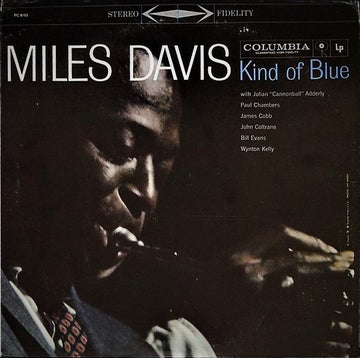
Want to know how good our Hot Stamper Kind of Blue pressings sound? Listen to this very record. If you play the tracks that were recorded in 1958, the year before Kind of Blue, you will hear practically the same lineup of musicians.

That means Stella By Starlight and Little Melonae on side one, and Green Dolphin Street and Fran-Dance (Put Your Little Foot Right Out) on side two. We’re talking Bill Evans, John Coltrane and Cannonball Adderley in their prime, 1958, with top 1958 sound to match.

The nine-minute-plus Green Dolphin Street that opens side two is nothing short of amazing, some of the coolest jazz you will ever hear, on any record, at any price.

(more…)

Miles Davis / Basic Miles – Here Is the Hot Stamper Sound of Kind of Blue

More of the Music of Miles Davis

  • Demo Disc Jazz sound for this wonderful collection, with both sides earning killer Nearly Triple Plus (A++ to A+++) grades, just shy of our Shootout Winner – fairly quiet vinyl too
  • Opening side two, the 9+ minutes of “On Green Dolphin Street” has some of the coolest jazz you will ever hear, on any record, at any price
  • We’re talking Bill Evans, John Coltrane and Cannonball Adderley in their prime, 1958, with top 1958 sound to match
  • If you want to know what the better copies of Kind of Blue sound like, this pressing will tell you, because it has that sound
  • And that means it is absolutely NOTHING like the MoFi 45 RPM 2 LP set that some audiophiles (and the reviewers who cater to them) seem to like so much, why, we cannot begin to fathom

Want to know how good our Hot Stamper Kind of Blue pressings sound?

Listen to this very record.

If you play the tracks that were recorded in 1958, the year before Kind of Blue, you will hear practically the same lineup of musicians.

That means Stella By Starlight and Little Melonae on side one, and Green Dolphin Street and Fran-Dance (Put Your Little Foot Right Out) on side two. 

The nine-minute plus Green Dolphin Street that opens side two is nothing short of amazing, some of the coolest jazz you will ever hear. With Fran Dance on the same side, that gives you about 17 minutes of great-sounding jazz by Miles’ classic Kind of Blue lineup.

Side one has the same cats playing for more than 12 minutes. By my calculation, that’s close to another album’s worth of material from the group. The rest of the material on this compilation is best seen as gravy; maybe not essential, but never less than interesting. (more…)

Letter of the Week – “Oh my gosh, so much money wasted on magic buttons, secret sauce and dilithium crystals…”

Hot Stamper Pressings of Miles’s Albums Available Now

One of our good customers had this to say about some Hot Stampers he purchased a long time ago (emphasis added):

Hey Tom,

I imagine you get a little bored with audiophile negativity around the concept of Hot Stampers. I have to admit, they are expensive and I sometimes just can’t push myself to buy (even though I want to). As an alternative I have purchased some of the “new” remastered all analogue classics like Kind of Blue hoping to get great sound.

I listen for enjoyment, but like many folks I get caught up in the hype of technology hoping for better sound. Oh my gosh, so much money wasted on magic buttons, secret sauce and dilithium crystals for a different but really not better sound.

So, to the point, I purchased a copy of Kind of Blue from you about 2 years ago. It was graded by you as A++ – A+++ on both sides. I tell myself this story when I need an incentive and want to buy another Hot Stamper.

I played the newly remastered UHQR KOB. It was quiet, wonderful, excellent.

And so just for fun I decided to listen to the copy of KOB I bought from you.

My Hot Stamper is a re-press from Columbia probably from the ’70’s. The difference between both copies was startling.

My Hot Stamper copy of KOB had bigger dynamics, air, tonal awareness, spatial sense.

Bass, sax, piano and Miles – alive and vibrant. It sounded better. The only negative difference was the vinyl was not as quiet.

My experience with the albums I buy from you has always been satisfying because they sound so good. So thanks and screw all the naysayers .

Anyways, just felt like saying thanks and trying to push myself forward on my next purchase.

Best, Art

Art,

Thanks for your letter. You are our letter of the week!

This caught my eye:

“…so much money wasted on magic buttons, secrete sauce and dilithium crystals for a different but really not better sound.”

Ain’t it the truth. Lots of smoke and mirrors and fancy packaging, but when the record in question is at best mediocre, as you discovered for yourself, we describe such a record as putting lipstick on a pig.

Michael Fremer says it’s the best KOB ever, and will be for all time.

Why can’t you hear what he can?

Seriously, could there be a more absurd and ridiculous statement? When discusssing pressings, this kind of certainty is the unmistakable mark of shallow and misguided thinking.  Audiophiles as a group evince far too much credulity and not nearly enough skepticism about both records and audio, which is why they are always looking for easy answers and quick fixes.

They don’t want to do the work. They want someone to tell them they don’t have to do the work.

(more…)

1962 Tubes and The Sound That’s Been Lost for Fifty Years

Hot Stamper Pressings of Pop and Jazz Vocal Albums Available Now

UPDATE 2025

This review was written many years ago, circa 2010 I would guess, right about the time we first started doing shootouts for the album. (Here is what we have to say about I Left My Heart in San Francisco these days, suspiciously similar to what we had to say in 2010. As the song says, ‘”The fundamental things apply…”)


Everything that’s good about All Tube vocal recordings from the 50s and 60s is precisely what’s good about the sound of this record.

The huge studio the music was recorded in is captured faithfully on this pressing. The height, width and depth of the staging are extraordinary, a true Demo Disc in that regard.

We are not big soundstage guys here at Better Records, but we can’t deny the appeal of the space to be found on a record that sounds as good as this one does.

Transparency and Tubey Magic are key to the sound of the orchestra and you will find both in abundance on these two sides.

(Other records that are good for testing those two qualities can be found here and here.)

Albums such as this live and die by the quality of their vocal reproduction. On this record Mr. Tony Bennett himself will appear to be standing right in your listening room, along with the 38 other musicians from the session. (Actually, come to think of it, they’re probably sitting.)

On the best pressings, the space of your stereo room will seem to expand in all directions to accommodate them — an illusion of course, but nevertheless a remarkably convincing one.

(more…)

We Was Wrong about Sketches Of Spain on Six Eye

Hot Stamper Pressings of the Music of Miles Davis Available Now

Many, many years ago (15?) we had this to say about a killer Red Label pressing we had played at the time.


When you get a Hot Stamper like this one the sound is truly MAGICAL. (AMG has that dead right in their review.)

Tons of ambience, Tubey Magic all over the place; let’s face it, this is one of those famous Columbia recordings that shows just how good the Columbia engineers were back then. The sound is lively but never strained. Davis’s horn has breath and bite just like the real thing. What more can you ask for?

We Was Wrong in the Past About HP and Six-Eye Labels

In previous commentary we had written:

Harry Pearson added this record to his TAS List of Super Discs a few years back, not exactly a tough call it seems to us. Who can’t hear that this is an amazing sounding recording?

Of course you can be quite sure that he would have been listening exclusively to the earliest pressings on the Six Eye label. Which simply means that he probably never heard a copy with the clarity, transparency and freedom from distortion that these later label pressings offer.

The Six Eyes are full of Tubey Magic, don’t get me wrong; Davis’s trumpet can be and usually is wonderful sounding. It’s everything else that tends to suffer, especially the strings, which are shrill and smeary on most copies, Six Eyes, 360s and Red Labels included.


UPDATE

Over the course of the last fifteen or more years we’ve come to appreciate just how good the right Six Eye stereo pressing can sound.

Nowadays, all the copies earning the highest grades will be original stereo pressings. Other pressings can do well, earning grades of 2+ or so, but none will do as well as the originals.

This has never been our experience with Kind of Blue by the way. The later pressings have always done the best job of communicating the music on that album.


UPDATE #2

Our comments for Kind Of Blue are no longer true either. The Six-Eye pressings of the album win all the shootouts now.


The above shows just how wrong we were about the sound of some later label Columbia pressings we used to like.  The commentary below concerning early versus later RCA pressings is part and parcel of the same dynamic.

Back in 2010 we liked reissue pressings of Living Stereo recordings a lot more than we do now. Only the advent of top quality cleaning equipment and fluids and much improved playback made it possible for us to reproduce the early Shaded Dogs in all their glory.

When my system was darker and less revealing, a lot of records that were mastered to be cleaner and brighter sounded great to me. Records like RCA Red Seal pressings, some OJC jazz titles, and lots of other bad records that I used to like were a good complement to my system back in those days. Now, not so much.

When we encourage our readers to get good sound so they can recognize and acquire good records, it’s because we learned that lesson the hard way, by getting lots of great recordings wrong.

Live and learn is our motto, and progress in audio is a feature, not a bug, of record collecting at the most advanced levels.

“Advanced” is a code word for having little to no interest in any remastered pressing marketed to the audiophile community. If you want to avoid the worst of them, we are happy to help you do that. The more progress in audio you make, the more you will  regret having wasted your money on them, and we hate the thought of seeing your hard-earned money go down the drain.

(more…)

Six-Eye, Black Print, White Print, Red Label – Which Is the Best Sounding Kind of Blue?

Hot Stampers Pressings of the Music of Miles Davis Available Now

Is the 50s original always better, is the 70s reissue always better, is the 60s 360 pressing always better?

The answer is “no” to all three.

Why? Because no pressing is always better. All pressings are unique and should only be judged on their merits, and you do that by playing them, not by looking at their labels. For us this truth is practically axiomatic. It is in fact the premise of our entire business. Over the course of the 28 years we have been selling records we have never found any compelling evidence to invalidate it.

The day that someone can accurately predict the sound quality of a specific record by looking at the label or cover is a day I do not expect to come, ever.


UPDATE 2024

Our Latest Thinking on KOB

The 6 Eye label domestic stereo pressings win our shootouts, in the case of Kind of Blue without exception.

The 360 label pressings, black print (1962-63) or white print (1963-70), as well as the rare 70s red label (1970-?), can sound very good, but they never win shootouts.

We’ve identified a select group of reissues with the potential to do well in shootouts, typically earning a grade of Super Hot (A++) when up against the best originals which earn our top grade, White Hot (A+++). Kind of Blue is one of those recordings.


A Larger Point

But there is a larger point to be made. Let’s assume that the best original Six Eye Columbia pressings can be the best — the most Tubey Magical, the most involving, the most real. You just happen to have a clean pressing, and you absolutely love it.

But is it the best? How could you possibly know that?

Unless you have done a comparison with many copies under controlled conditions, you simply cannot know where on the sonic curve your copy should be placed.

Perhaps you have a mediocre original. Or a mediocre 360 Label copy. Since you haven’t done a massive shootout you simply have no way of knowing just how good sounding the album can be.

(more…)

Lady in Satin – What It Takes to Hear It Right

Robert Brook runs a blog called The Broken Record, with a subtitle explaining that the aim of his blog is to serve as:

A GUIDE FOR THE DEDICATED ANALOG AUDIOPHILE

Here is Robert’s latest posting.

LADY IN SATIN: What it Takes to HEAR it RIGHT

Robert writes:

A few years ago, Better Records founder Tom Port told me something that I’ve never forgotten. I had just demoed my system for an industry guy, and while relaying the experience to Tom, he asked me what records I had played for him. I mentioned a few, including Charles Mingus‘s Ah Um.

Tom said (paraphrasing here) “Not a good choice. You want to play records that can only sound good one way. Ah Um can sound good a lot of different ways.”

At the time I didn’t fully understand what Tom was getting at. Ah Um, or at least the copy of it I had, always sounded great. Wasn’t it therefore a great record to demo my system with?

Since then I’ve come to understand that this was exactly Tom’s point. If you really want to show someone what your system can do, by all means, play a great sounding record, but also one that requires your turntable and your system as a whole be at their best to reproduce it.

Lately I’ve come to understand something that I feel every audiophile, analog audiophiles in particular, would do well to recognize and come to terms with. When we play a record, each of us is listening for different things, and these things are very often not the things that we should be listening for if we want to determine if our system is sounding its best.

Robert continues:

But a pretty steady diet of Ah Um for a number of years now has taught me that the right copy will sound good, even with the most basic turntable setup, and even on a system that’s not performing its best.

Meanwhile, it would seem that Lady In Satin is a record that only sounds good, great even, one way and one way only. It needs us to attend to all the little details in our system before it will reveal its magic.

(more…)

Another 30th Street Studio Knockout – This One’s from Tony Bennett

Hot Stamper Pressings of the Music of Tony Bennett Available Now

UPDATE 2018

This review was written many years ago, circa 2010 I would guess, right about the time we first started doing shootouts for the album. (Here is what we have to say about I Left My Heart in San Francisco these days, suspiciously similar to what we had to say in 2010. As the song says, ‘”The fundamental things apply…”)


Everything that’s good about All Tube vocal recordings from the 50s and 60s is precisely what’s good about the sound of this record.

The huge studio the music was recorded in is captured faithfully on this pressing. The height, width and depth of the staging are extraordinary, a true Demo Disc in that regard.

We are not big soundstage guys here at Better Records, but we can’t deny the appeal of the space to be found on a record that sounds as good as this one does.

Transparency and Tubey Magic are key to the sound of the orchestra and you will find both in abundance on these two sides.

(Other records that are good for testing those two qualities can be found here and here.)

Albums such as this live and die by the quality of their vocal reproduction. On this record Mr. Tony Bennett himself will appear to be standing right in your listening room, along with the 38 other musicians from the session. (Actually, come to think of it, they’re probably sitting.)

On the best pressings, the space of your stereo room will seem to expand in all directions to accommodate them — an illusion of course, but nevertheless a remarkably convincing one.

(more…)

Letter of the Week – “I will spare you the time to comment on my 1992 Analogue Productions Reissue…”

Hot Stamper Pressings of Sonny Rollins’s Albums Available Now

One of our good customers had this to say about some Hot Stampers he purchased recently:

Dear Tom and Fred

After having had the opportunity to listen to the next batch of 7 more records, here are my observations on the now 40 records I bought from you.

First to my listening experience. After receiving the CSNY 4 Way Street and looking for my own record, I thought was a German press easy to beat I realized it was a white label promo first press and thought, oh, did I make a mistake to buy this for this kind of money from you guys, this may be a tough one to crack?

Not so, your SH Stamper clearly beat the WL promo, check!

Next up was the Miles Davis Sketches of Spain White Hot Stamper, one of my very top Miles favorites.

I did not recall that I had the six eye first press, and on side 2, with identical stampers (when your 3/3 WH show up, you do not have the time to check this but hurry :-since your WH 3/3s sell like hot cakes!).

So even more difficult to beat?? Promising start: your WH was clearly better on side 1, now to the identical stampers side 2: not as clearly but still just more transparent, better drums, less shrill on track 2, check!

But it certainly cannot get better than this 3/3 WH stamper, can it?

Next up is Sonny Rollins 3/3 WH Stamper [of Way Out West]. Hard to believe, but yes, even better than the great Miles 3/3 WHS, and I will spare you the time to comment on my 1992 Analogue Productions reissue which I always thought was quite decent.

And so it goes on…

Christian

Christian,

In less than a year you have acquired a large number of simply amazing sounding records. Congratulations.

As you point out about the stampers, you may have a pressing with the right stampers, but our copy will still beat it. How it was pressed and how it was cleaned are critical to the sound, and that is not something the stamper numbers can tell you. It’s a subject we discuss all over this blog. Here is a good place to start.

As for your 1992 Analogue Productions Heavy Vinyl remaster, I honestly don’t know how anyone can listen to a record with sound like that and consider it acceptable, or, in your words, “quite decent.” I went into the long story of the album in this commentary.

(more…)

Letter of the Week – “I feel like I’m right there … in the middle of analog heaven.”

Hot Stamper Pressings of the Music of Miles Davis Available Now

One of our good customers had this to say about a Hot Stamper pressing of Kind of Blue he purchased recently:

Hi Tom,

It’s funny how, when the music sounds so good, a little surface noise here or there doesn’t bother me.

The sound of this SHS [Super Hot Stamper] is crazy good and very very engaging.

What an astonishing difference in what one feels when listening to the BR copy versus the Classic or the 33RPM UHQR.

I guess now I’ve got more minty LPs to sell.

This SHS may only be a 2/2 but it kicks ass. It really does.

Turn it up all the way and it just shines…. I feel like I’m right there, on the mezzanine, in the middle of analog heaven.

I am so glad I took a chance on this one.

Many thanks,

Michel

Michel followed up the next day, apparently after he had spent more time listening to the album, with this missive:

I just can’t get enough of KOB.

I can’t believe it sounds so f***ing good.

It’s like a celebration here at the house… hearing this music this way is a completely different thing.

So really I’ve only just heard it.

I remember reading a letter you posted where a customer went to a friend’s house with his BR KOB and when they got to playing that one after some of his friend’s copies,the friend went “oh shit” within like a minute.

Well ditto here. Who would have known?

Michel,

Thanks for writing. The letter you are referring to is this one. It’s a short letter, the best part of which I’ve reproduced below.

I went to my dearest friend’s house yesterday, he was SO excited to play for me his deluxe UHQR version of Kind of Blue.

We listened for a while and then I brought out the Super Hot Stamper of KOB that I got from you and played it.

About 90 seconds in, he was like “uh oh.”  It was about 3 minutes into So What and his exact words were “oh…shit.”

We love it when our customers tell us that they can’t get enough of one of our records, that they can’t believe the difference in the feeling they got when they finally heard a record sound the way it’s supposed to.

An “astonishing difference” hits it right on the head.

Best, TP

P.S.

We never officially reviewed the Classic Records pressing of Kind of Blue, the one that came out in 1995 with the speed-corrected side two. We felt it was no better than decent, another Classic Records jazz mediocrity that could not begin to compete with a properly-mastered, properly-pressed Columbia, regardless of which of the first three labels it might have had. (More on Kind of Blue labels here.)

As a non-trumpet-playing audiophile, the corrected speed side sounded pretty much like the non-corrected speed side to these ears.

But neither side sounded very much like the good copies I had been enjoying starting sometime in the early 90s, which, I admit, was a case of me coming late to the game. But better late than never.


Kind of Blue is an album we admit to being obsessed with — just look at the number of commentaries we’ve written about it.

Some highlights include:

(more…)