1962-all

Takin’ Off – A Cisco Record We Used to Like

Hot Stamper Pressings of Blue Note Albums Available Now

UPDATE 2026

This is a very old review and it is doubtful we would be remotely as enthusiastic now as we were in 2006 when the Cisco pressing came out. Please take everything you read below with a big grain of salt (if such a thing can exist).


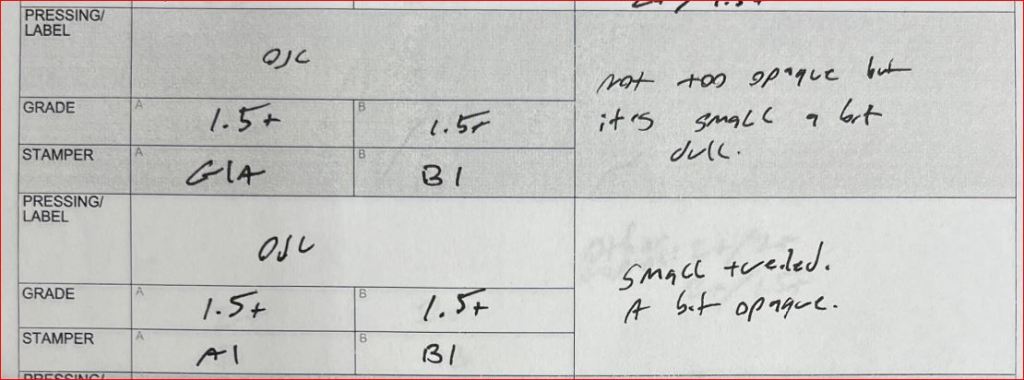
The sound is very good, with correct tonal balance and plenty of life. I was WAY TOO HARD on this album when it first came in. It’s playing right now and really swinging!

I just learned the secret to getting this one to sound right, and I am happy to share it with you. TURN IT UP! When you get some volume going, the musicians really come to life on this album. It may sound crazy, but you need to play this one as loud as you would play your average rock record.

Billy Higgins whacks the hell out of his snare on the second track on side one. He really goes to town on that thing. Imagine you are sitting twenty feet from him in a jazz club; it would be plenty loud, right? Now find the equivalent volume setting on your preamp, drop the needle and get ready to FEEL the music, the way you would feel it if you were in that club. 

Robert Pincus and Kevin Gray did a great job on this one. I put it right up there with the very best jazz records on Heavy Vinyl being made today. The first track is a tiny bit lean for my taste, but things get better after that.

Of course, how many copies do you really see of an album like this that aren’t beat to death, or minty but hundreds of dollars? Mighty few in our experience, so this has to be seen as a welcome addition to any audiophile’s jazz collection.

Khachaturian – Spartacus & Gayneh

Hot Stamper Pressings of Orchestral Spectaculars Available Now

UPDATE 2024

This is a very old review. The last time we sat down to play a number of copies of this recording, we were underwhelmed by all of them There may be some great sounding pressings out there, but we did not have any on hand and don’t want to commit the resources that would be needed to find them.

Our favorite recording that we stock, for both sound and performance, is the Mercury with Dorati from 1961.

It is guaranteed to give your system a real workout, especially if you can play it something approaching live levels in order to get the tympani and bass drum sounding right.


Our Old Review

This is a Decca In The Box British Import LP featuring Spartacus on side one and Gayaneh on side two with the Vienna Phil.

Side Two is the BEST EVER! Just play the Sabre Dance! This famous TAS List LP has a very good side one as well, 90 to 95% the best. This is a record that deserves its Super Disc ranking. It IS a Super Disc! 

(more…)

Don’t Waste Your Money on this Schubert Recording with Munch from 1962

Hot Stamper Pressings of Living Stereo Recordings Available Now

Some audiophiles buy albums based on their labels. For example, this Shaded Dog pressing from the Golden Age of RCA Living Stereo might appeal to a certain kind of audiophile who treasures original LSC pressings.

More than that, he might limit himself to the most sought-after 1S Indianapolis pressings. Hooray! What could be better?

However, many records from this era simply do not sound good, and this is one of them. We have never heard a good sounding copy of LSC 2522, and we’ve played plenty of them over the decades that we’ve been selling Golden Age Classical records.

Are You a Fan?

If you’re a fan of Living Stereo pressings, have you noticed that many of them – this one for example – don’t sound very good?

If you’re an audiophile with good equipment, you should have. But did you? Or did you buy into the hype surrounding these rare LSC pressings and just ignore the problems with the sound?

When vintage RCA Living Stereo records don’t sound good to us, we put them on this list and they go into our hall of shame. We don’t make excuses for them. We call a spade a spade. The same goes for records being made today.

Some audiophiles buy albums based on their labels. For example, this Shaded Dog pressing from the Golden Age of RCA Living Stereo might appeal to a certain kind of audiophile who treasures LSCs on the original label.

More than that, he might limit himself to the most sought-after 1S Indianapolis pressings. Hooray! What could be better?

However, many records from this era simply do not sound good, and this is one of them. We have never heard a good sounding copy of LSC 2522, and we’ve played plenty of them over the decades that we’ve been auditioning Golden Age classical records for sale.

This Shaded Dog might be passable on an old school system, but it was too unpleasant to be played on the high quality modern equipment we use.

There are quite a number of other records that we’ve run into over the years with similar shortcomings. Here are some of them, a very small fraction of what we’ve played, broken down by label.

  • London/Decca records with weak sound or performances
  • Mercury records with weak sound or performances
  • RCA records with weak sound or performances, including many on the coveted Shaded Dog label

(more…)

Don’t Waste Your Money on this Living Stereo from 1962

Hot Stamper Pressings of Living Stereo Recordings Available Now

The sound of the copies we’ve played of LSC 2605, Highlights from Rubinstein at Carnegie Hall, released by RCA in 1962, have never impressed us sonically.

We didn’t listen to the music critically because our primary purpose here at Better Records is to evaluate recordings for their sound quality first (hence the name of our business), and if the sound isn’t good enough, we have to move on to titles with better sound that our customers might find more to their liking.

1962 was surely one of the truly glorious years for analog recordings, but the sound of the most recent copy of the album we played may have been rich, but unfortunately is was also opaque.

We would consider the sound no better than passable, and therefore it’s not a title we would consider offering to our customers.

Unless…

Unless you somehow managed to come across a copy noticeably better than the ones we’ve played over the last twenty or more years — a possibility that, although unlikely, cannot be ruled out — we would advise those interested in a top quality piano recital recording to look elsewhere.

Leave this RCA to the people who love collecting records. It’s perfect for record collectors — it’s from the right company, made in the right era, and it has the right original label — but it’s really not suitable for those of us who love playing good sounding records. It will of course sit happily on a shelf, to be pulled out and shown to other like-minded souls, but it is unlikely to spend much time spinning on a turntable platter with a needle tracing its grooves.

Some audiophiles are of the opinion that vintage Living Stereo recordings on the original Shaded Dog label can do no wrong, but we have never subscribed to that view. We’ve played too many that did plenty wrong. Maybe one out of three are good enough for the audiophile who wants to experience music reproduced at a highest levels of sound quality.

There are quite a number of records that we’ve run into over the years with more shortcomings than this one. Here are some of them, a very small fraction of the titles we’ve played, broken down by label.

  • London/Decca records with weak sound or performances
  • Mercury records with weak sound or performances
  • RCA records with weak sound or performances

(more…)

Another Unimpressive Reissue Pressing of Coltrane’s Music — What Is Going On?

Hot Stamper Pressings of the Music of John Coltrane Available Now

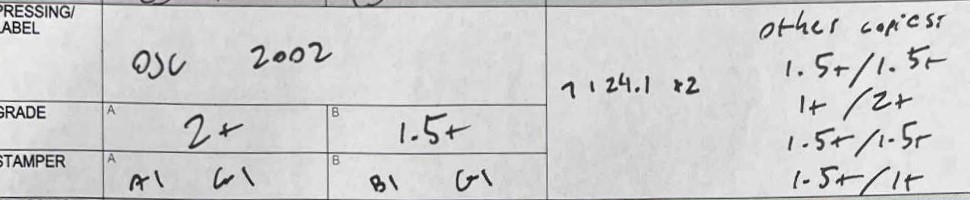
We had an early Blue Label Prestige mono pressing that was not as awful as the original Yellow Label mono we played, but it’s not very good either. Our grade for a record that earns one plus on both sides is passable.

Which means you could play it, maybe even enjoy it, but you would have no idea just how well Rudy Van Gelder recorded the sessions in 1958 that went into the making of the album, which as you know was not compiled for release until 1962.

As you can see from the notes above, it was crude, smeary and thick. We don’t sell records that sound like that.

I can’t say that most modern remastered records are crude, although some of them are, but a great many we’ve played are smeary, and almost all of them are thick — that is, lacking in transparency — to some degree. That last quality — a lack of transparency — may be the most irritating of all, a subject we discuss here.

(A great many records we’ve auditioned over the years are good for testing transparency. Those wanting to improve this aspect of their playback should consider making use of them.

(more…)

La Creation du Monde Is Not As Good As We Thought, Sorry

Hot Stamper Pressings of Living Stereo Recordings Available Now

Many years ago, perhaps around 2010, we played a nice copy of LDS 2625 and had this to say about it:

1s/ 2s. Side 2 has DEMO QUALITY sound. These rare Soria pressings have a tendency to be noisy so this is as quiet a copy as you are likely to find.

Unusually smooth. Just the opposite of the Mercury recordings. Perfect for this kind of music.


UPDATE 2025

The last couple of copies we picked up in preparation for a shootout we had been wanting to do were a little bright and would probably have earned grades of 1.5+, which are good, not great Hot Stamper grades.

Unless we can find some better sounding copies — not likely since this album on the original Soria pressing in stereo is rare and usually fairly expensive — we are very unlikely to be offering this title to our customers anytime soon.

Seems we got this one wrong. Live and learn is our motto, for precisely this reason.

(more…)

Don’t Waste Your Money on this Living Stereo from 1962

Hot Stamper Pressings of Living Stereo Titles Available Now

LSC 2612, released in 1962 on the Shaded Dog label, offers Handel’s Water Music and Royal Fireworks with Stokowski conducting, engineered by one of the greats, Robert Simpson.

The sound is terrible however.

The copies we had on hand were loud and crude, with steely strings and not much in the way of hall space. In other words, LSC 2612 seems to suffer from the “old record” sound that we’ve found on many of the hundreds of vintage pressings we’ve auditioned over the years as we were looking for top quality recordings to put in our Hot Stamper shootouts.

If you want a good Water Music, the right stamper pressings of the Philips recording with Leppard are the best we’ve ever played.

The Shaded Dog of LSC 2612 might be passable on an old school system, but it was too unpleasant to be played on the high quality modern equipment we use.

Leave this RCA to the collectors. Some audiophiles are of the opinion that vintage Living Stereo recordings on the original label can do no wrong, but we have never subscribed to that view.

There are quite a number of other records that we’ve run into over the years with similar shortcomings. Here are some of them, a very small fraction of what we’ve played, broken down by label.

  • London/Decca records with weak sound or performances
  • Mercury records with weak sound or performances
  • RCA records with weak sound or performances

1962 was a phenomenal year for audiophile quality recordings – we’ve auditioned and reviewed more than one hundred and twenty titles as of 2024, and there are undoubtedly a great many more that we’ve yet to discover.

When it comes to classical and orchestral titles, more than a dozen are so good that we would consider them Must Owns.

(more…)

This Mercury Is Not a Good Way to Enjoy Tchaikovsky’s 4th

More of the Music of Tchaikovsky Available Now

The pressings we’ve played of SR 90279 over the years tended to have crude and shrill sound. The string tone was bright and steely.

In our most recent shootout for the work, since we happened to have one in stock, we figured we would give the Mercury one more chance, just in case we had finally stumbled on some good stampers or that other improvements to our playback would allow the hidden virtues of the recording to be revealed. (Yes, thankfully that is still happening. So is the reverse; some records don’t do as well in shootouts as they used to, a reality every audiophile has to be on the alert for, a subject we discuss here.)

It probably lasted less than five minutes on the table.

It was simply too unpleasant to be played on the revealing modern equipment we use.

It seems that many early Mercury recordings suffer from these shortcomings. My guess would be at least half, maybe even closer to two out of three.

Waking Up

If your system is dull, dull, deadly dull, the way some audiophile systems tend to be, this record has the hyped-up, bright and aggressive sound to bring it to life in no time. (If you’re a fan of MoFi pressings from the 70s and 80s, you definitely have a much smoother top end than we do. Most of the records they made in those years are way too bright and full of the kind of phony detail that some systems need to wake them up. I should know; I had one of those systems myself, but of course I didn’t know it at the time and would have gone to the mat to deny the accusation.)

There are scores of commentaries on the site detailing the huge improvements in audio available to the discerning (and well-healed) audiophile. It’s the reason Hot Stampers can and do sound dramatically better than their Heavy Vinyl or audiophile counterparts: because your stereo is now good enough to show you the difference.

With a too-forgiving system, you will most likely continue to be fooled by bad records, just as I and all my audio buds were fooled thirty and forty years ago. Audio has improved immensely in that time. If you’re still playing Heavy Vinyl and audiophile pressings, there’s a world of sound you clearly don’t know you’re missing.

My advice is to get better equipment and spend as much time as you can learning to tweak and tune it. That will allow you to be better at recognizing bad records when you play them.

The Heavy Vinyl Route

If more vintage Mercurys had sound as bad as this one, we would happily admit that going the Heavy Vinyl route might make sense.

And there certainly are a lot of bad vintage pressings — we should know, we’ve played them by the hundreds — but the number of bad modern Heavy Vinyl pressings would give them a run for their money and then some.

Beyond this Tchaicovsky title, there are plenty of others we’ve run into over the years with too many sonic shortcomings. As a public service, here are about 60 of them, broken down by label.

(more…)

Khachaturian Conducts Spartacus – Not As Good As We Thought

Hot Stamper Pressings of Orchestral Spectaculars Available Now

Probably more than ten years ago we had written the following about CS 6322:

The famous TAS list recording. The Decca 180 gram version is very good, but those of you who appreciate the qualities of the original mastering will want to have this one. 

Now jump ahead five years to five years ago. We played three or four copies of the album and none of them really worked for us.

The sound was a bit opaque, a bit dry, and not nearly as tubey as we would have liked. (Many Decca recordings suffer from dry strings, a shortcoming that is apparently rarely noticed by audiophiles and the reviewers who write for them.)

A good record, not a great one, and for that reason really not worth cleaning up and doing a shootout for.  The best copy would not pay for the labor to discover it.

Seems we got this one wrong. Live and learn is our motto, for precisely this reason.

There are quite a number of others that we’ve run into over the years with similar shortcomings. Here they are, broken down by label.

  • London/Decca records with weak sound or performances
  • Mercury records with weak sound or performances
  • RCA records with weak sound or performances

To this day, some of the records on the TAS list seem to me better suited to the old school audio systems of the 60s and 70s than the modern systems of today. These kinds of records used to sound good on those older systems, and I should know, I had an old school stereo and some of the records I used to think sounded good back in the day don’t sound too good to me anymore.

For a more complete list of those records, not just the ones on the TAS List, click here.

The following three things are best kept in mind when a pressing doesn’t sound like we remember it did, or think it should:

(more…)

Don’t Waste Your Money on this Living Stereo with Munch from 1962

More of the Music of Franz Schubert

Some audiophiles buy albums based on their labels. For example, this Shaded Dog pressing of LSC 2522 from the Golden Age of RCA Living Stereo might appeal to a certain kind of audiophile who seeks out clean copies LSCs on the original label.

More than that, he might limit himself to the most sought-after 1S Indianapolis pressings. Hooray! What could be better?

However, many records from this era simply do not sound good, and this is one of them. We have never heard a good sounding copy of LSC 2522, and we’ve played plenty of them over the decades that we’ve been auditioning Golden Age Classical records for sale.

This Shaded Dog might be passable on an old school system, but it was too unpleasant to be played on the high quality modern equipment we use.

There are quite a number of other records that we’ve run into over the years with similar shortcomings. Here are some of them, a very small fraction of what we’ve played, broken down by label.

  • London/Decca records with weak sound or performances
  • Mercury records with weak sound or performances
  • RCA records with weak sound or performances, including many on the coveted Shaded Dog label

(more…)