Month: August 2023

Keeping the Players Together on Jazz Impressions of Black Orpheus

guarajazzi_wtlf_1406113104

Hot Stamper Pressings of Jazz Recordings Featuring the Piano

Another in our series of listening exercises here discussing the importance of transparency, ambience and resolution.

The arrangement of the players is straightforward, with the bass hard left, drums hard right (with leakage well to the left on the cymbals, but that’s another story), and Guaraldi on piano in the center. (The first track of side two reverses this arrangement; why, I have no idea.)

Here’s the crazy thing about this recording: The best copies really connect up — tie together — the space each of the players is in. I heard it during the shootout, and I can’t recall if it actually happened more than once or twice, but I know I heard it. They are all live, they are all on the same soundstage, but on most copies you would hardly know it.

They sound like they are playing in booths, the ambience never extending very far in any direction. The best copies have so much ambience that one player’s space extends all the way to the edge of the other player’s space. The effect, though rare, is nothing less than magical.

The piano is solid, mostly clear and not hard. Not many copies present the piano this way — correctly in other words. The amazing snare of Colin Bailey in the right channel is LIVELY and fun like you’ve never heard before.

There is no sacrifice in fullness, richness or Tubey Magic in the presentation, and that is the right sound for this music.

No Breakup on the Piano

I would be willing to bet that 90% or more of all the early pressings still in playable condition have some breakup on the piano. The old arms and carts of the day simply could not track the groove the way modern arms and carts can, and ended up damaging the record.

We are happy to report that this copy has no breakup on the piano at all.

The best copies bring out the contribution of the bass player better, the bass being essential to the rhythm of the music. On some, the bass is so tight and note-like you can see right into the soundstage and practically watch Monte Budwig play.


Further Reading

John Coltrane – The Stardust Session

  • A stunning copy of this Coltrane double album – recorded in one day! – with INSANELY GOOD Shootout Winning Triple Plus (A+++) grades on all FOUR sides – fairly quiet vinyl too
  • Spacious, open, transparent, rich and sweet, it’s a remarkable disc from the Golden Age of Jazz with the benefits brought about by lower-distortion, wider-bandwidth cutting equipment in the 70s
  • Superb sound quality courtesy of Rudy Van Gelder‘s engineering (1958/1963) and the superior mastering of David Turner (1972)
  • 4 Stars: “…Coltrane is heard near the end of his ‘sheets of sound’ period, perfecting his distinctive style and taking colorful and aggressive solos.”

These records take their material from three John Coltrane albums: “Bahia,” “Stardust” and “Standard Coltrane.” We would be surprised if the originals of any of them can beat the sound of this reissue.

Note that the complete Standard Coltrane can be found on these four sides, along with a substantial portion of the other two Coltrane albums listed above.

(more…)

Bennett and Evans – The Tony Bennett / Bill Evans Album

More Tony Bennett

More Bill Evans

  •  early pressing of this classic collaboration, here with solid Double Plus (A++) sound from first note to last and vinyl that is hard to find any quieter
  • When heard on our best Hot Stamper pressings, the album clearly belongs near the top of the All Time Great Male Vocal Recordings
  • Want to hear the Bennett-Evans Magic? Go right to “Waltz for Debby,” the high point of the album for us, and clearly one of Tony’s greatest performances, recorded when he was still at the peak of his powers, and thank goodness for that
  • 4 1/2 stars: “… one of the best albums of either’s career… an excellent jazz-pop hybrid in which both musicians were shown off to advantage.”
  • This is our pick for Tony Bennett’s best sounding album. Roughly 150 other listings for the Best Recording by an Artist or Group can be found here on the blog.
  • It’s yet another Vocal Album that belongs in any audiophile record collection worthy of the name

If you like sophisticated vocal jazz I don’t think you can do much better than this record, especially when it sounds like this. Tony Bennett’s voice sounds wonderfully rich, BREATHY, and above all REAL.

The soundstage is open and spacious, the piano full-bodied and clear, and the vocals have the clarity and fullness missing from most pressings. It’s incredible to hear these two top-notch musicians interacting and responding to each other in this kind of huge, open and natural space.

(more…)

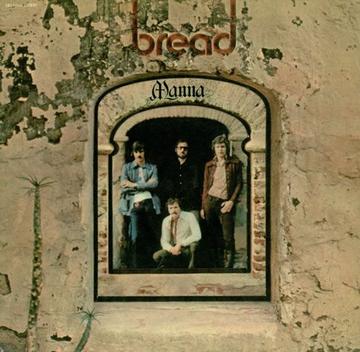
Manna – Super Hot Versus White Hot

Hot Stamper Pressings of Great Sounding Pop Albums Available Now

Back in the mid- to late-2000s, we felt we owed our Hot Stamper customers a more complete picture of the good and bad qualities we heard in our shootout for practically every record we played.

The idea was that the buyer could listen along for what the record was doing well and what it might not be doing so well. If you noticed that the top end was a little soft, well, that’s what we might have heard too. We would put that shortcoming, and any others we thought worth mentioning, right there in the listing.

Over the years, in order to avoid having to write every listing from scratch, we streamlined the process and dropped the criticisms.

Below you can see a typical example of an older listing. This is how we used to recognize when a record was Super Hot as opposed to White Hot.

This commentary on the famous recording of The Firebird with Dorati discusses the same issues in more depth.

Side One

A++, with good balance and lots of rockin’ energy. It’s transparent — just listen to how clear the drums are on the first track. It’s a bit dry and doesn’t have all the top end extension of the best, so Super Hot is a fair grade we think.

(more…)

Letter of the Week – “I truly was in awe of how sweet the sound was…”

Our new customer Michel wrote to tell us how much he likes his Doors Hot Stamper pressing.

Hello.

I wanted to share my story with you. At some point in some youtube video I heard about you. I didn’t exactly know what to think about it all. Then over time I heard more, etc. My interest peaked, I eventually went to your website and read and browsed.

I bought a NWH Waiting For the Sun. It turns out to be an original [redacted]. I have at home an original [redacted] pressing.

Just in case it matters, I use a thorens td145 with grado red, linn kairn preamp, hafler xl280,a nd polk model 10’s. So I started with side one.

My copy sounded great…that nice tubey sound…nice presence…that nice ‘OG’ special something. OK, well that was good.

Your copy however was nothing short of magical. I felt like I was at the circus. I truly was in awe of how darn sweet the sound was… each part of the sound was in its perfect place and distinguishable within this wonderful warmth with clarity and no shrillness.

I did my testing at max volume as to expose everything. The crescendo at the end of track one is one to give you goosebumps. I must congratulate you for such a truly wonderful offering. This is truly one magical sounding piece of vinyl.

Many Thanks!
Michel

Michel,

Thanks for your letter.

I think we can all agree that your system is not exactly state-of-the-art. The good news there is that it does not take a megabuck stereo to put you in awe of the albums of The Doors.

All you need is a good pressing. We are not surprised that you were very impressed with our Hot Stamper. The LP you had is from a pressing plant that we are not big fans of.

All the top pressings come from one plant and one plant only. They will always have the Gold Label, but the stamper numbers can vary. Nearly White Hot means you got a copy that was only beaten by one other, and that means it must have been very good indeed.

As for this:

[E]ach part of the sound was in its perfect place and distinguishable within this wonderful warmth with clarity and no shrillness.

That’s what Bruce Botnick brings to the table. The man engineered some of the best sounding rock records ever made.

Waiting for the Sun is an album we think we know well, one that checks off a number of important boxes for us here at Better Records:

(more…)

Robert Brook Shoots Out One Flight Up

Hot Stamper Pressings of Blue Note Albums Available Now

We have never heard the Tone Poets pressing that Robert played against the Van Gelder cutting he discusses in the commentary below.

We have one in stock and are just waiting to do the shootout for the album so that we can compare it to the better pressings we know we will find.


UPDATE 2025

We have now played the Tone Poets pressing for ourselves, and if anything, Robert is being too kind!


You may have read that we were knocked out by a killer copy way back in 2007. We expect to be no less knocked out in 2023.

Robert concludes with his take on the strengths and weaknesses of the two pressings. Here is a excerpt:

Overall, the Tone Poet is closed, distant and frankly boring to listen to. Where is the energy of the music? Where is the presence of these musicians? Where is the studio space?

He goes on in much more detail, but this is exactly the kind of sound we hear on one Heavy Vinyl pressing after another. For some reason, none of these shortcomings appears to bother the fans of the label. I get why this guy is missing the boat: he actually thinks a system with five inch woofers can play jazz. What possible excuses could these other people have? [1]

The complete review can be found below. If you are considering following the crowd and buying some of this label’s albums, you might want to take it slow. (Those of you with five inch woofers can charge right ahead. The sonic problems with the Tone Poets releases Robert Brook describes would barely be audible on such a system, so get while the gettin’s good. Just make sure you are never tempted to upgrade to big speakers. You could find yourself in the unfortunate position of needing a new record collection to go along with them. Unlike Tone Poets releases, good records ain’t cheap.)

Dexter Gordon’s ONE FLIGHT UP: One of the Better TONE POETS?

[1] This is rhetorical question. These other folks have no excuses. They have exactly the sound quality they have earned by underutilizing the two most important audio resources they have at their disposal: time and money.

If they have failed to put in enough of either one or both, they have only themselves to blame for letting themselves be fooled by the chalatans currently marketing one meretricious [2] Heavy Vinyl pressing after another.

If they decide to remedy this sad state of affairs, we are more than happy to guide them in the new and exciting direction we’ve pioneered over the course of the last twenty years or so. The advice we give in this commentary would be a good place to start: first get good sound – then you can recognize and acquire good records

For another 60+ pieces of record collecting advice, more than enough to keep anyone busy for months, perhaps years, please click here.

[2] To save you the trouble of looking it up, Merrian-Webster defines meretricious as apparently attractive but having in reality no value or integrity. Used to suggest pretense, insincerity, and cheap or tawdry ornamentation.

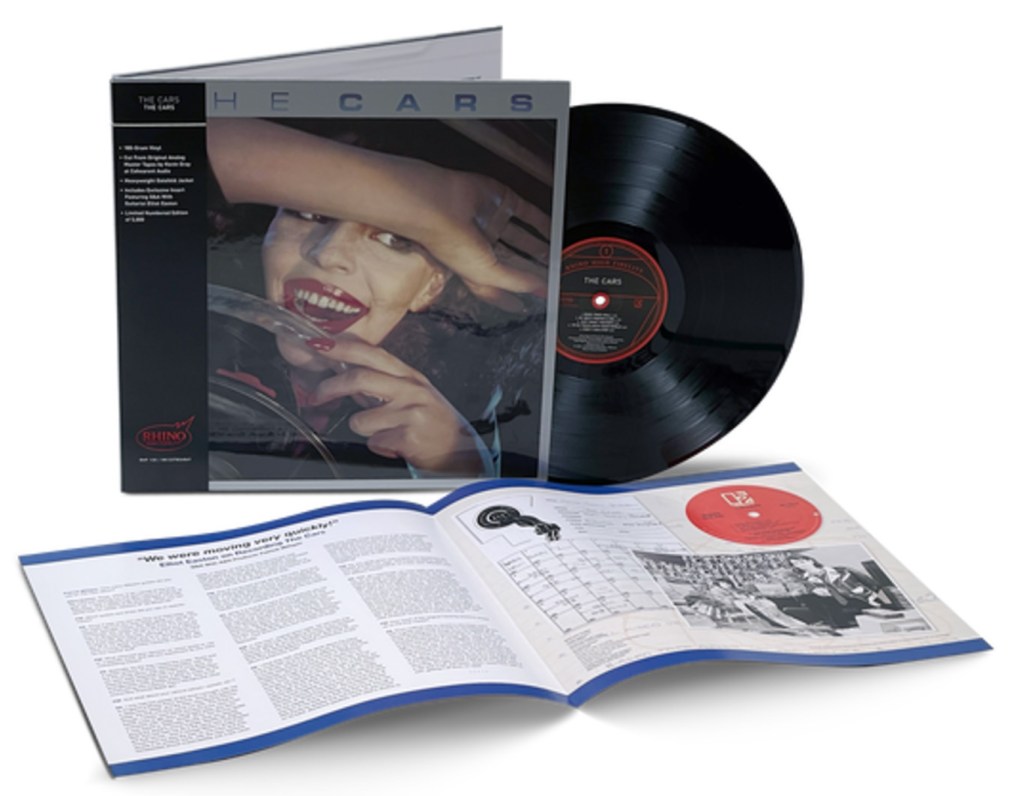
For a deeply meretricious release of recent vintage (OBI strip!, custom booklet!, premium heavy vinyl!, fold-open cover!), see The Cars on Rhino. The only thing left out of the package was a good sounding LP.


Further Reading

(more…)

Geoff Edgers on Sinéad O’Connor

Sinéad O’Connor is still in one piece

“She tore up a picture of the pope. Then her life came
apart. These days, she just wants to make music.”

This was true as of 2020, when Geoff Edgers wrote his touching and insightful story about her.

To give you the flavor of the piece, a series of text messages she sent him can be seen below.

I do feel like I was a monster. I feel awful. I do beat the living s- - - out of myself. Am full of grief about it would be a better way of describing it

Was Not my purpose on the planet to have hurt anyone …

But no one ever minded if they hurt me

Is the thing

That’s part of the code also

All artists have one dream that will never come true

If you can figure that out you know them

They teach that in acting school. Key to finding a character is what dream does he or she have that will never come true

Mine is a mom

Rest in peace.

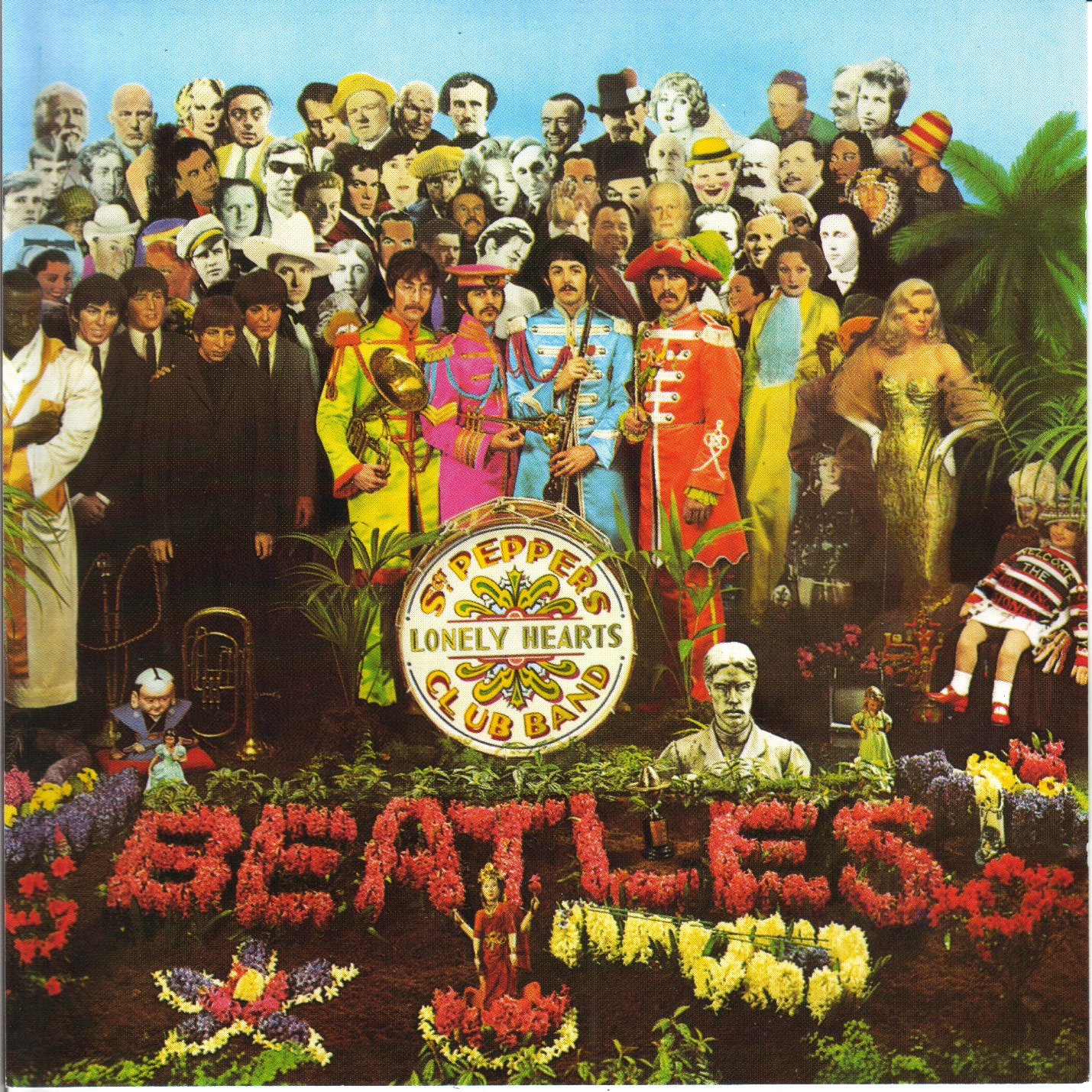
Is the Heavy Vinyl from 2012 the Best Sounding Sgt. Pepper?

beatlessgtHot Stamper Pressings of Sgt. Peppers Available Now

You might agree with some reviewers that EMI’s engineers did a pretty good job with the new stereo pressing of Sgt. Pepper mastered by Sean Magee from the 2009 digitally remastered tapes.

In the March 2013 issue of Stereophile Art Dudley weighed in, finding little to fault on this title but being less impressed with most of the others in the new box set. His reference disc? The MoFi UHQR! Oh, and he also has some old mono pressings and a domestic Let It Be.

Now there’s a man who knows his Beatles. Fanatical? Of course he is! We’re talkin’ The Beatles for Chrissakes.

When I read the reviews by writers such as these, I often get the sense that I must’ve fallen through some sort of Audio Time Warp and landed back in 1982. How is it that our so-called experts evince so little understanding of how records are made, how variable the pressings can be, and, more importantly, how absolutely crucial it is to understand and implement rigorous protocols when attempting to carry out comparisons among pressings.

Critically comparing LPs is difficult and time-consuming. It requires highly developed listening skills. I didn’t know how to do it in 1982. I see no evidence that the audiophile reviewers of today are much better at it now than I was in 1982.

Just to take one example: They all seem to be operating under the same evidence-free conceit: that the original is the benchmark against which other pressings must be compared.

To those of us who have played Beatles pressings by the hundreds, this is patent nonsense. To cite just one instance, a recent Hot Stamper listing notes [inaccurately as it turns out, see below]:

We defy any original to step into the ring with it. One thing we can tell you, it would not be a fair fight. The cutting equipment to make a record of this quality did not exist in 1967, not at EMI anyway.

We had the opportunity not long ago to audition a very clean original early pressing of the album and were frankly taken aback by how AWFUL it was in virtually every respect. No top end above 8k or so, flabby bass, murky mids — this was as far from Hot Stamper sound as one could imagine. If it were a Heavy Vinyl or Audiophile pressing we would surely have graded it F and put it in our Hall of Shame.

To be fair we have played exactly one early copy of the record on our current system. (Played a copy or two long ago but on much different equipment, so any judgments we might have made must be considered highly suspect.) Perhaps there are good ones. We have no way of knowing whether there are, and we are certainly not motivated to find out given the price that original Sgt. Pepper’s are fetching these days.

We can tell you this much: no original British pressing of any Beatles album up through Pepper has ever impressed us sonically. We’ve played plenty and have yet to hear one that’s not congested, crude, distorted, bandwidth-limited and full of tube smear. (The monos suffer from all of these problems and more of course, which is only natural; they too are made with the Old School cutting equipment of the day.)

If that’s your sound more power to you. It’s definitely not ours. The hotter the stamper, the less congested, crude, distorted, bandwidth-limited and smeary it will be. (Or your money back.)


UPDATE 2023

There is a copy of a Beatles album on the original label that was competitive with our best 70s pressings, this one. We explained why it’s not a problem to admit we were wrong about the album in question, For Sale, this way:

This finding about For Sale is precisely why live and learn is our motto.

We don’t know it all, and we’ve never claimed that we did. We constantly learn things about pressings in our daily shootouts. That should not be too surprising, as record shootouts are the only way to learn anything about the sound of records that’s actually worth knowing.

Start doing your own experiments and your record knowledge might just take off the way ours has. 99% of what we think we know about the sound of records we’ve learned in shootouts over the course of the last twenty years.

Here is our advice on getting started.

Before this, the only Beatles record we would sell on the Yellow and Black Parlophone label was A Collection of Oldies… But Goldies. That title does have the best sound on the early label. In numerous shootouts, no Black and Silver label pressing from the ’70s was competitive with the best stereo copies made in the ’60s.

Until now, it was clearly the exception to our rule. From With the Beatles up through Yellow Submarine, the best sounding Beatles pressings would always be found on the 70s reissue label.


The Best Pepper Pressings

How did we come to find the best Sgt. Peppers pressings? Our recent commentary about a wonderful Benny Carter record on the original Contemporary Black Label may serve to shed some light on the process.

(more…)

If This Guy Isn’t on the Payroll…

Hot Stamper Pressings of the Music of The Cars Available Now

He sure ought to be!

Based on what I’ve just read, if Rhino Records is looking for a cheerleader, they could hardly do better than Mr. Youman.

I stumbled upon this fellow’s review of The Cars first album on Positive Feedback just a few days ago.

Not sure I would even call it a review. It comes across to me as more of a PR release.

I don’t think Positive Feedback cares either way. They need content, and apparently they consider this content.

The New Rhino High Fidelity Series – The Cars And John Coltrane Kick It Off in Grand Style!

One thing I have noticed about PF is that they do not seem to employ editors of any kind. My friend Robert Pincus writes for them — here is his review of a Dillards album that no one would be likely to buy from us at our prices but is probably worth picking up for the five or ten dollars a record store might charge. There are plenty of typos throughout his reviews and others I have read.

You’re on your own with PF. And they are good with however many exclamation marks you may want to use. Four in one paragraph? Bring it on they say!

The following paragraph from Youman’s review contains a ridiculous mistake that any knowledgeable editor should have noticed. Can you spot it? If so, email me at tom@better-records.com

Mastered by George Marino, the 1978 original would seem hard to beat, as the level of detail and attack is quite impressive. It absolutely rocks, and I would be very happy if this was my one and only copy. The 1980 Nautilus, which was half speed mastered by Jack Hunt, is surprisingly very much like the original with some minimal improvement in transparency and dynamic punch. Most would be hard pressed to hear the difference. Of course, the super quiet Japanese vinyl might be contributing to this. We also have the 2009 Mofi, which was half speed mastered by Shawn Britton. In my system, I found it to be dark and somewhat veiled. Bass was just too prominent to my ears. It was almost impossible to sit through the entire Mofi after hearing the OG and the Nautilus. I am a huge Mofi fan, so this was very disappointing.

When someone as clearly lacking in critical listening skills as this fellow has the temerity to compare “the” original and the Nautilus remaster (reviewed here) and declare “Most would be hard pressed to hear the difference,” it rubs me the wrong way.

I want to sit such a person down and say that it’s unlikely that anyone with two working ears and a halfway-decent stereo would not hear the difference.

You can hardly hear it, that seems clear, but why insult others of a Cars-loving persuasion?

The reference to Giant Steps below is yet more evidence of this fellow’s inability to recognize a bad record when he hears it:

Let’s return to that Rhino catalog and all that it could possibly offer to the audiophile enthusiast. We need to send our wish lists and raise our hands if not bring out the megaphones!  Of course we have the Led Zeppelin catalog, but that has been debated ad nauseum on several internet websites and forums. It seems that those in control will not allow it. Can you imagine a Kevin Gray mastering for Led Zeppelin II? There have been several very good reissues for the Black Sabbath catalog, but the original UK pressings are still the ones to beat based on my own comparisons with various other collectors. Lets [sic] get those original analog UK tapes and hand them over to Kevin!  I also have a copy of the 45 RPM John Coltrane, Giant Steps released by Rhino in 2008. Some argue that this is best pressing ever and by a wide margin! One of the top ten jazz releases of all time as ranked by many jazz experts. Bernie Grundman did a fantastic job on that reissue but there was only a limited production of 2500 copies. Lets [sic] take another shot at those tapes as part of the new Rhino High Fidelity series!

We make the case that Bernie’s recutting of Giant Steps for Rhino is possibly the worst sounding version of the album ever, and perhaps by a wide margin! He already had his shot, the patient did not survive the operation, what good would it do to put another bullet in the corpse?

Jazz experts may rank it one of the top releases of all time — I certainly would — but it is unlikely they have ever heard Rhino’s bloated, thick, dull, lifeless and altogether unsatisfactory pressing of the album. We gave it an a F and felt that we were being too kind. There is some consolation to be had though: The limited production meant that only 2500 people had to suffer through it upon release. (According to Discogs, these days the average price paid for a copy is $225. We may charge a lot for records, but we charge a lot for good sounding records, not bad sounding records, and that should count for something, shouldn’t it?)

And Kevin Gray already ruined the album once for Rhino, so why would anyone want to hand him the tapes to do it again? Is he now a better mastering engineer than he was in the mid-2000s? What evidence to support this proposition could you possibly supply to those of us who question his competence? The shockingly bad sounding records he’s cut recently — Stand Up, Moondance and Rickie Lee Jones are three that spring to mind — make a mockery of the very idea that this guy knows what he is doing.

More comments from the above paragraph of the exploding head variety:

There have been several very good reissues for the Black Sabbath catalog…

Have there? Would someone please name one? We would love to hear it.

but the original UK pressings are still the ones to beat based on my own comparisons with various other collectors.

Then you need to get out more. The UK pressings we have played are not competitive in the least with the best domestic originals. Maybe there are some new reissues that are comparable to the UK pressings, but that is clearly setting the bar much too low. For our last shootout, we noted:

(more…)

Sergio Mendes + Psych + Your Mind Will Be Blown

mendestill_depth_1102533608More of the Music of Sergio Mendes and Brasil ’66

This commentary was written sometime around 2010.

If you are looking for DEMO DISC QUALITY SOUND with music every bit as wonderful, look no further — this is the record for you.

If I had one song to play to show what my stereo can really do, For What It’s Worth on a Hot Stamper copy would probably be my choice. I can’t think of any material that sounds better. It’s amazingly spacious and open, yet punchy and full-bodied the way only vintage analog recordings ever are.

This one being from 1970 fits the bill nicely.

Side two of this album can be one of THE MOST MAGICAL sides of ANY record — when you’ve got a killer copy. I don’t know of any other record like it. It seems to be in a class of its own. It’s an excellent test disc as well. All tweaks and equipment changes and room treatments must pass the Stillness test.

To fail to make this record sound better is to fail completely. The production is so dense, and so difficult to reproduce properly, that only recently have I begun to hear just how good this record can sound. There is still plenty to discover locked in these grooves, and I enthusiastically accept the challenge to find all the sounds that Sergio created in the studio, locked away in the 40 year old vinyl.

(more…)